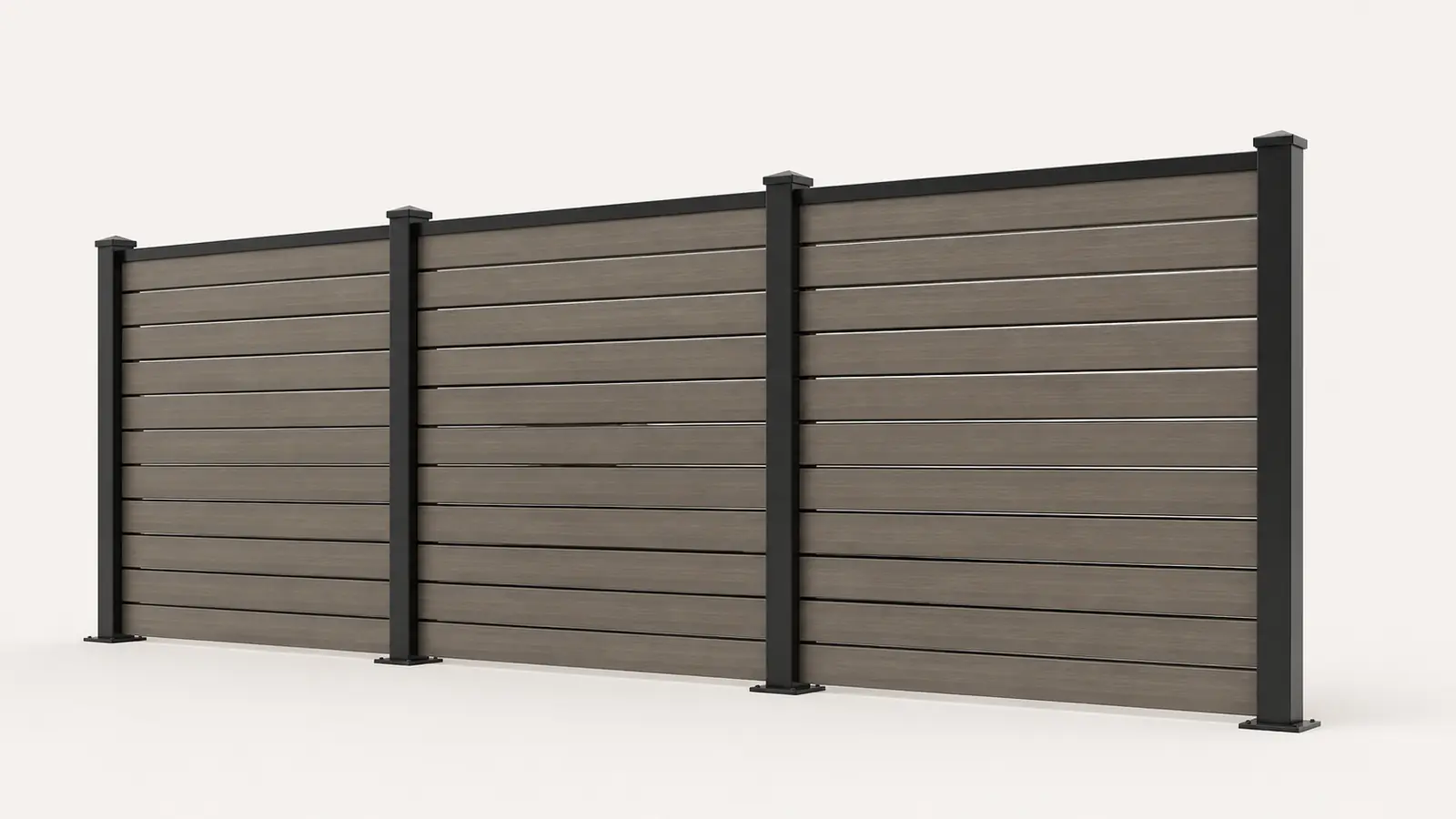
3D configurator
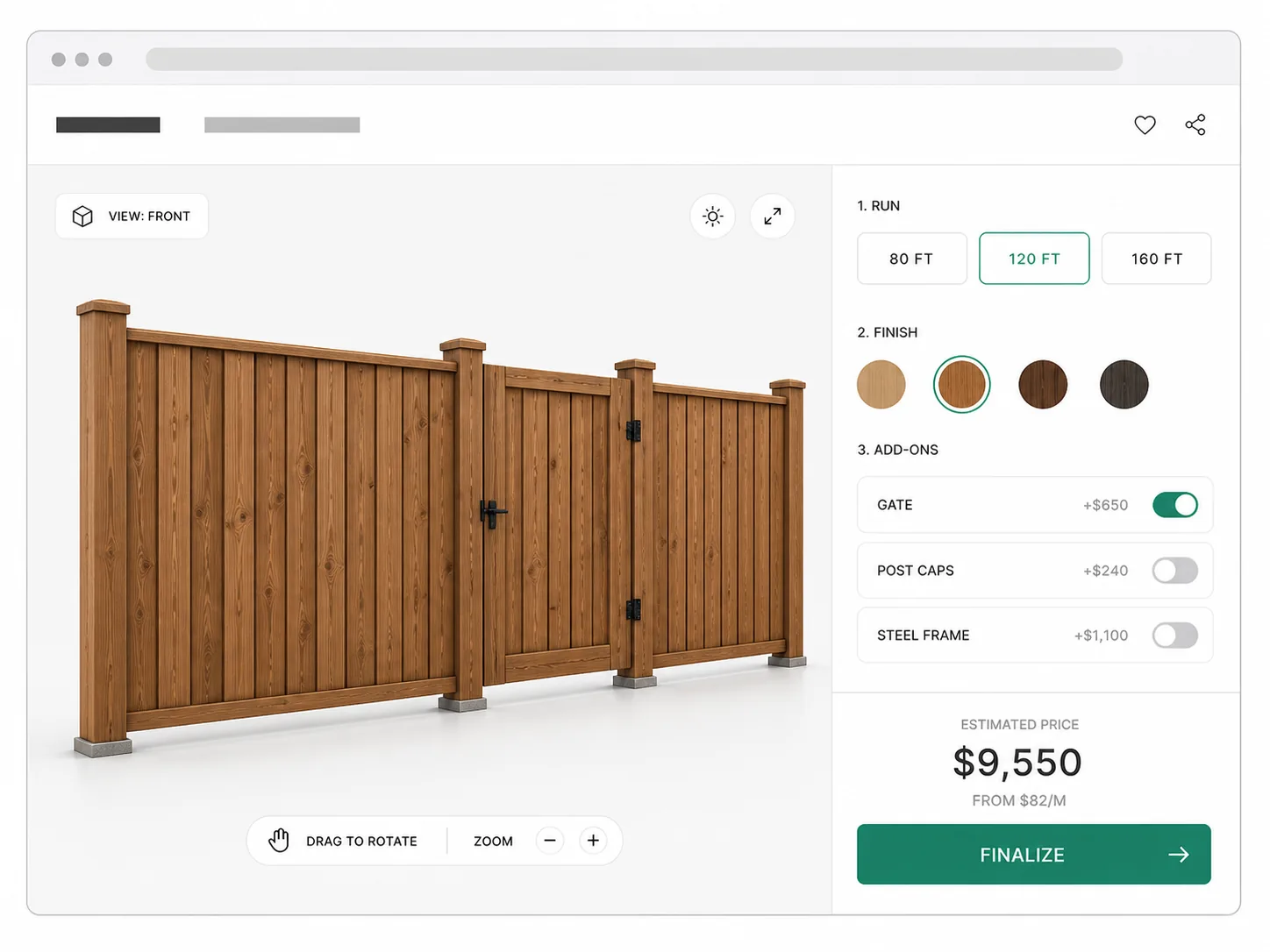
The buyer builds the product and sees it in 3D.
 LIVE 3D96 FT RUN
BLACK STEELPOOL GATEVIEW 3D
Your customer draws the fence line, picks the material, and sees the price. You get the takeoff, the material list, and a quote ready to send before the other fencing company has returned the call.
Six modules pass one project down the line, from the first click on your site to a build your shop can make.
The buyer builds the product and sees it in 3D.
LIVE 3D96 FT RUNThe total updates with each option.
YOUR BUILD
A PDF with renderings and a QR code that opens the 3D model.
Dealers quote with your catalog, your rules, their prices.
Every quote, order, and activity in one live feed.
One click sends the confirmed order with the full spec.
No new storefront and nothing to install. The same configurator drops into the places your buyers already are.
It runs on your site and on your partners' sites from one catalog. Nothing installs, and nobody maintains a second copy.
It opens in a browser: a showroom laptop, a phone in the yard, or the screen at your counter.
The buyer lays the fence line across the yard and checks every gate at real size before anyone signs.
Every PDF goes out in the seller's own name, with their logo on it, never ours.
Approved orders can land in your ERP and the lead behind them in your CRM. Nothing is exported or re-keyed.
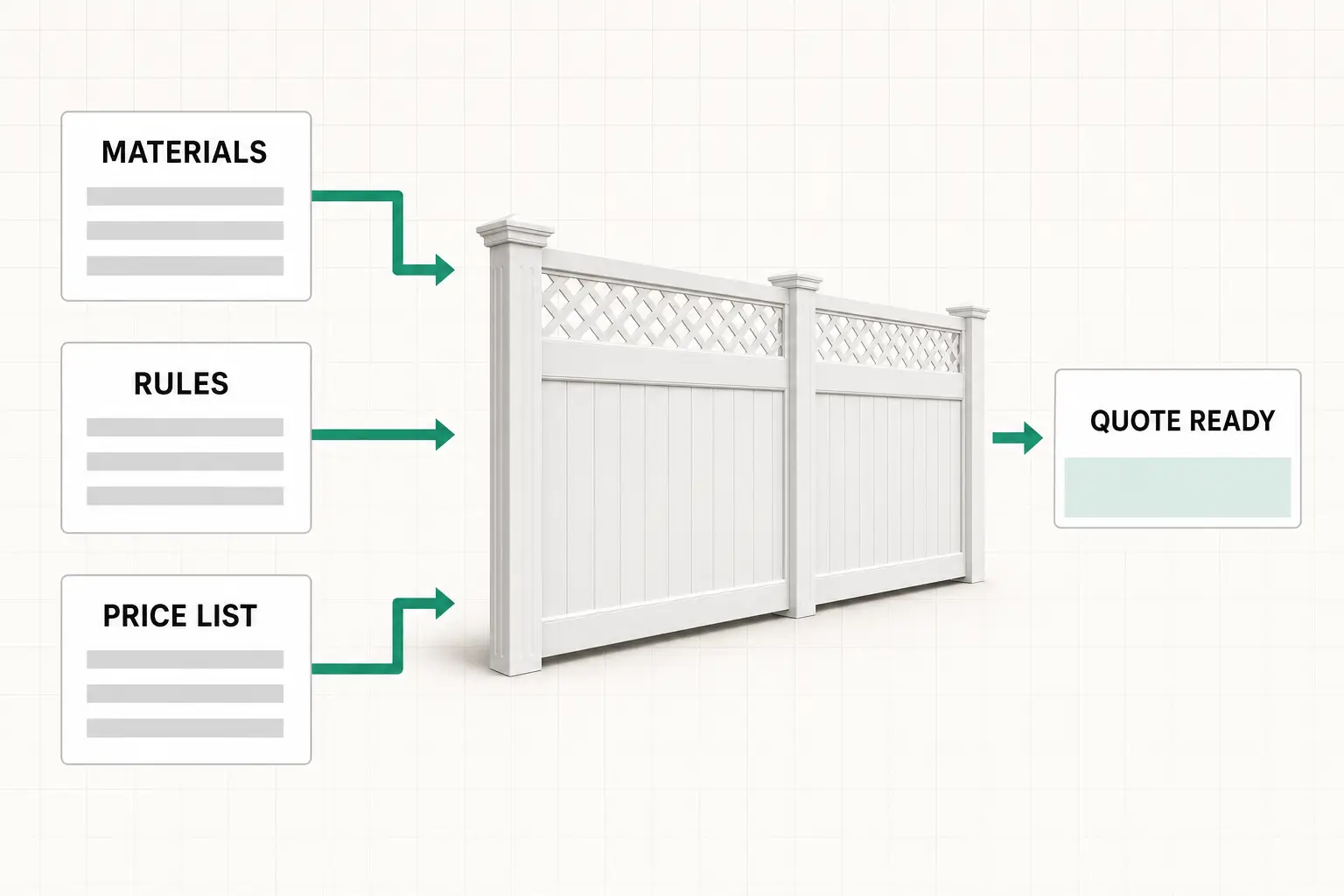
Fence estimating software turns a measured fence line into a takeoff, a material list, and a priced quote in one pass. An estimator or a customer draws the run, sets the material, the height, and the gates, and the software counts the posts, panels, rails, and hardware and prices the job off its linear footage. It replaces the two tools most fencing companies still quote with: the paper takeoff sheet and the stale price spreadsheet. Some vendors call the category a fence estimate tool. The test is the same under any name: the count comes from the drawn line, the prices come from one list, and the estimate, the material list, and the quote all describe the same fence. The estimating runs wherever the fence is being sold: at the desk, on a phone at the site walk, or on the fencing company's own website. A customer's drawn run comes back as a measured, priced lead.
Every material family you sell, with its heights, styles, post spacing, gate widths, and a price on all of it. Plus what a sheet cannot hold: which gate needs a double frame, what a slope allows, which combinations you will not build.
Whoever is selling: the estimator, the crew lead, or the customer on your own website. It is not a CRM. It is the estimating half of a fencing business, and a won job carries into whatever CRM you already run.
The wider category is the product configurator. If that is the open question, what a product configurator is starts from the beginning.
Written by Teodoro Pickett and kept current by the team that builds Dealect, in Mississauga, Canada. Who builds Dealect.
The site walk takes an hour. The estimating takes the evening: the counting, the price lookups, the proposal. And the job often goes to whoever put a number in front of the customer first.
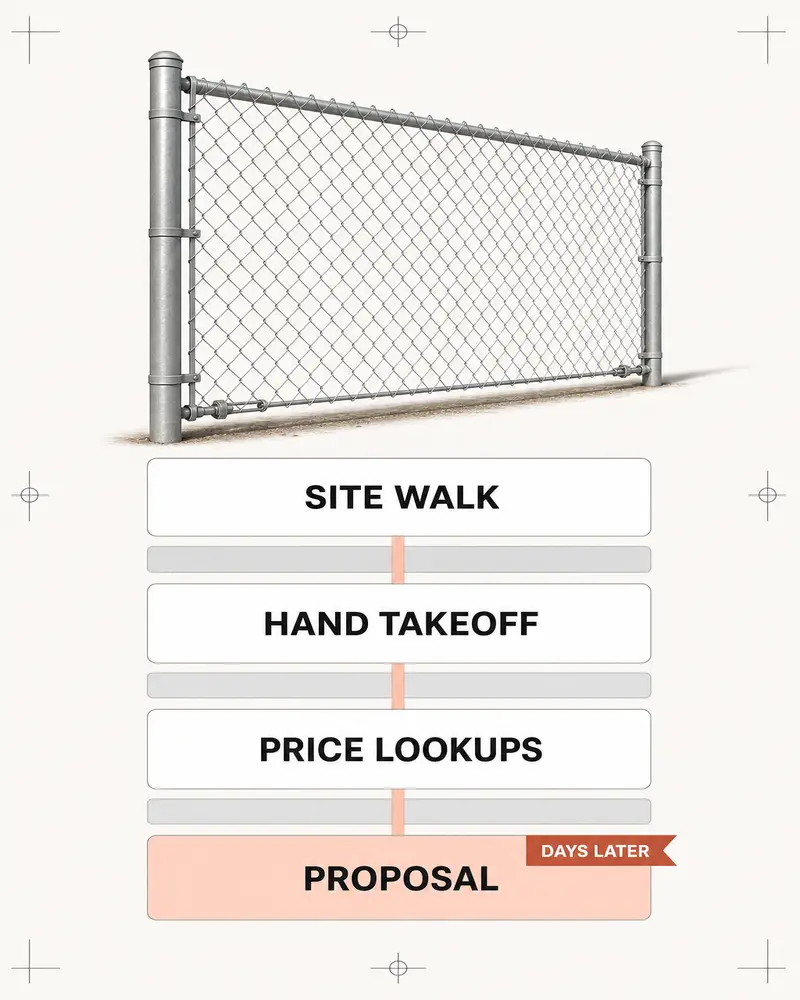
Measure the run, subtract the gates, turn spacing into spans and spans into posts, panels, and concrete. Each step is a place a tired estimator slips, and the wrong count is not caught on the quote. It is caught at the job, one panel short.
Cedar, vinyl, and steel move all season, and the spreadsheet in the truck does not move with them. The gap between the sheet and this week's supplier invoice comes out of the margin, after the fence is built.
A fencing lead is a phone call with no budget attached. You drive out, measure, count, and quote, and then learn the number was never close. The estimate is free to the customer. It has never been free to you.
Estimating tools stop at your desk. Website fence calculators stop at a lead form. This is the two halves connected.
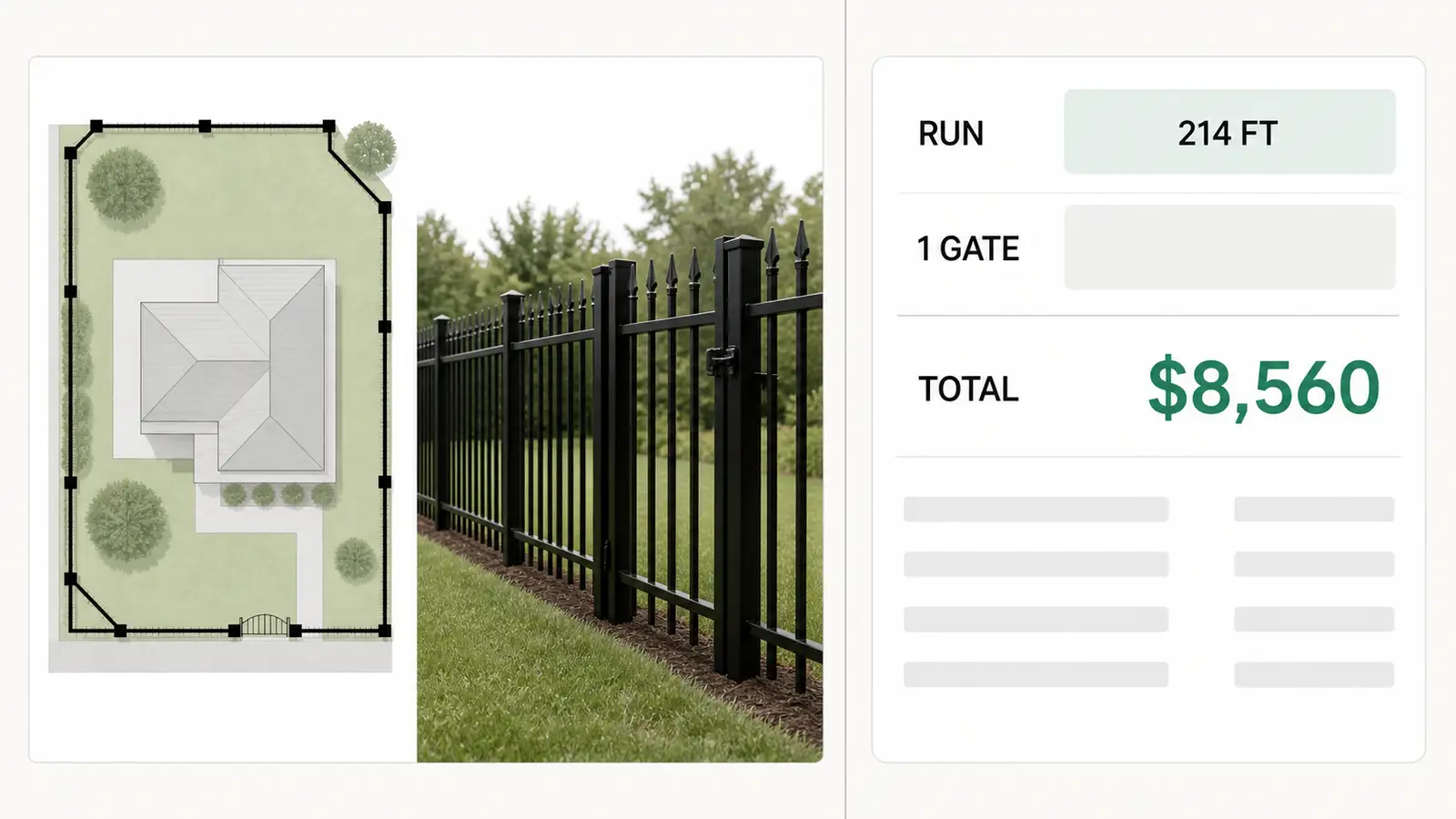
On a fencing company's website it reads as a fence planner. A homeowner drags the line around the yard, places a gate, switches wood to vinyl, and watches the price move. Underneath, it is fence design software running your rules, so the run that reaches your inbox is one your crew can actually build. The 3D view is the fence visualizer that sells the job, our 3D product configurator wearing your materials and your prices. A fence layout tool on its own produces a drawing. Wired to your price list, it is the front door of your estimating.
A configurator sells the fence. These three get a fencing job built and paid at the number it was sold at.
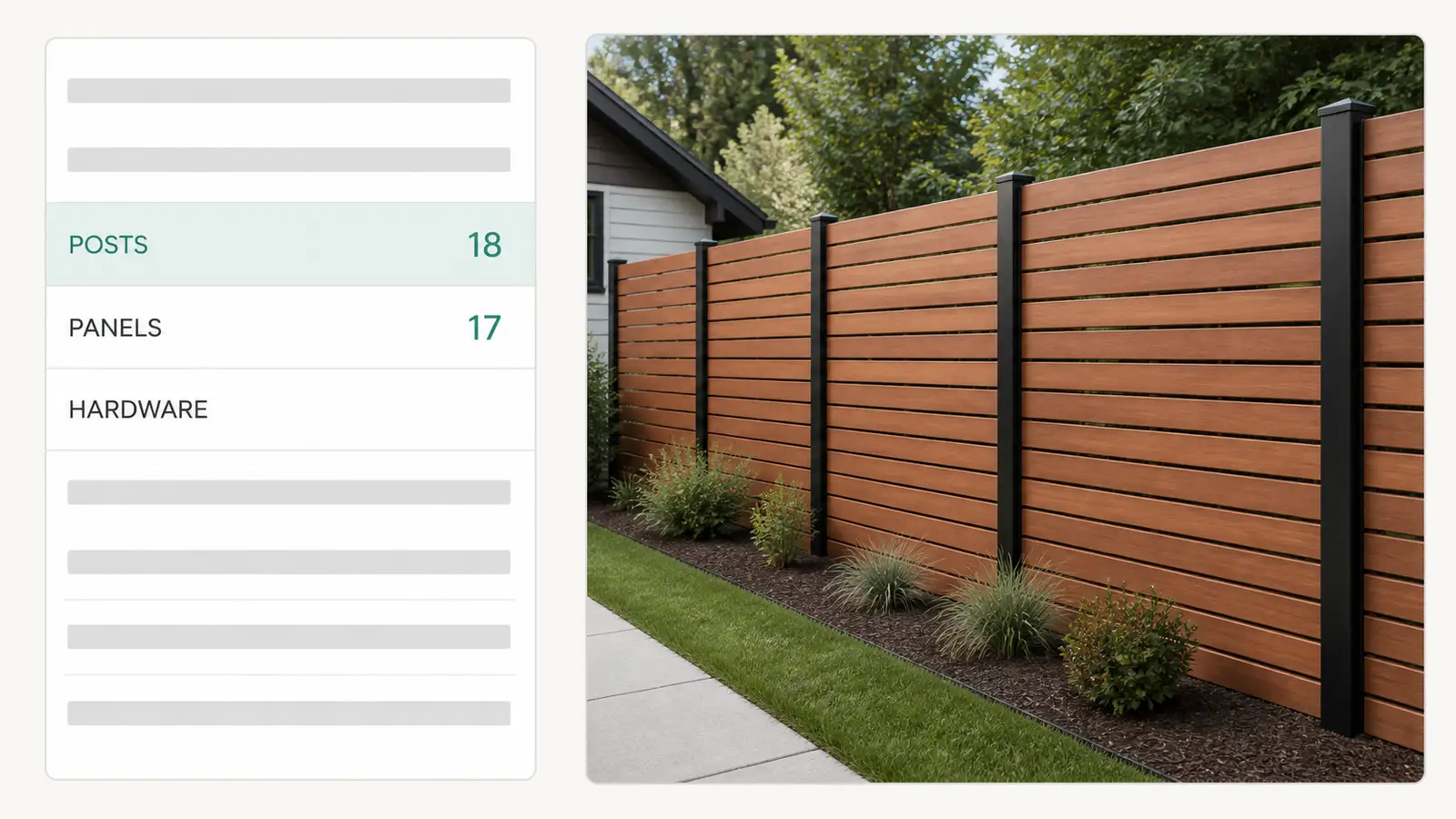
Posts, panels, rails, pickets, gates, and footings, counted from the drawn fence line with the corners and slope in, and priced per linear foot. The takeoff is where fence estimating software earns its keep, because the count is where quotes go wrong.

The proposal generates from the configuration: line items, options, and the total on your template, your logo, your terms. The estimate goes out the hour the customer asks, and when the fence changes, the quote changes with it. Nothing is retyped.
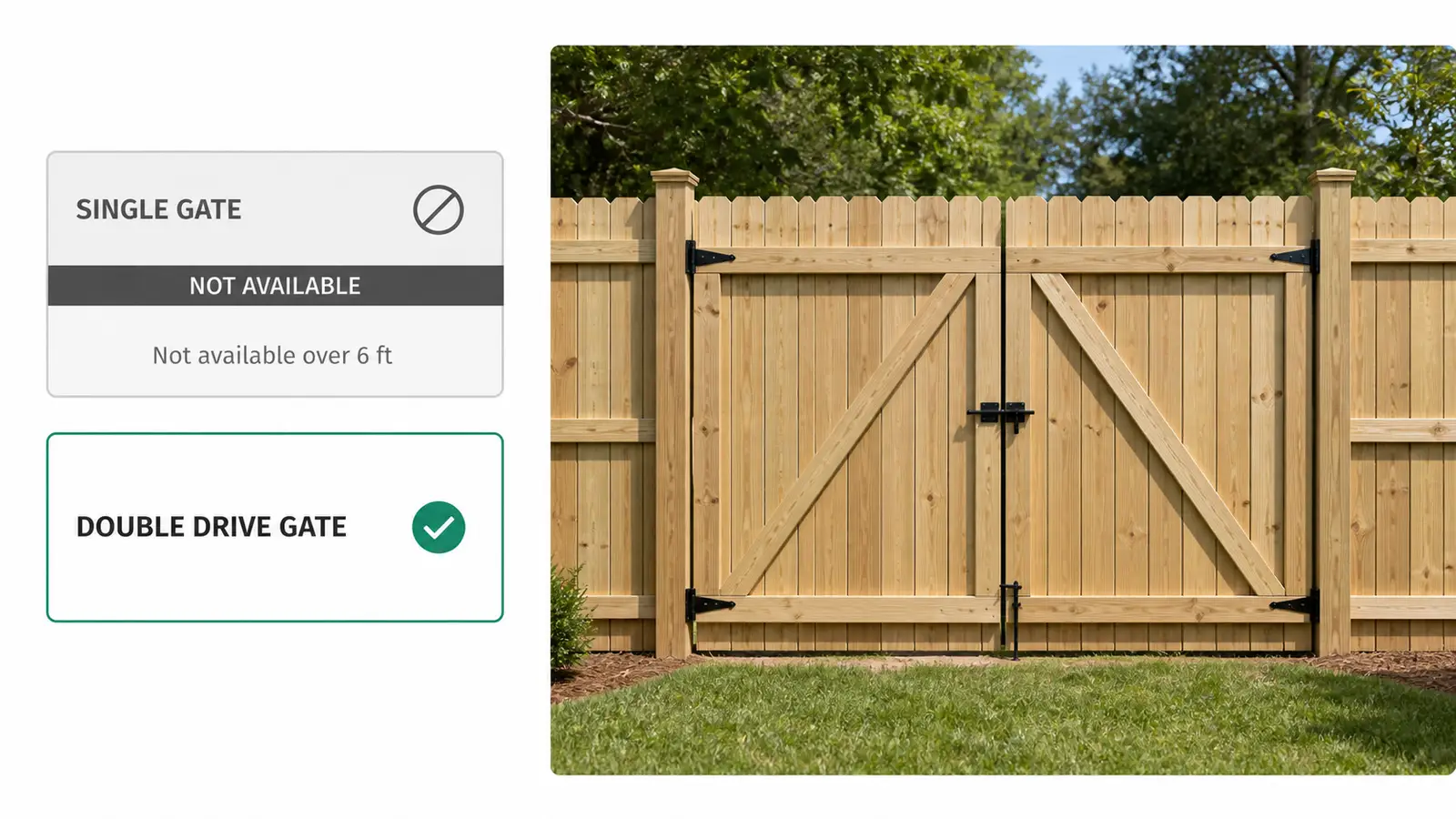
Gate widths that need a double frame, post spacing by material and height, what a slope does to a panel run. The rules live in the software rather than in the estimator's head, so a fence that cannot be built cannot be quoted. The material list can be trusted at the yard.
Three moves, and none of them waits for the evening.
Step 01 · Wherever the fence is being sold
Your estimator draws the run at the desk, the customer draws it on your website, or the crew draws it in the fence app on a phone at the site walk. Corners, gates, and slope go in as they are measured.
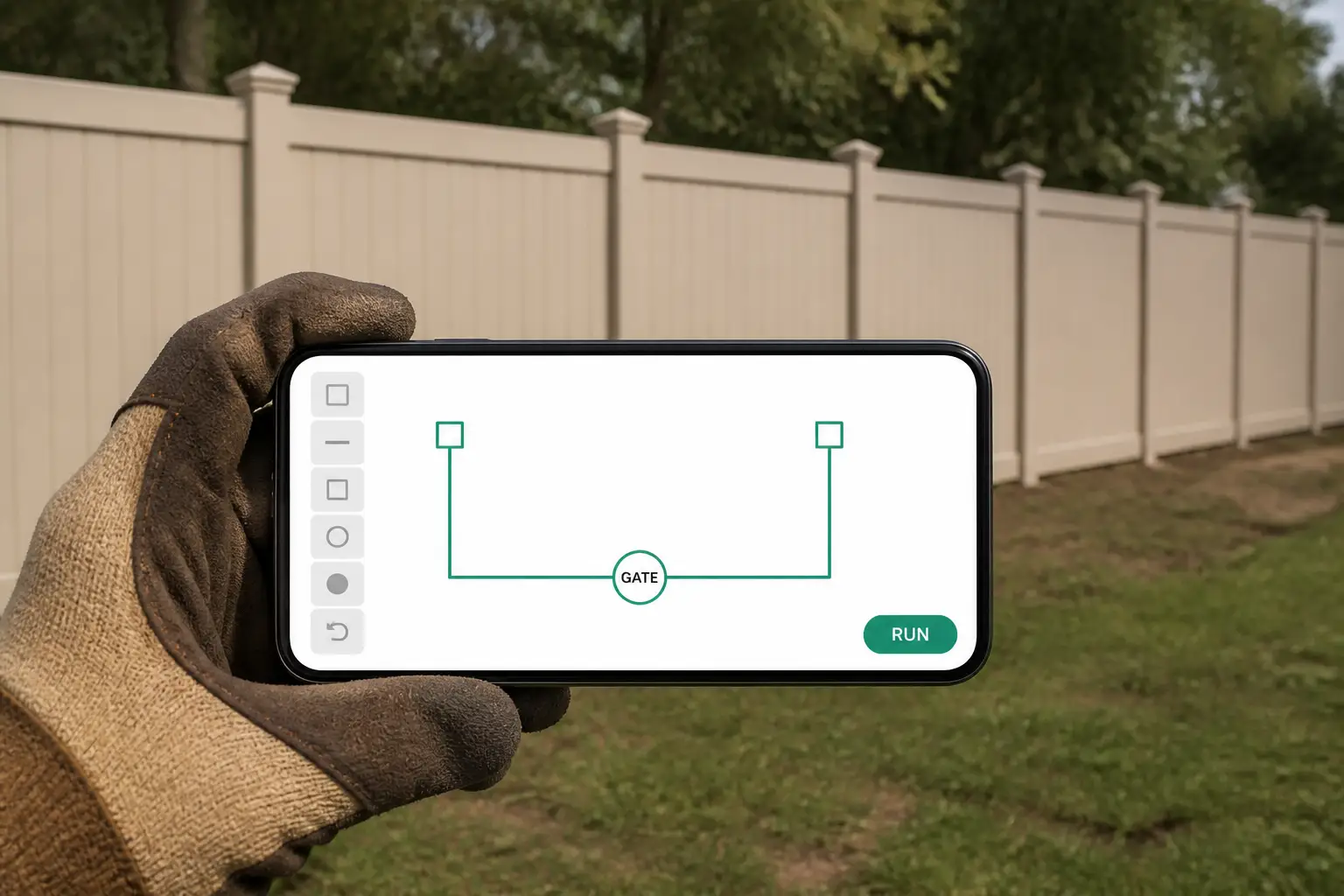
Step 02 · The takeoff builds itself
Spacing turns the line into spans, spans into posts and panels, gates into frames and hinges, posts into concrete. Every count prices off your list as it lands, so the estimate is finished when the drawing is. This is the half of fence contractor software that pays for itself first: estimating stops being an evening job.
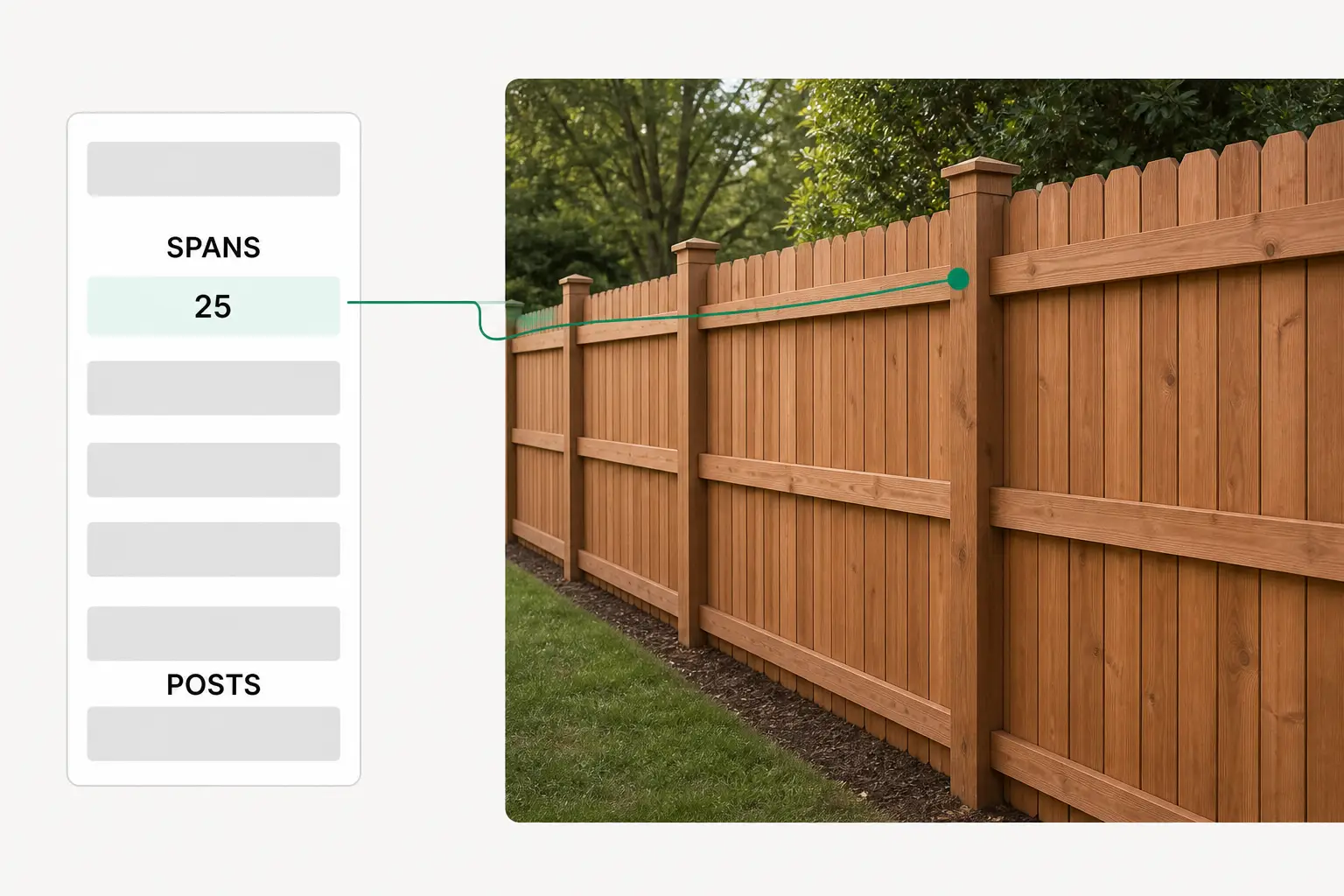
Step 03 · The quote goes out while the visit is warm
The proposal generates from the same record and reaches the customer the same day, at a price that survives the build. Fencing jobs go to whoever answers first with a number that holds, and answering first becomes a settings question rather than a staffing one.
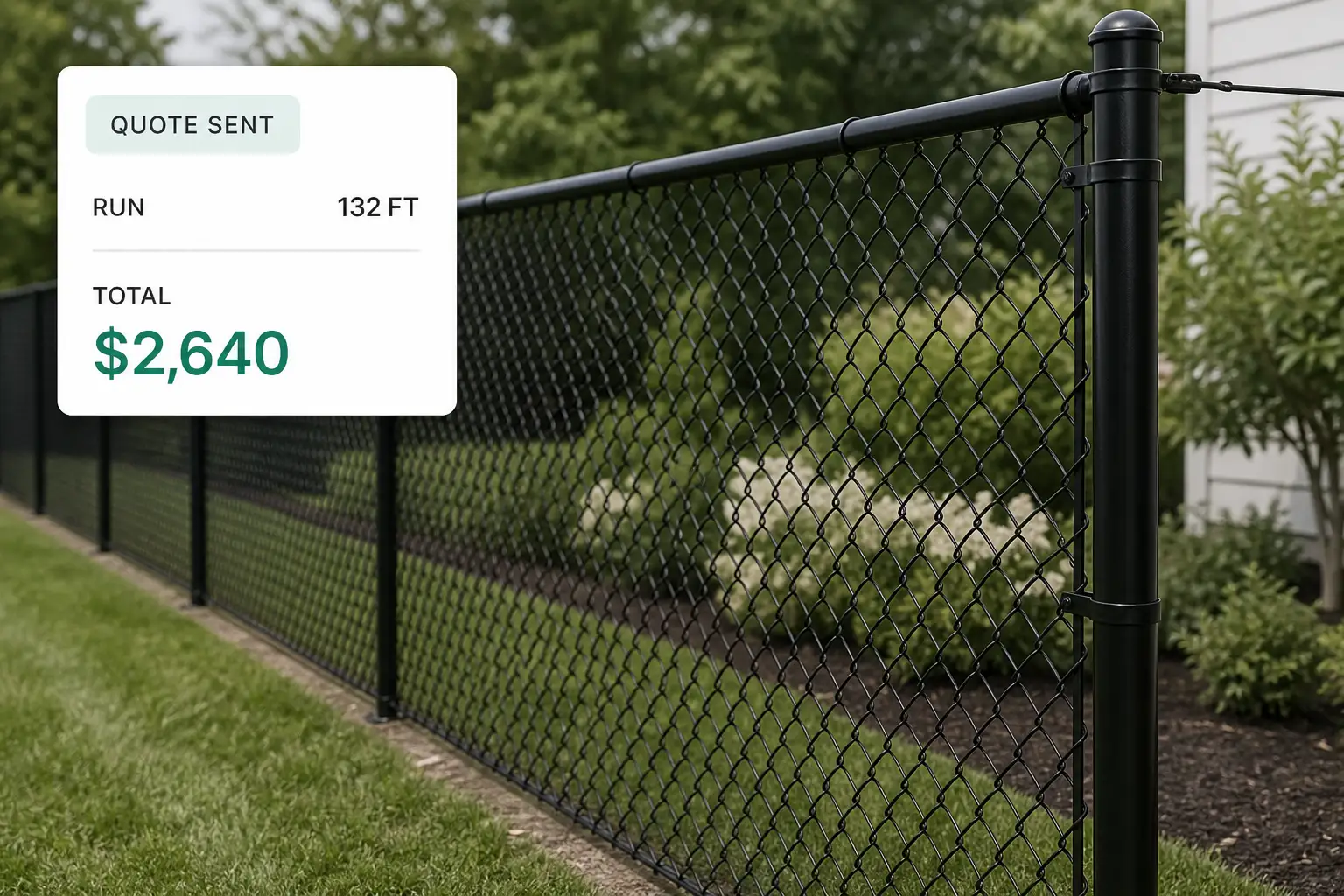
A fencing company rarely sells one material, and each family estimates differently. The rules absorb the difference.
| In the takeoff | Wood | Vinyl | Chain link | Ornamental |
|---|---|---|---|---|
| What gets counted | Posts, rails, and pickets, or prebuilt panels | Posts, prefab panels, caps, and brackets | Line posts, terminal posts, mesh rolls, and top rail | Welded panels, posts, and gates |
| What moves the price | Species, grade, height, and gates | Panel style, height, and colour | Gauge, coating, and fabric height | Steel or aluminum, height, and picket profile |
| Where a hand count slips | Picket counts on long runs, and corner posts | A short span still needs a full panel | Terminal posts counted as line posts | Rackable versus stepped panels on a slope |
We do not decide what a fence is allowed to be. Height, setback, and pool barrier rules come from the code in force on that lot, and the trade body that tracks them for the people who install fences is the American Fence Association. A configurator carries those limits into the rule set, so the takeoff and the permit agree before a crew is booked.
The takeoff is arithmetic. The mistakes are manual. One straight fencing run, counted out loud, before a single corner or gate complicates it.
25
200 ft at 8 ft spacing. The first corner changes that, which is the point.
26
At 8 ft spacing on that 200 ft run, one more post than spans. Every corner and gate in the fence adds more.
52
Two bags a post is the stated assumption. Soil and wind move it, so it is a rule, not a memory.
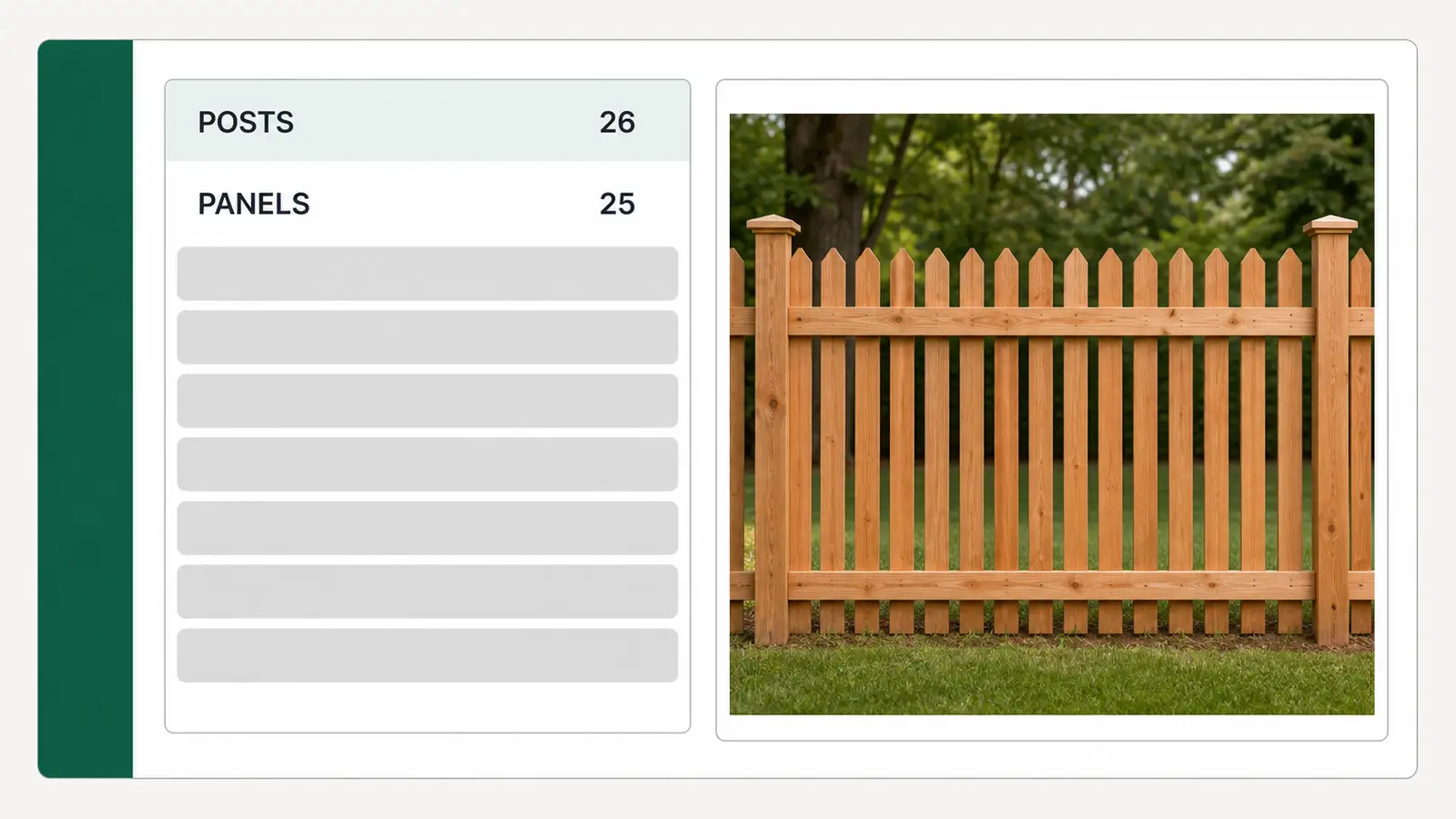
Corners add posts. A gate takes a panel out and puts a frame and hinges in. A slope stretches the spacing or steps the panels. The arithmetic is grade school and the exceptions are not, which is why two careful takeoffs of the same fence disagree. The estimating software runs the same rules on every line, every time.
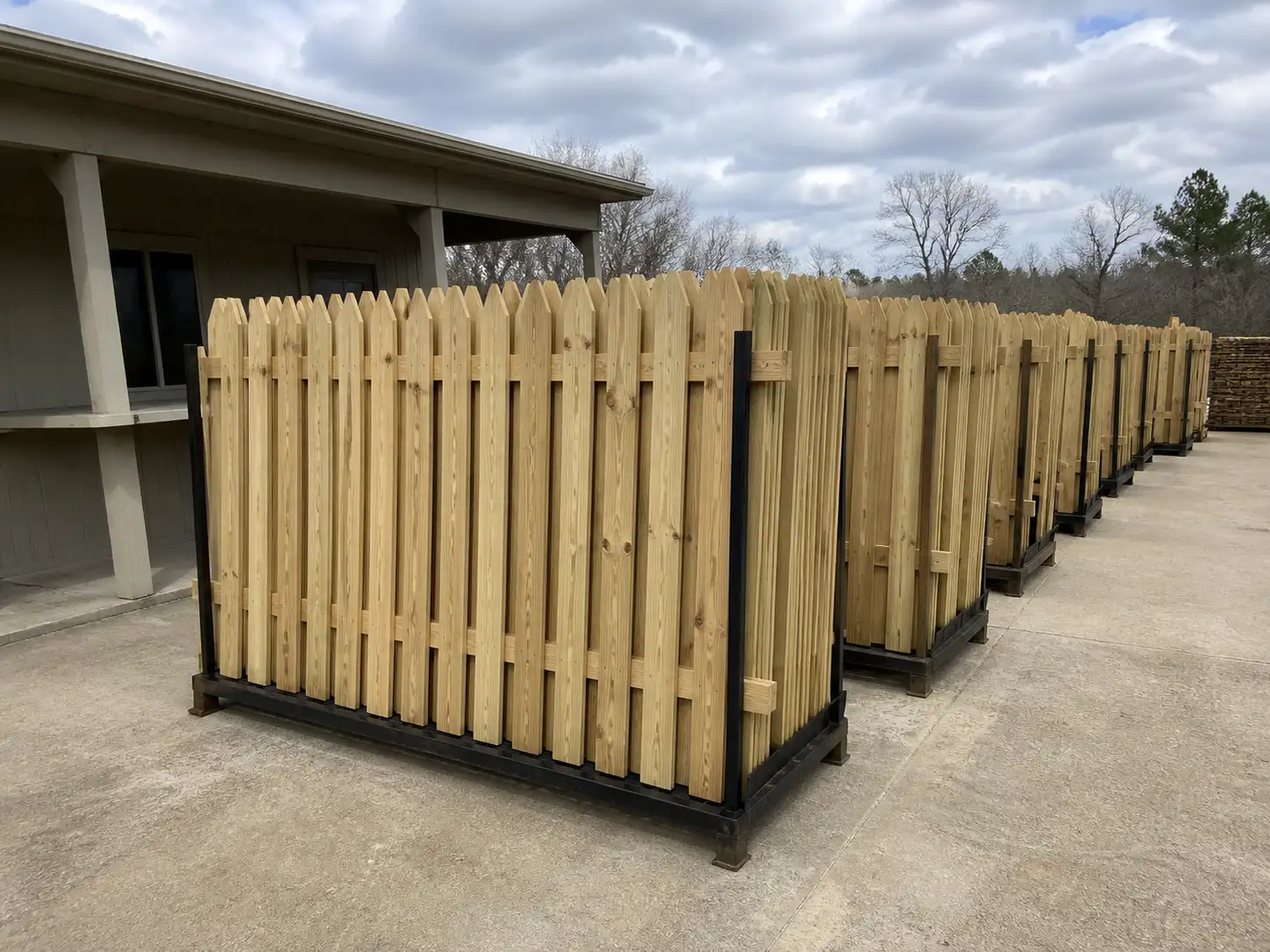
Fencing crews quoting at kitchen tables and site walks, who want the estimate and the proposal finished before they leave.
Your rules and your price lists behind every dealer's counter. Each dealer quotes on its own numbers, and your costs stay on your side.
A fencing run quoted at the counter instead of a list pencilled off the rack. Fence builder software a seasonal counter hire can use in week one.
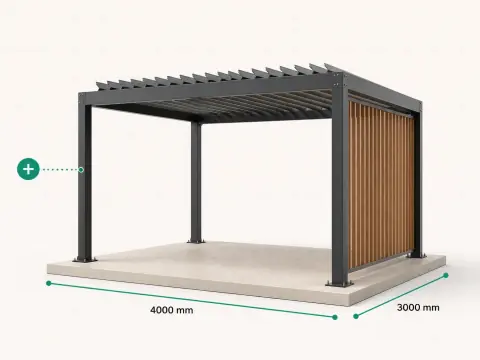
If your fences sell through dealers, the portal each dealer signs into is our b2b customer portal. The nearest live vertical to this one is our shed design software, the same argument in a different yard. And when a buyer wants the yard shaded as well as fenced, our pergola configurator prices that build from one catalog too. The software's pricing model is on what a configurator costs, and the whole platform is on the Dealect homepage.
There is no self-serve trial and no published list price, because the number depends on how many material families and estimating rules your line needs. Pricing is per company, not per seat, so the estimator, the crew, and the counter all quote on one bill, and a seasonal hire does not move it. Dealers never pay for portal access. You hear your figure on a 30-minute demo call: bring your price list and the materials you sell, and we draw a run from your own line while the software counts it with your rules and prices it as you watch. Nothing else has to be prepared before the call. No CAD files, no data cleanup, and no long setup project, because the rules and prices you already estimate with are the setup. The pricing model itself is written up on our pricing page.
Yes. A two-person fencing crew uses it to get takeoffs and proposals out of the evening. A larger company, or a manufacturer with dealers, uses it so every estimate comes off one set of rules no matter who quotes. The software setup is the same either way: your materials, your rules, your price list.
Yes. Proposals generate on your templates: your logo, your terms, and the line items the drawn fence produced. The document comes from the configuration, not from retyping, so changing the fence changes the quote and the two can never disagree.
Yes. It is cloud-based and runs in the browser on whatever is in the truck: a phone at the site walk, a tablet at the dealer counter, a laptop at the desk. Nothing to install, and a fence drawn on site is the same estimate the office opens later.
Because the count is computed, not remembered. Post spacing, corner posts, gate frames, slope, and concrete are rules, and the software runs them against the drawn line the same way every time. The estimate, the material list, and the quote come from one record, so the posts, panels, and gates the crew loads are the ones the customer priced.
Yes. Wood counts pickets, rails, and posts. Vinyl counts prefab panels. Chain link counts mesh rolls, line posts, and top rail. Ornamental counts welded panels and how they rack on a slope. Each family carries its own counting rules and price list, so the estimator picks the material and the software changes the arithmetic.
Last updated
Same portal, same dealer login, one more trade at a time.
Bring your materials and your price list to a 30-minute call. We will draw a run, let your rules count it, and produce the quote while you watch. The same engine runs the fencing software your customers will use on your website. We reply by email to set a time.
Your call is with the Dealect team.