A need stated in the buyer's words
The buyer knows the opening size, the setting, the finish, or the job to be done. They do not need to know your model codes.
Turn product rules into questions any dealer can answer. This guide covers configured physical products, not next action software for reps or a shopper quiz for a ready made SKU.
Last updated
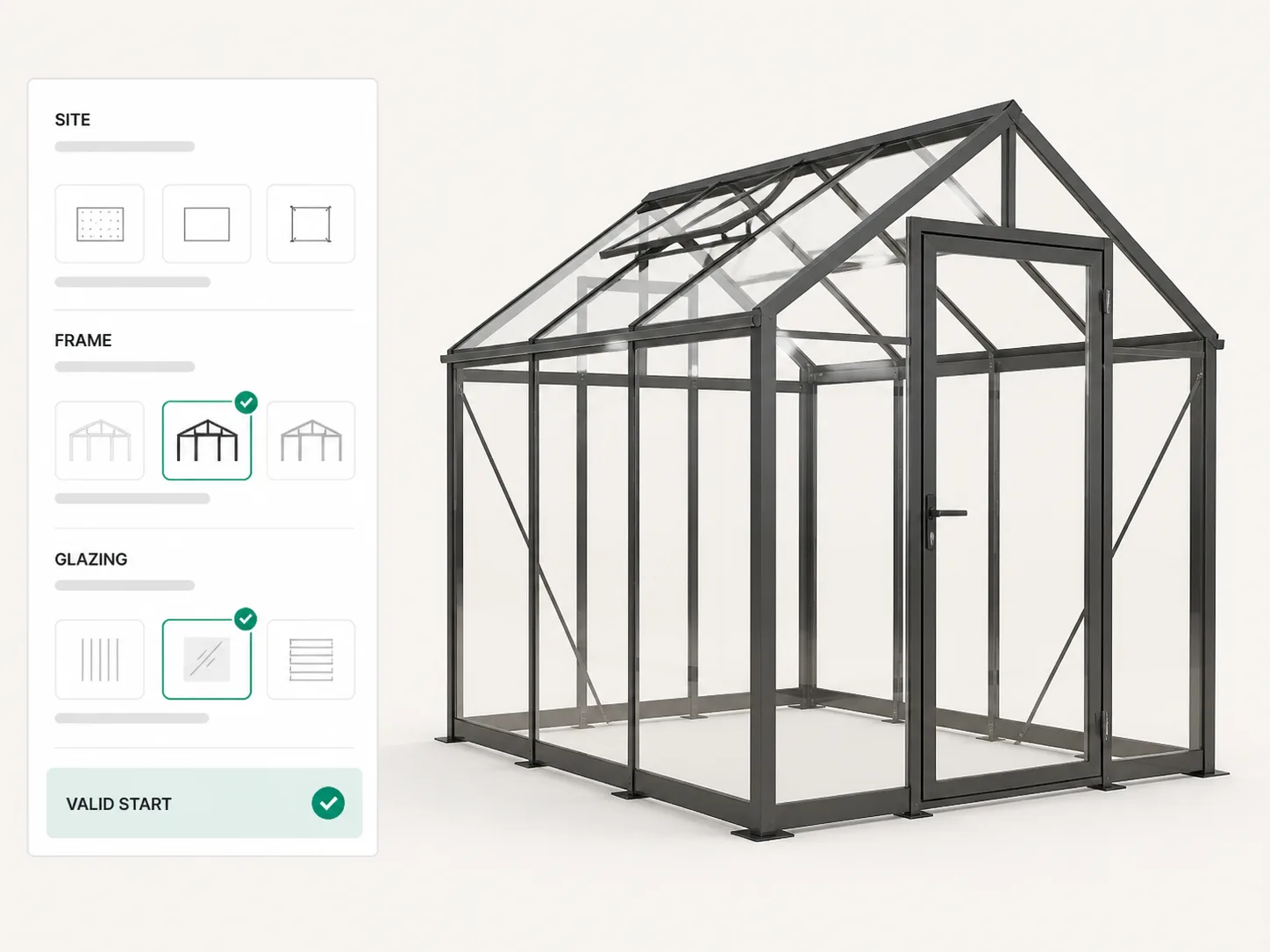
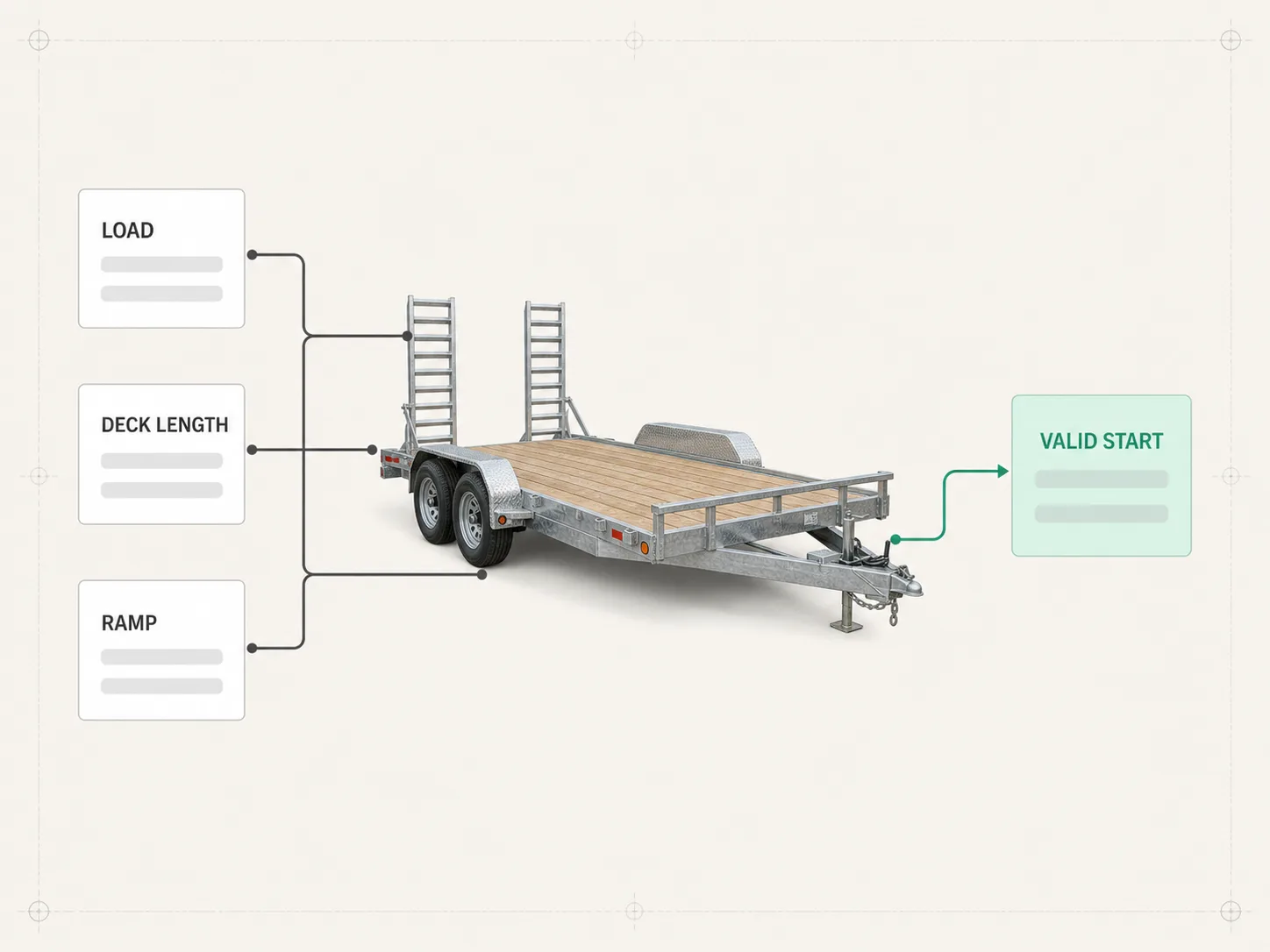
Guided selling is a question flow that turns a buyer's needs into a valid configured product by asking the decisions in the order your product rules require.
The order matters more than the wording. Ask the constraint that removes the most wrong paths first, usually a size, a capacity, an opening, or a site condition, then the material or construction family, then the options that depend on both. Ask a finish question first and the flow has to reopen decisions later. The path ends at a build your rules accept, and configuration, dealer pricing, and quote logic take over from there. It suits configured physical products such as carports, saunas, cabinet runs, pergolas, and window packages, where a wrong early choice forces a redesign. A dealer who carries four brands can still sell yours correctly on the first visit, because the screen holds the product knowledge instead of the seller.
The same phrase also names software that coaches a sales rep on the next action, or an ecommerce quiz that finds one ready made item. This page uses the manufacturing meaning.
The buyer knows the opening size, the setting, the finish, or the job to be done. They do not need to know your model codes.
Each answer removes products and options that no longer fit. The seller reaches a build your rules allow before price and quote logic take over.
The terms are often used as if they were one tool. They are three decisions in one selling path.
| Tool | What it decides | What it cannot do alone |
|---|---|---|
| Question flow | Which product or starting build fits the stated need | Validate every option, calculate price, or issue a quote |
| Product configurator | Which options form a valid, buildable product | Choose the right product before the buyer states the need |
| CPQ | Which price, margin, approval, and quote rules apply | Discover what the buyer needs without a question layer |
A guided selling CPQ flow connects the first decision to the last. Read what a product configurator is and what CPQ means if either handoff needs a closer definition.
Each example begins with the answer that removes the most wrong paths. The product changes, but the ordering rule does not.
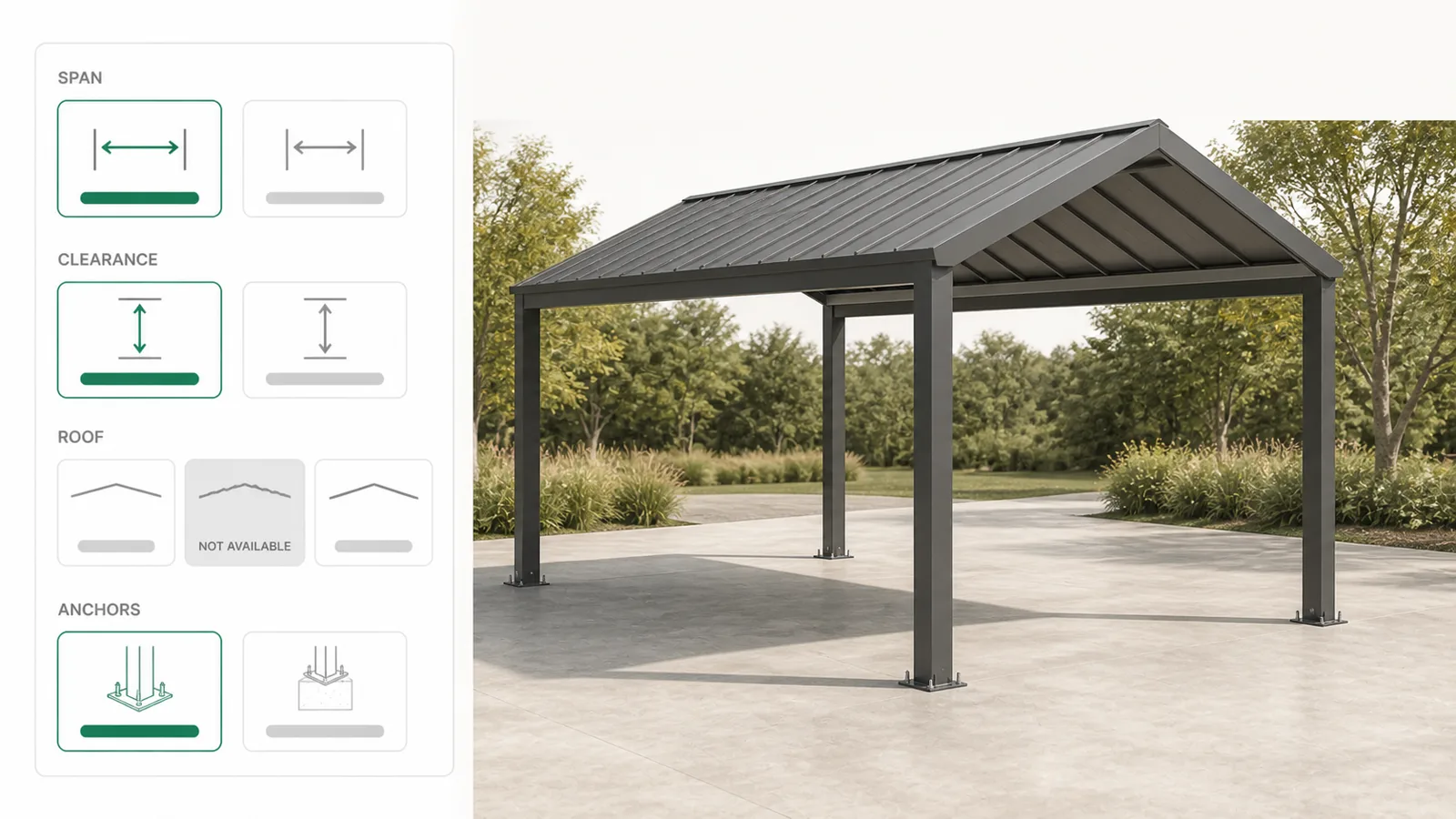
Span comes first because it controls the frame, post count, roof options, and wind package. Once the opening is known, the seller sees only roof profiles and anchors that fit that structure. The buyer never starts from a wall of part numbers.
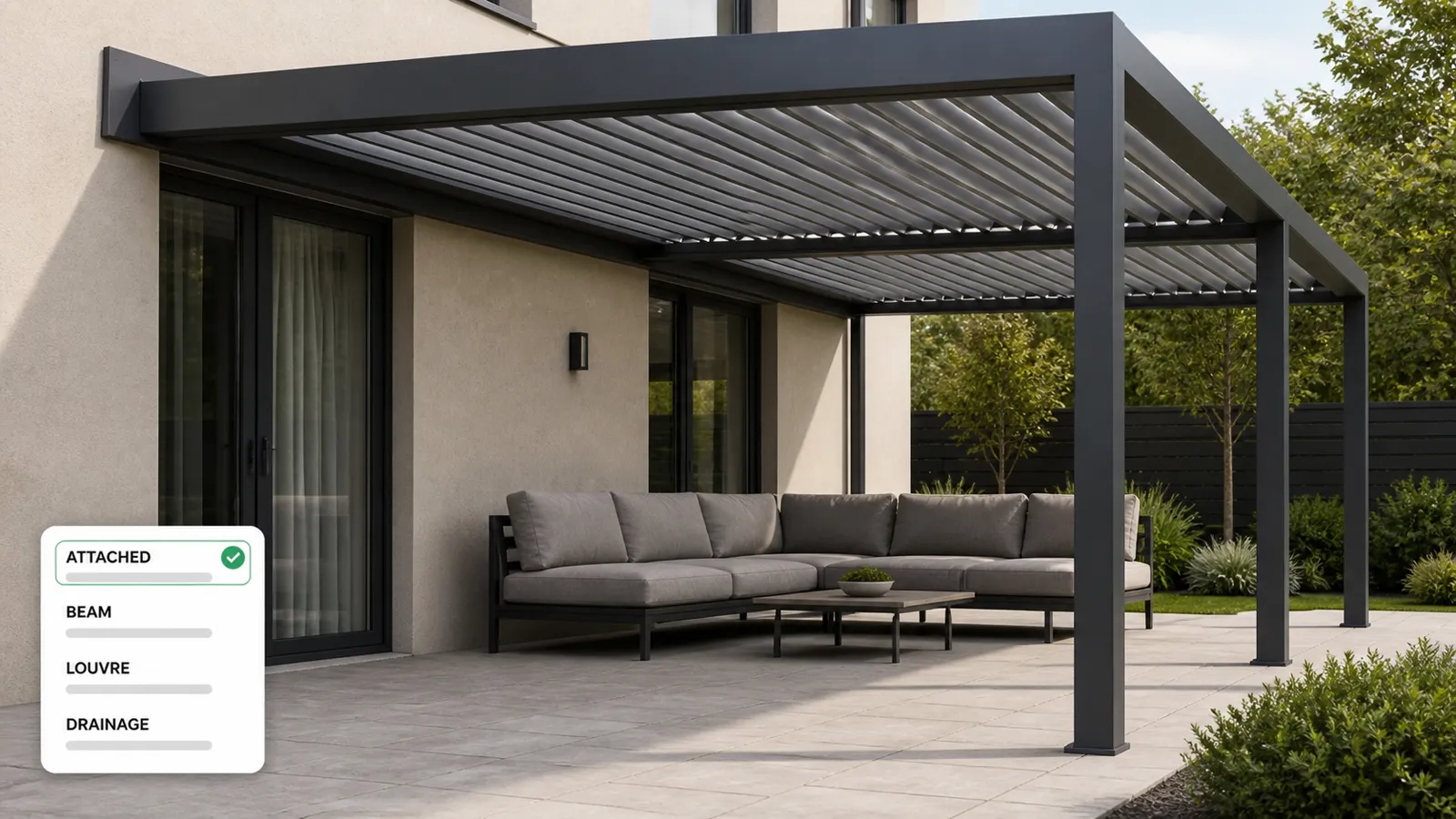
That answer changes the beam layout, posts, mounting hardware, and available spans. The next questions can ask about louvre finish and drainage without showing parts that belong to the other structure. One early answer keeps the rest of the path short.
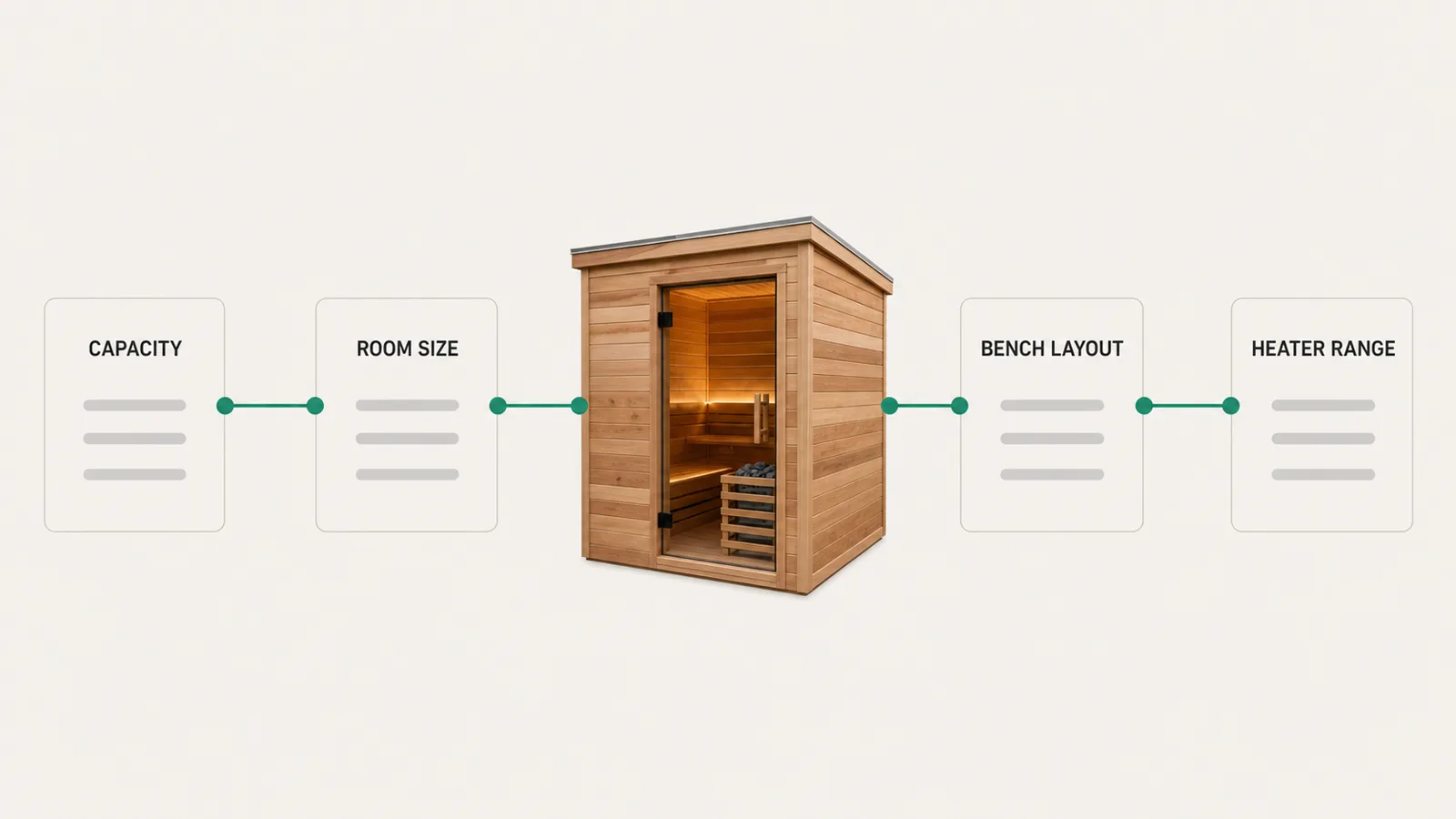
Capacity sets the room size before benches, heater output, door position, and cladding are offered. A four person room should not show a heater meant for a larger enclosure. The question flow turns capacity into a safe starting configuration.
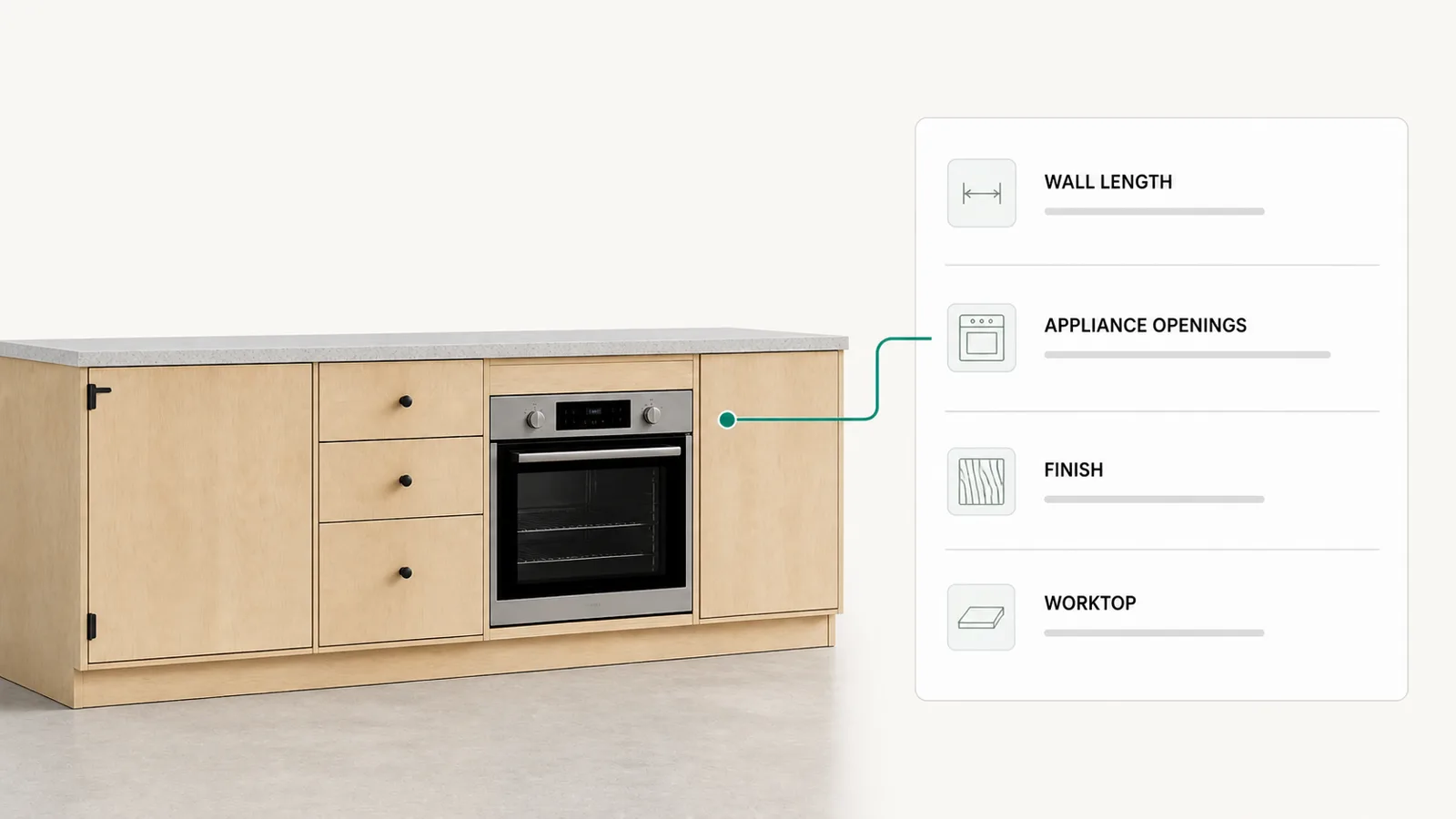
The run length and fixed openings remove layouts that cannot fit. Only then does the seller ask about cabinet types, finish, hardware, and worktop. The buyer sees choices inside the available space, not choices that force a redesign later.
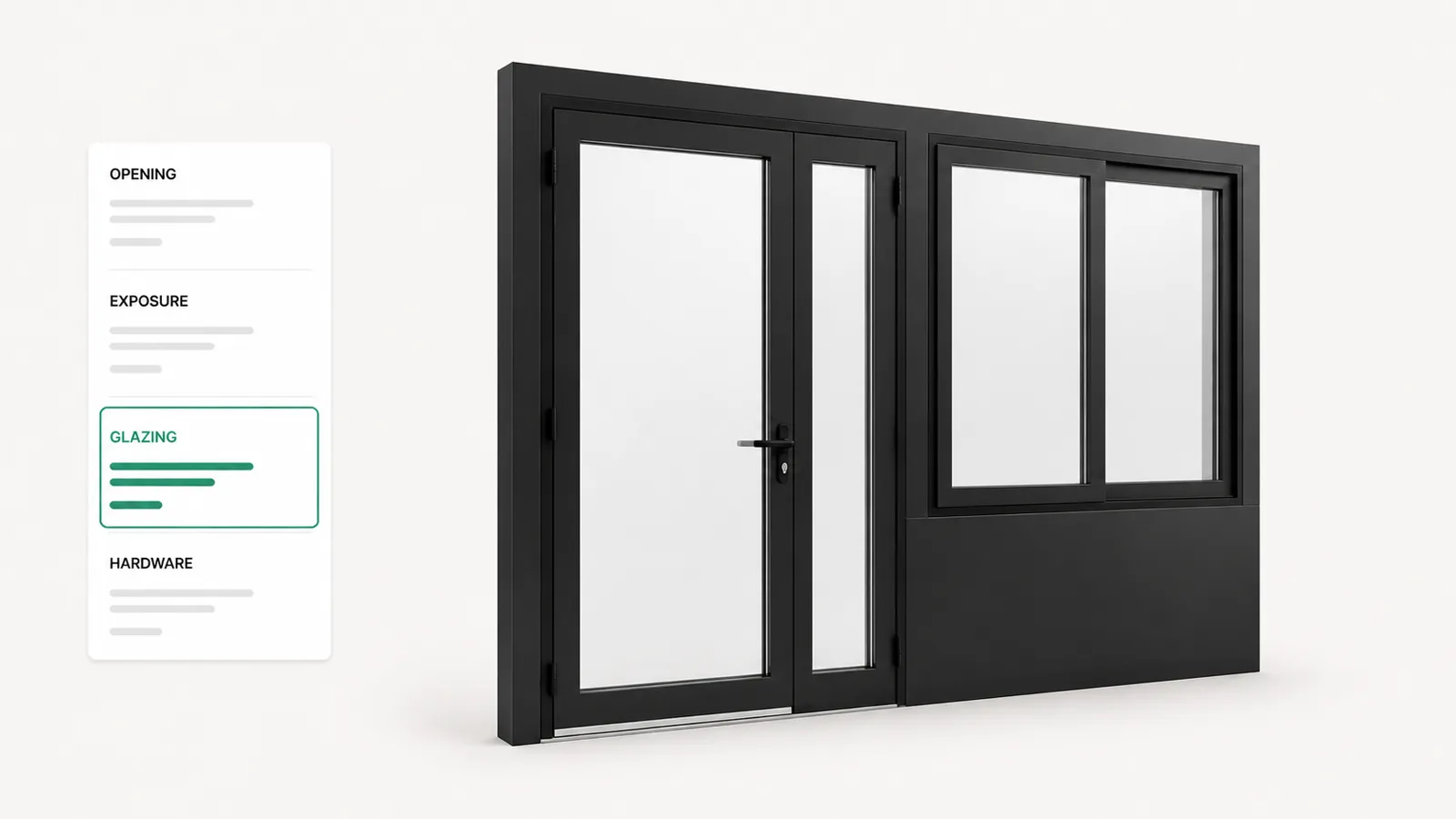
Opening type and exposure decide which frames, glazing packages, and hardware remain valid. The dealer can move through the package without memorizing every profile rule. Configuration starts with a shortlist that already fits the building condition.
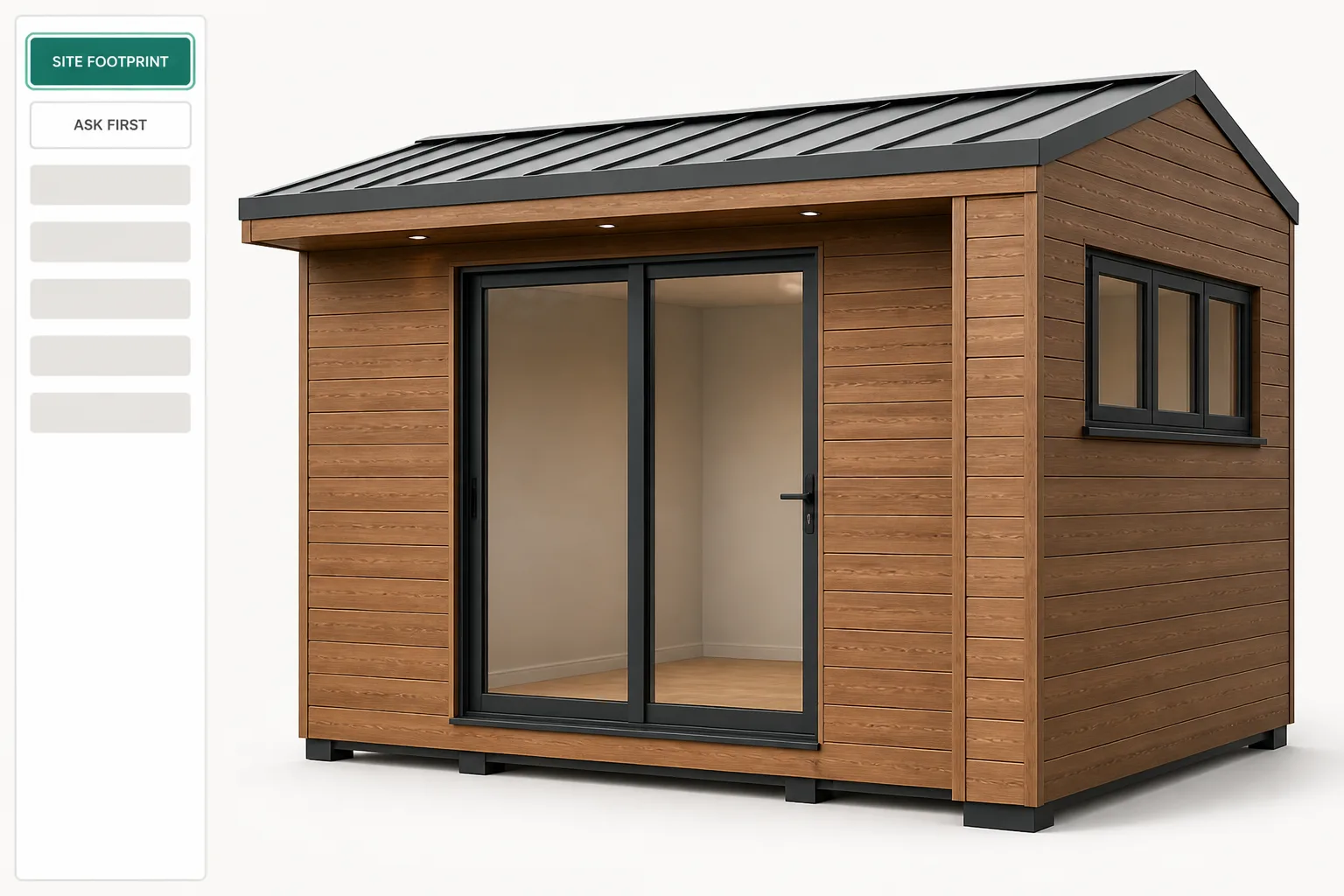
Ask the constraint first. Ask for the material next. Then reveal only the options both answers allow. This order is the one we run in our own sauna and outdoor kitchen configurators, not a generic template.
01ConstraintAsk first
Size, capacity, opening, or site condition usually removes more choices than color ever will. Ask it before the catalog appears.
02MaterialNarrow next
The material can change spans, joints, finishes, and price logic. It belongs before the options that depend on it.
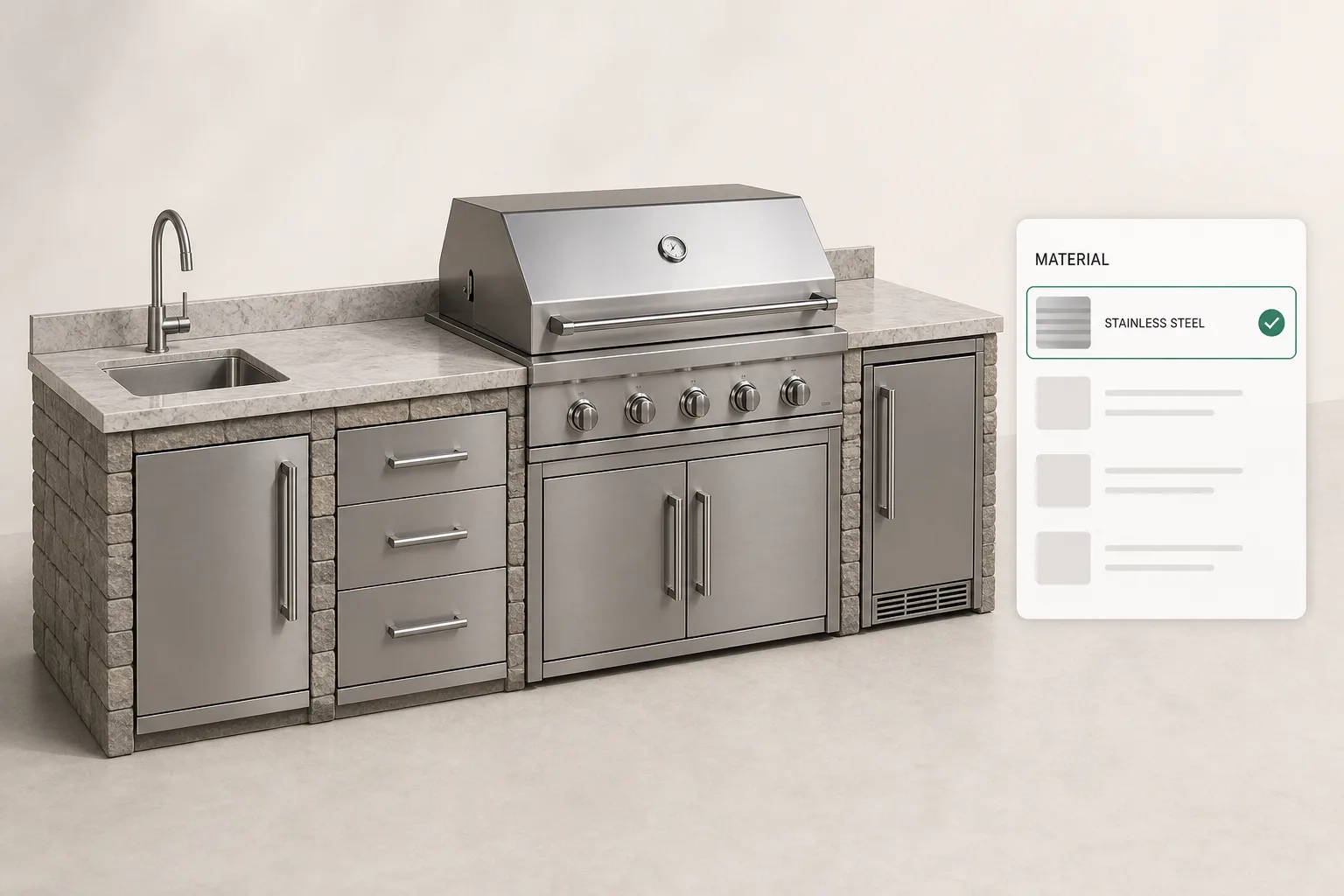
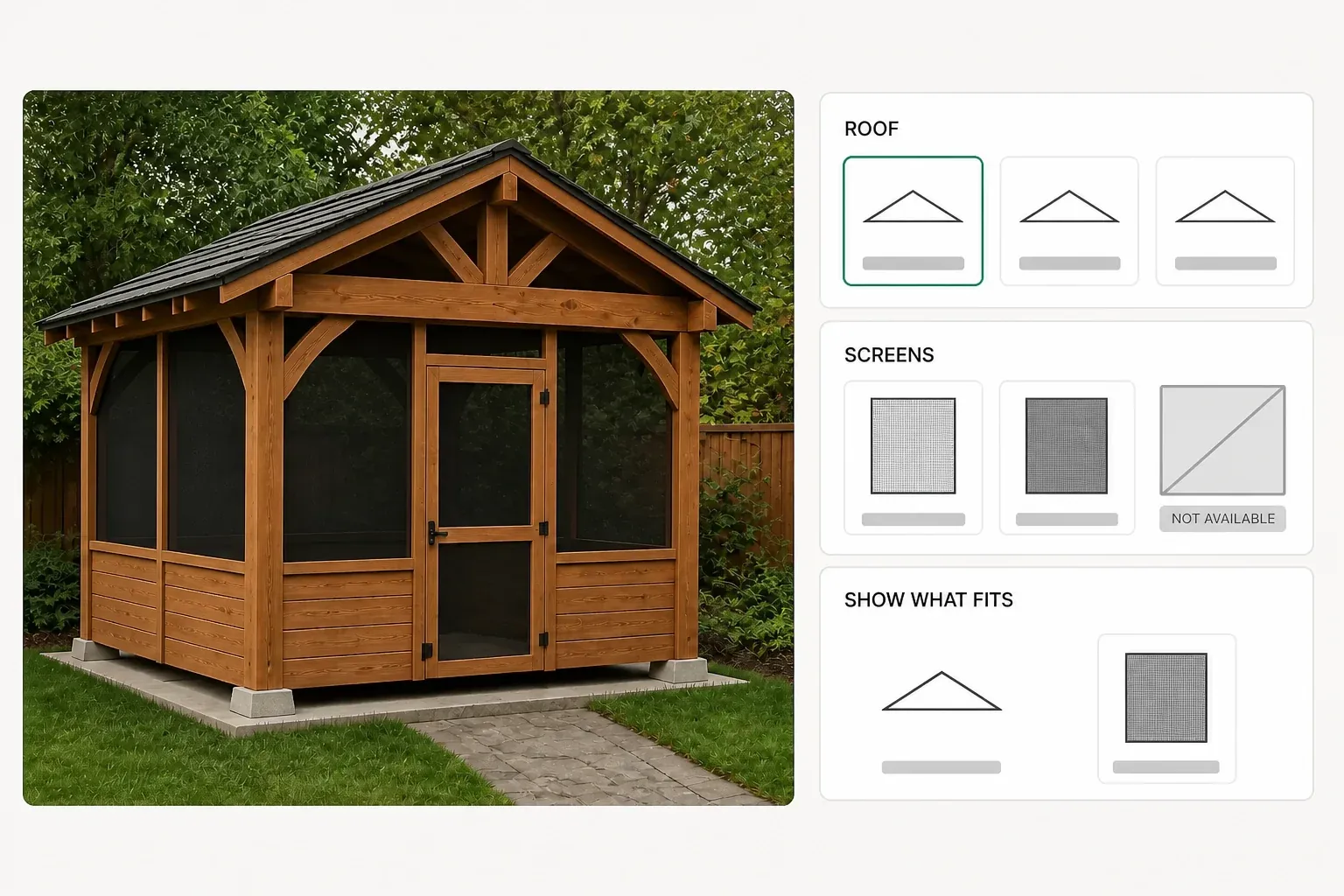
03OptionsShow what fits
The seller now sees a smaller, safer choice set. Hidden options are not lost. They are simply not valid for this build.
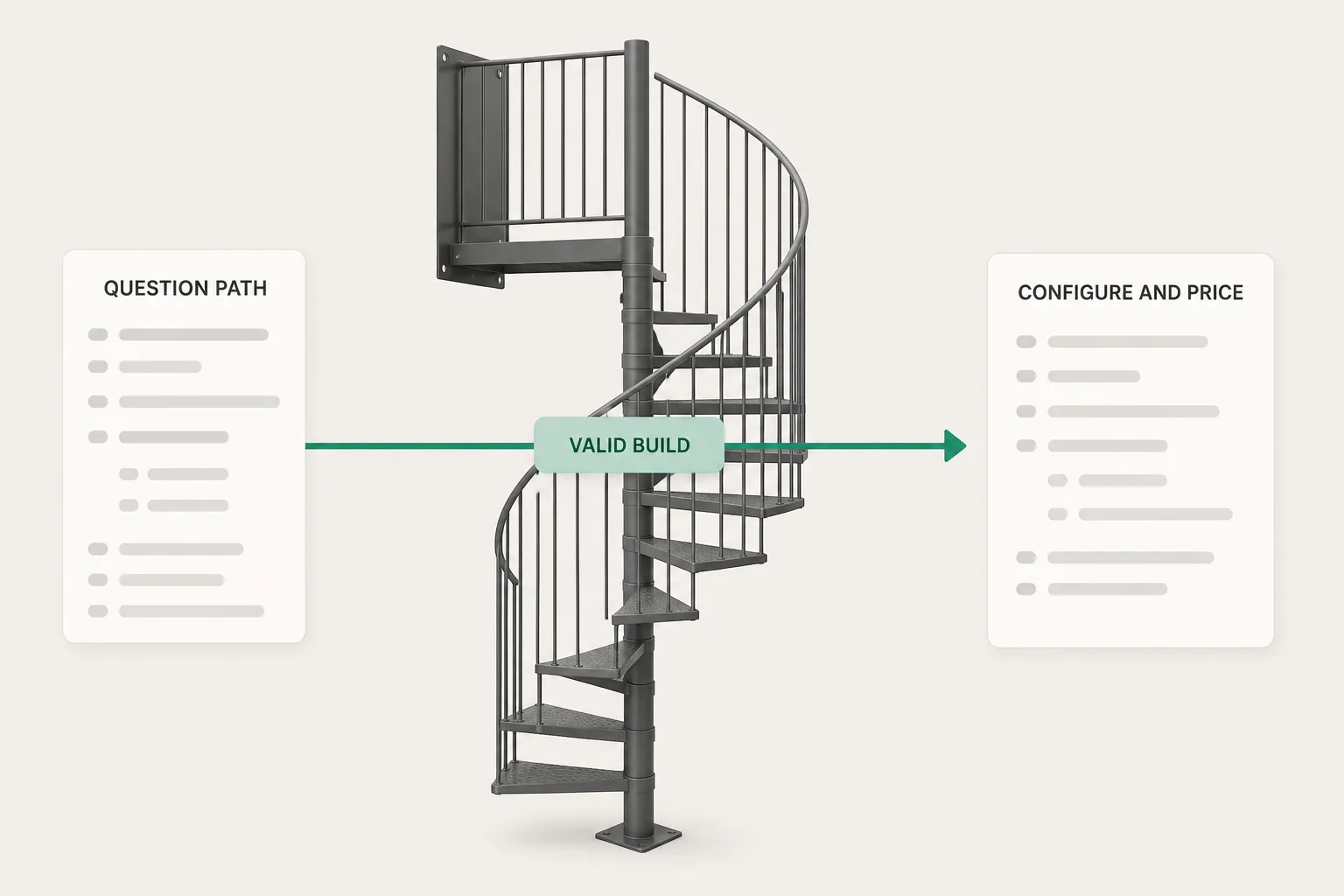
04Valid buildHand off
The question path ends where the configurator begins. Rules, dealer prices, approvals, and quote output can now work on a valid product.
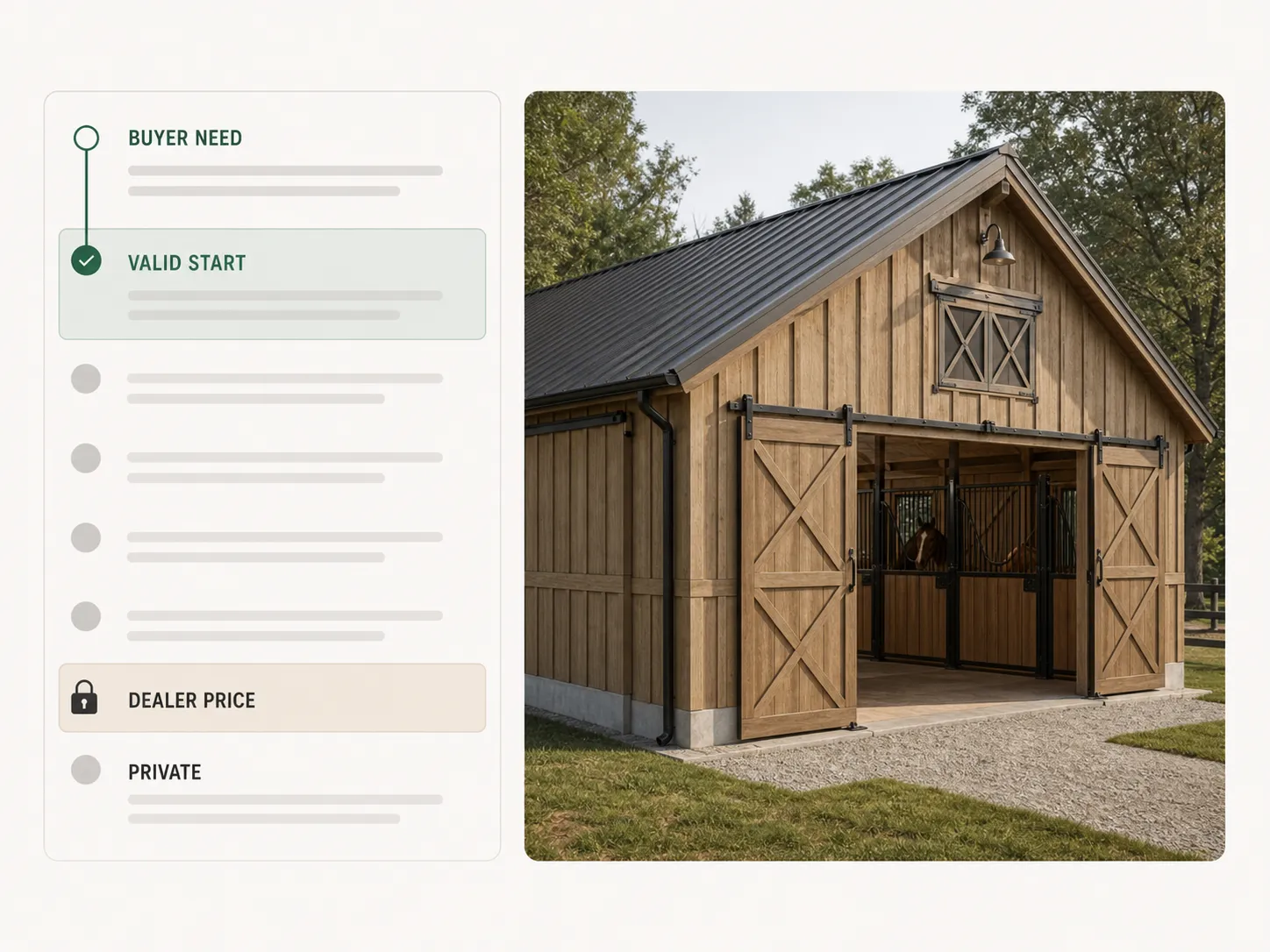
The seller may work for another company, carry four brands, and open your catalog only when a buyer asks. The screen must carry the product knowledge.
The dealer states the buyer's constraint in familiar words.
Your rules narrow the catalog and explain why choices disappear.
The valid start passes into configuration, the dealer's price, and the quote.
The same flow can sit inside a b2b dealer portal and hand a valid build to cpq software for manufacturing. The dealer follows one approved path without calling the factory for every option question. The commercial model is the same one every page here describes, per manufacturer, on what a configurator costs.
In CPQ, it asks the buyer or seller a short sequence of product questions before configuration and pricing begin. The answers narrow the catalog to a valid starting point, then CPQ applies prices, approvals, and quote rules.
No. The question flow decides which product or starting configuration fits the need. A product configurator then controls the options, dependencies, and valid combinations inside that choice.
No. AI guided selling can help when answers are vague or the catalog is very large, but clear product rules are enough for most configured products. The first useful version is usually a deterministic question path that is easy to test.
It needs product rules, clear questions, valid answer paths, and a handoff to configuration and pricing. Useful guided selling software keeps that logic editable. Guided selling tools should also show why an option disappeared. The basic guided selling best practices are to ask the strongest constraint first and test every answer path. The guided selling technology matters less than the rule order.
One product line, usually within a month. You hand over the option list, the rules between options, and the prices. We build the question path, the configurator, and the dealer logins on top of them, and you test every answer path against real orders before a dealer sees it. The rest of the range follows once the first line is running.
You pay per manufacturer, not per seat, so a dealer network of forty costs what a network of four does. The price depends on how deep the product line is, how many rules have to be written down, and which systems it connects to. There is no list price on this site, because one number could not be true for every product line. You hear your number on a 30-minute demo call.
Request a 30-minute demo and bring one product. We will show how its constraints, options, and dealer prices can move through one guided flow.
Your call is with the Dealect team.