Pain 01
An option matrix no spreadsheet holds
Capacity, drive, voltage, guarding and duty class multiply into more complex configurations than a price book holds. That complexity stalls the quote.
A machine carries capacity, voltage, guarding, drive options, ship-loose items and a country of installation. No price book holds those combinations, so your sales engineer waits on the one person who knows which options fit together. Dealect moves that knowledge into rules. Your dealers configure the equipment, pricing follows every option, and the order leaves as a bill of materials the plant can build.
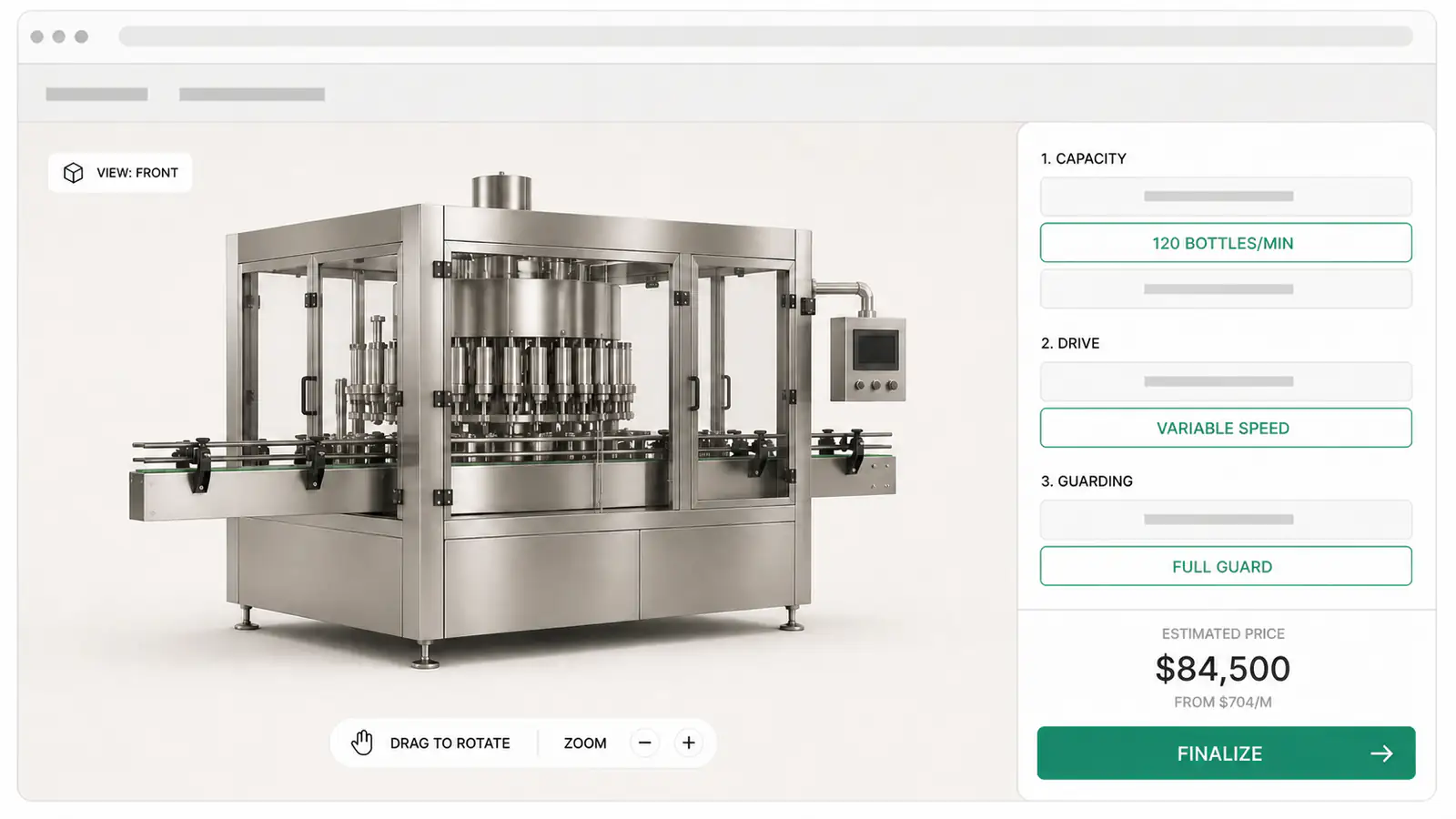
A dealer sends the duty, the throughput and the site conditions. The answer comes back when the one person who knows the option matrix has time for it.
Capacity, drive, voltage, guarding and duty class multiply into more complex configurations than a price book holds. That complexity stalls the quote.
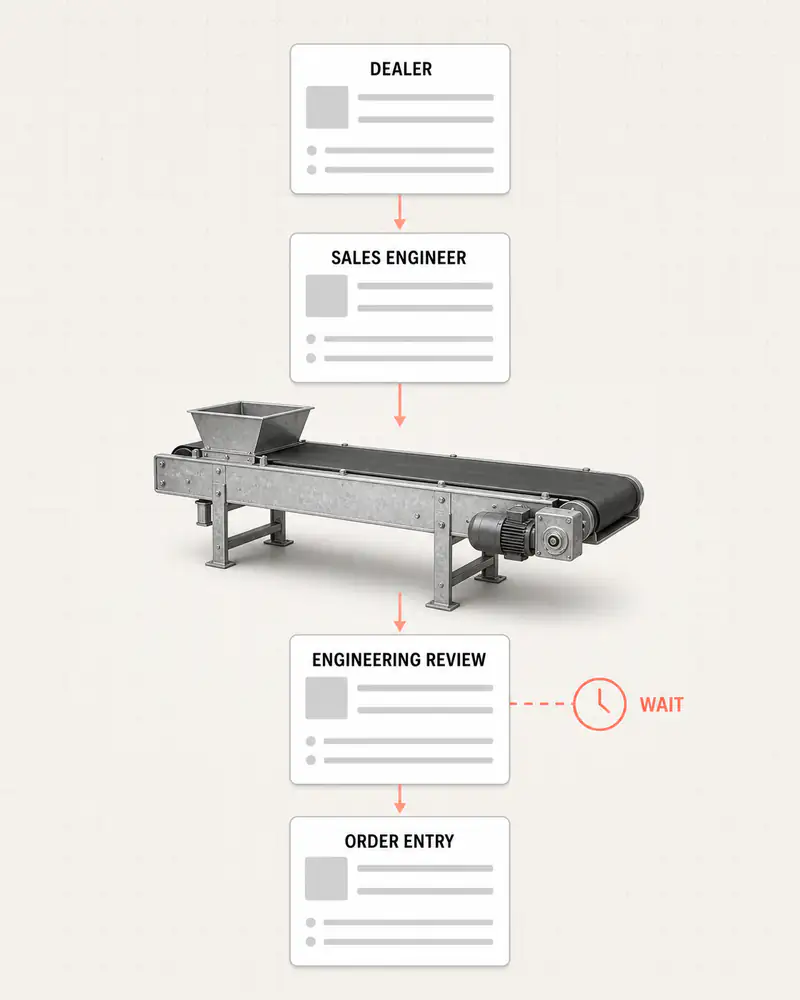
Sales cannot settle a configuration question alone, so engineering prices the machine your sales team has already sold forty times.
When that person is away, quoting stops. Your sales cycle is the length of their queue.
A drive that will not run at that voltage is found at assembly. Spec errors cost most when equipment manufacturers find them late.
Quoting, then order entry, then ERP. Each re-key drops an option the customer paid for.
An industrial equipment manufacturing CPQ is the rule set, the price list and the paperwork between a dealer's first question and a released bill of materials. Six jobs, one system.
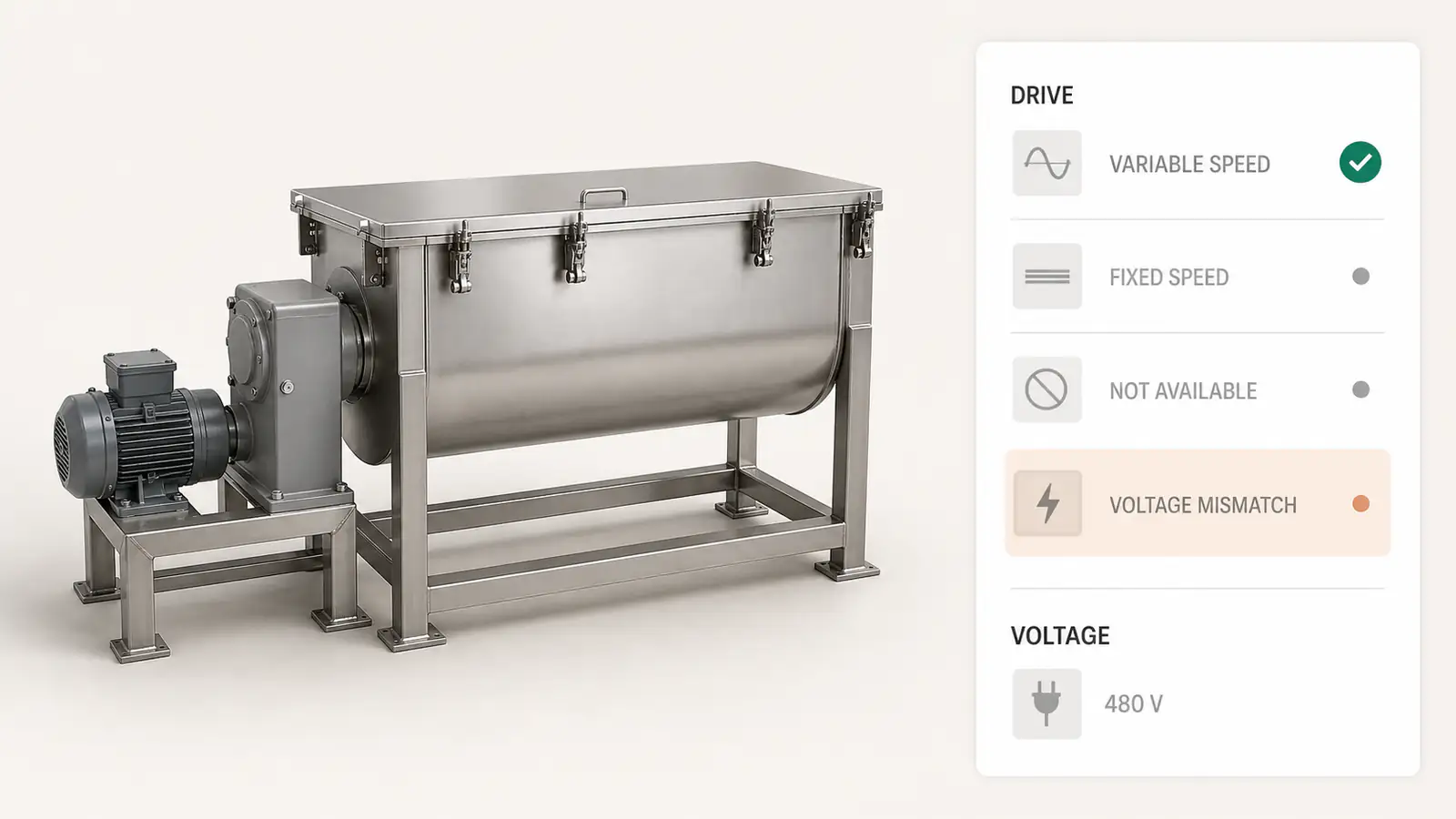
The drive that will not take that voltage. The guarding a throughput demands. Blocked on screen, before anything prices.
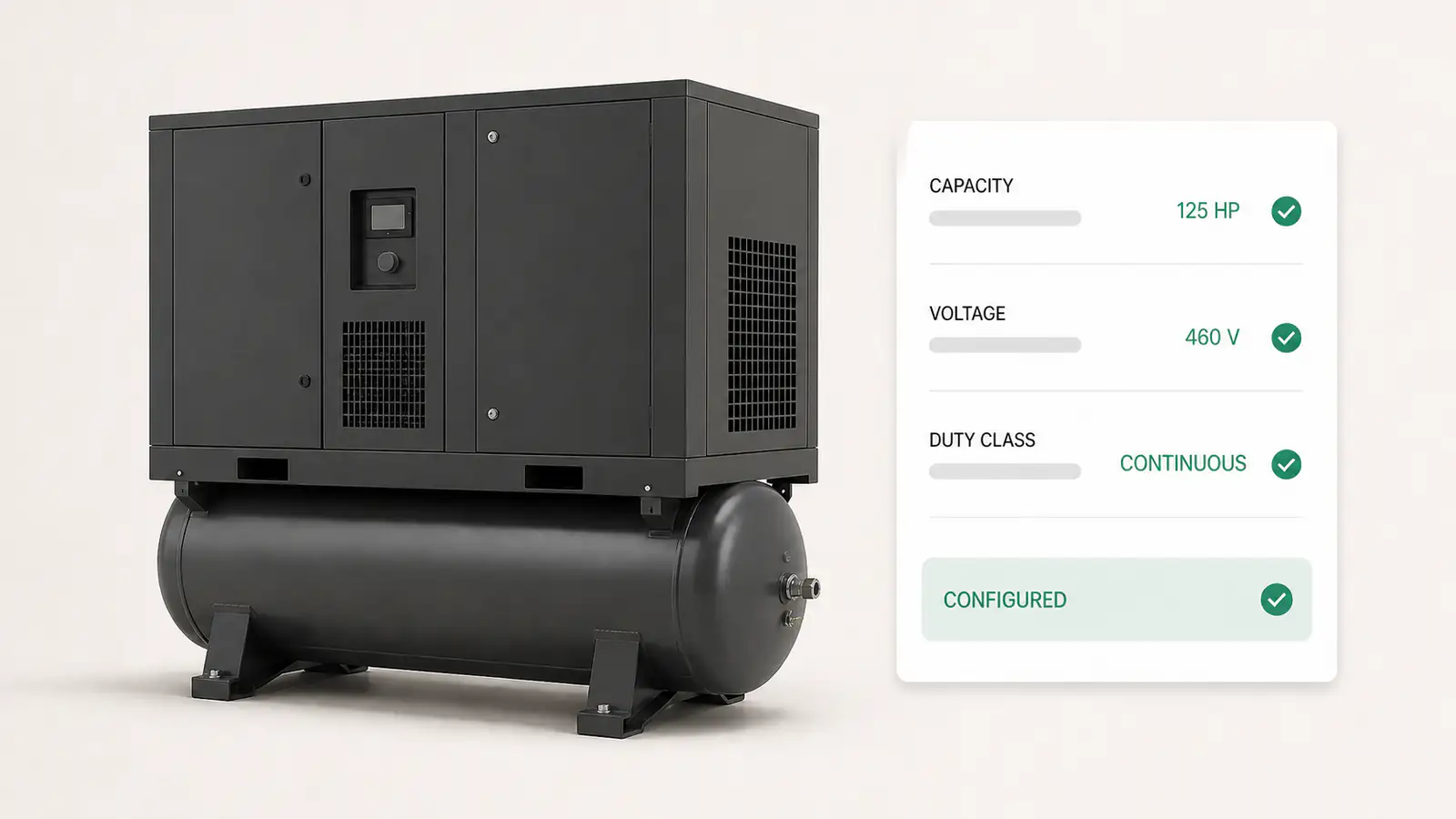
One machine family, every variant it ships in. Metric and imperial, 50 and 60 hertz, the duty class the site needs.
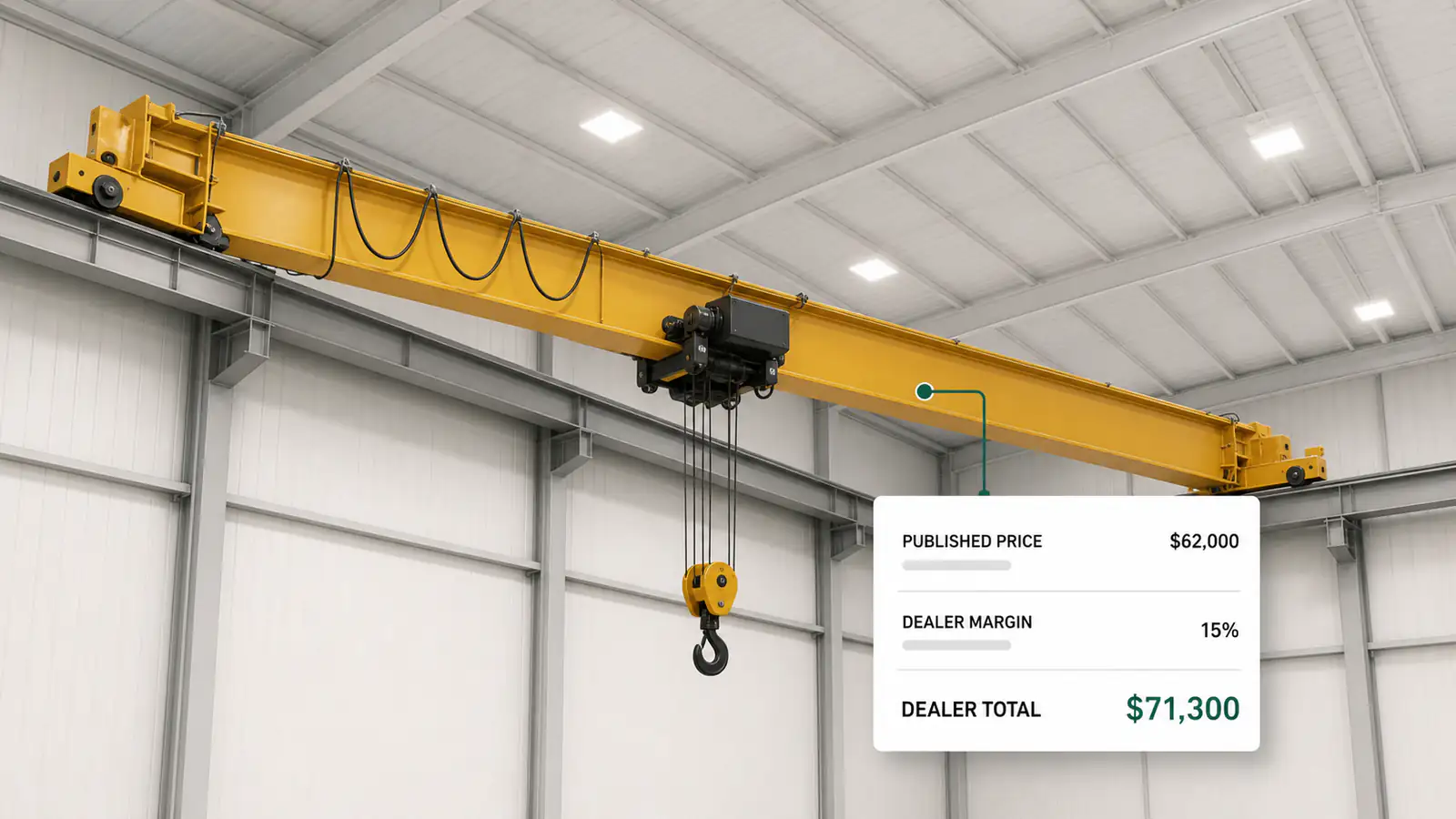
Dealers quote your published list at their own margin. Your factory cost never renders on their screen.
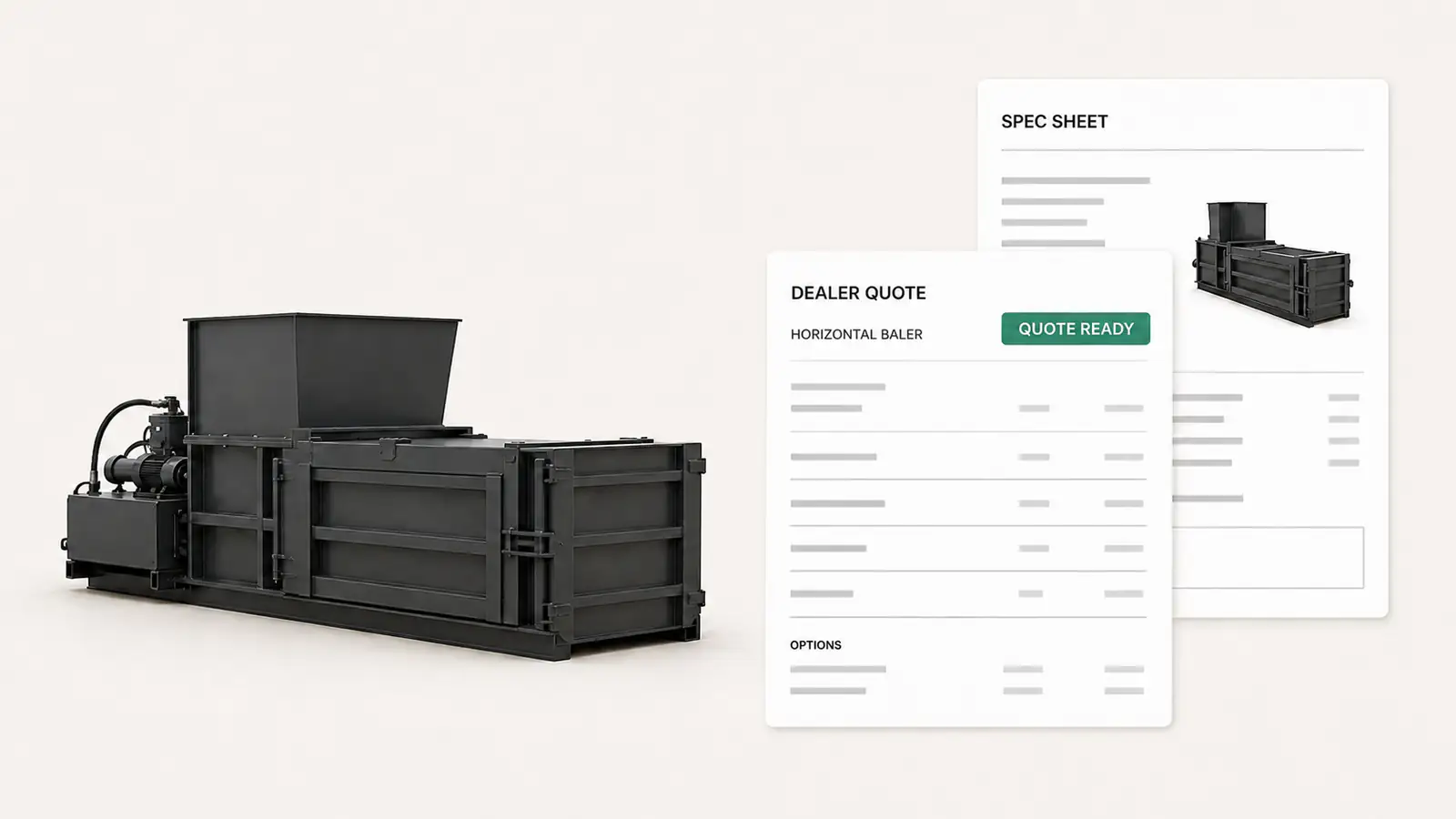
A branded document leaves with the option list, the 3D view and the spec sheet the customer's engineer asked for.
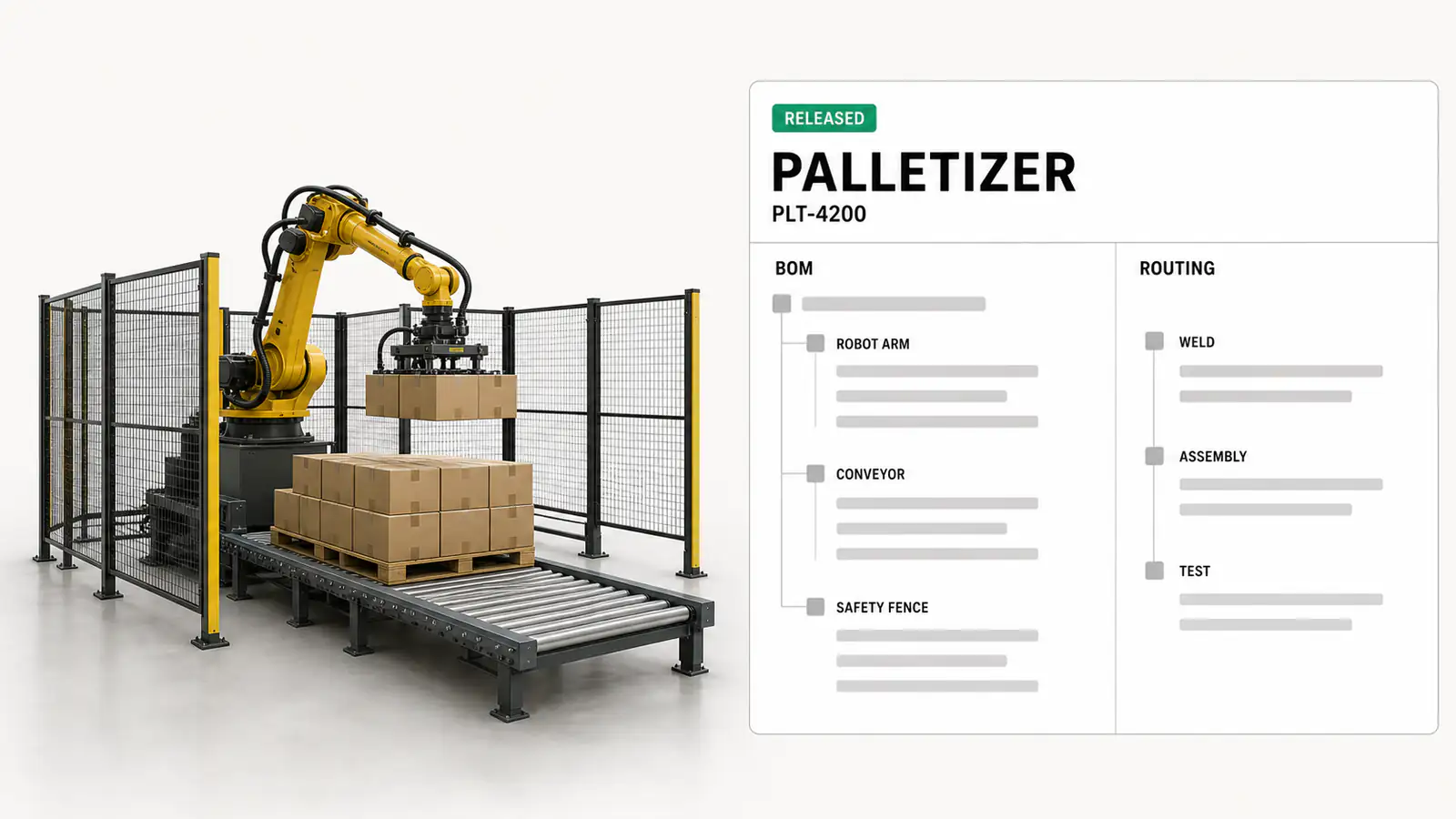
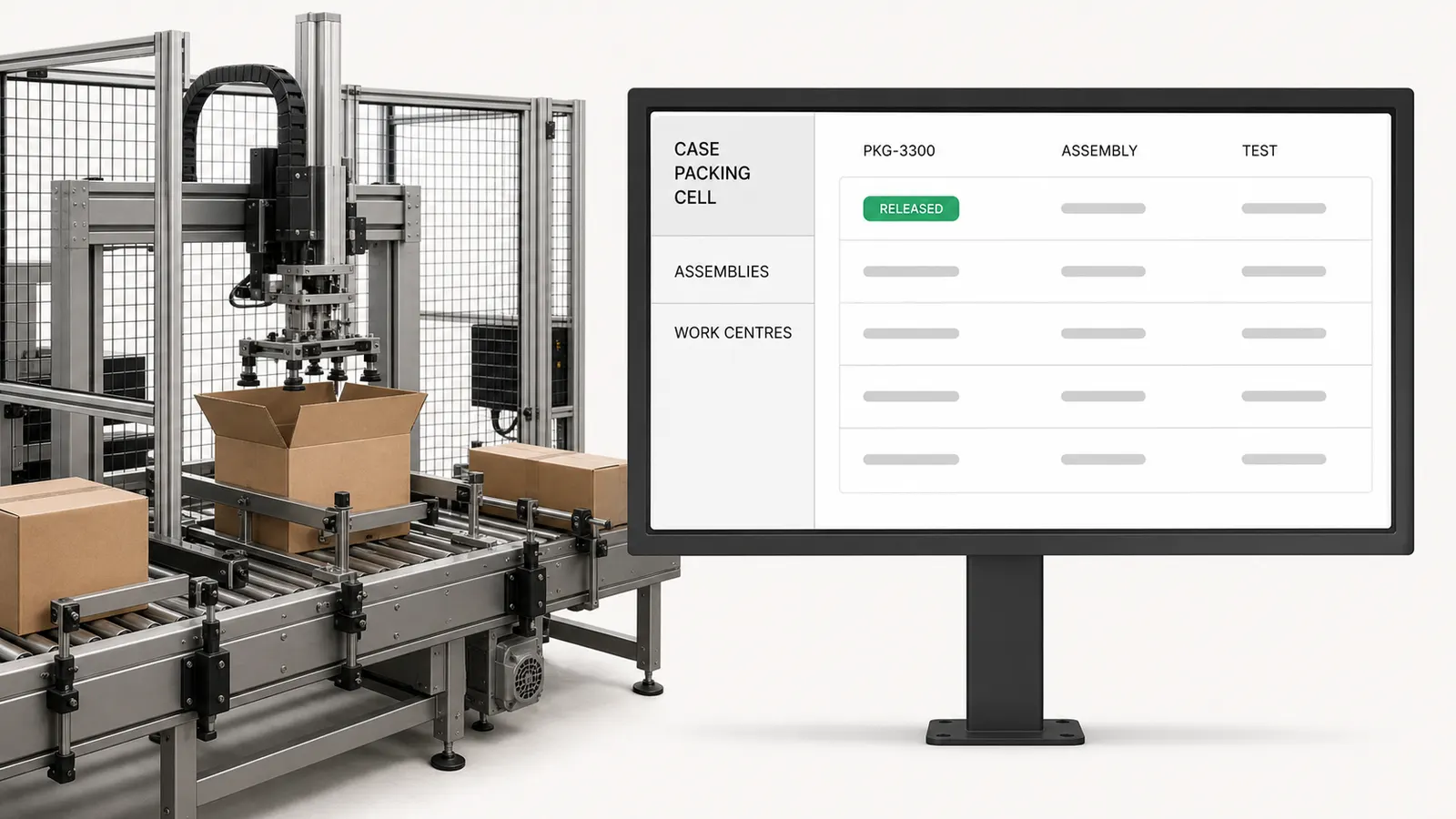
The accepted configuration releases a multi-level BOM, a routing and smart part numbering. Production builds from the order.
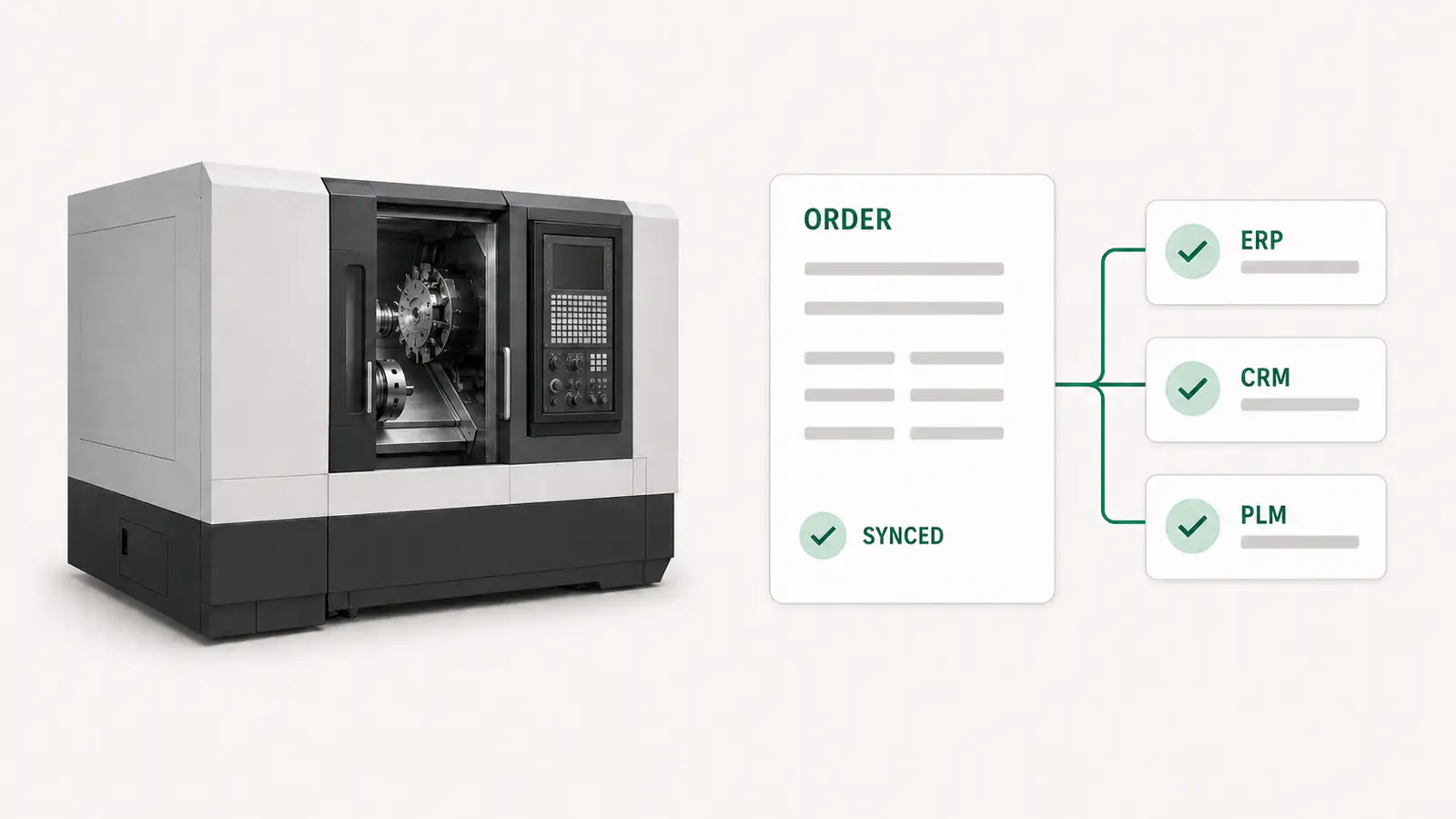
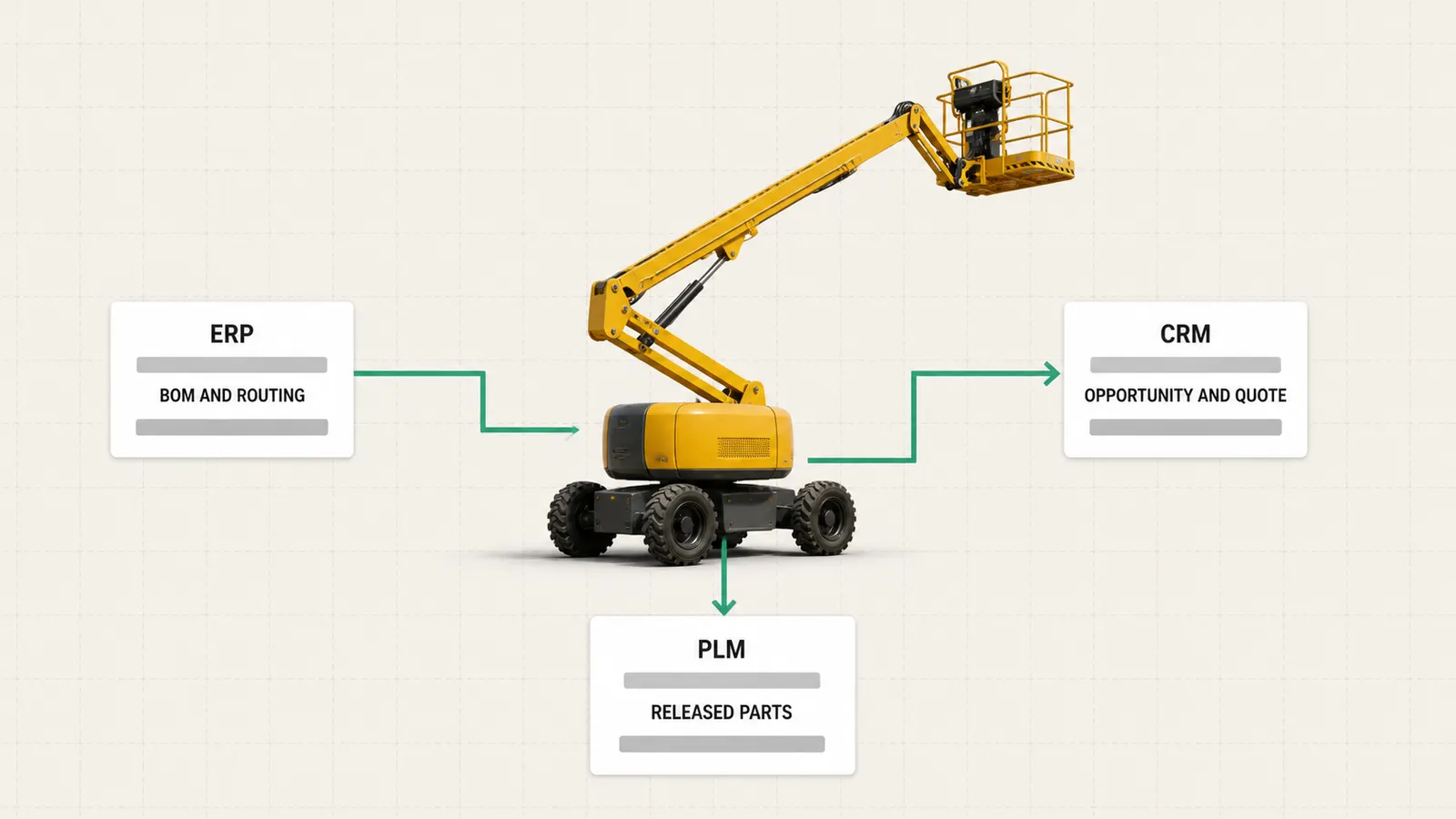
The order lands in your ERP, the opportunity in your CRM, the released part in PLM. Nothing is retyped.
If the acronym is the question, we answer it slowly in what CPQ is. Written by Teodoro Pickett and kept current by the team that builds Dealect. Published .
In August 2026 we read the five vendor pages ranking in the United States for this category. Every one describes configuring a machine. Not one shows it. Here it is.
Step 01 · Configure
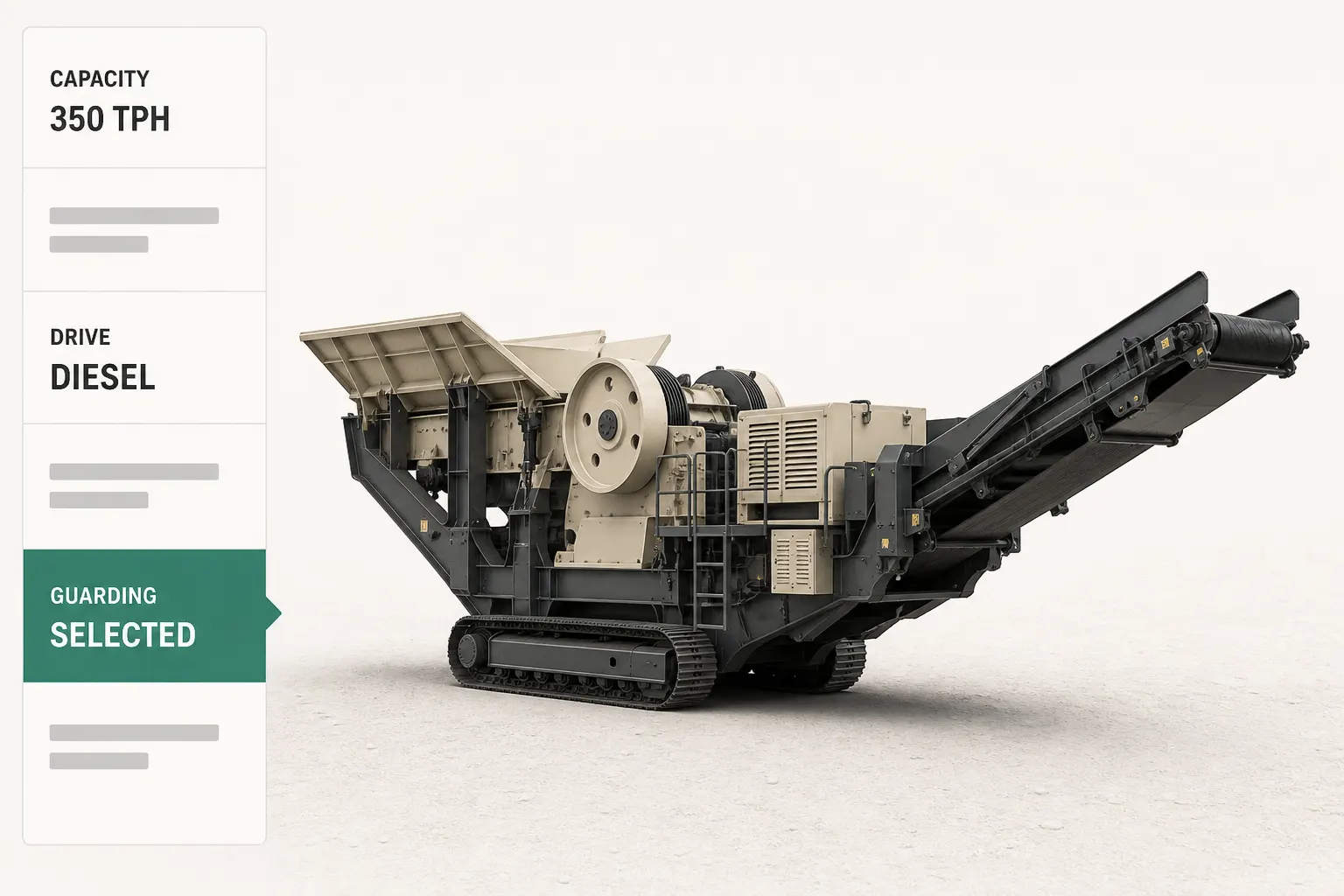
Capacity, drive and guarding are chosen in the browser. The 3D view redraws on every option, so the customer sees the machine, not a line on a quote.
Step 02 · Check
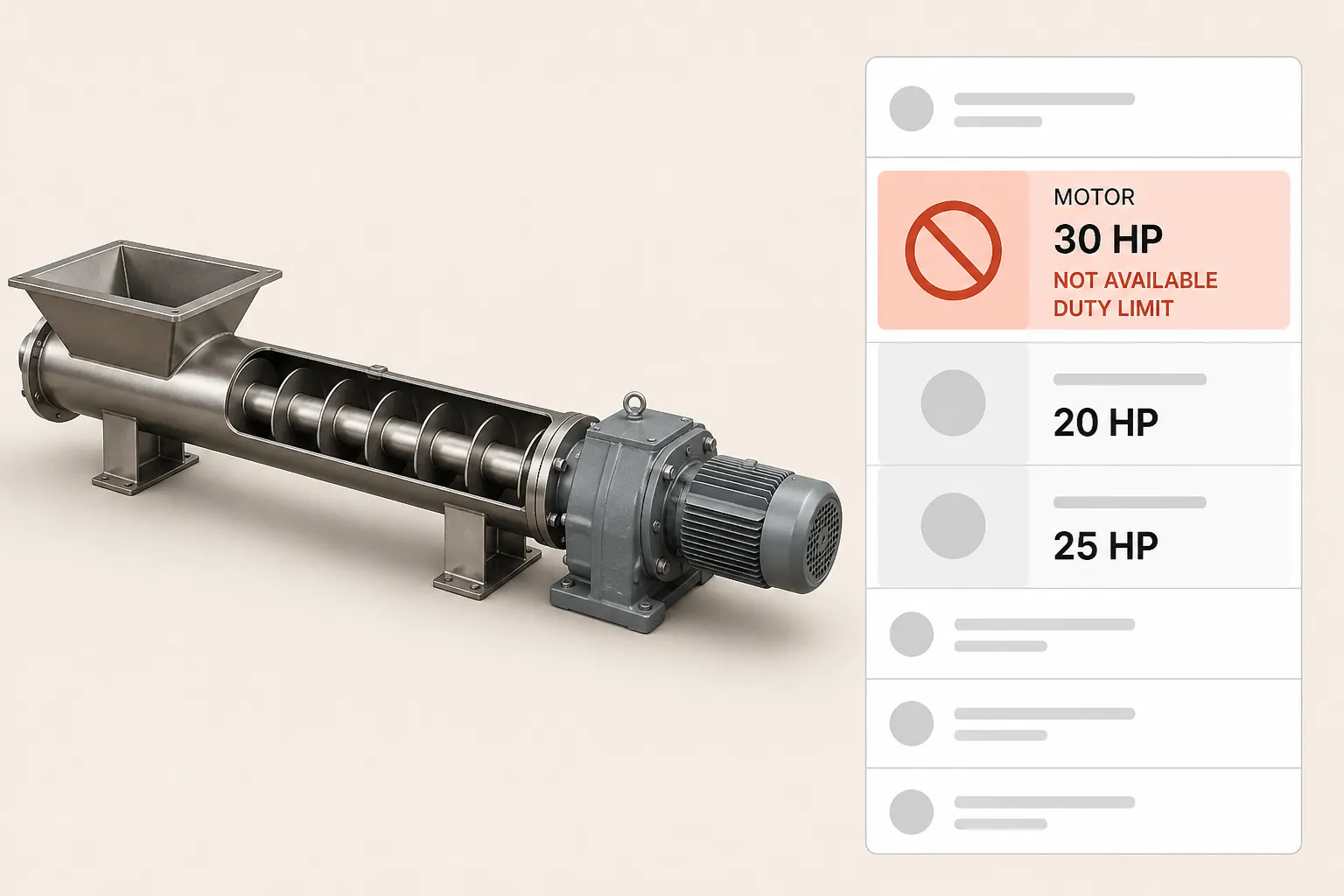
The combination that fails clearance, voltage or duty class is blocked while the dealer is still choosing. Errors surface on screen, not at assembly.
Step 03 · Price
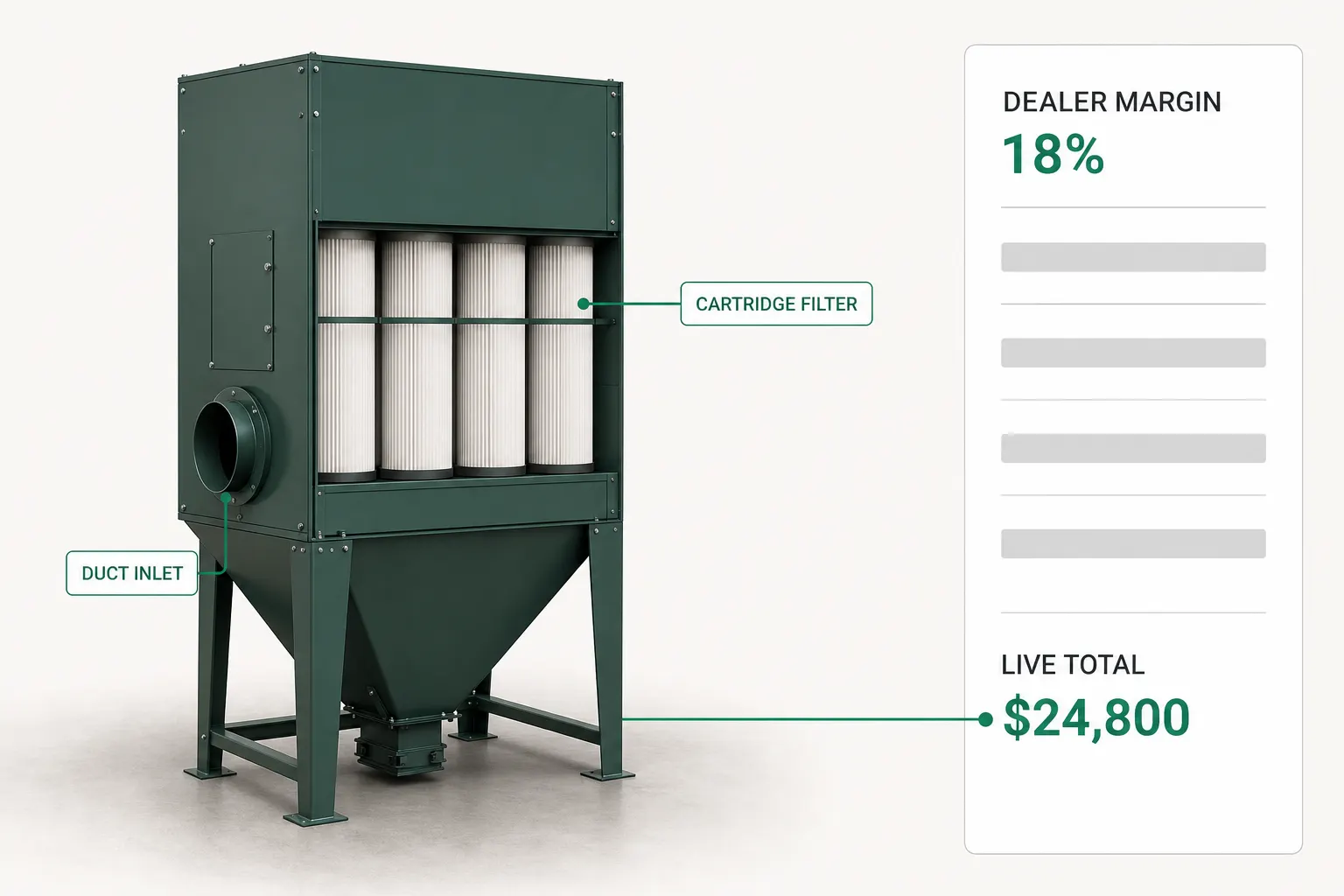
The total moves automatically with each choice, from your current list, at that dealer's margin. Pricing stops depending on who is quoting.
Step 04 · Quote
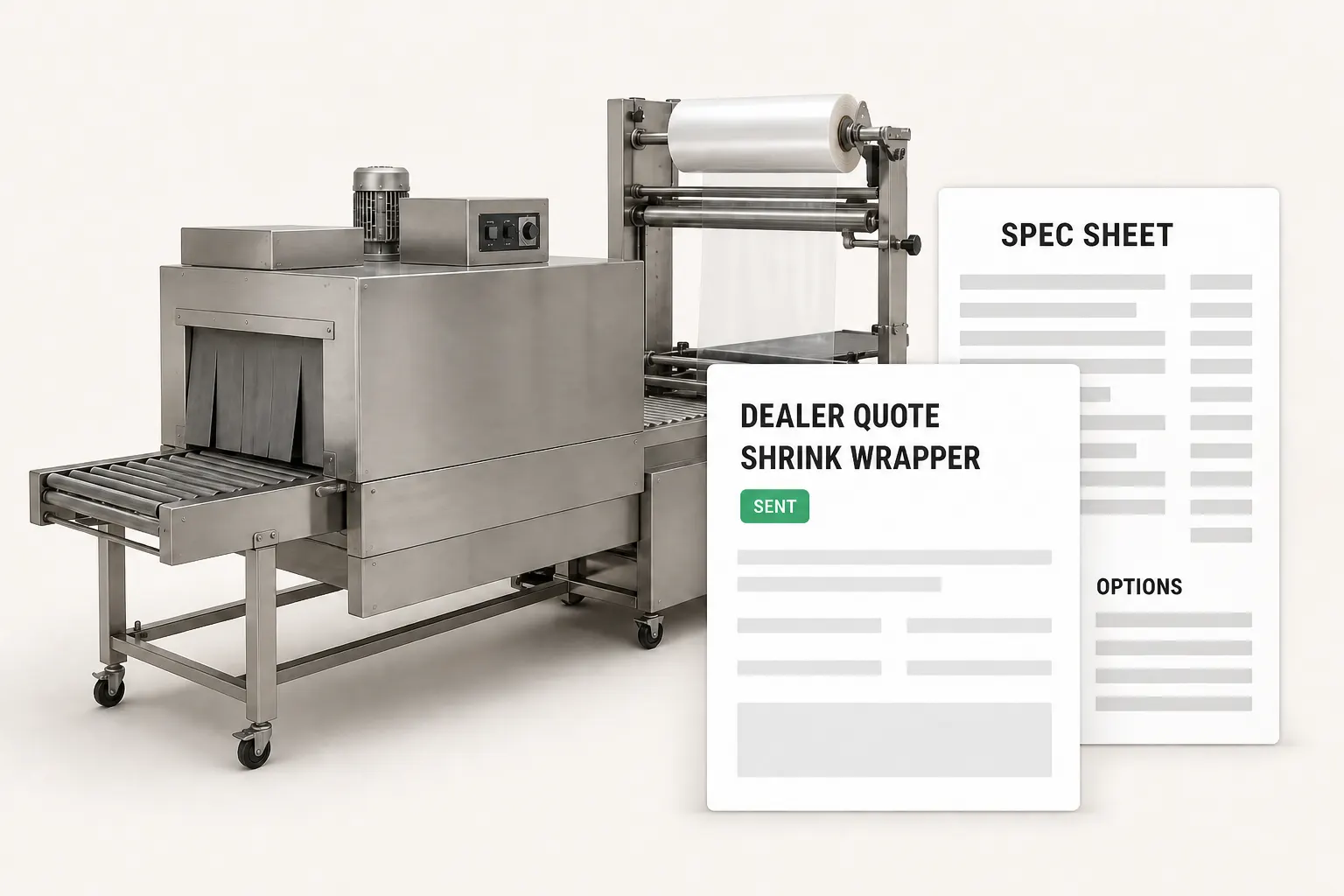
A branded quote leaves with the option list, the 3D view and the spec sheet, in the dealer's name. The customer reads one thing, not four attachments.
Step 05 · Release
This is where an industrial equipment manufacturing CPQ ends: the configuration releases a multi-level BOM, a routing and smart part numbers into production. Nothing is retyped.
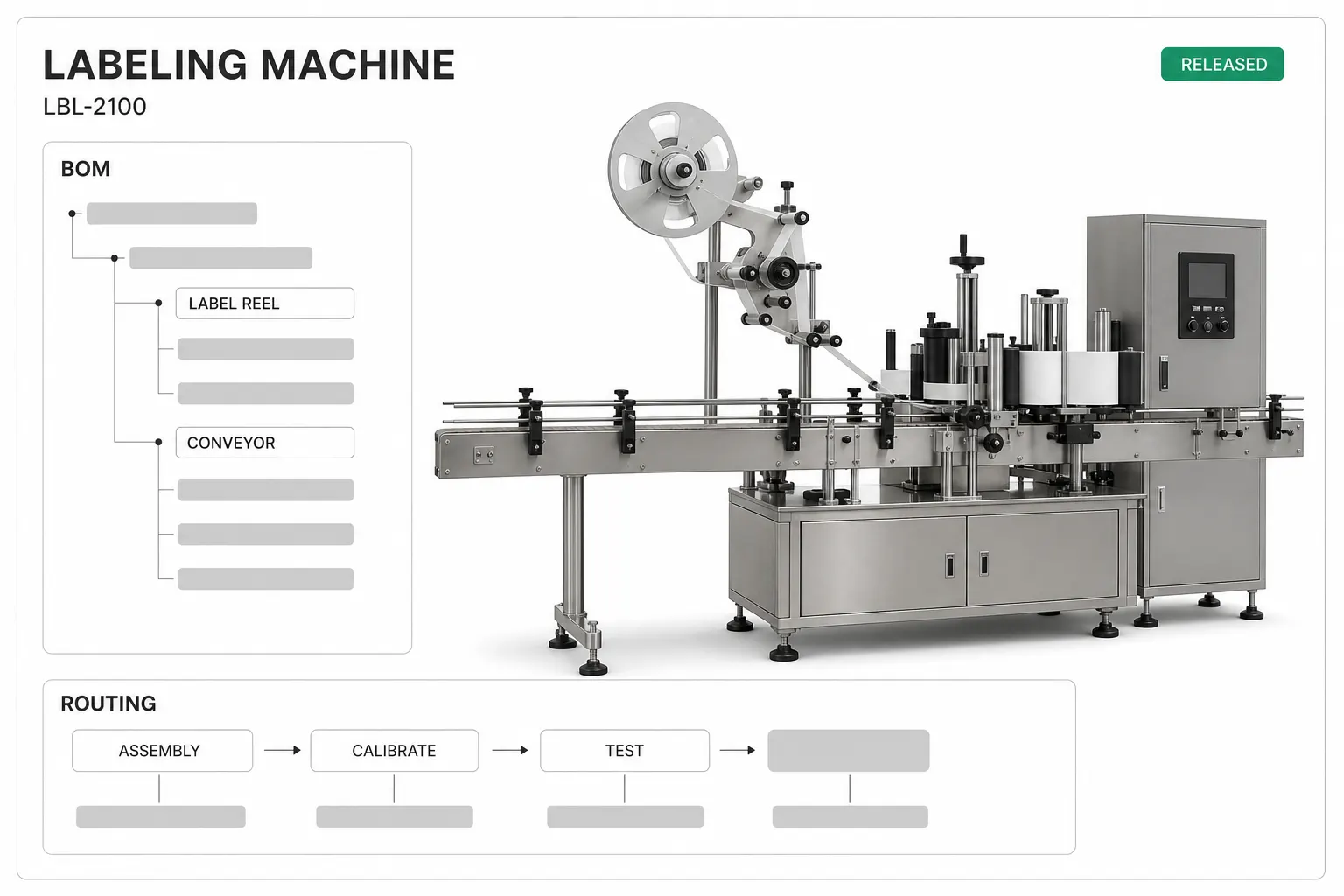
The machine on screen is our 3D product configurator on your catalogue. Priced live, that is 3D CPQ.
Most of what an engineer-to-order shop calls new is a machine it has built before, with different numbers on it. Move that majority to configure-to-order and keep the engineering review for the genuinely new one. That is mass customization. The sales cycle gets its weeks back and quotes go out faster.
| How the machine is quoted | Who prices it, and how long | What reaches the shop floor |
|---|---|---|
| A price book and a spreadsheet | A sales engineer, once the file is current. Days. | A quote nobody can build from, and a re-key into the order. |
| An engineering review on every machine | Engineering, in its own queue. Days into weeks. | A drawing set, most of it repeating last month's machine. |
| Configure-to-order, rules carry it | The dealer, in the browser. Minutes. | A multi-level BOM, a routing and smart part numbers. |
The same argument covers every configurable product a plant ships. CPQ for manufacturers is the parent page. This one stays on the machine.
Nothing here replaces the systems or the process you already run. The configurator sits in front of them and hands each one the part of the order it owns.
Machine quoting leaks margin quietly. A superseded price, a forgotten ship-loose item, freight carried from memory. Rule-checked pricing cannot forget an option, because the option priced itself when it was chosen. That is where quote accuracy comes from.
Approvals fire on the exception, not on every deal. Dealers inside your discount floor send it themselves. A dealer below it waits for you, and the approval workflow shows which machine and which margin you are ruling on. The same mechanics run our sales configurator.
You publish one price list. Each dealer quotes it with their own margin. Your factory cost never renders on a dealer's screen, and a discount below your floor waits for your approval.
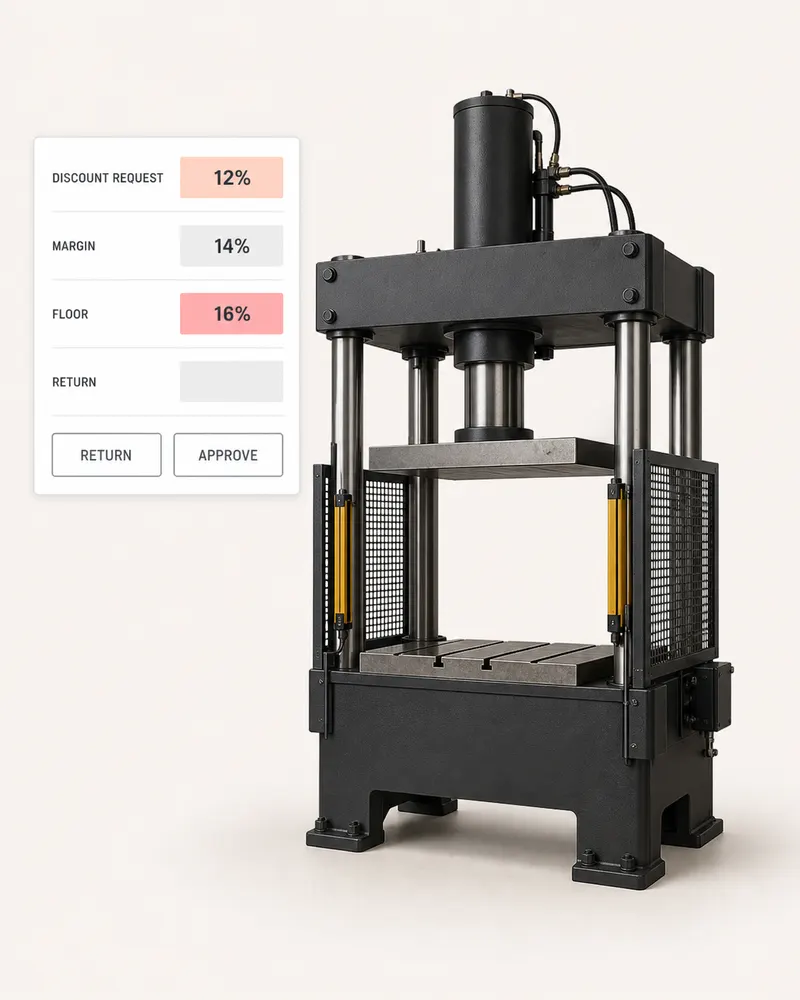
Your catalogue is the single source. Your dealers and your distributors quote from it at their own margin, and every lead stays tied to the dealer who owns it.
You manage the catalogue, the rules and the price list in one place. Your dealers and your distributors work from that one source. Change a price on Monday and the whole channel is quoting the new one on Monday.
Every configuration a customer makes becomes a lead tied to the dealer who owns it, so you see which dealers work a lead and which sit on it. The portal each dealer signs into is our b2b customer portal.
One equipment configurator, six ways of describing a machine. The vocabulary changes. The mechanics under it do not.
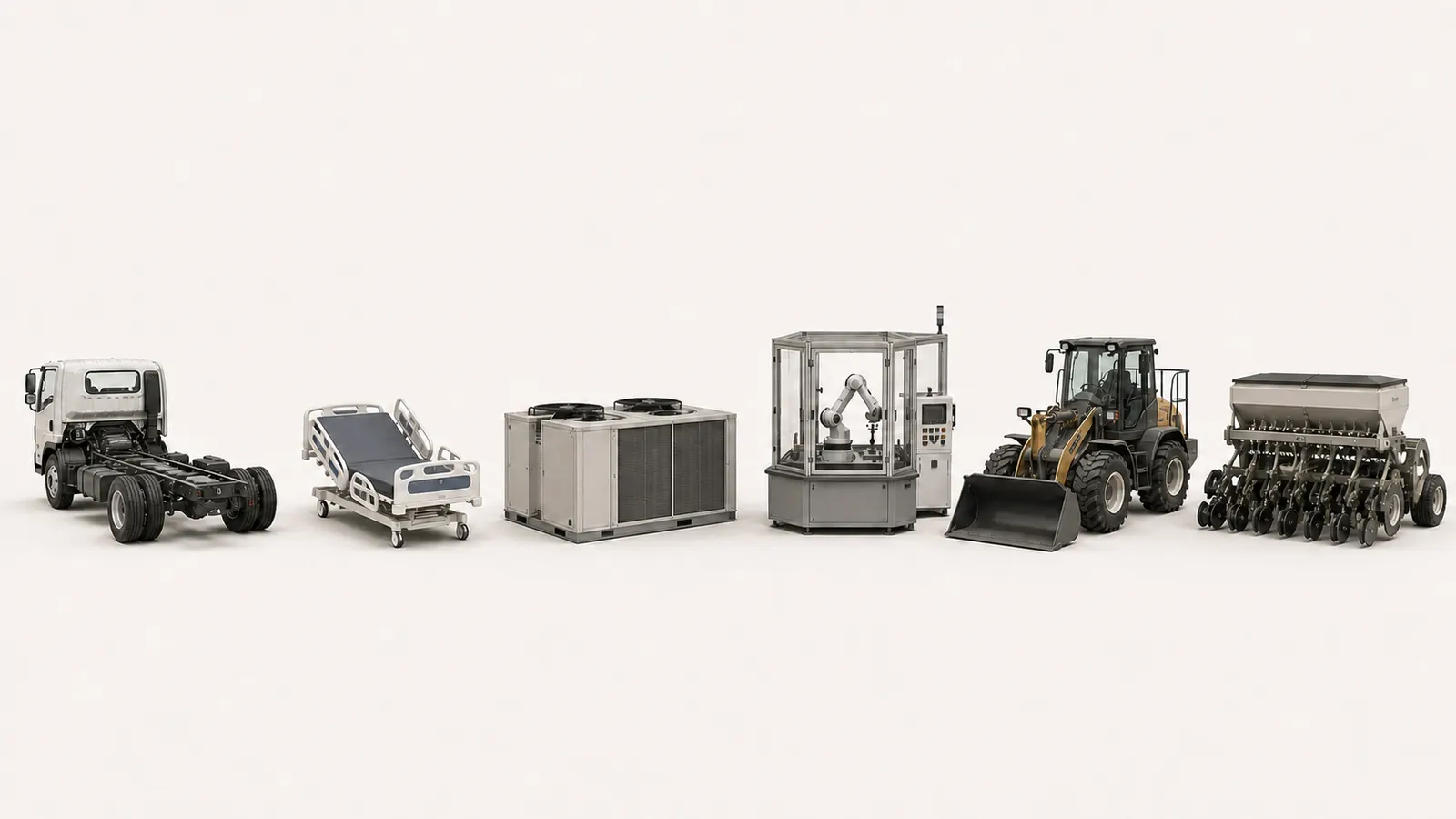
Chassis, body, axle configuration and upfit, priced as one vehicle.
The configuration and the compliance file, released together.
Capacity, coil, airflow and refrigerant, matched to the building.
A complex option matrix priced per unit, so ten machines are ten correct machines.
Attachments, undercarriage and duty class on one machine, for one site.
Implement, working width, hitch category and the tractor it has to fit.
Comparing vendors rather than classes? The field is ranked in best CPQ software.
Counts, not outcomes. Facts about the software, measured on one machine from a dealer's first click to a released order.
One configuration becomes the quote, the order and the multi-level BOM.
ERP takes the BOM and routing, CRM the opportunity, PLM the part.
One catalogue and one price list, quoted across your whole sales channel.
Quote speed and order accuracy depend on your option matrix, your dealers and your market, so we publish no percentage. Bring one machine family and your price list to a 30-minute call and we will time the quote in front of you.
CPQ is the software a manufacturer uses to configure a product, price it and quote it in one place. For a machine builder it holds the option rules, the price list and the order documents, so a dealer answers the customer without asking engineering.
Configure, price, quote. Configure picks the capacity, the drive and the guarding, and refuses what your plant cannot build. Price applies your list and the dealer's margin. Quote produces the document and the spec sheet.
The CRM holds the customer and the deal. The CPQ builds the machine and the price inside that deal. A CRM records that a quote went out; only a CPQ knows it carried the heavy duty drive and priced the guarding with it. Neither replaces the other.
Judge it on four things a machine exposes fast. Can the rules express an interlock, not just a dependency. Does the accepted configuration release a multi-level BOM and a routing. Can dealers price at their own margin without seeing your cost. Does it reach ERP without a re-key.
A one-time build plus a monthly fee, priced per manufacturer rather than per seat, so a growing dealer network does not grow the bill. The build follows the depth of the option matrix. Our pricing page states the model.
Last updated
Same portal, same dealer login, one more trade at a time.
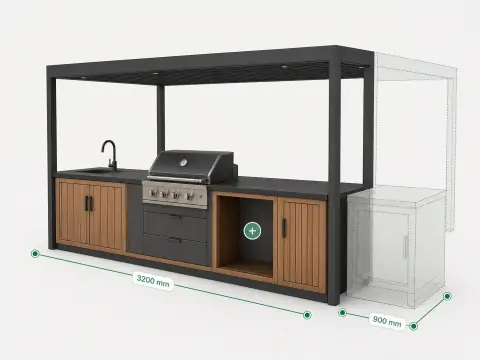
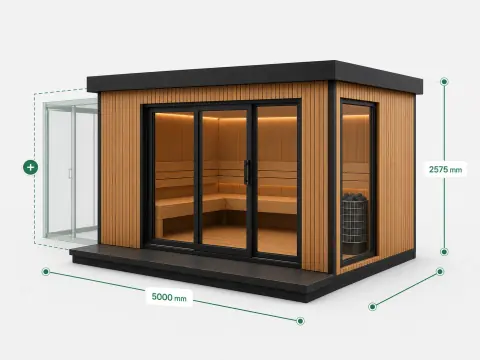
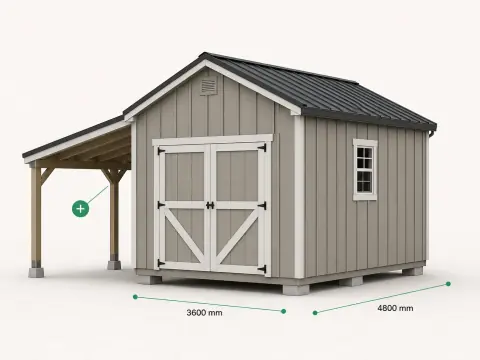
Bring one machine family, its option matrix and your price list to a 30-minute call. We will configure the machine, apply a dealer's margin and release the bill of materials while you watch. We reply by email to set a time.
Your call is with the Dealect team.