Blog · Configurators, defined

What is a product configurator? The meaning, in plain words

A product configurator is software that lets a buyer build a valid version of a product by picking options, with the price updating as they choose. Rules block the combinations the maker cannot build, so every finished configuration is one the shop can produce. The picture on screen is optional. The rules underneath it are not.

By Teodoro PickettLast updated 13 min read
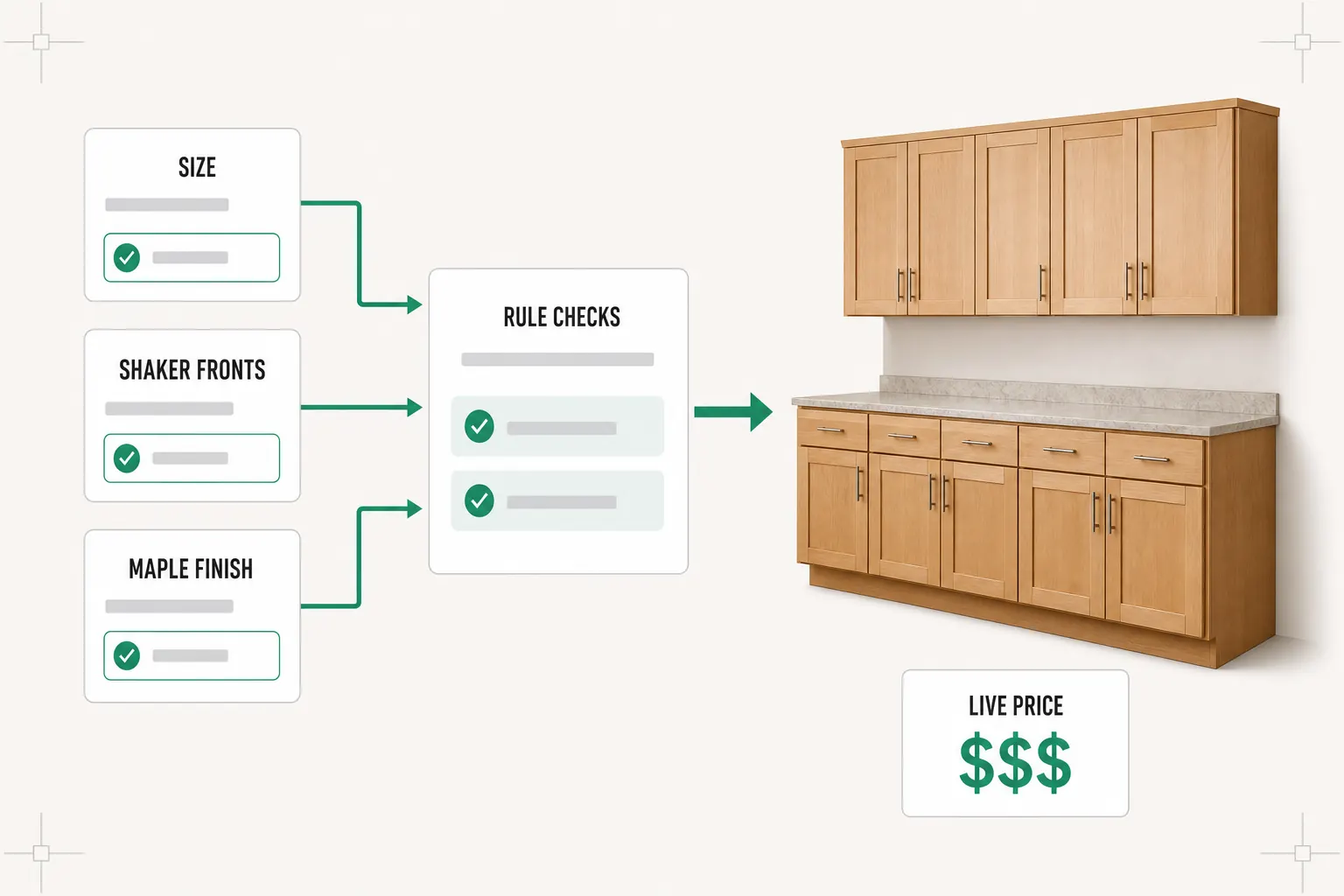
Option picks and rule checks feeding one valid maple cabinet run with its price, the anatomy of a product configurator

This guide is written for manufacturers of custom products, and the first half serves anyone who just asked what a configurator is. It starts with the configurator meaning, the word itself, then the mechanics, the types, and the comparison everyone reaches next. It ends where the vendor guides do not: what happens when your dealers do the configuring.

Key takeaways

  1. A product configurator walks a buyer through a product's options.

    Software, not a person: it blocks invalid combinations and shows the price as the choices change.

  2. The picture is optional. The rules are not.

    A configurator earns its keep by making every quote buildable, whether it renders in 3D, 2D, or a plain option list.

  3. For a manufacturer selling through dealers, the configurator is the quoting seat.

    A dealer quotes correctly without calling the factory, and without ever seeing the factory's cost price.

  4. The expectation is already set.

    76%of consumers get frustrated when their interactions are not personalized McKinsey Next in Personalization, 2021

    71%of manufacturers and distributors need at least a full day to produce a quote vendor-commissioned Aleran/TrendCandy survey, July 2025

The word

What does “configurator” mean?

The word comes from configure, from the Latin configurare, to shape by arranging parts. So what is a configurator, literally? The thing that does the arranging, and the dictionaries stop about there. The configurator meaning in software is more specific: a tool that assembles a valid arrangement of options against a set of rules, and prices what it assembles.

To define configurator in one line: software that turns options and rules into one correct, buildable configuration. The rules are what separate it from a form. A form accepts whatever is typed into it. A configurator checks every choice against what can actually exist, and refuses the combinations that cannot.

You have probably met one already. Car builders on automaker sites, laptop configure-to-order pages, and PC part pickers are all configurators: the same idea, pointed at different products.

This page is about the version that matters to a manufacturer: the product configurator, where the thing being arranged is a physical, buildable product and a wrong arrangement costs real money. That is the sense the rest of this guide uses.

The mechanics

How does a product configurator work?

A product configurator works in a loop of four moves. Someone picks an option, the rules check the pick, the price updates, and the screen shows the result. When the picking is done, the tool emits the configuration: an exact, valid description of one product to be built, with its price attached.

Almost every page on this subject leads with the picture, because the picture demos well. The load-bearing half is the rule model. It holds what depends on what, what excludes what, and the dimensional limits the shop builds to. The prices ride the same model, so the total is assembled from the picks rather than remembered by a person. The picture is the interface. The rules are the product knowledge.

The rules read the way the shop talks. Take a worked example: a poolside cabana, cedar, 12 by 14 feet, with a louvered roof. Pick the 14 foot width and the rules add the second roof beam and price it. Pick the bar wall and the configurator places it on the closed side, because the bar is not offered facing the pool. Pick the infrared heater and the solid roof panel comes with it, because the heater cannot mount under open louvers.

Nobody choosing had to know any of that. The buyer, or the dealer sitting with them, just clicked through options and watched the total move. At the end there is no maybe in the build: what was configured is what the shop can make, and the output says exactly which parts that takes.

The alternative is the phone. In a July 2025 survey of 200 US manufacturers and distributors, run by research firm TrendCandy and commissioned by CPQ vendor Aleran, 71% said producing one quote takes them at least a full day. A configurator prices the same build at the speed of the clicks, because the checking that used to queue for an expert happens on every click instead.

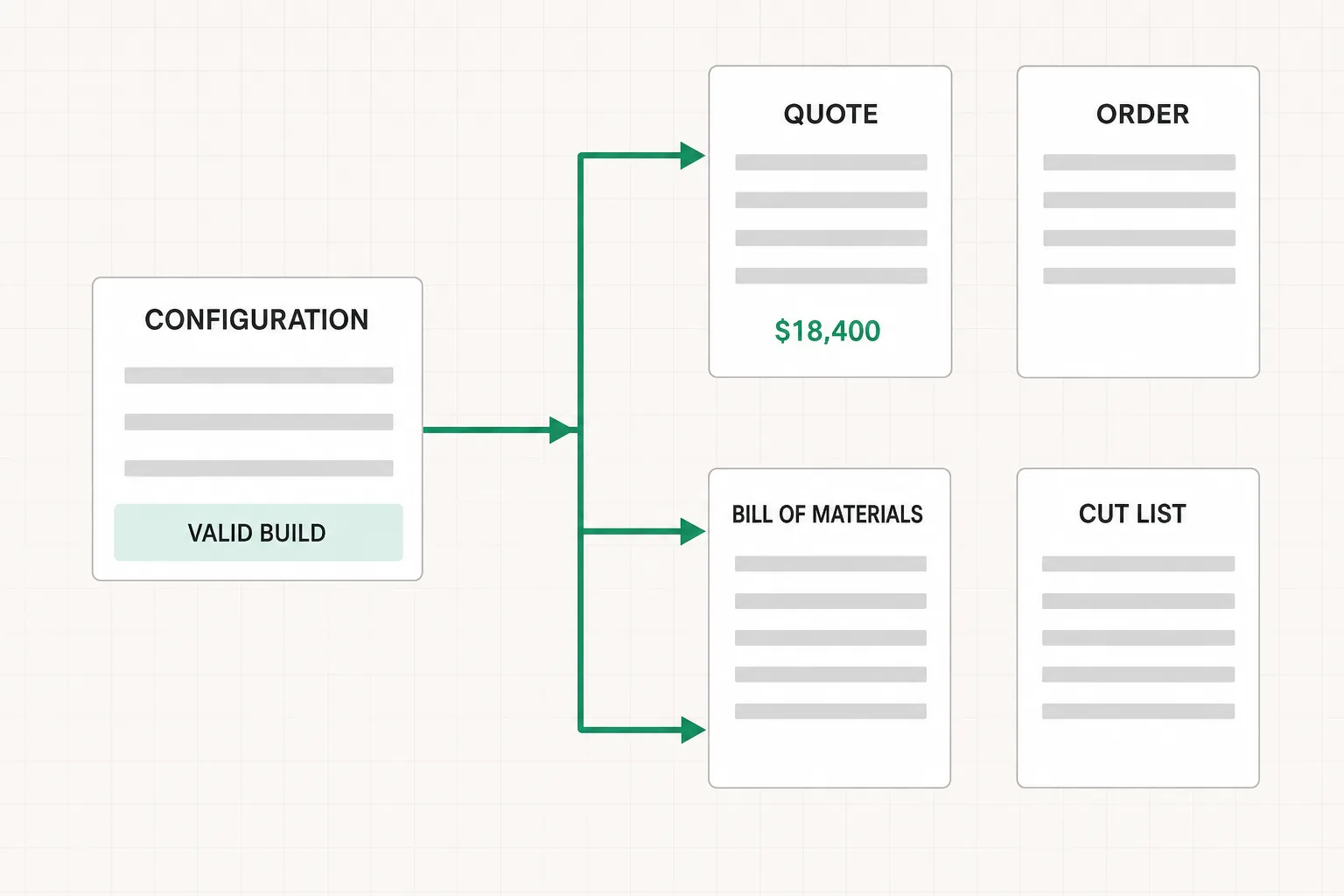
Where does the output go? For most vendors the answer is the cart, and the story ends. For a manufacturer it is the start of the interesting part. A finished configuration can become the quote, the order, the bill of materials, and the cut list, with nothing retyped between them. A wrong custom build has no restock and no resell, which is why the valid part of valid configuration matters more than the photorealism, and why the sections below keep following the configuration past the screen.

One valid configuration becoming the quote, the order, the bill of materials, and the cut list, with nothing retyped between them
The view

The types: 3D, 2D, and no picture at all

Configurators differ by what they show, not by what they do. The rules layer is identical across every type; what varies is the view the person configuring looks at, and what that view costs to set up.

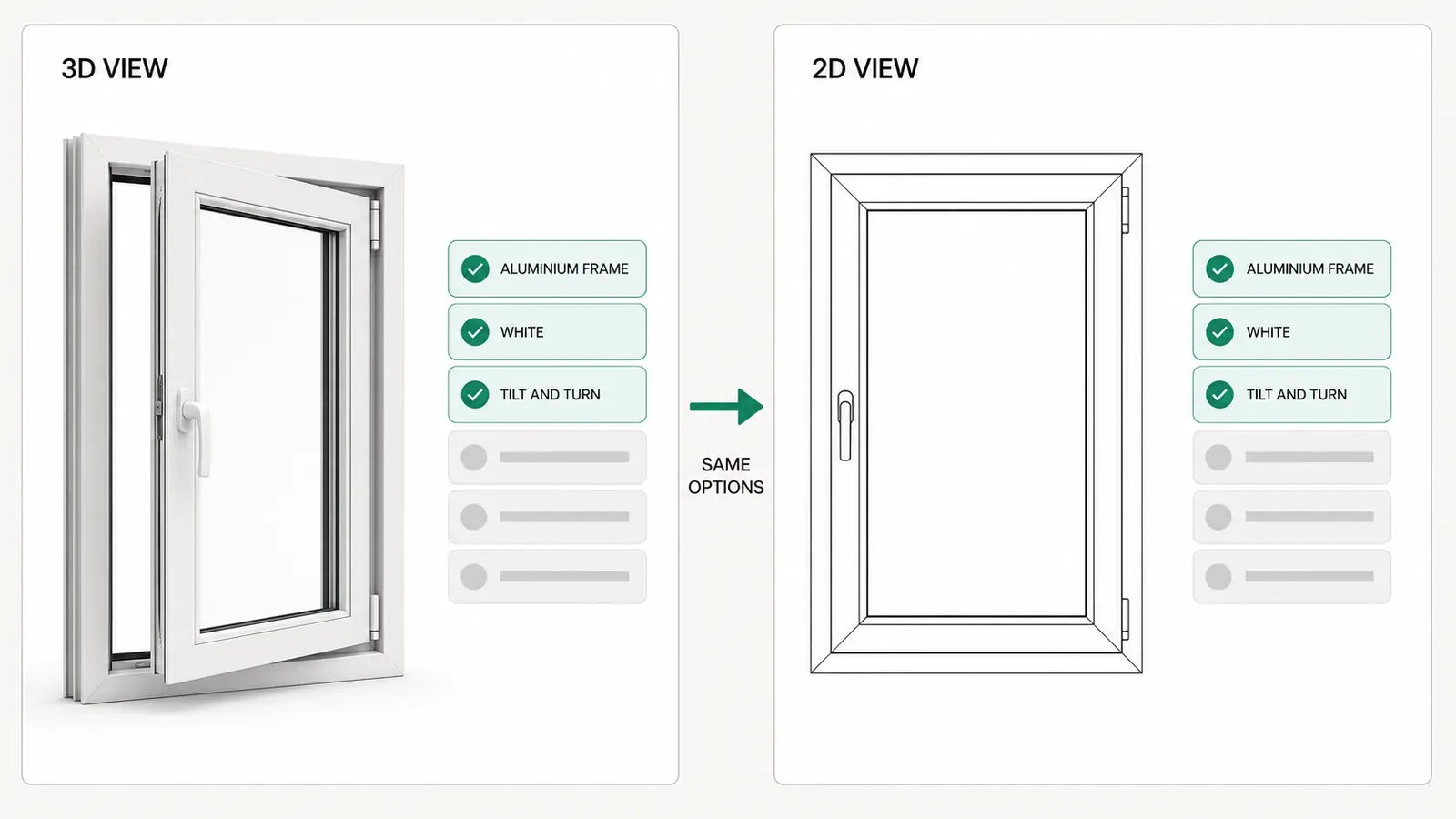
The showpiece of the category is the 3d product configurator: the build stands on screen in real time and changes as options are picked. It earns its setup cost where the product's shape changes with the options, because seeing the 14 foot span with the second beam in place answers a question no option list can. That cost is the modeling, not the software: each product's geometry has to be built and tuned to run in a browser before the first option is picked. When that live view runs with the price book, so the buyer watches the build and the total move in step, vendors call the combination visual cpq.

The quieter types do the same job. A 2d product configurator swaps flat drawings or layered photos as choices change, which is the honest fit for products that vary in finish and trim more than in shape. And plenty of configurators show no picture at all: a priced option list with the rules running underneath, which is how a lot of dealer quoting actually happens. The cards below draw the line between the three.

  • Real time 3D

    The showpiece
    What your buyer sees
    A live model of their buildThe product stands on screen, turns, and changes as they pick options.
    Pick it when
    Choices change the product's shapeSpans, roof pitches, added modules. Seeing the new shape answers questions no list can.
    Work to launch
    The most work of the threeEvery product needs its 3D model built and tuned before anyone can click.
  • 2D drawings or photos

    What your buyer sees
    A drawing or photo that updatesA flat drawing or a layered photo swaps as choices change.
    Pick it when
    Choices change the look, not the shapeFinishes, colors, trim, and layouts, on a form that stays put.
    Work to launch
    Little work beyond what you haveThe drawings and photos already in your catalog usually cover it.
  • No picture, an option list

    What your buyer sees
    A priced list of optionsNo picture, just choices and a running total, like a smart order form.
    Pick it when
    Your buyer knows the product by heartDealers who quote the same line every week do not need it drawn.
    Work to launch
    The least, ready the soonestEnter the rules and the price list and it works.
The same aluminum tilt and turn window shown twice, as a live 3D render and as a flat 2D elevation drawing, with identical options picked beside each
The process

What is product configuration?

Product configuration is the process the tool automates: turning a product's possible options into one specific, buildable variant. It is older than the software. A dealer with an options sheet, a price list, and a phone line to the factory was doing product configuration; the configurator just does it without the phone line.

The output has a name worth knowing. A configured product is one specific valid variant: not the catalog entry, but the cedar cabana at 12 by 14 with the bar wall on the closed side. Manufacturers configure products from one of two seats. Either their own people do it at the sales desk, or the buyer and the dealer do it themselves on a screen, with the rules standing in for the expert.

One boundary keeps the term honest. Configure-to-order means every allowed combination is known in advance, and the configurator picks within them. Engineer-to-order means someone designs something new for the job. A configurator automates the first completely and only assists the second. A practical test: if your order desk can price a build from the options sheet without an engineer's sign-off, that line is configure-to-order, whatever the catalog calls it.

The payoff

What changes when a manufacturer runs one

The benefit is not prettier product pages. It is that invalid quotes stop existing, and quoting stops waiting on the factory. Every quote that leaves the configurator is a build the shop can make, priced from the current list, which is a sentence no manual quoting process can say.

The buyer side of the argument is expectation. In 2021, McKinsey's Next in Personalization research found 71% of consumers expecting personalized interactions, and 76% frustrated when they do not get them. A buyer who can already build their car online does not understand why your cabana takes a week to price.

The manufacturer side is the cost of quoting by hand. The same Aleran/TrendCandy survey put the average cost of manual quoting at 5% of annual revenue. That is sellers describing their own process, in a vendor-commissioned study. But the shape matches what any custom manufacturer can verify at their own desk: quotes queue, errors slip, and the buyer who waited went somewhere faster.

The category itself is no longer niche. One analyst, Market Research Future, puts the product configurator market at roughly $2.56 billion in 2025, growing about 10.5% a year through 2035.

One caution about the other numbers you will meet on this query. The pages ranking beside this one carry figures like 90% fewer configuration errors, 2 to 3x faster sales cycles, and 95% less manual effort, with no dated source behind them. The often-quoted line that 80% of consumers buy more with personalization traces to a 2018 press release surviving as vendor blogs citing each other. We could not verify any of them, so this page does not use them. The numbers above are the ones with retrievable sources.

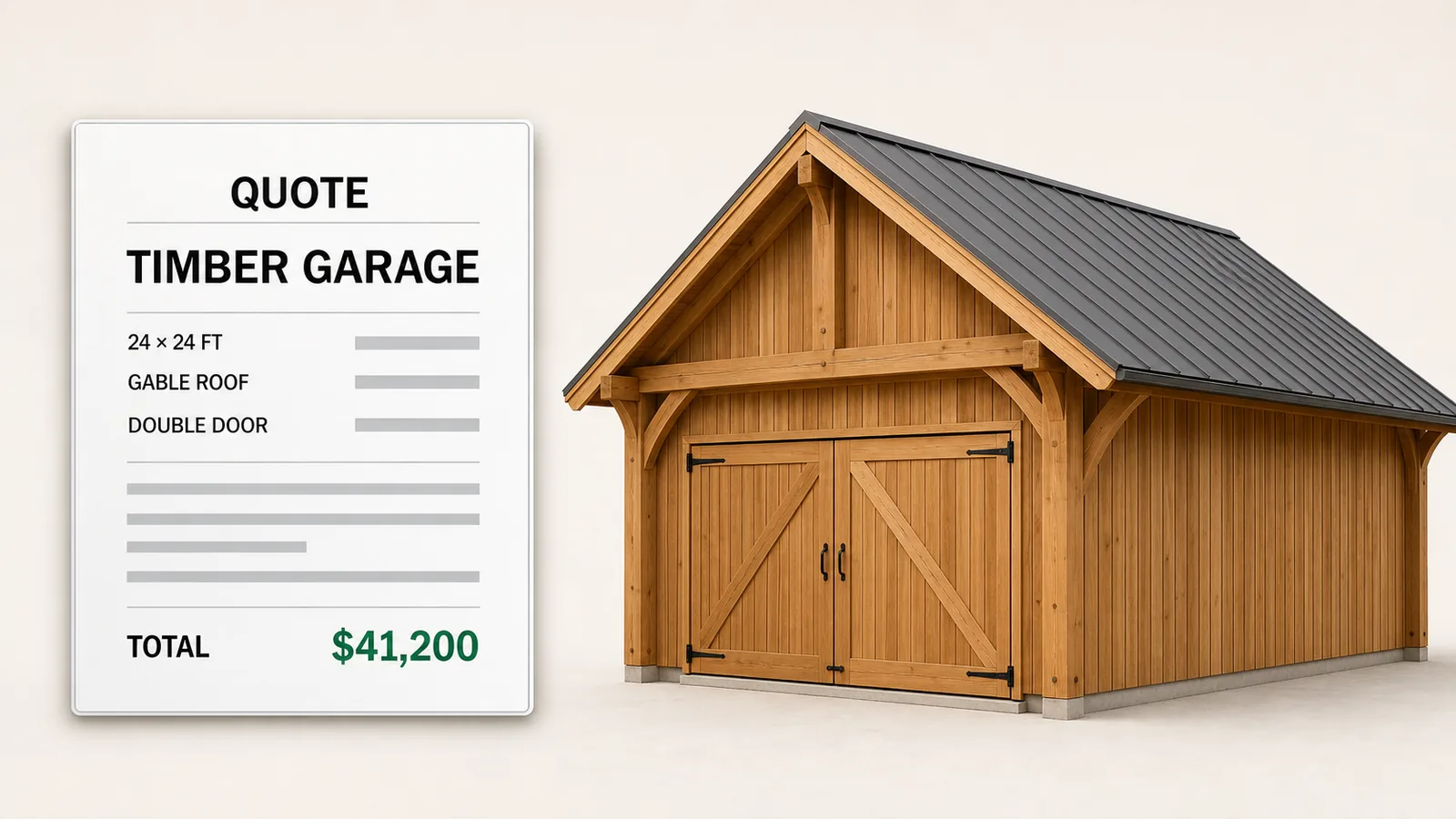
A configurator quote for a timber two-car garage rendered as a finished sheet, every option priced and the build already checked against the factory rules
The fit

Who uses product configurators

Configurators pay anywhere the product has more valid combinations than a price list can hold: pergolas, saunas, outdoor kitchens, cabinets, sheds, fences, trailers, machinery, windows and doors. If you came looking for product configurator examples, this section is that list, told through what the rules actually catch.

On a pergola, the rules carry the snow and wind load: the span decides the post count, and the region decides the beam. In a sauna, the heater is sized to the room's volume and keeps its clearances, whatever the buyer would prefer. In a cabinet run, corner units bring their filler panels and the drawer stack refuses to sit under the sink. On a trailer, the axle rating follows the deck length and the load the buyer names. None of that knowledge is on the brochure, and all of it decides whether the build is possible.

The pattern repeats per vertical, in each vertical's own language. An outdoor kitchen configurator carries appliance clearances and countertop spans; a sauna configurator carries heater sizing and venting. The rules differ; the mechanism never does.

The demand is not new, either. Back in 2015, a Deloitte consumer review found 1 in 5 consumers willing to pay a 20% premium for a customized product, and 48% willing to wait longer for it. The appetite was never the bottleneck. The quoting was.

And the honest non-fit: a catalog with three fixed variants needs a dropdown, not a configurator. If every product has a SKU and the price never depends on a combination, a webshop already does this job.

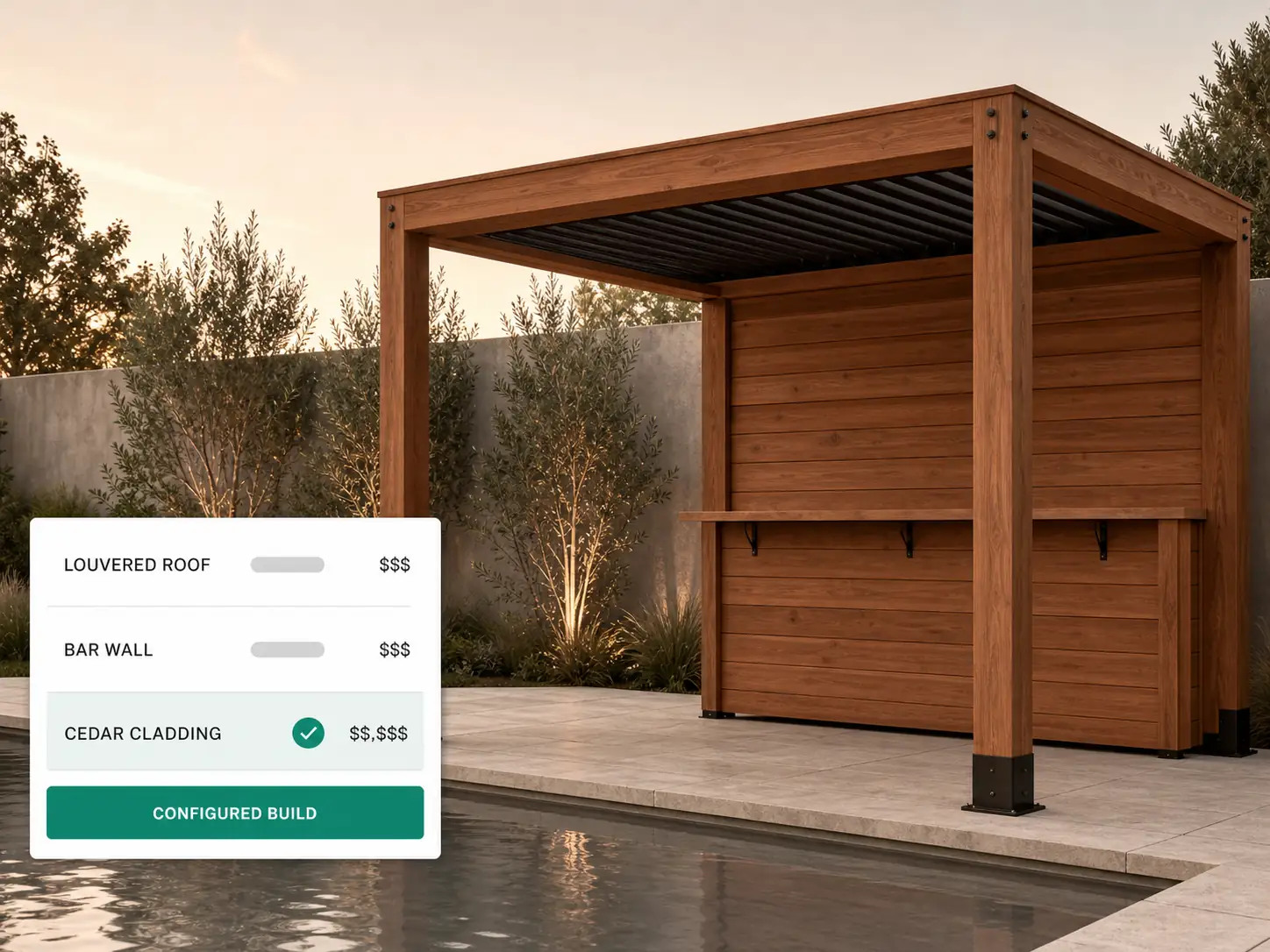
A configured cedar poolside cabana with a louvered roof and one bar wall standing beside a pool in evening light, a floating card naming its chosen options
The boundary

Product configurator vs CPQ

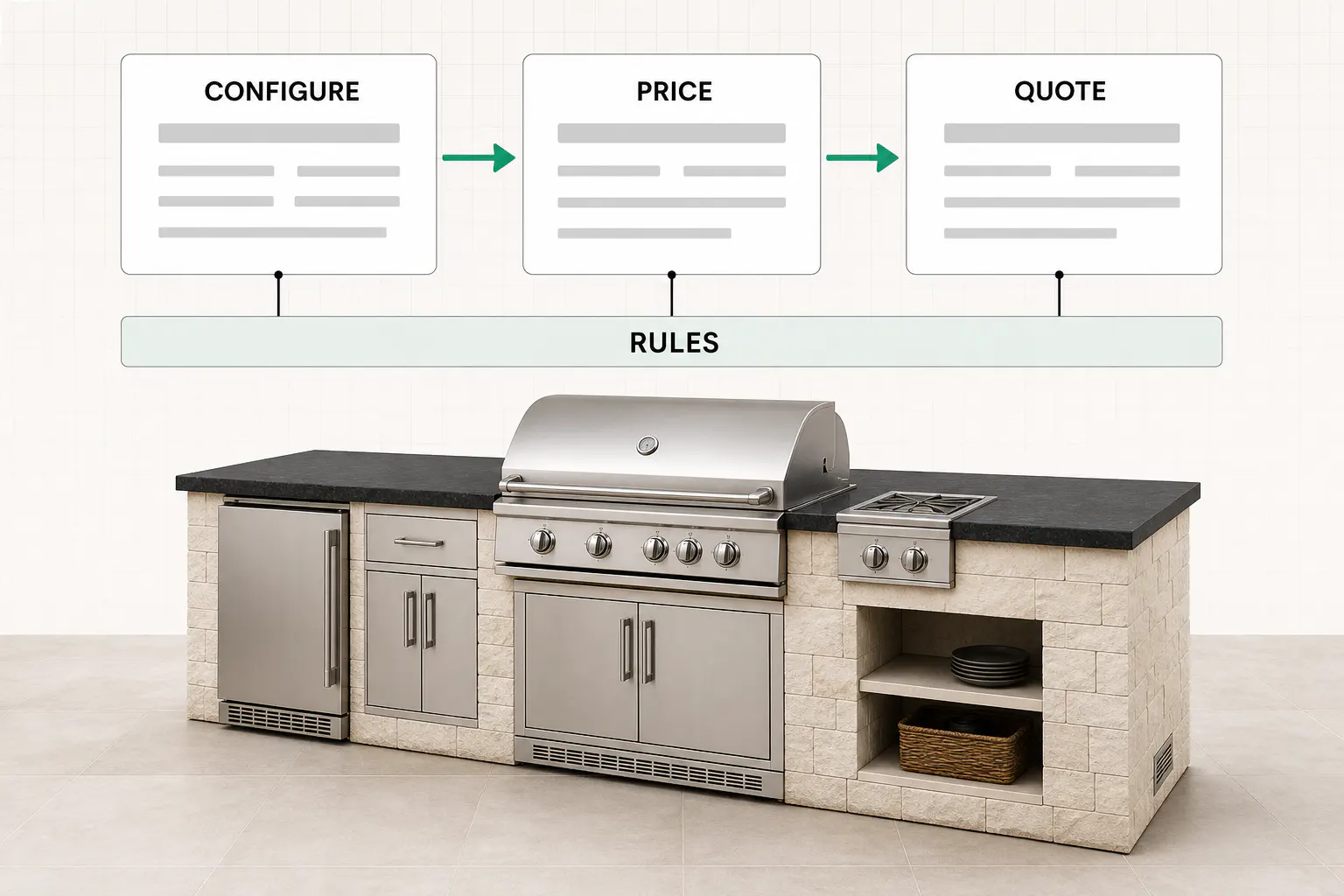
A product configurator is the front half. CPQ is configure, price, quote as one flow: the configurator plus the price books, the discount and approval logic, the quote document, and the order trail behind it. The two names are used interchangeably in sales calls, and they should not be.

  • Product configurator

    Where to start
    What it does
    Guides the buyer to a valid buildIt knows every option and blocks combinations your shop cannot make.
    What you get
    A spec your shop can buildOne complete, correct version of the product.
    What you still need
    Prices and paperworkOn its own it holds no price list and prints no quote.
  • CPQ

    What it does
    The same, plus the moneyIt adds price books, discount limits, approvals, and quote templates.
    What you get
    A quote ready to signPriced and approved, one step from becoming the order.
    What you still need
    Invoicing and productionThe books and the shop floor stay in your ERP.
The three CPQ stages, configure then price then quote, drawn as one flow around a custom outdoor kitchen, with the product configurator as the first stage

Which do you need? If a valid specification is the whole job, the configurator alone does it. The moment quotes, dealer margins, or approvals enter the picture, you are shopping for CPQ whether the label says so or not, and the two halves usually ship as one system. That combined system is what the market sells as product configurator software. It is also what our own product configurator is: the choosing screen with the price books and the order trail already behind it.

The other half of this comparison has its own pillar. If the three letters are new to you, start with what CPQ means; if your product is configurable and your channel is dealers, the deeper read is cpq software for manufacturing.

The dealer seat

Configurators in dealer sales

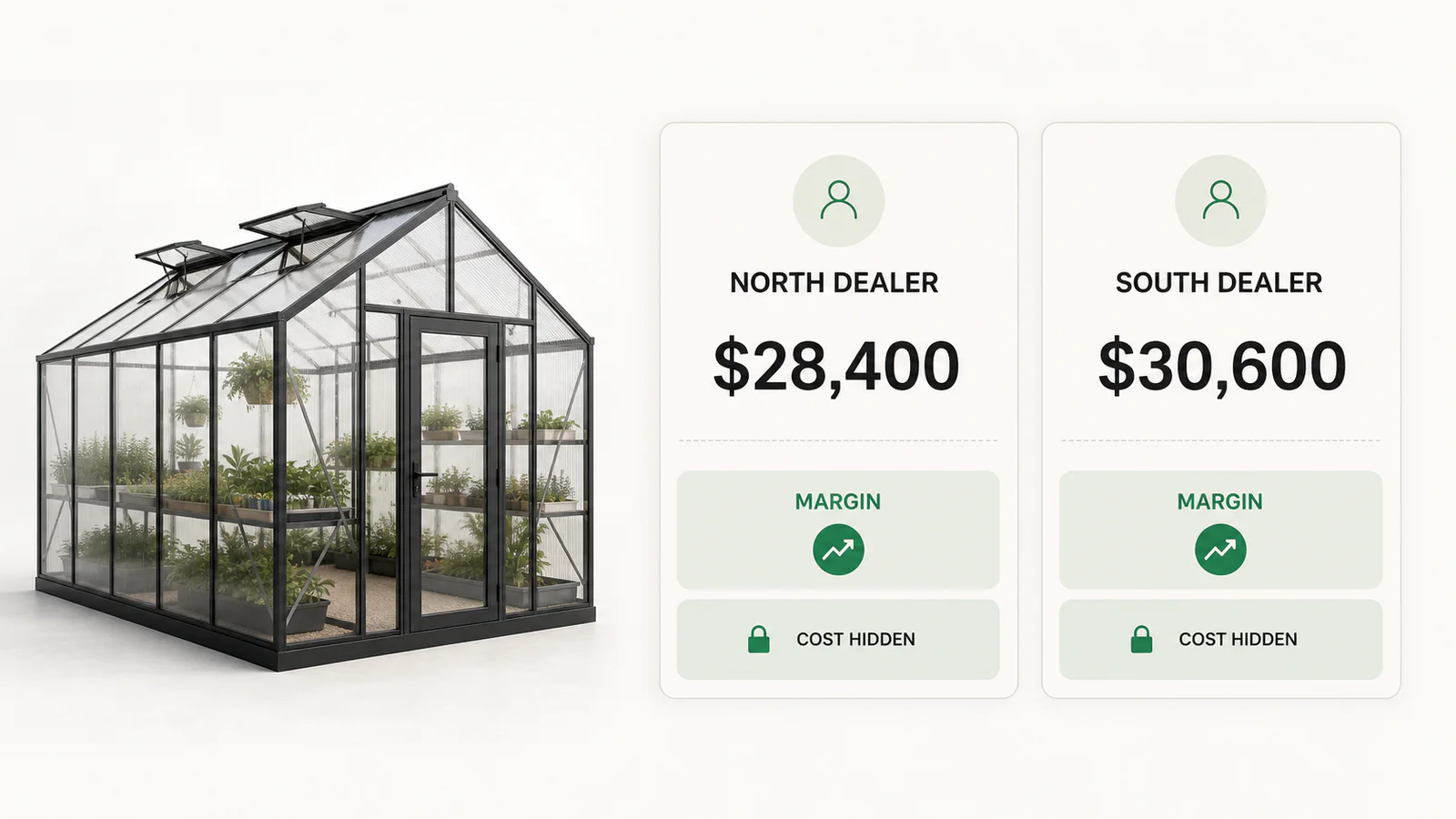
When the person configuring is a dealer, three things about the configurator change hands at once. The rules stay the factory's, so a dealer three time zones away cannot promise a build the shop will refuse. The price list becomes that dealer's own, with their margin on top. And the factory's cost price never appears on anyone's screen but the factory's.

That seat has names. The screen the dealer drives with the buyer in front of them is a sales configurator; the signed-in home where each dealer opens on their own prices, quotes, and orders is a b2b customer portal. Either way, the factory stops being the quoting bottleneck and starts receiving valid orders only.

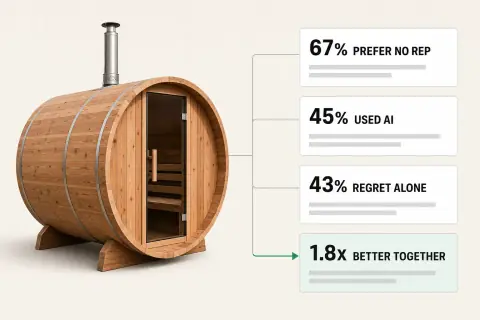
The buyers are already there. A Gartner survey of 646 B2B buyers, fielded in August and September 2025, found 67% prefer a rep-free buying experience. McKinsey's B2B Pulse, a 2024 survey of 3,942 B2B decision makers, found 39% willing to spend $500,000 or more through self-service or remote channels. And Digital Commerce 360 measured US B2B ecommerce at $2.93 trillion in 2025, up 13% in a year in which total US B2B sales grew 0.4%. The buying moved to screens; the quoting is following it.

This is the case every ranked guide on this query skips, and it decides more than the view type does. A manufacturer choosing between 2D and 3D is fine either way. A manufacturer whose dealers still phone the factory for every price is losing deals to whoever answers first, whatever their configurator renders.

One configured modular greenhouse priced on two different dealer price lists, each dealer seeing their own margin and the factory cost appearing on neither screen
FAQ

Common configurator questions, answered.

Short answers to the questions people actually search. The first sentence of each is the answer.

Four parts. The product model, which holds every option, size, and material the product comes in. The rule model, which holds what depends on what and which combinations are blocked. The pricing layer, which prices each pick from a price list or a formula. And the output: the valid configuration the system emits as a specification, a quote, or an order. The view on screen, 3D or otherwise, is the interface over those four.

Select, validate, price, output. Someone picks options, the rules check each pick and block what cannot be built, the price recalculates as the build changes, and the finished configuration is emitted as a specification, a quote, or an order. Every configurator runs that same loop, whatever the product and whatever the screen shows.

No. The rules and the pricing do the real work, so a configurator runs fine on 2D drawings, photographs, or a plain option list. Real time 3D earns its setup cost where the product's shape changes with the options and the buyer needs to see the build to trust it. If your product varies in finish rather than in form, skip the models and keep the rules.

There is rarely a public price list, because no two setups match. The figure is shaped by three things: the products and rules to model, the number of dealers or sellers who will quote with it, and the pieces you add around the configurator, like ordering or a dealer portal. Dealect prices for the manufacturer, dealers pay nothing, and you hear the full number on one 30-minute call.

Yes, and in dealer-facing setups that is most of the point. Each dealer works from their own price list and watches their own margin while they configure. The buyer sees one finished price, the factory's cost price never leaves the factory, and no dealer ever sees another dealer's numbers.

Last updated

Recap

The short version

That is what a product configurator is, in one page. Three claims worth carrying out of it:

  • A product configurator turns options and rules into one valid, priced build. The picture is the interface; the rules are the product knowledge, and they are what make every quote buildable.
  • It pays where combinations outrun the price list and a wrong build is expensive. A catalog with three fixed variants needs a dropdown, and no vendor page will tell you that.
  • In a dealer channel, the configurator is the quoting seat. Dealers quote on their own margin against your rules, and your cost price stays home.

If your next question is what a configurator costs, the honest structural answer is on the pricing page. And if it is faster to just watch one of your own products get configured this way, that is what the demo below is.

Last updated

Teodoro Pickett

Teodoro Pickett writes the Dealect blog, covering CPQ, product configurators, and the business of selling custom products through dealer networks. Every article is written for manufacturers first, checked against sources a reader can open, and updated as the category moves.

Keep reading

Where to go next

All articles

The blog

Latest articles

All articles
See it on one of your products

Watch one of your products configured live.

Request a 30-minute call, bring one product, and see it configured, priced, and quoted against your own rules. We reply by email to set up the time.

  • 30-minute personalized demo
  • See real configurators in your industry

Your call is with the Dealect team.