Sales configurator

Sales configurator for custom manufacturers

Your dealers and reps build the product with the buyer, watch the price move with every option, and send a finished quote before the meeting ends. A sales configurator carries your options, your rules, and each dealer’s prices, so nothing gets quoted that your shop cannot build.

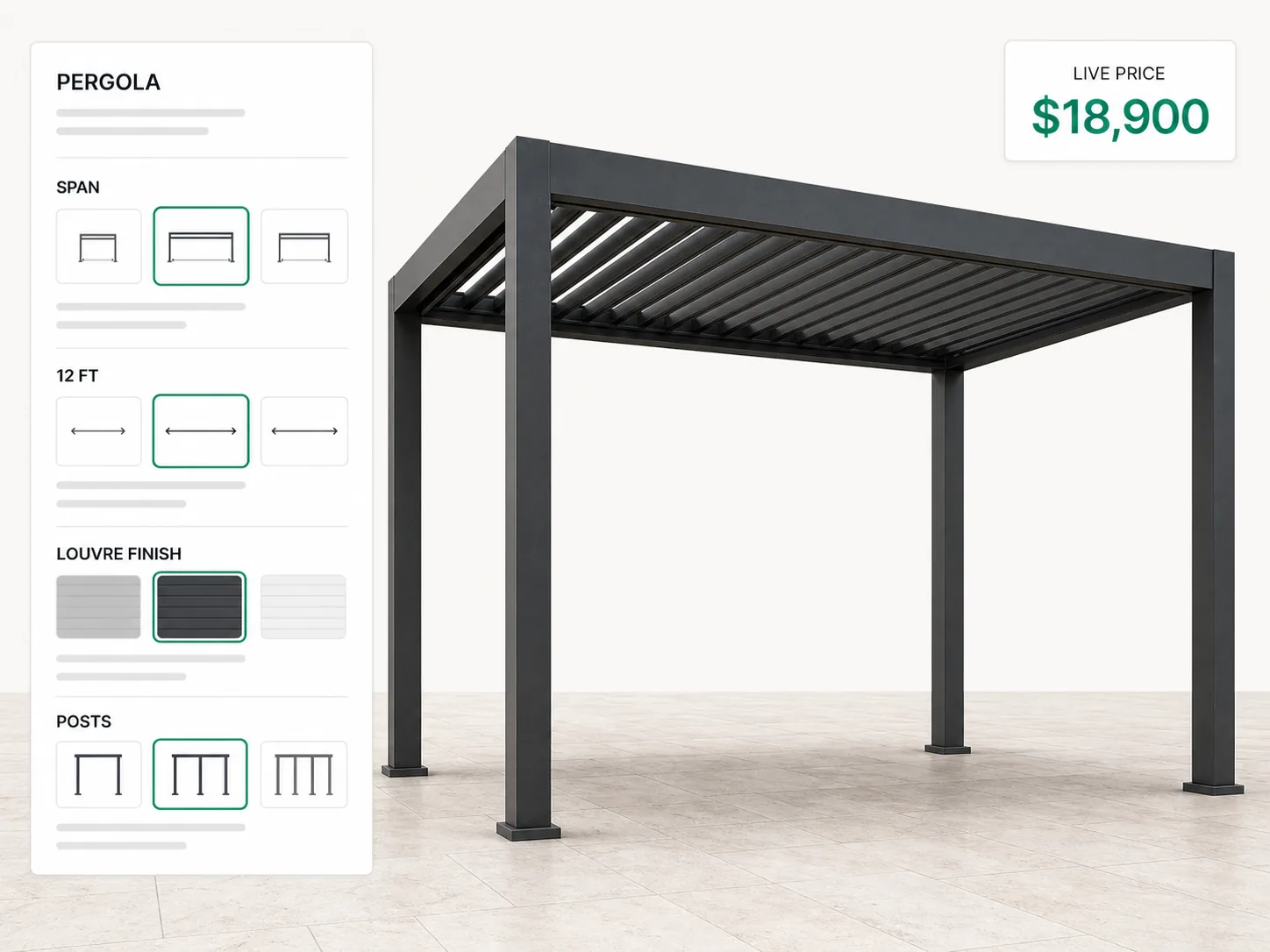
Sales configurator screen with a louvered pergola being specified, an option rail on the left, and a running total that moves with every choice.
In plain words

What is a sales configurator?

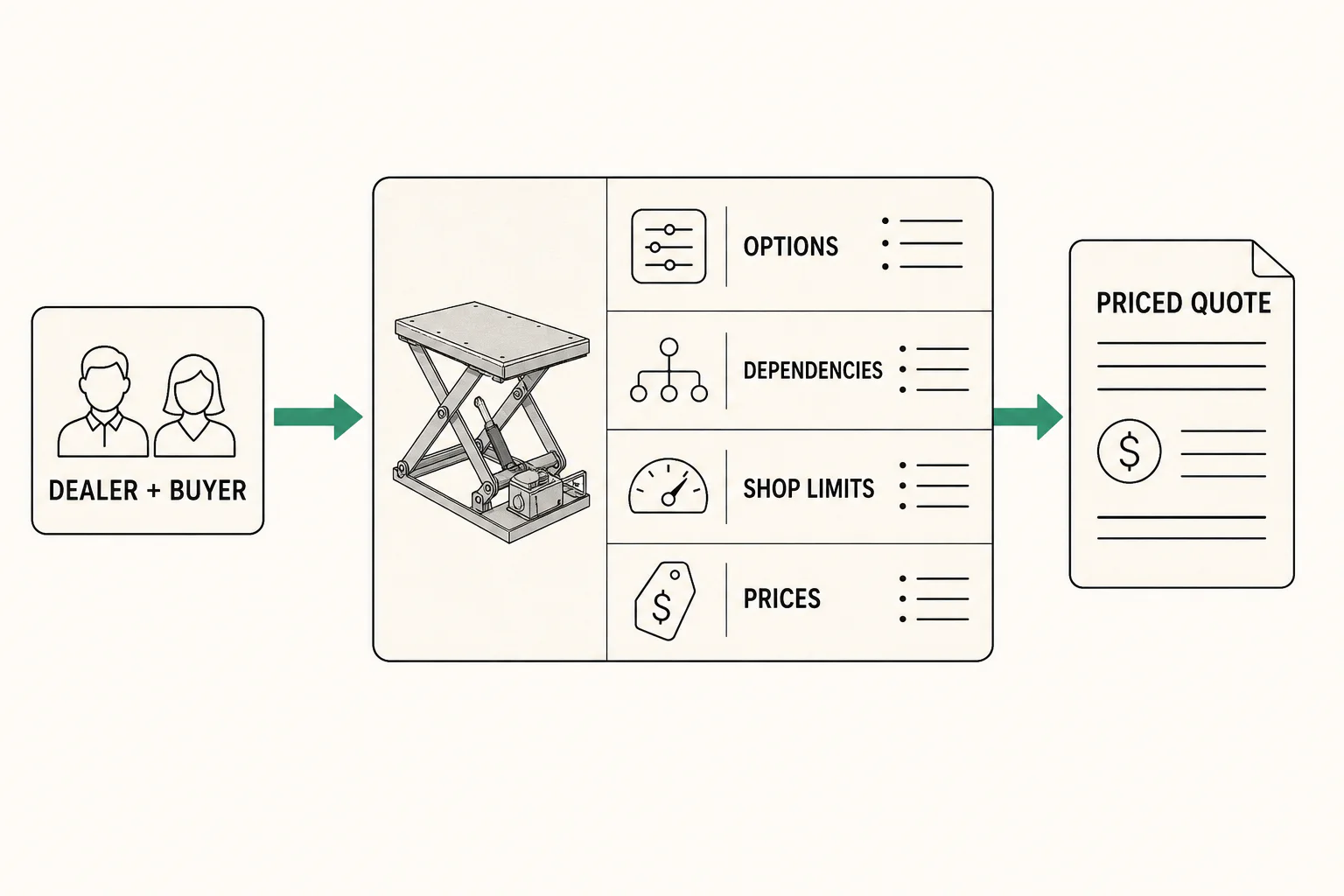
What a sales configurator holds: the manufacturer's options, dependencies, shop limits, and prices in one place, with a dealer and a buyer driving it and a priced quote coming out.

A sales configurator is software a salesperson or a dealer uses to build a product with the buyer in front of them. It prices the build as every option changes, then turns the finished configuration into a quote. It carries the manufacturer's options, rules, and prices, so the quote is valid and priced right the first time.

What it holds

Your product knowledge, out of the price list

Every option you sell, every dependency between them, the limits your shop actually works to, and a price on each one. Sales configuration software keeps all of it in one place, so a change to a material price reaches every quote written after it rather than chasing a revised PDF around the network.
Who drives it

A seller, with the buyer beside them

This is not a page a buyer browses alone. A dealer or a rep runs it in a showroom, on a job site, or at a kitchen table, with someone ready to sign sitting beside them. That is why a sales configurator is judged on how fast it gets to a number the buyer can act on, and on whether that number is one you can honor.

This page defines the seller's seat. If the underlying category is the open question, start with what a product configurator is, told in plain words.

Written and kept current by the team that builds Dealect, in Mississauga, Canada. Who builds Dealect.

The comparison

Sales configurator vs product configurator vs CPQ

A sales configurator ends at a priced quote the buyer can sign. A product configurator ends at a valid specification, with no price on it. CPQ is the wider loop that adds approvals and the order trail behind both. Which one you need depends on who is holding the screen.

Side by side · one configured deal
In a configured dealSales configuratorProduct configuratorCPQ
The question it answersWhat is this buyer getting, and what does it cost?What can this product be?What is the right price, and what does the customer sign?
Who is driving itA dealer or a rep, with the buyer beside themA buyer on a website, or your team defining the product lineSales operations, plus whoever approves a discount
What comes outA priced, valid configuration and a quote ready to sendA valid specificationA quote, an order, and the approval trail behind it
What it reads fromYour rules and the dealer's own price listYour options and the rules between themPrice books, discount rules, CRM and ERP records
Where it stopsAt a signed quote, not at a checkoutShort of a price and a documentShort of showing the buyer the build itself

In practice the three arrive as one screen. The product configurator is the part that knows what can be built. The sales configurator is the part a seller drives in front of a buyer. CPQ software for manufacturing is the name for the whole configure, price, quote loop, once approvals and downstream systems are attached to it. If CPQ is a new term, our what is CPQ guide unpacks it from zero. Choosing between them is usually the wrong question. Which of the three your buyer touches, and whose prices it quotes on, is the right one.

The problem

A configured quote moves at the speed of the one person who knows the price.

Quoting a product that changes with every order means somebody works the number out by hand, and everyone else waits on them to do it.

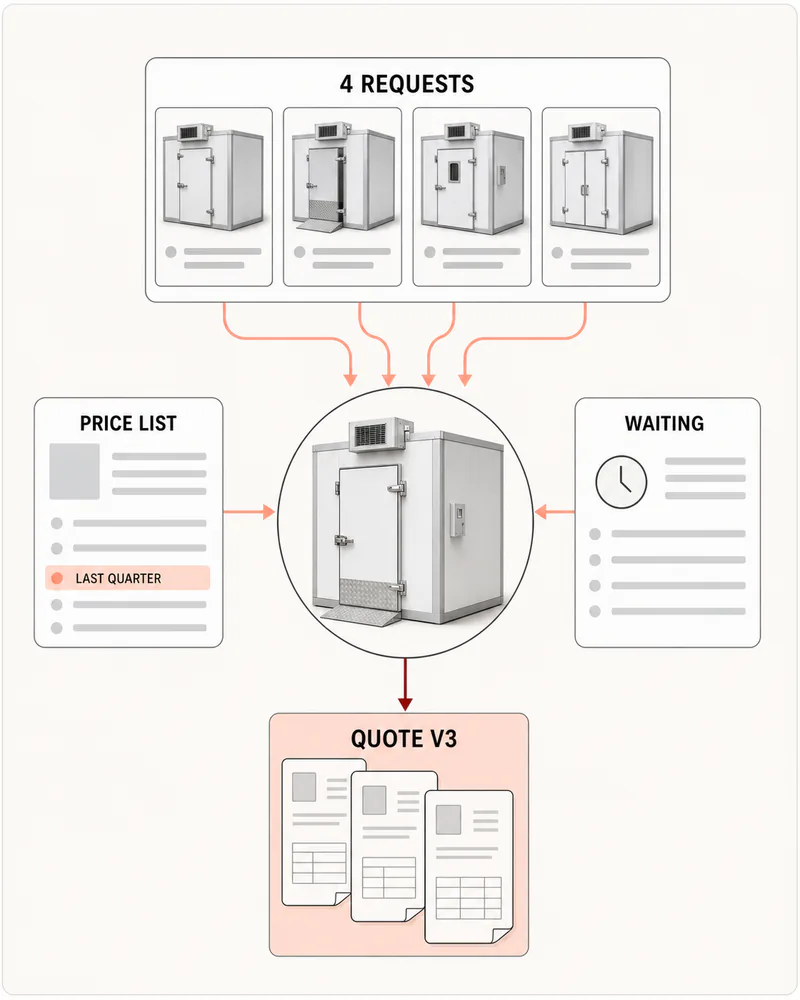
The manual quote path: four walk-in cooler requests, last quarter's price list, a waiting step, and three versions of the quote.
  • The price lives with one person

    Options multiply faster than any list can hold, so the real number sits with whoever knows the product best. A rep standing next to a ready buyer has to ask them, and the answer arrives after the moment has passed.

  • Price lists go stale the day after they go out

    A material cost moves, an option is discontinued, a surcharge appears. The file everyone quotes from does not move with any of it, and the gap between last quarter's number and this week's comes out of someone's margin.

  • A build nobody can make becomes an order

    Nothing checks a hand-written spec against what your shop can actually produce. The combination gets quoted, signed, and caught on the floor, where the only moves left are walking it back or eating it.

  • Every revision is a new document

    Change a size, change a finish, and the quote is rebuilt by hand. The thread grows, the versions pile up, and by the third one nobody is certain which file the buyer is looking at. That pile is what a sales configurator replaces.

The arithmetic

What counts as a complex configurable product

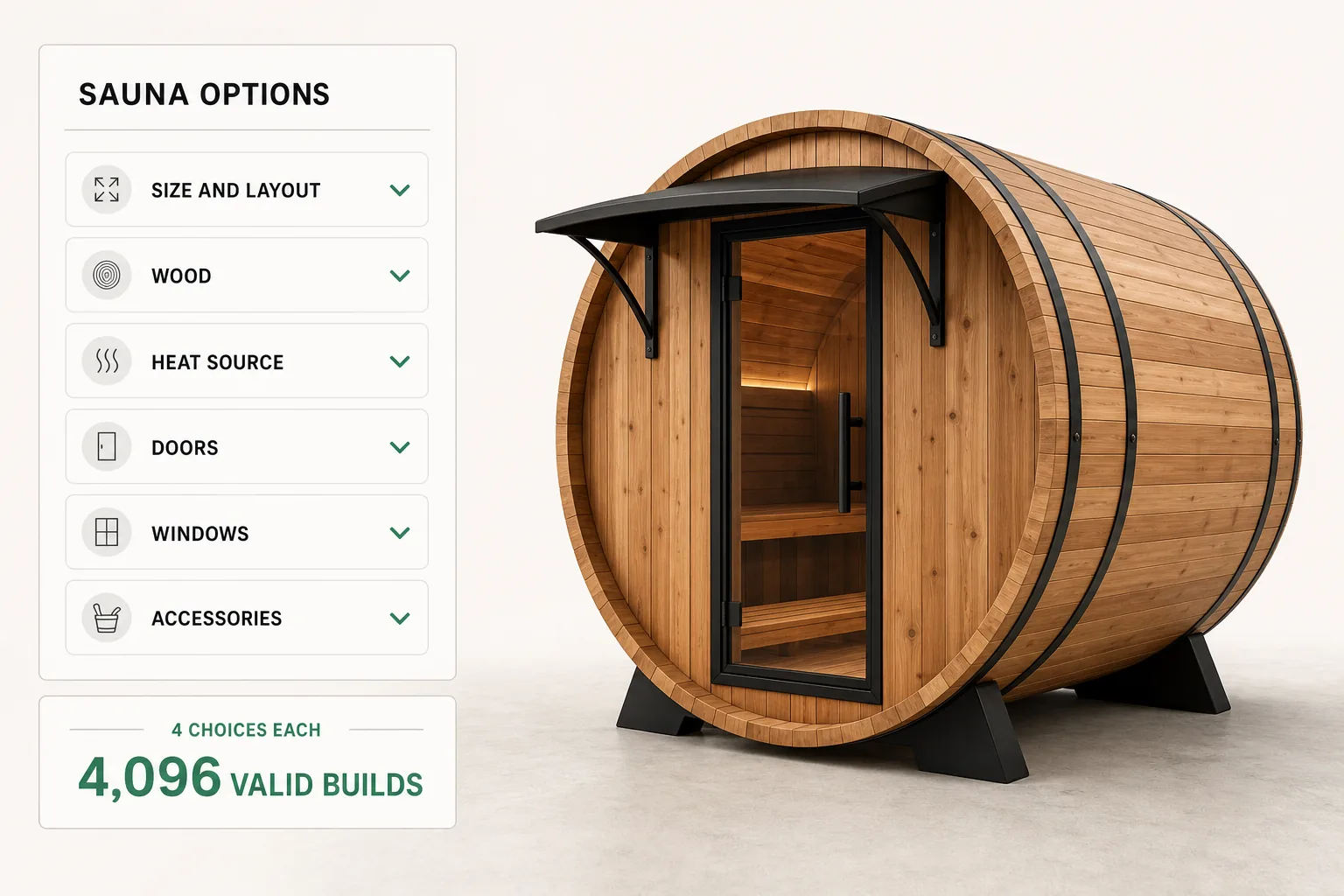
Every page on this subject uses the phrase and none of them shows one. Here is a product line broken into its option groups, with the multiplication done out loud.

One barrel sauna · the arithmetic at four choices per group
  • Option groups

    6

    Size and layout, wood, heat source, doors, windows, accessories. The groups our own sauna configurator carries.

  • Options to remember

    24

    Four choices in each group. A number a person can hold in their head, and a list that fits on one page.

  • Builds those options make

    4,096

    The same four choices, multiplied instead of added. 4 × 4 × 4 × 4 × 4 × 4, and every one of them a real quote.

Size and layout
The room size, and whether the build is one room or two.
Wood
Cladding and benches, cedar or spruce, sometimes different from each other.
Heat source
A heater matched to the room it has to heat, which is a rule and not a preference.
Doors
Swing, handing, and how much glass goes in them.
Windows
Where the glass goes, and how much of it the frame will carry.
Accessories
The things added last, after the buyer has already decided, that still move the price.
Option groups behind one barrel sauna, listed as size and layout, wood, heat source, doors, windows, and accessories, with the number of valid builds under them.

The six groups are the ones our sauna configurator already carries, so you can check them. Four choices in each is the assumption, and it is a modest one for a custom line. Add a seventh group, or a fifth choice anywhere in the six, and the count moves again in a direction a price list cannot follow. That is the whole definition: complex configurable products are not the ones with the most parts, they are the ones whose parts combine.

Do this before you read on

Run the same multiplication on your own product line. If the answer is bigger than the number of rows on your price list, the gap is being covered by somebody in your office answering the phone. A sales configurator is where that arithmetic is supposed to live instead.

How it works

Configure, price, quote, order, without leaving one screen.

A sales configurator runs the four moves a good rep already makes, and keeps the numbers right at every one of them.

  1. Step 01 · The questions, in selling order

    Step 1: Configure

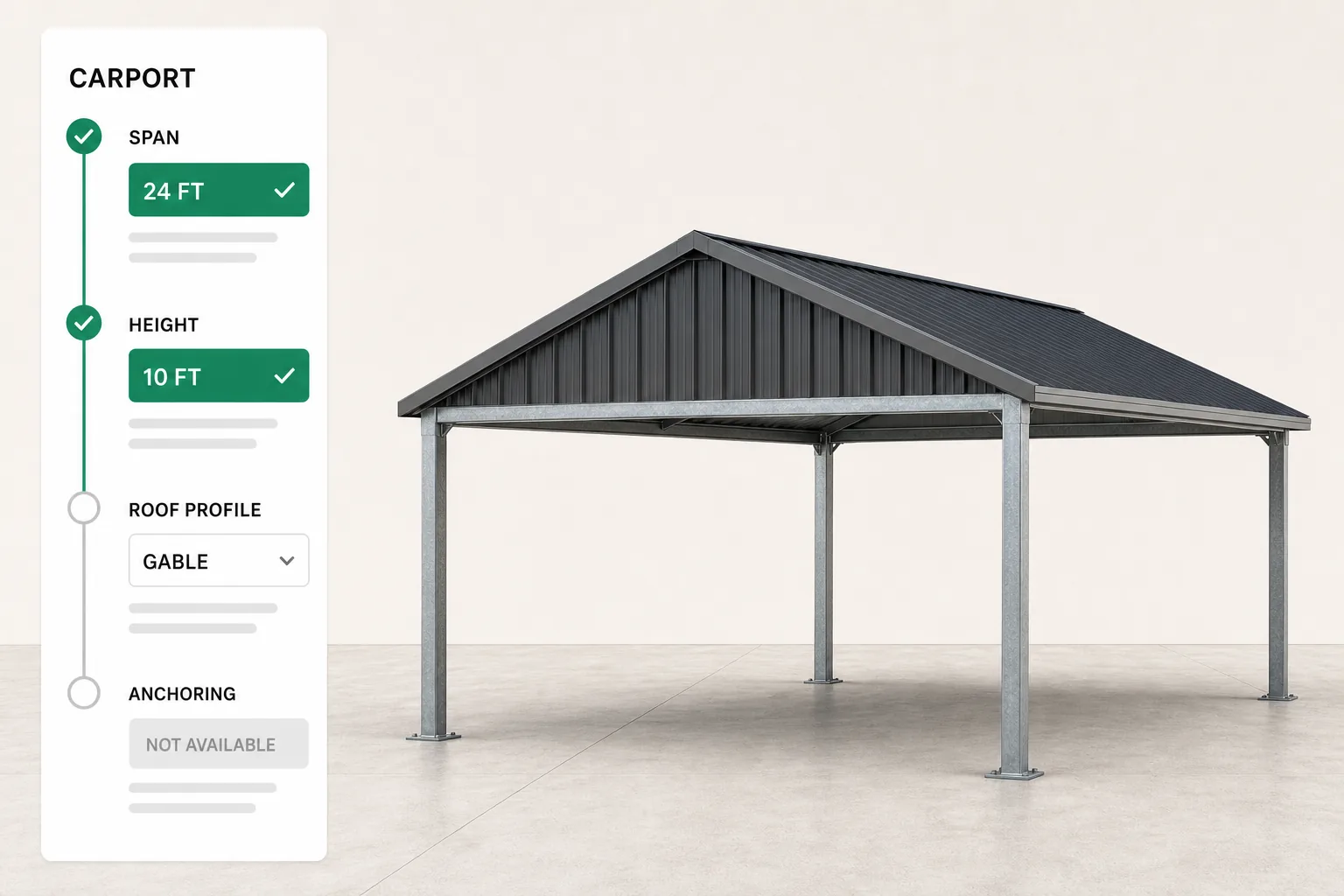
    The configurator asks what a salesperson already asks, and in the same order: the size first, then the material, then the options that depend on both. That makes it a guided selling configurator rather than a blank spec form, so a rep who has never memorized your product line still specifies it correctly. Your rules sit behind every choice, and a combination your shop cannot build never becomes a quote.

    Guided selling configurator specifying a steel carport, with span and height answered first and the roof and anchoring options narrowing to match.
  2. Step 02 · Every click, the same second

    Step 2: Price

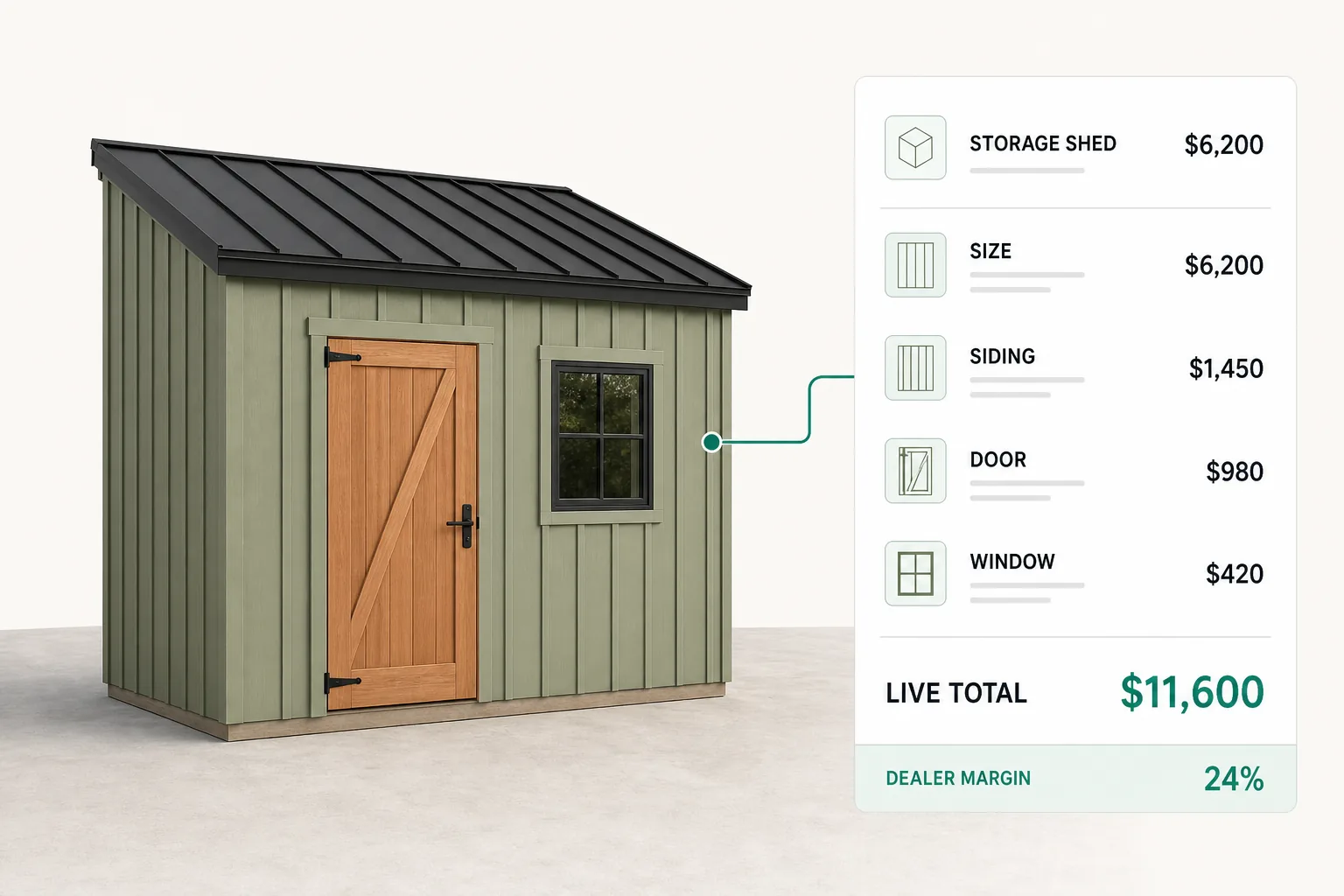
    Each option carries its own price, so the total moves the moment the build does. The numbers are the ones you quote by hand today, not a rounded package price. Every dealer works from their own price list and watches their own margin while they build, and your cost price stays on your side.

    Live pricing panel beside a configured storage shed, with each option priced on its own line and the running total moving as the size changes.
  3. Step 03 · A document, not a promise to send one

    Step 3: Quote

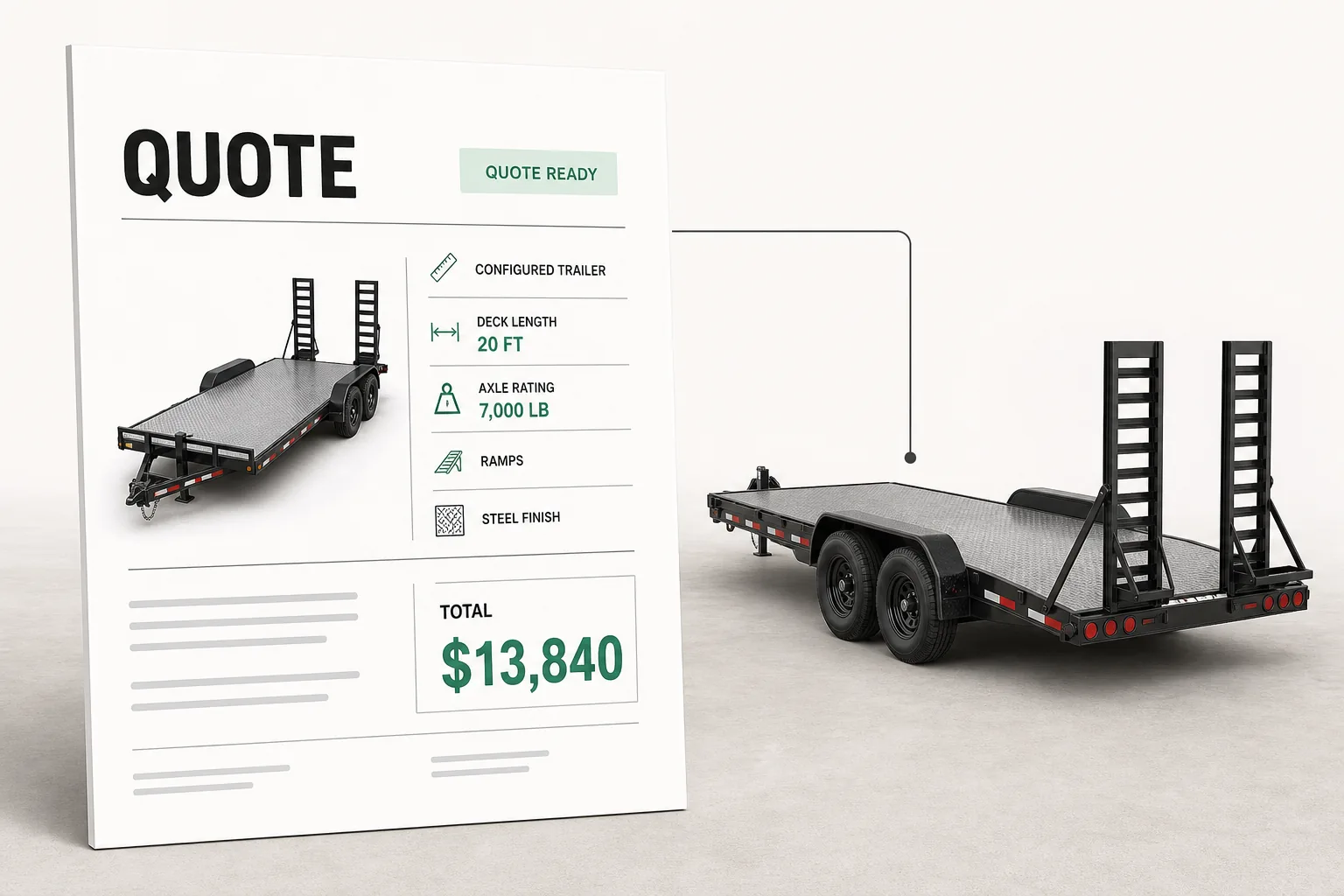
    The configuration becomes the quote while the buyer is still in the room. Line items, options, and the total come straight from the build that was just made, so nothing is transcribed and there is no second document to assemble. Used this way, a quote configurator ends the evening spent rebuilding a proposal in a word processor.

    Finished quote for a configured flatbed trailer, its line items carried over from the configuration and a quote ready status on the card.
  4. Step 04 · From yes to the shop floor

    Step 4: Order

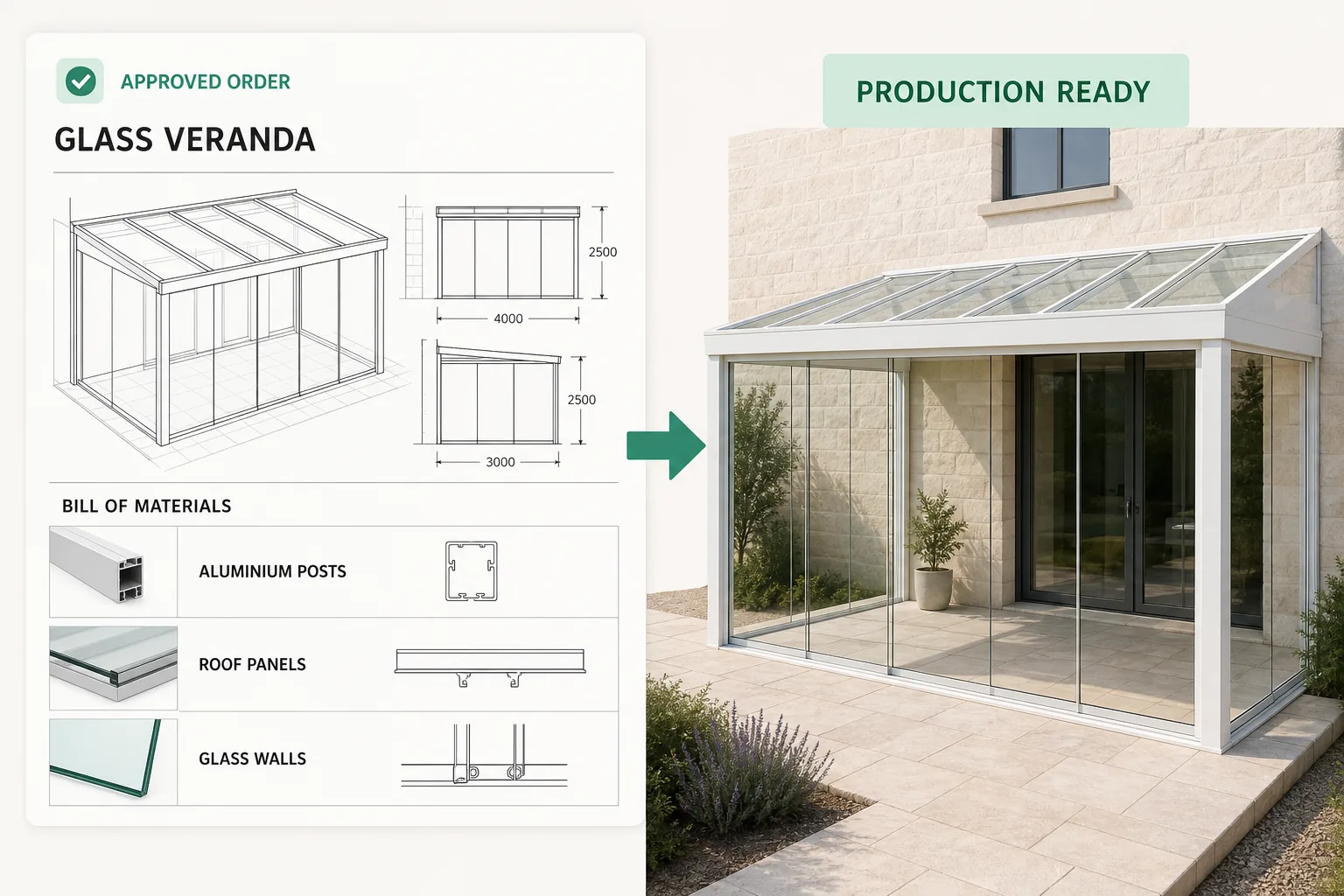
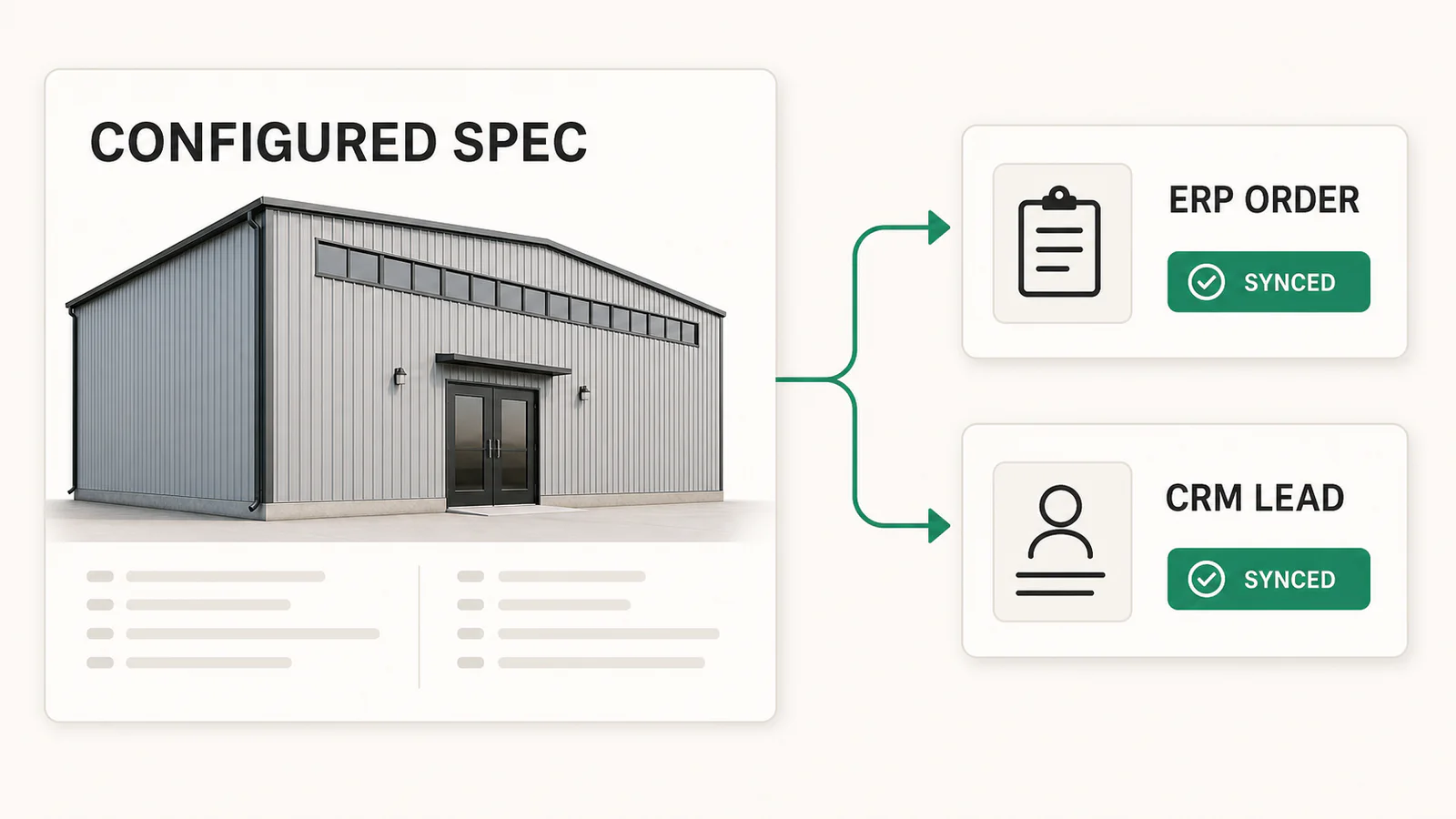
    When the buyer signs, the approved specification becomes the order, and then the build sheet and the bill of materials your shop works from. Approved orders can land in your ERP and the lead in your CRM with nothing retyped. Your dealers watch each status change on their own screen instead of calling your office to ask.

    Approved order for a configured glass veranda becoming a production build sheet, with the parts list carried straight over from the configuration.
The payoff

What changes once the configurator does the quoting

A dealer network's first month quoting on Dealect, measured against the months before it.

Network report · DLCT 001 · month 01
  • Quote time

    2 days to10 min

    From a dealer's request to a sent quote.

  • Spec reworks

    weekly to0

    Nothing reaches the shop floor with a wrong spec.

  • Selling hours

    9 to 5 to24/7

    Your dealers sell without the office. You just tap approve.

The software

What sales configurator software has to do

Most lists on this subject run to a dozen or more features and recommend none of them. These are the six a manufacturer is actually choosing between.

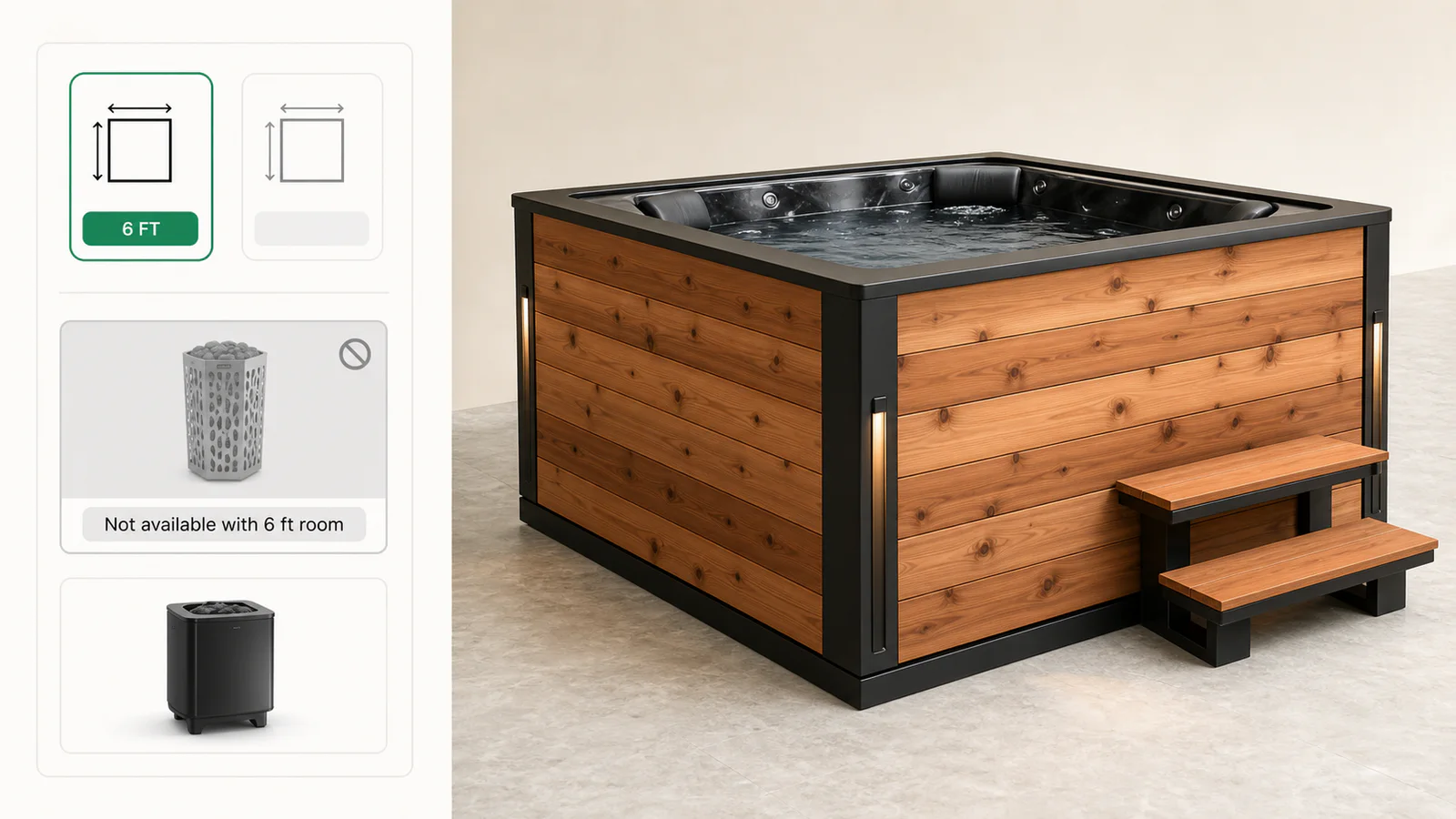
Option rules stopping an invalid cedar hot tub enclosure, with one heater choice greyed out because the room size chosen earlier rules it out.

Option rules and dependencies

One choice requires or rules out another: a heavier frame under a motorised roof, a finish that exists in two widths only. The rule lives in the software instead of a person's memory, so the impossible build is stopped at the option rather than in the shop.

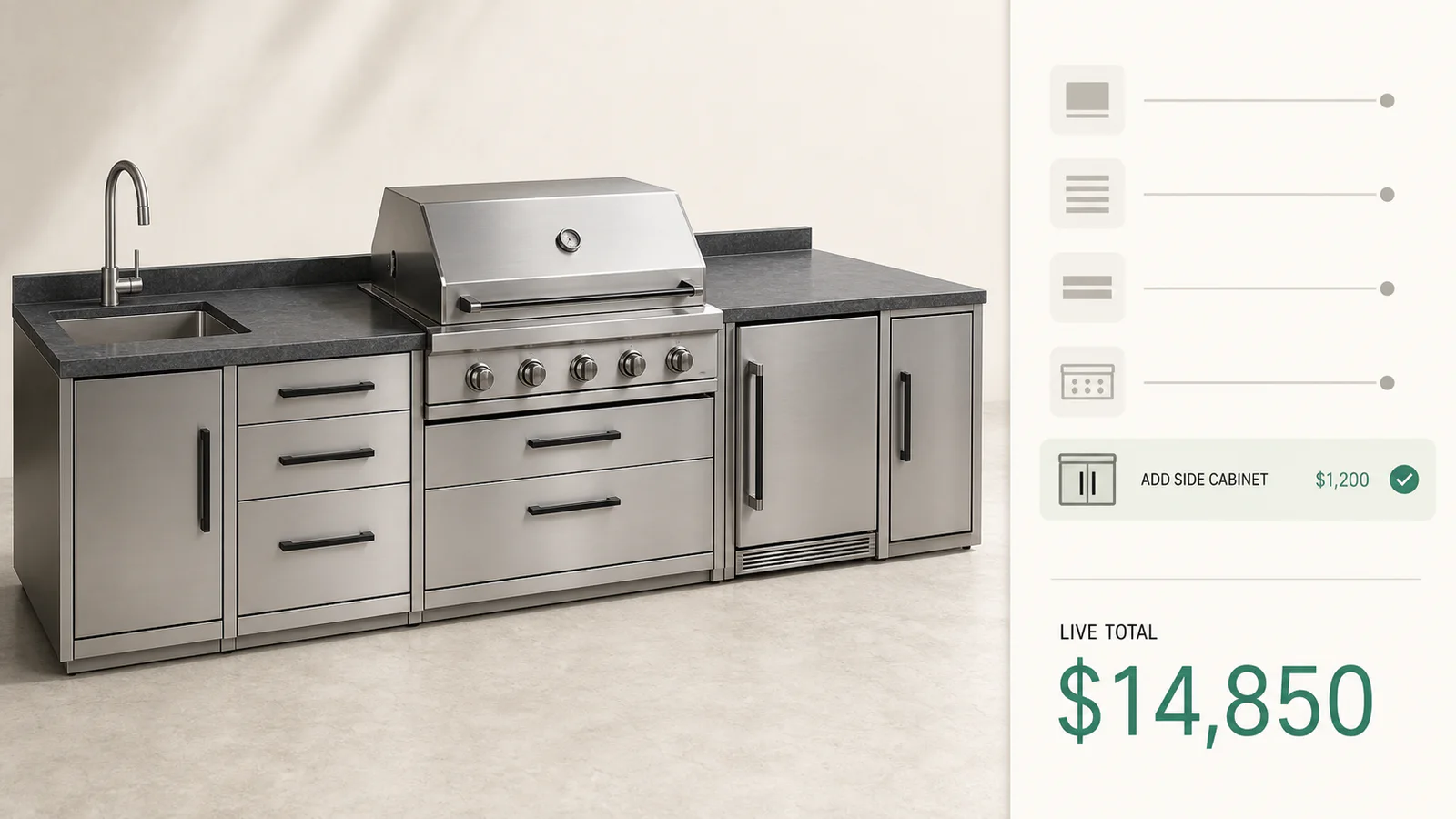
Running total on a configured outdoor kitchen island moving as a cabinet run is added, with every option priced on its own line.

A total that moves with the build

Pricing sits on the options themselves, so the number recalculates on every click rather than at the end. Nobody waits for a callback to learn what a change costs, and no quote goes out at a price that was already out of date when it was written.

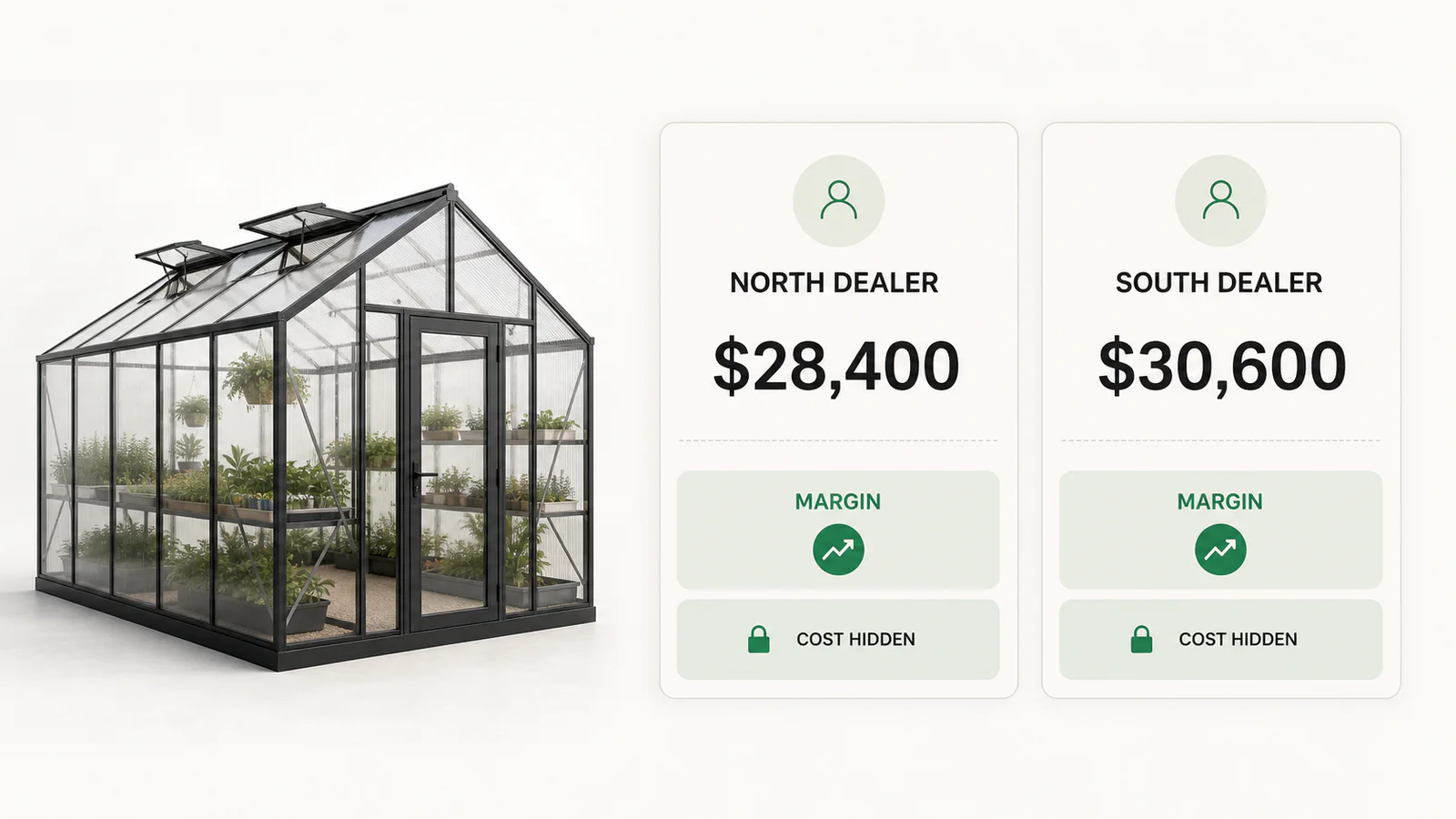
One configured modular greenhouse priced on two different dealer price lists, each dealer seeing their own margin and neither seeing the other's numbers.

A price list for every dealer

Each dealer quotes on their own prices and sees their own margin on each deal. No dealer sees another dealer's numbers, and the cost price you build to never leaves your side. One build carries three different figures at the same time.

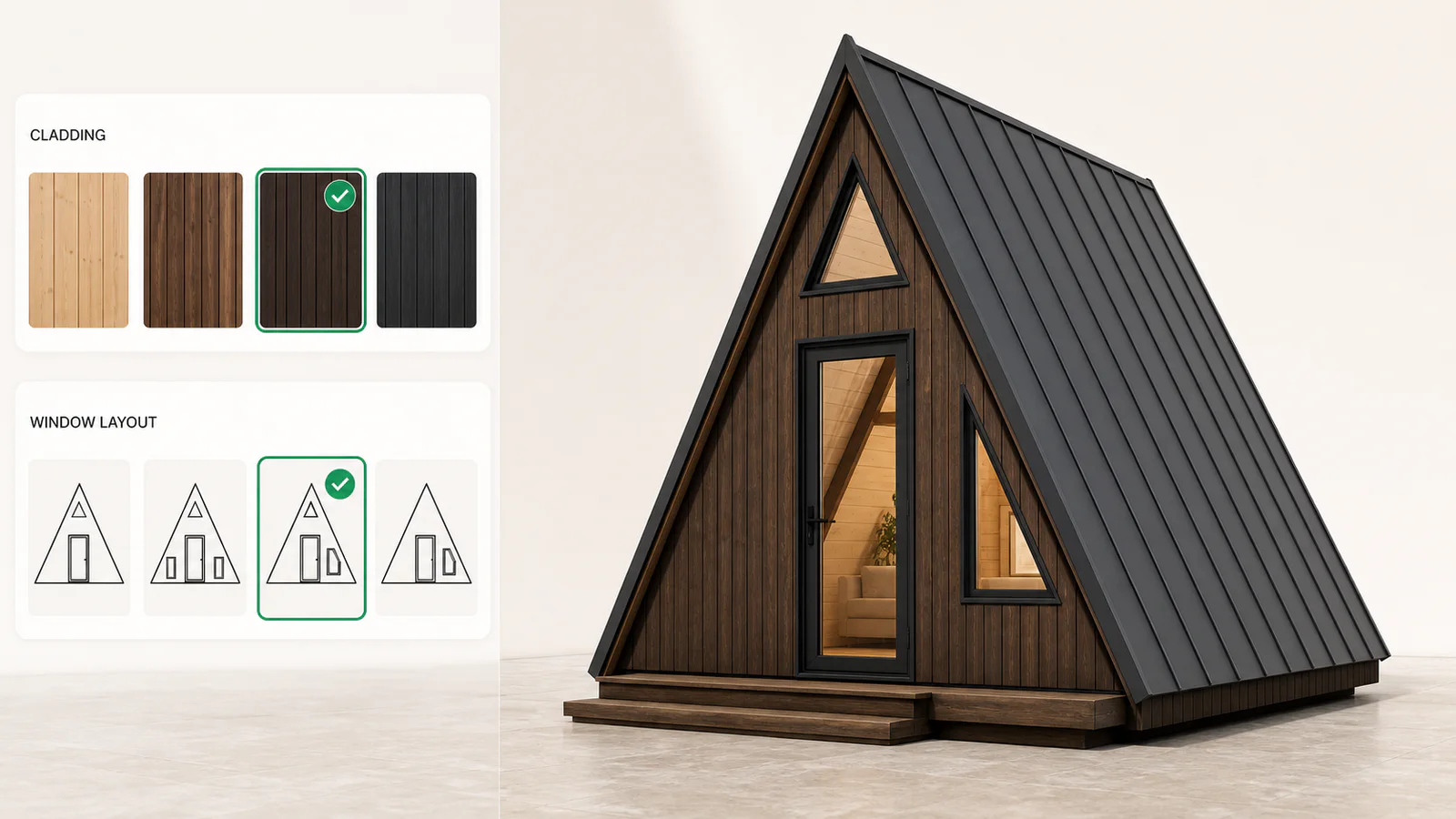
Interactive sales configurator showing a timber A-frame cabin change on screen the moment the cladding and window options are picked.

The build, on screen

An interactive sales configurator shows the product changing as the options are picked, so the buyer approves something they can see rather than a spec sheet they have to imagine. Fewer things get agreed to and then argued about after the deposit.

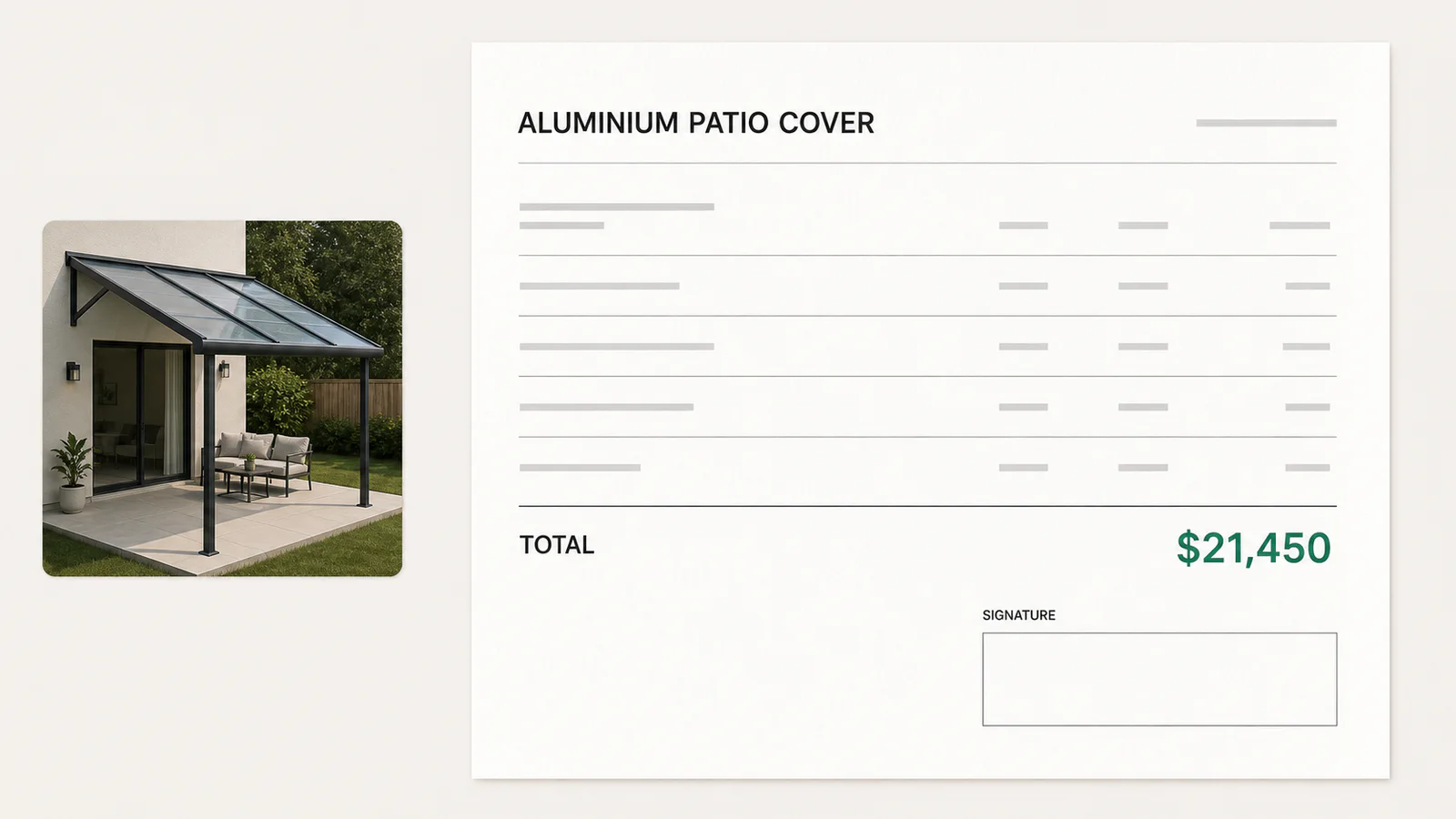
Quote for a configured aluminium patio cover, its line items generated from the build and a signature block waiting at the foot of the document.

A quote the buyer can sign

The document at the end is generated from the configuration, not assembled beside it. Line items, options, and the total are the build itself, which is why the quote can go out in minutes and why what the buyer signs matches what production receives.

An approved steel workshop building order moving into the ERP and its lead into the CRM with nothing retyped along the way.

A handoff, not a re-entry

Approved orders can land in your ERP and leads in your CRM on their own. The spec is typed once, by the person who configured it, and everything downstream reads that record instead of a transcription of it.

Price visibility

One build, three different numbers

A dealer who cannot see their own margin is guessing, and a dealer who can see your cost price is negotiating with it. Both problems disappear when one configured build carries three separate figures and each party is shown only theirs.

That is the part a shared spreadsheet has never been able to do. It is why a sales configurator built for dealer networks is a different piece of software from one built for a company that only sells direct.

Who sees which number
The buyer sees
One price for the build in front of them, from the dealer they are talking to.
The dealer sees
Their own price list and their own margin on the deal, and never another dealer's numbers.
You see
Every quote and order across the network, plus the cost price, which never leaves your side.
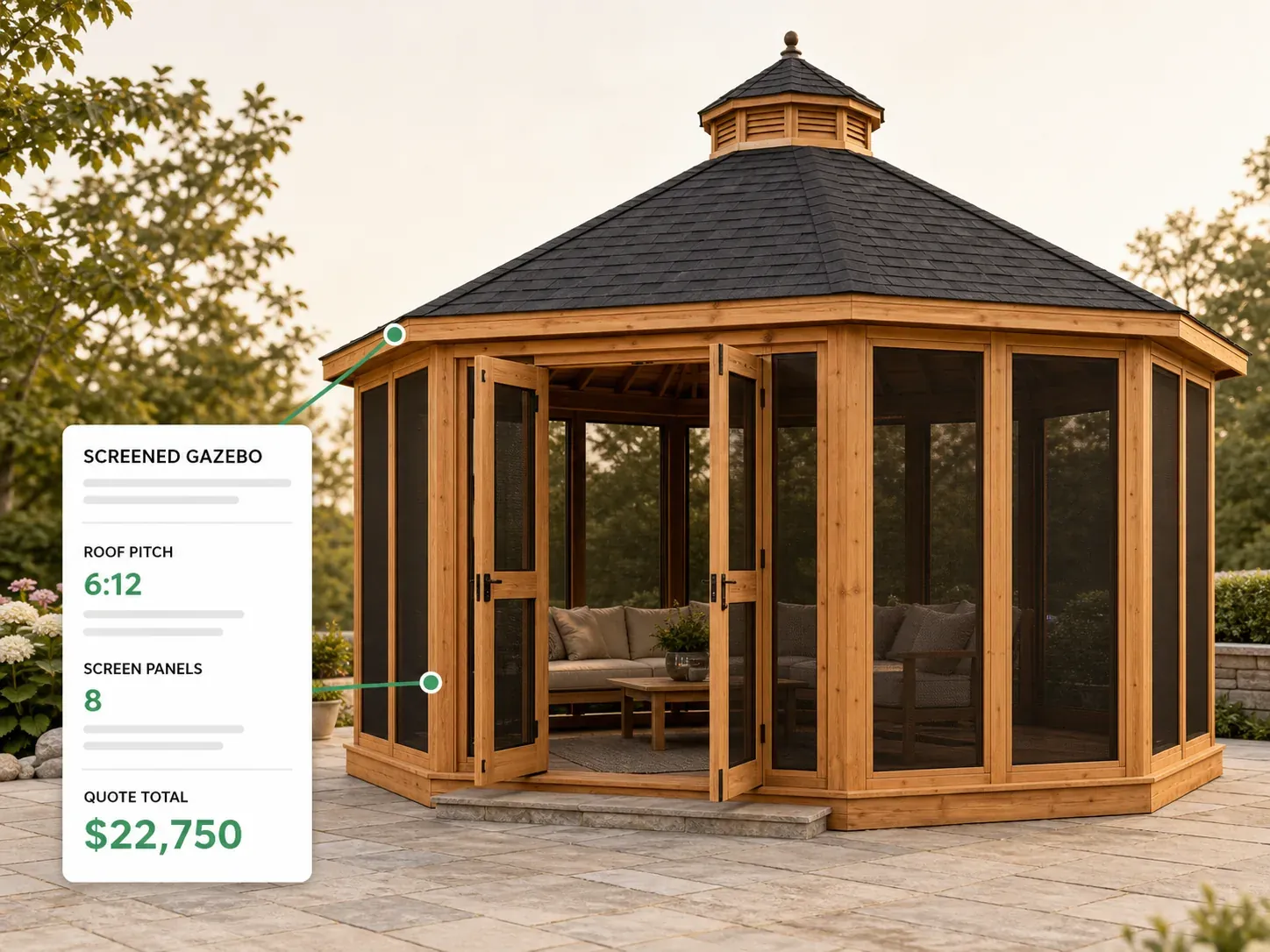
Screened cedar gazebo rendered beside the quote that prices it, the roof pitch and screen panels on screen matching the line items.
On screen

Seeing the build while you price it

The thing on screen is the thing being priced. The buyer approves a build they can look at rather than a specification they have to imagine, which is the difference between a signature and another week of questions.

A 3D sales configurator adds the render to that same flow, so the model driving the quote is also the one selling it. The whole visual side of this, in one place, is our 3D product configurator page. When that render is joined to the price and the quote document, the category name for it is visual cpq.

Who it's for

Who needs one, and where you get one

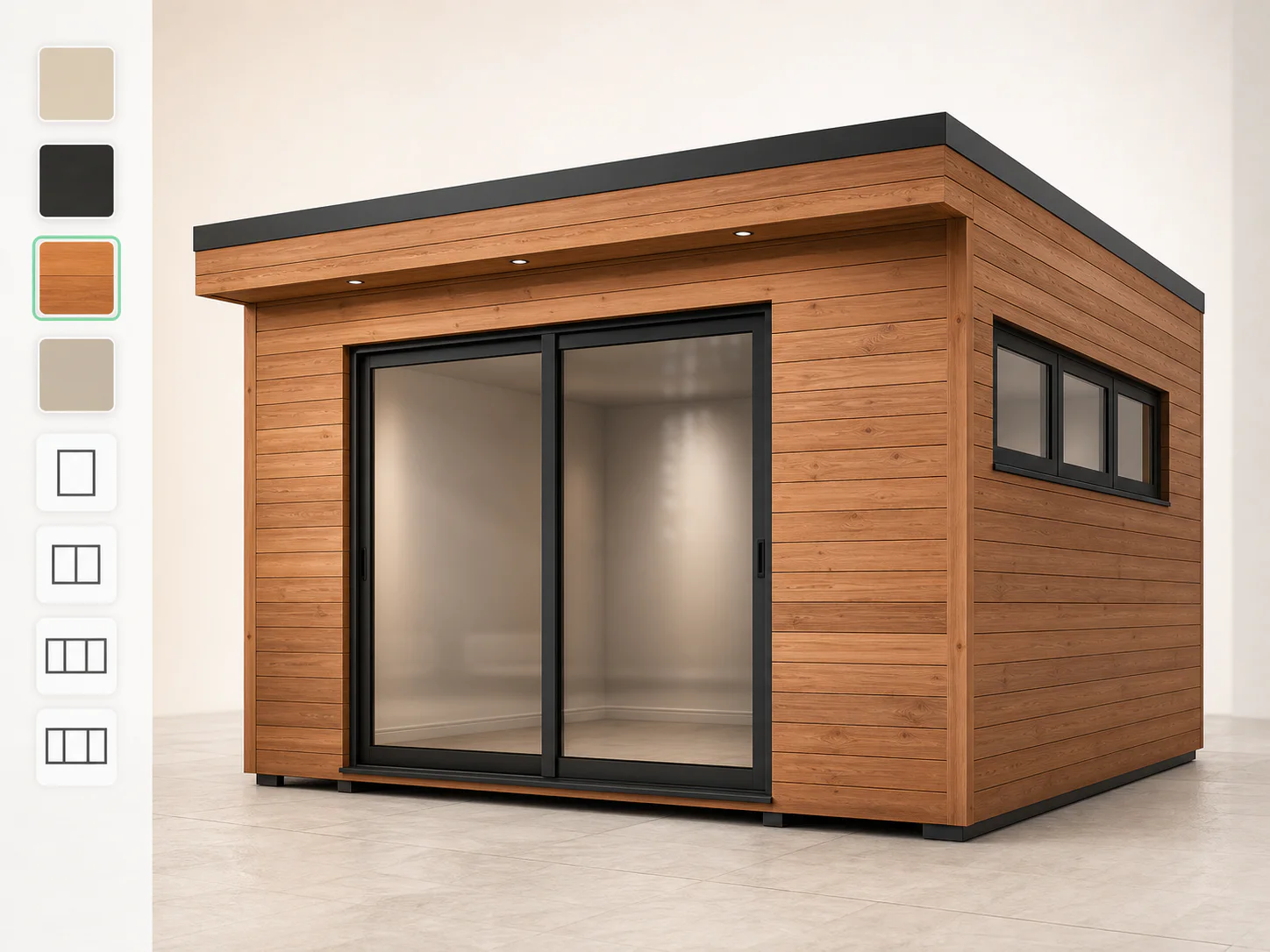
A configured timber garden office as a dealer shows it to a buyer, with the chosen cladding, door, and window layout picked out.
  • Manufacturers selling through dealers

    High-ticket custom products, sold on your behalf through dealers or distributors.

  • Sales teams out on a deal

    Reps who quote configured products in the field, in a showroom or at a kitchen table.

  • Channel and distributor networks

    Networks whose members each need their own prices and their own margin on every deal.

Where you get one · three honest places
  • A module of your ERP

    Puts the logic next to your production data, and usually far away from the people selling.

  • A module of your CRM

    Suits a sales team quoting a price book, and struggles the moment a build has rules.

  • A standalone platform

    Carries the rules and the per-dealer prices itself, and talks to the ERP and the CRM on either side of it.

    What Dealect is

For a custom manufacturer of roughly 30 to 200 people selling through dealers, the standalone route is usually the right one. The hard part is the rules and the per-dealer prices, not the record keeping on either side of them. Dealect is that third kind: a sales configurator and a b2b dealer portal in one, connected to the ERP and CRM you already run.

Setup and cost

What you hand over, and what it costs

Every page on this subject says a configurator needs your product rules. None of them says what that means on a Tuesday, or what the thing costs.

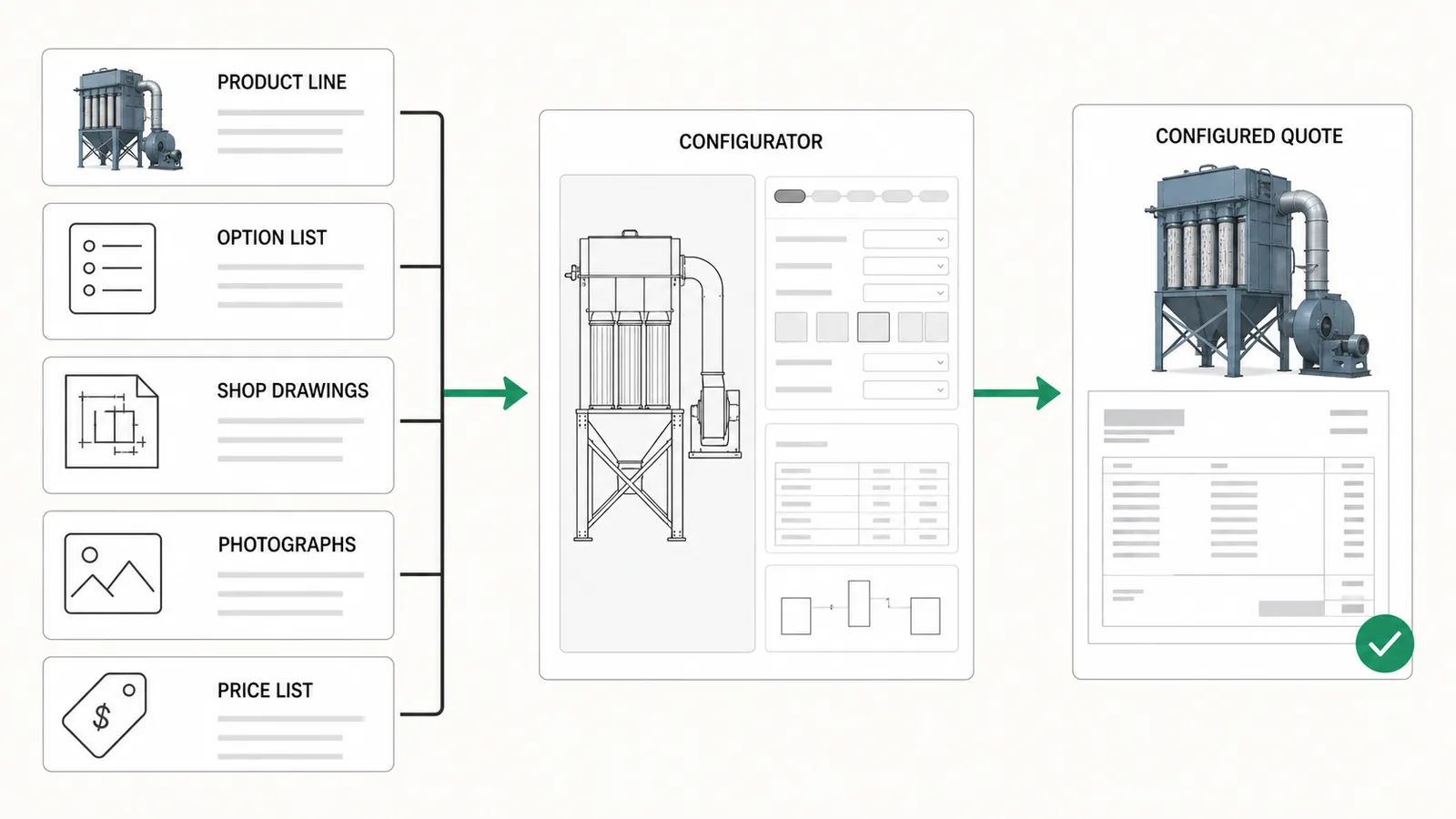
Diagram of the setup handoff: a product line, an option list, shop drawings and photographs, and a price list per dealer going in, and one configured quote coming out.
You bring · One product line
Not everything you sell. One line goes in first, your dealers start quoting on it, and the rest follows from there.
You bring · Your option list
Every size, material, finish, and add-on, arranged in the order a rep meets them on a real deal.
You bring · Your rules and your limits
Dependencies, maximum spans, and the combinations you will not build, turned into rules the configurator enforces.
You bring · Your prices, per dealer
A price on every option and a price list for each dealer, so every quote starts from the right numbers.

No CAD files needed

Shop drawings, spec sheets, and photographs of a finished build are enough, and nearly every custom shop already has all three. CAD helps where it exists and never decides whether this can start. What matters more is that the option list and the rules are the real ones.

What it runs on

A browser, and that is the whole list. Nothing for a dealer to install and no plugin for their IT to approve. It opens on a showroom laptop and on a phone at a buyer's kitchen table over ordinary mobile data.

What it costs

A sales configurator is priced per manufacturer rather than per seat or per license tier. Dealect is scoped to your product line and your dealer count, then quoted after a 30-minute demo, so the number you hear is for your products rather than a starting point.

Two things that do not move
  • Your dealers never pay for their portal access. Dealect is priced for the manufacturer.
  • There is no self-serve tier to sign up for. You hear your full price on the demo call, before committing to anything.

The three things that do move the number are how complex your product line is, how many dealers will quote in your portal, and which connections you need on either end. More on what a configurator costs.

FAQ

Questions manufacturers ask about sales configurators

A product configurator answers what the product can be. A sales configurator answers what this buyer is getting and what it costs, then produces the quote. The first ends at a valid specification. The second ends at a priced document somebody can sign, on the dealer's own price list.

They overlap. CPQ is the wider category: configure, price, quote, plus the approvals and discount rules a larger sales organization needs. A sales configurator is the configure and price half of that, in the hands of the person actually selling. In one platform they are the same flow under two names.

No. Shop drawings, spec sheets, and photographs of a finished build are enough, and most custom shops already have all three. CAD helps where it exists and is never the blocker. What matters more is that the option list and the rules are the real ones your shop works to.

Yes. Every dealer works from their own price list and watches their own margin while they build. The buyer sees one finished price. Your cost price never leaves your side of the portal, and no dealer sees another dealer's numbers.

Weeks, not months. It starts with one product line rather than everything you sell. You hand over the options, the rules, and the prices, and the configurator gets built around them. Your dealers begin quoting on that line while the rest follows.

It is priced per manufacturer rather than per seat, and scoped to your product line and your dealer count. Dealect quotes it after a 30-minute demo, so you hear your full number on that call. Your dealers never pay for portal access, and there is no self-serve tier.

Last updated

Next step

See one of your own products quoted in 30 minutes.

Request a 30-minute demo, bring one product, and watch it configured, priced, and quoted live on the call. We reply by email to set up the time.

  • 30-minute personalized demo
  • See real configurators in your industry

Your call is with the Dealect team.

See pricing