The price list, callback, and re-key
A question that used to travel to the factory and back now answers while the customer is still in the showroom.
A made-to-order sofa carries modules, fabric, legs, arms, and size. The price book cannot keep up, so the dealer waits while the customer cools. Dealect gives them one furniture configurator to build it on screen, apply their margin, and send a complete order to the shop.
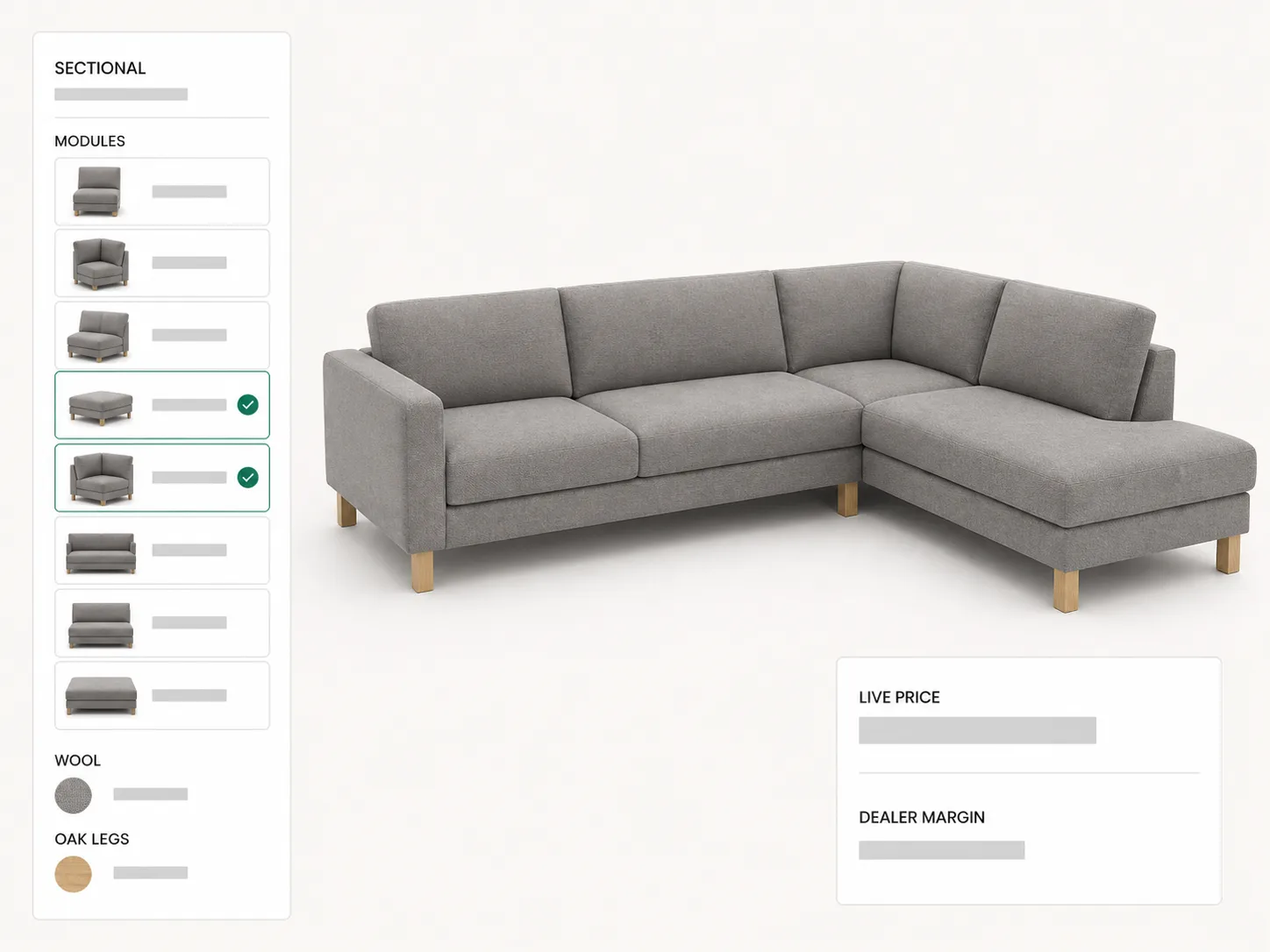
A custom furniture order changes in small choices. A manual process asks people to remember every dependency, every price, and every handoff.
Manual quoteA fabric, finish, or dimension changes after the price book was printed.
Ruled configurationRow 1: The current option price follows the selection on screen.
Manual quoteA retailer calls the factory to ask whether two sectional modules fit.
Ruled configurationRow 2: Rules allow the valid connection and refuse the wrong one.
Manual quoteA showroom quote is copied into an order, then copied again for production.
Ruled configurationRow 3: One configuration becomes the quote, the order, and the shop specification.
Manual quoteCustomers see a swatch and imagine the finished piece.
Ruled configurationRow 4: The chosen upholstery, legs, armrests, and modules appear together in 3D.
Return rate and sales conversion are outcomes, not promises we publish for your catalog. The mechanism we can show is earlier: the exact upholstery, size, and modules appear before the quote.
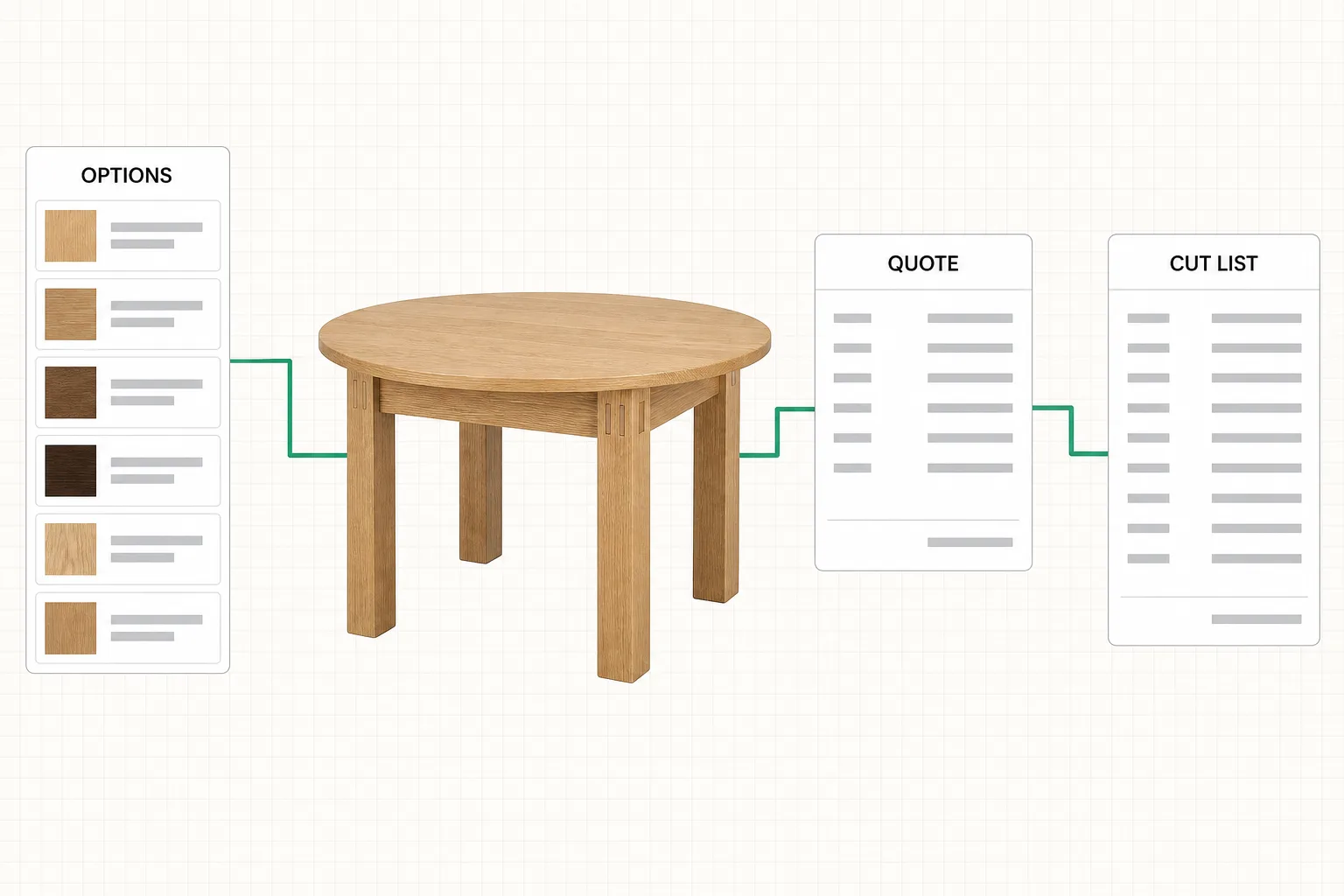
A 3D furniture configurator lets a manufacturer's dealers, showroom staff, and retail buyers assemble an approved product on screen and get the price of that exact build. The rules allow only combinations the factory can make, then the same configuration becomes a branded quote, a frame BOM, a cut list, and an upholstery yardage requirement for the shop.
The configurator holds the catalog once: the modules, fabric and leather grades, finishes, legs, armrests, and dimensions the factory already builds, and the rules that say which of them connect. Each dealer, showroom, and retailer signs in to that one catalog and sees the current price with their own margin applied, while factory cost stays hidden. When the customer approves the piece, nothing is typed again. The accepted configuration carries its frame BOM, cut list, upholstery yardage, hardware, and finish into production, so the shop builds the product the customer saw on screen.
A question that used to travel to the factory and back now answers while the customer is still in the showroom.
It is a 3D product configurator with the selling and production rules behind the picture.
Last updated
A furniture line is not one model with a color picker. The selling system has to know what connects, what it costs, and what the shop needs next.
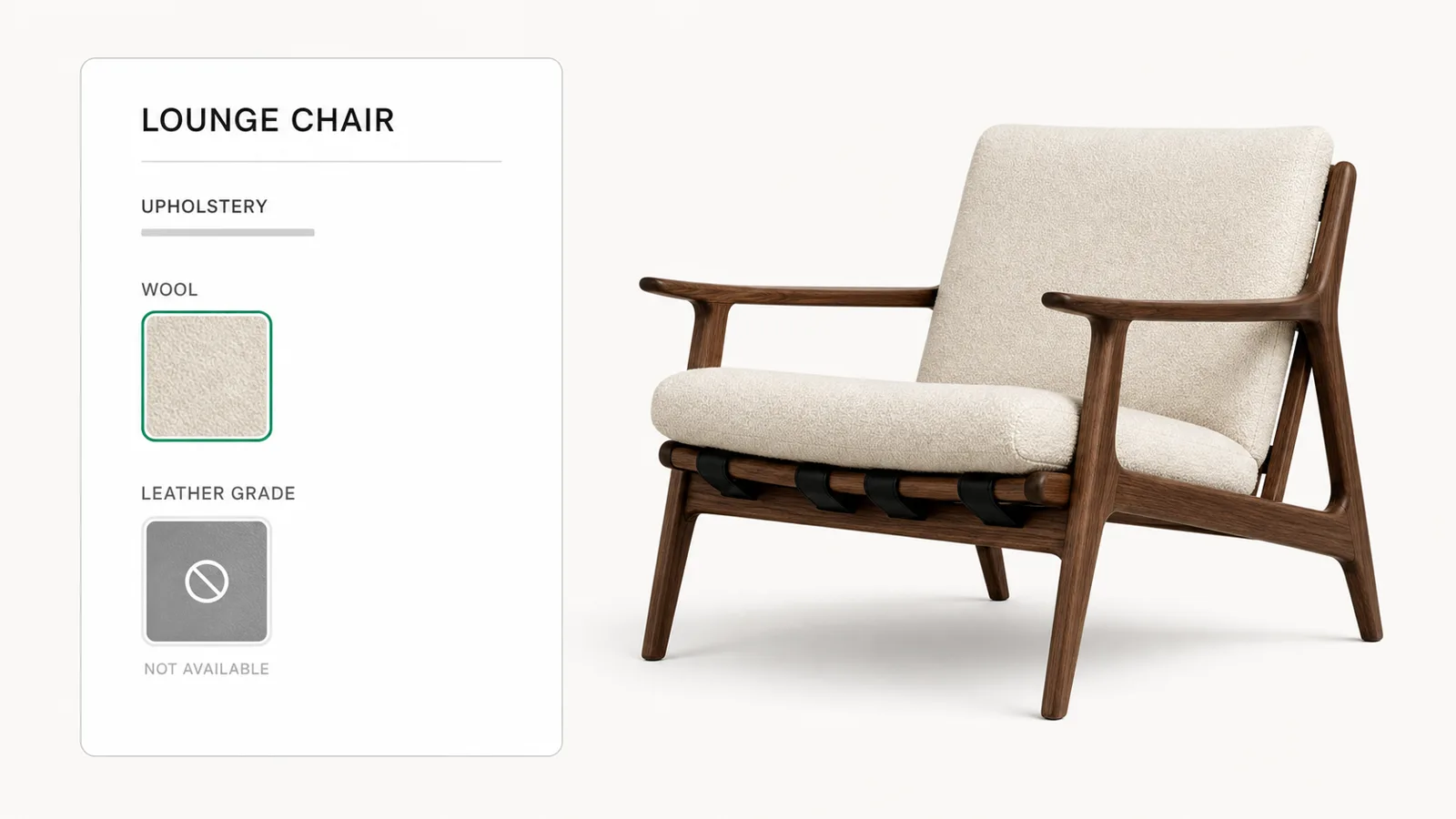
Fabric and leather grades, finishes, legs, handles, armrests, and dimensions follow your build rules. An invalid choice is refused before it can reach a quote.
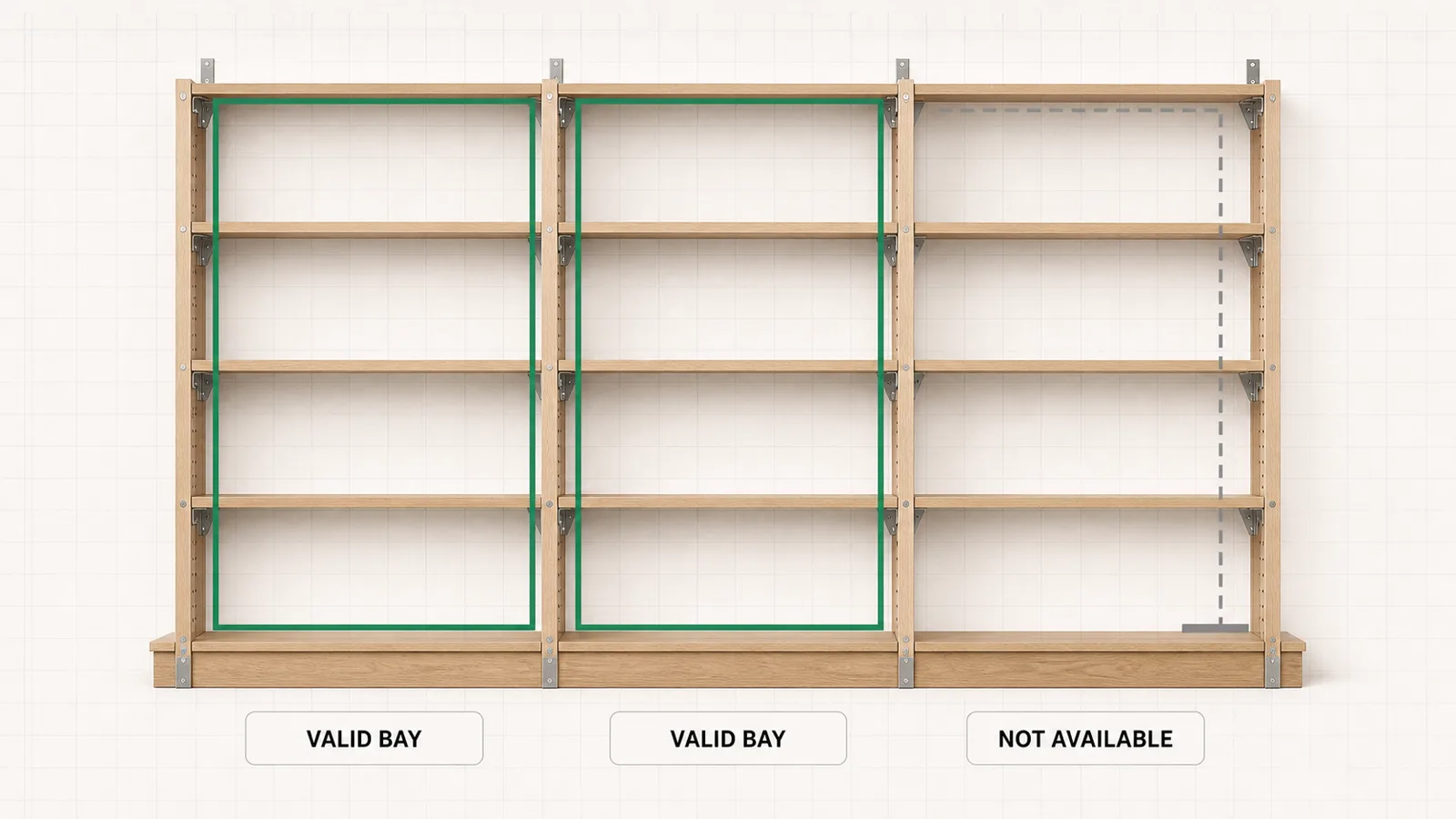
A modular furniture 3D configurator connects bays, corners, arms, and fillers only where the frames and fixing points agree.
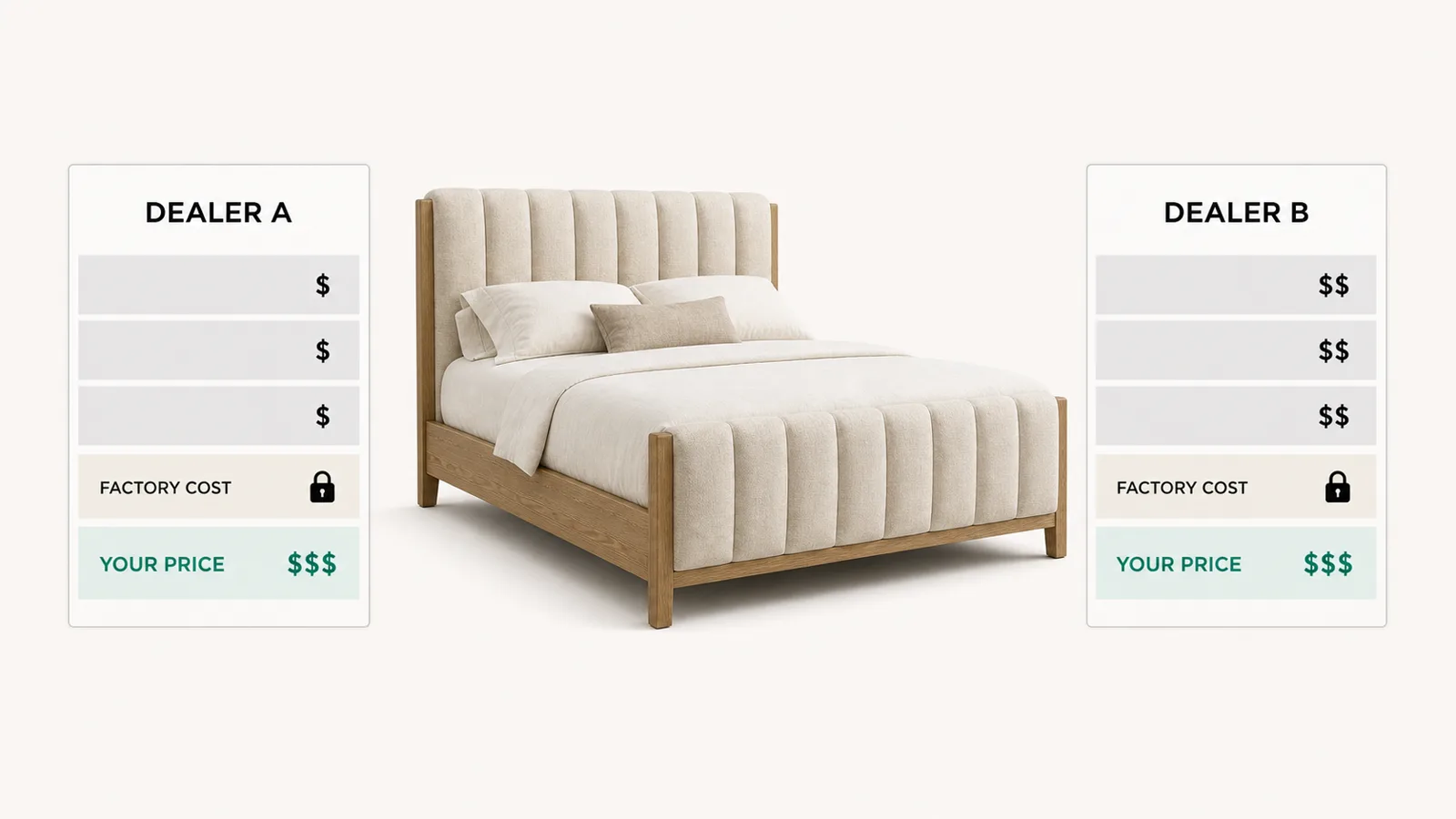
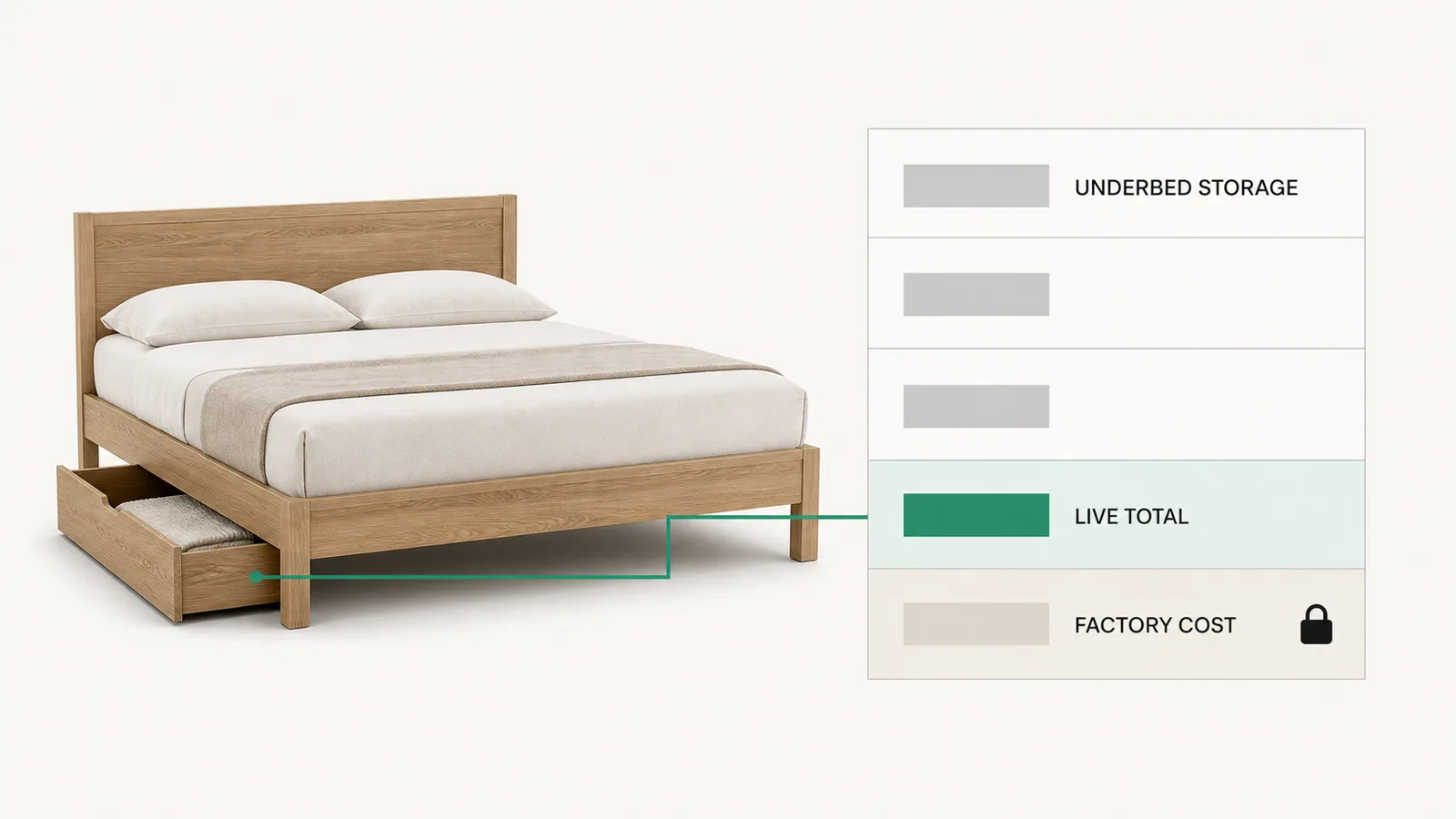
Each dealer sees the current price with their own margin applied. Your factory cost stays hidden, and discounts below your floor wait for approval.
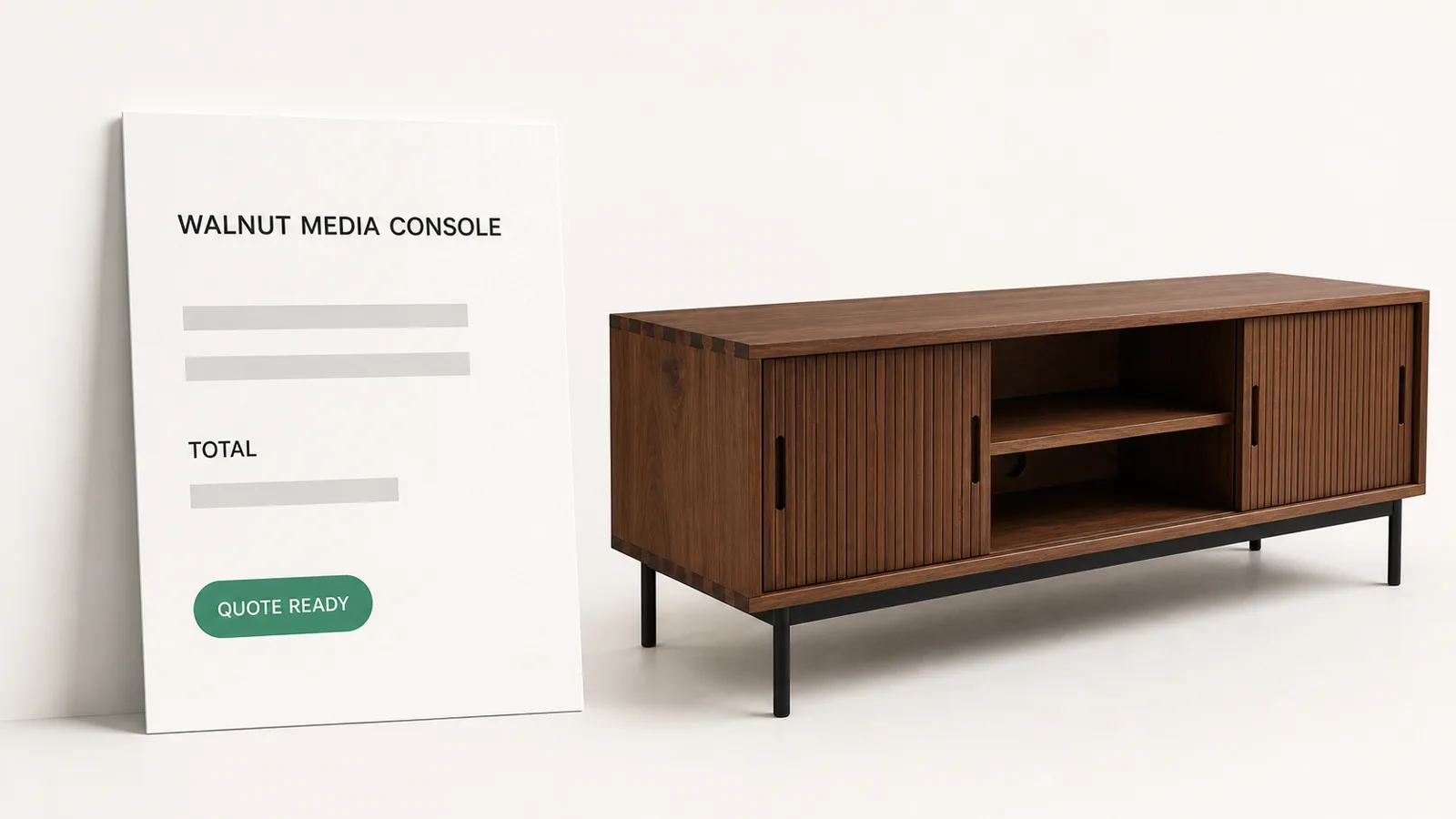
The customer receives the configured piece, its selected materials, the total, and the dealer's name in one clear document.
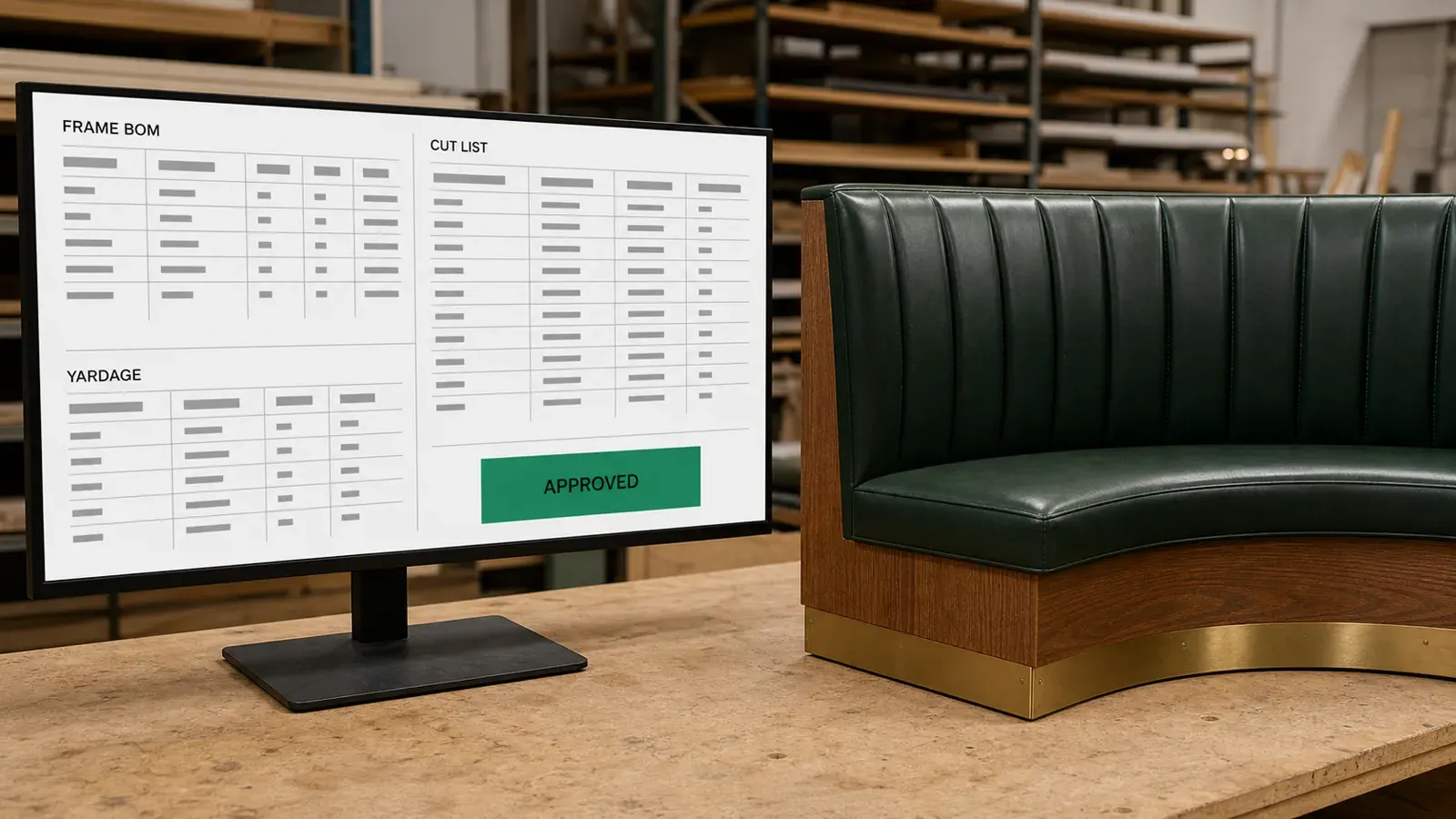
The accepted order can carry the frame BOM, cut list, upholstery yardage, foam, hardware, and selected finish into production.
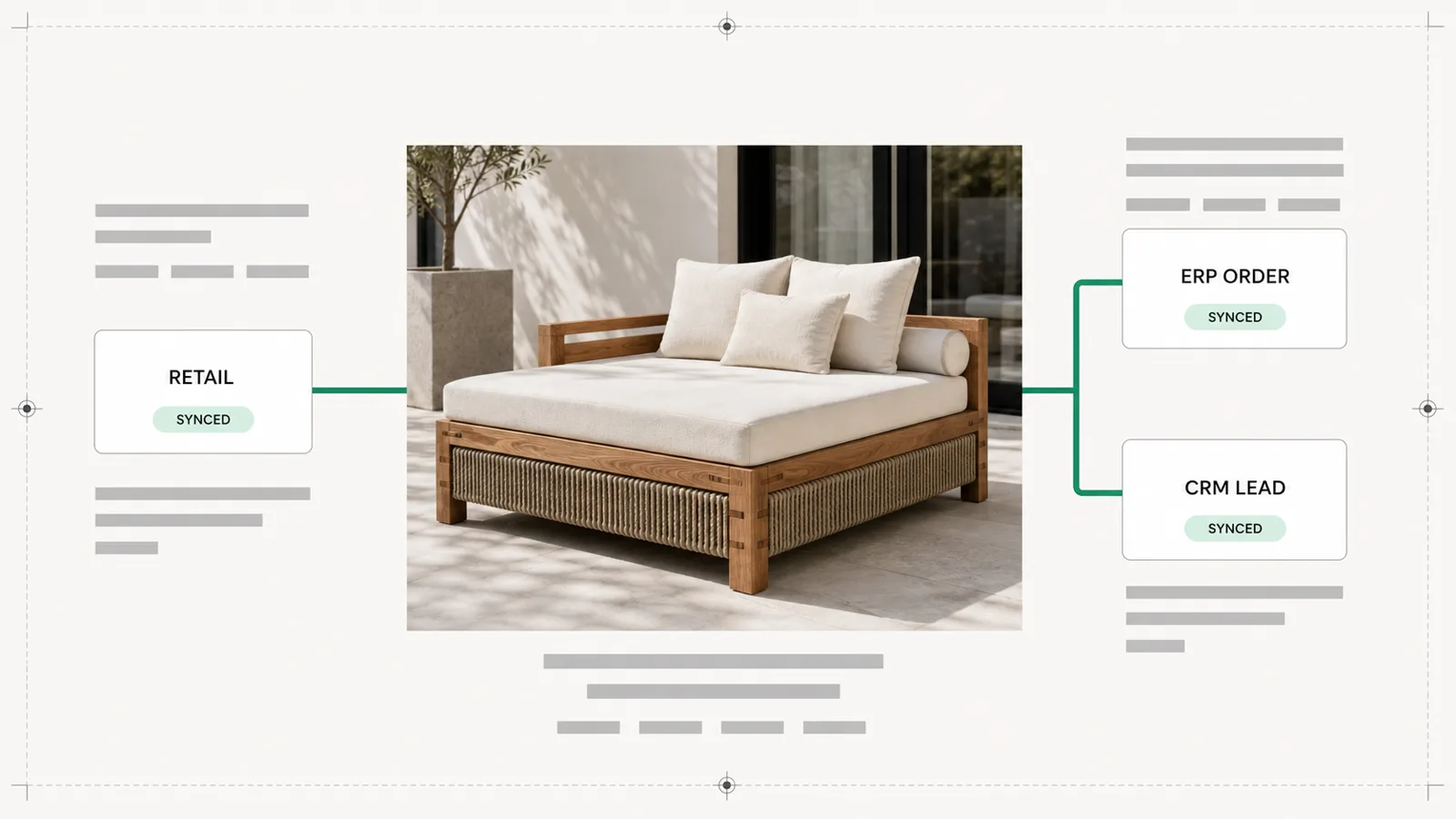
Shopify or WooCommerce can carry the retail experience. ERP and CRM connections carry the accepted order and its customer record into the factory workflow.
The product configurator furniture makers use has to hold the vocabulary of each line without turning every line into a new system. The rules change by product. The catalog, dealer accounts, quoting, and order path stay together.
Modules, corners, arms, upholstery, and legs.
Frame, armrest, seat height, fabric, and base.
Top, edge, base, finish, length, and extension leaves.
Size, headboard, upholstery, storage, and leg style.
Carcass, door, handle, finish, and internal fitting.
See our cabinet estimating software for the deeper casework workflow.
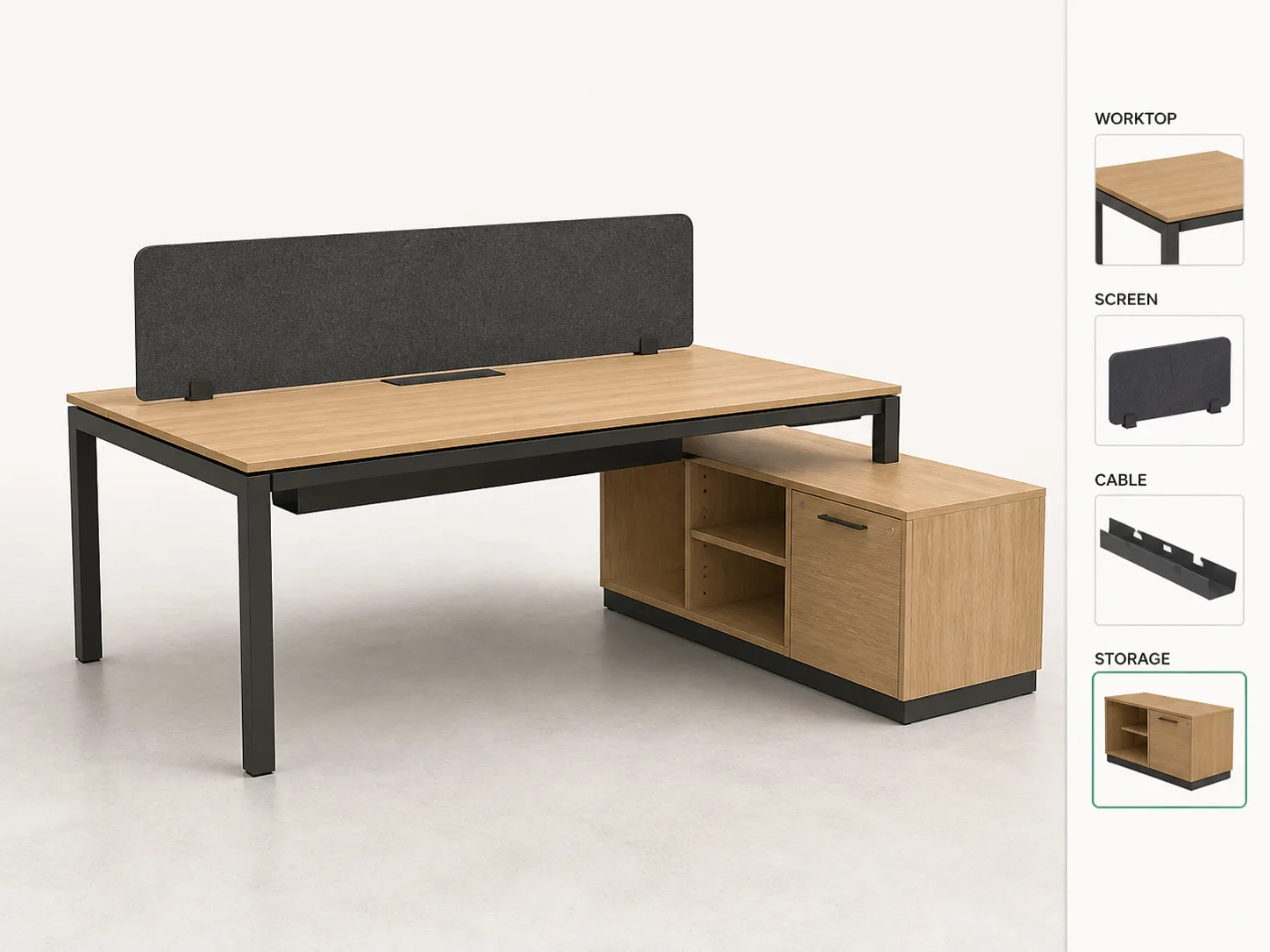
Worktop, frame, cable access, screens, and storage.
Module, cushion, cover, frame, and weather finish.
The useful part begins after the picture. One approved configuration has to stay intact from the first choice to the shop floor.
Step 01 · Configure
The furniture configurator shows each module in place. Its 3d product visuals put the chosen materials on the product instead of a separate swatch sheet.
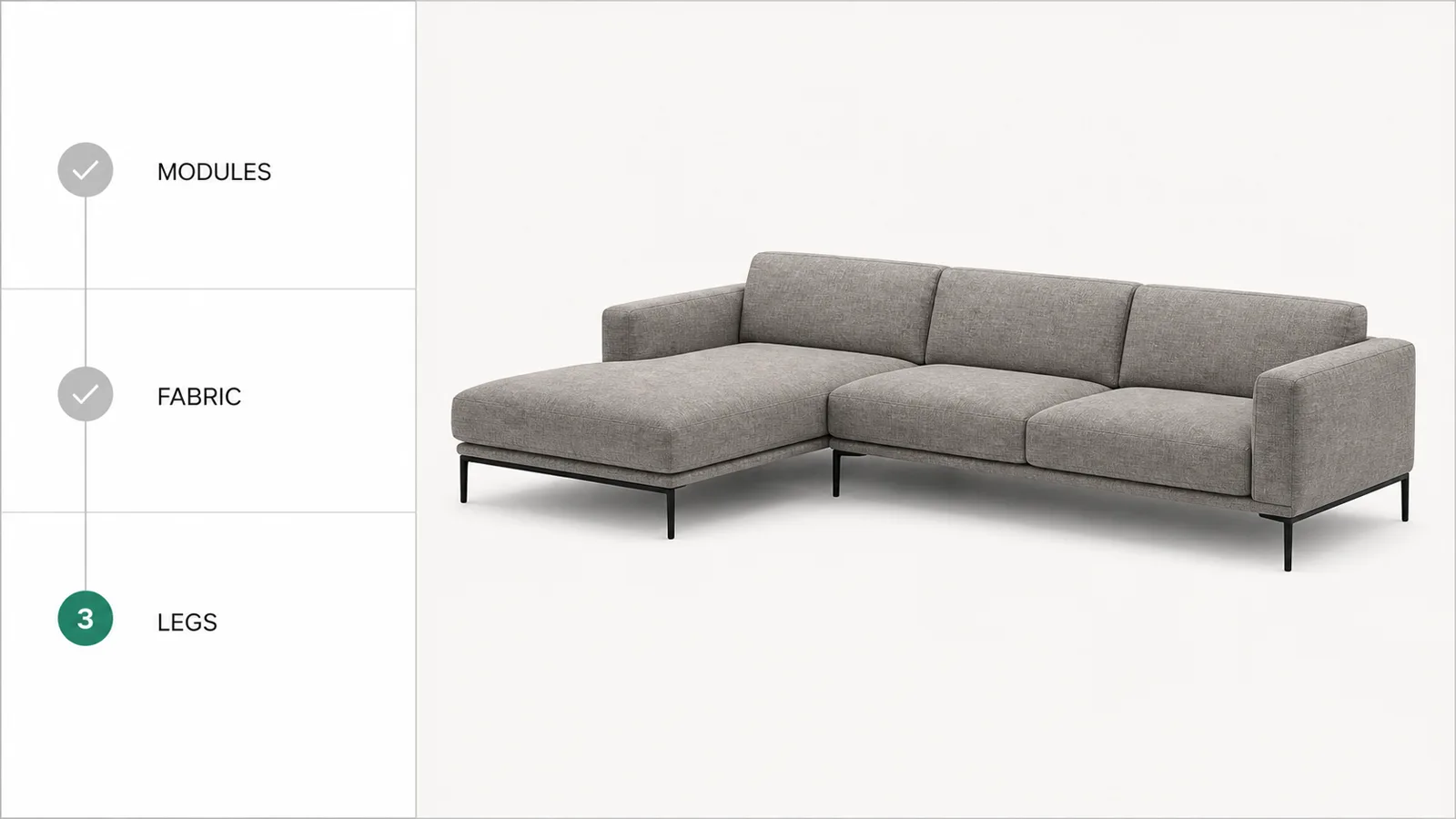
Step 02 · Validate
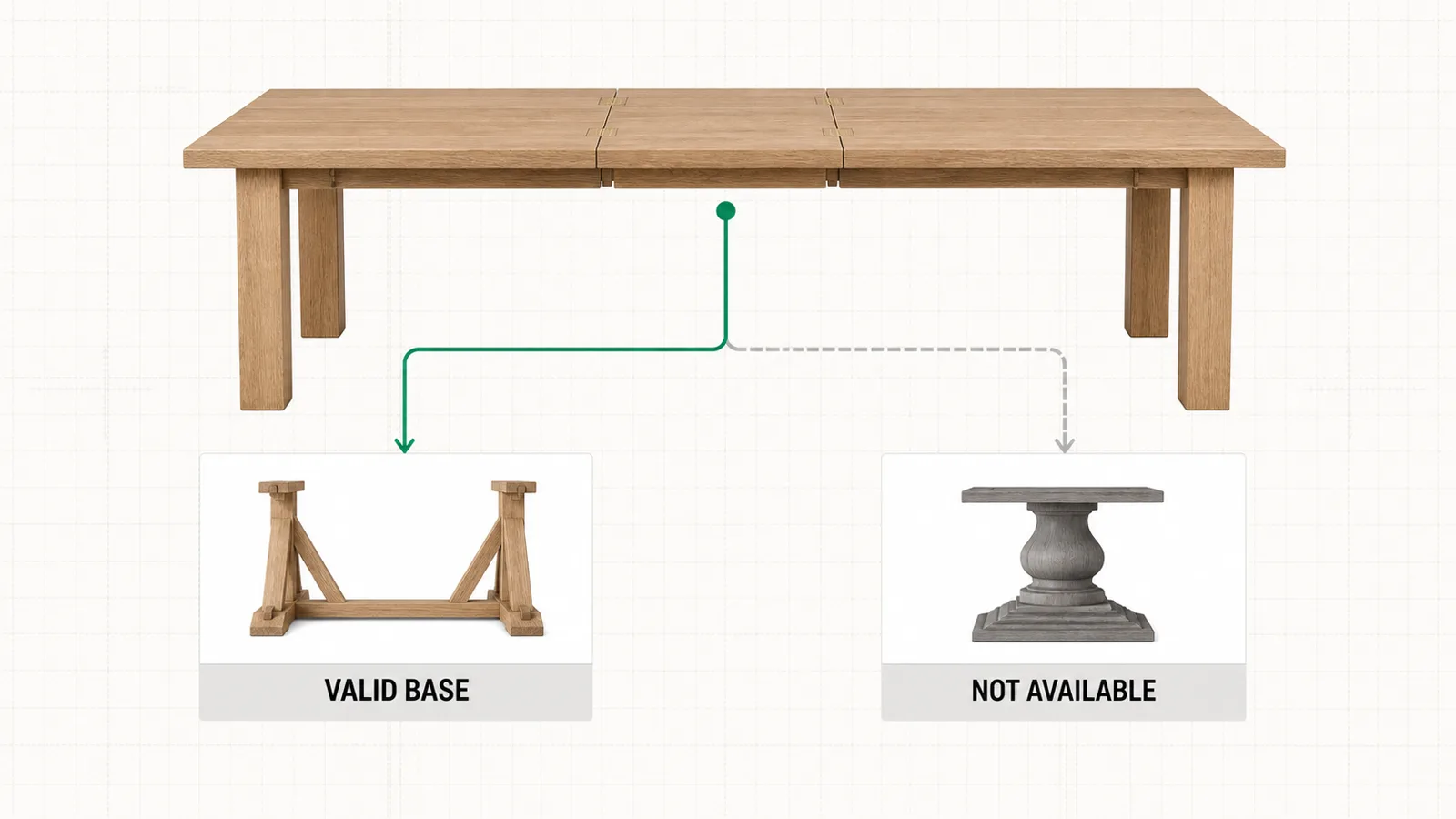
The rules refuse a corner that cannot connect to the selected seat depth and a leg that does not fit that frame, before a quote exists.
Step 03 · Price
Every allowed choice changes the live total from the current price list. The dealer's margin is included, while factory cost stays hidden.
Step 04 · Quote
The quote carries the same product view, materials, measurements, and total the customer approved in the showroom.
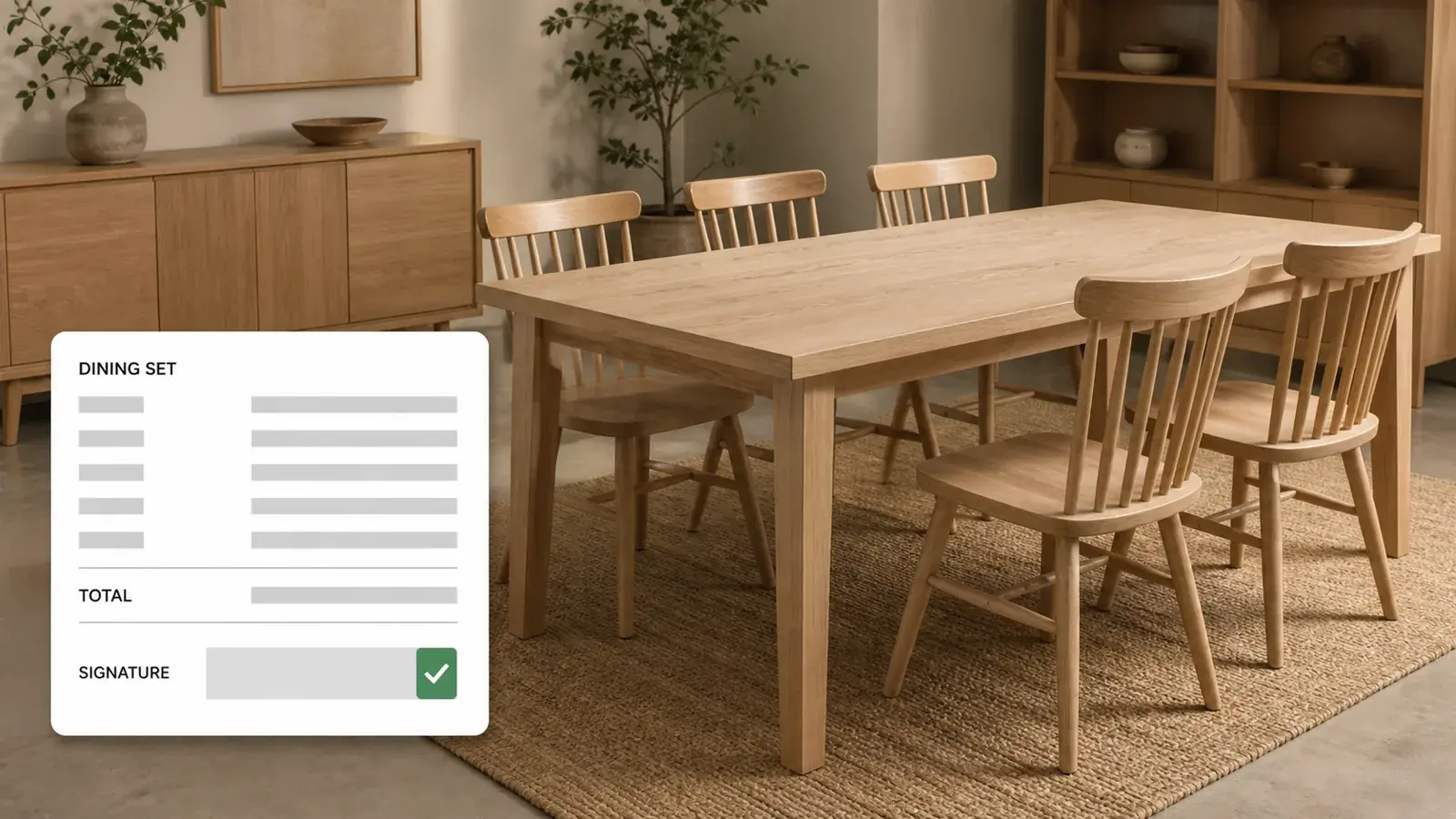
Step 05 · Produce
The frame BOM, cut list, upholstery yardage, hardware, and finish travel with the accepted order. Nobody types the same choices again.
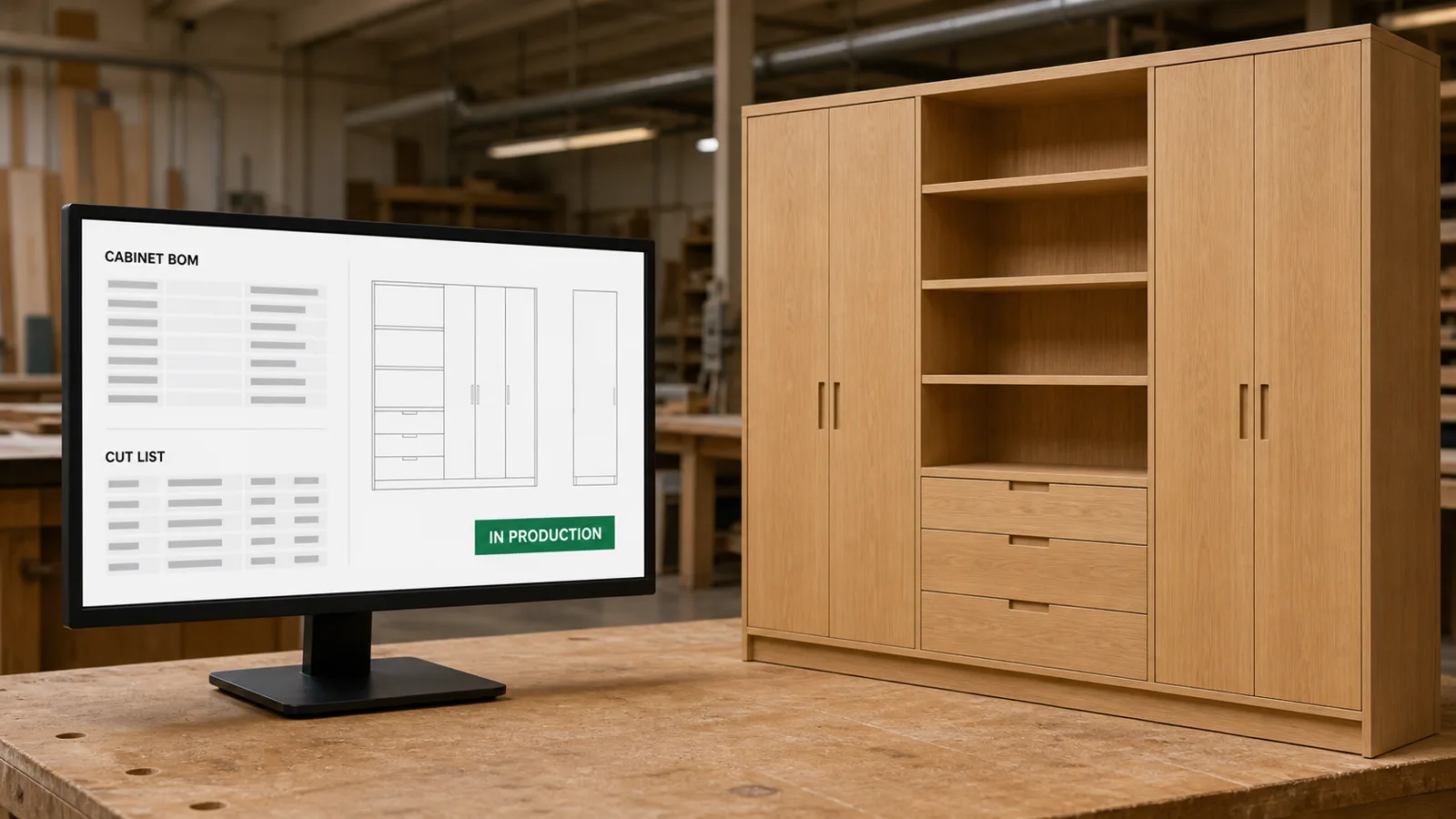
We map its options, rules, prices, dealer terms, and the artifacts your shop needs after an order.
We configure and quote your own piece, so you can judge the mechanism against a catalog you know.
The first launch is measured in weeks. More product families can follow once the working pattern is proven.
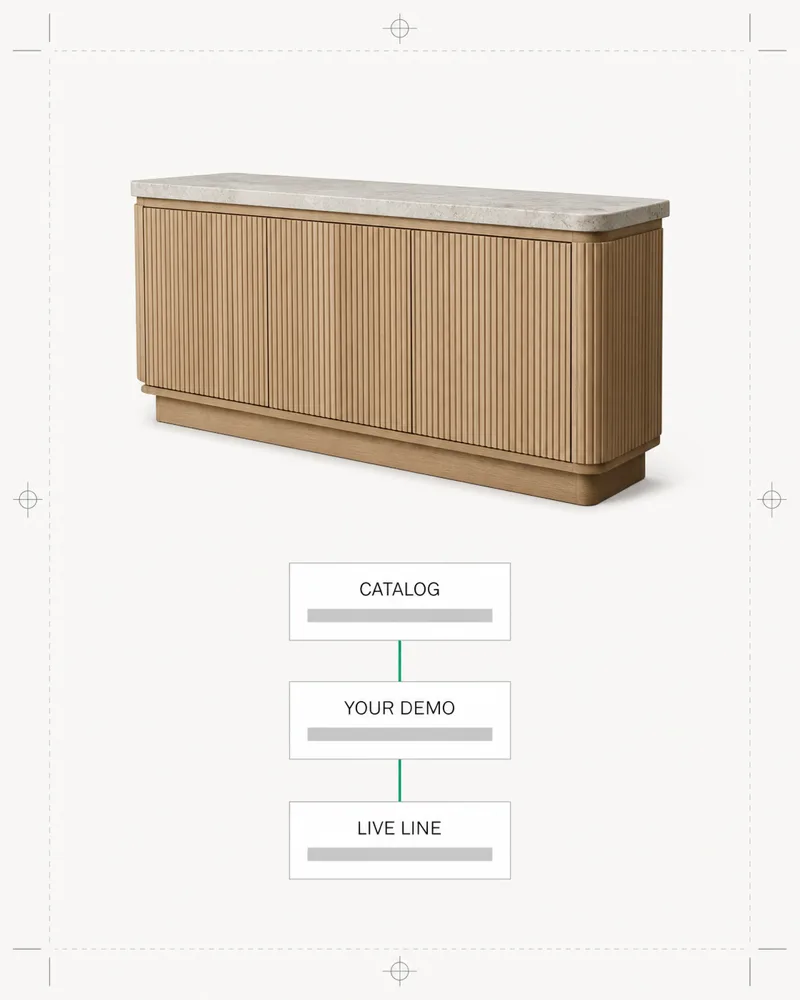
We check the source geometry first. If new assets are needed, that work is scoped before the build, not found halfway through it.
The manufacturer controls the catalog. Every dealer and retailer quotes from it with their own margin, and every finished configuration remains tied to its owner.
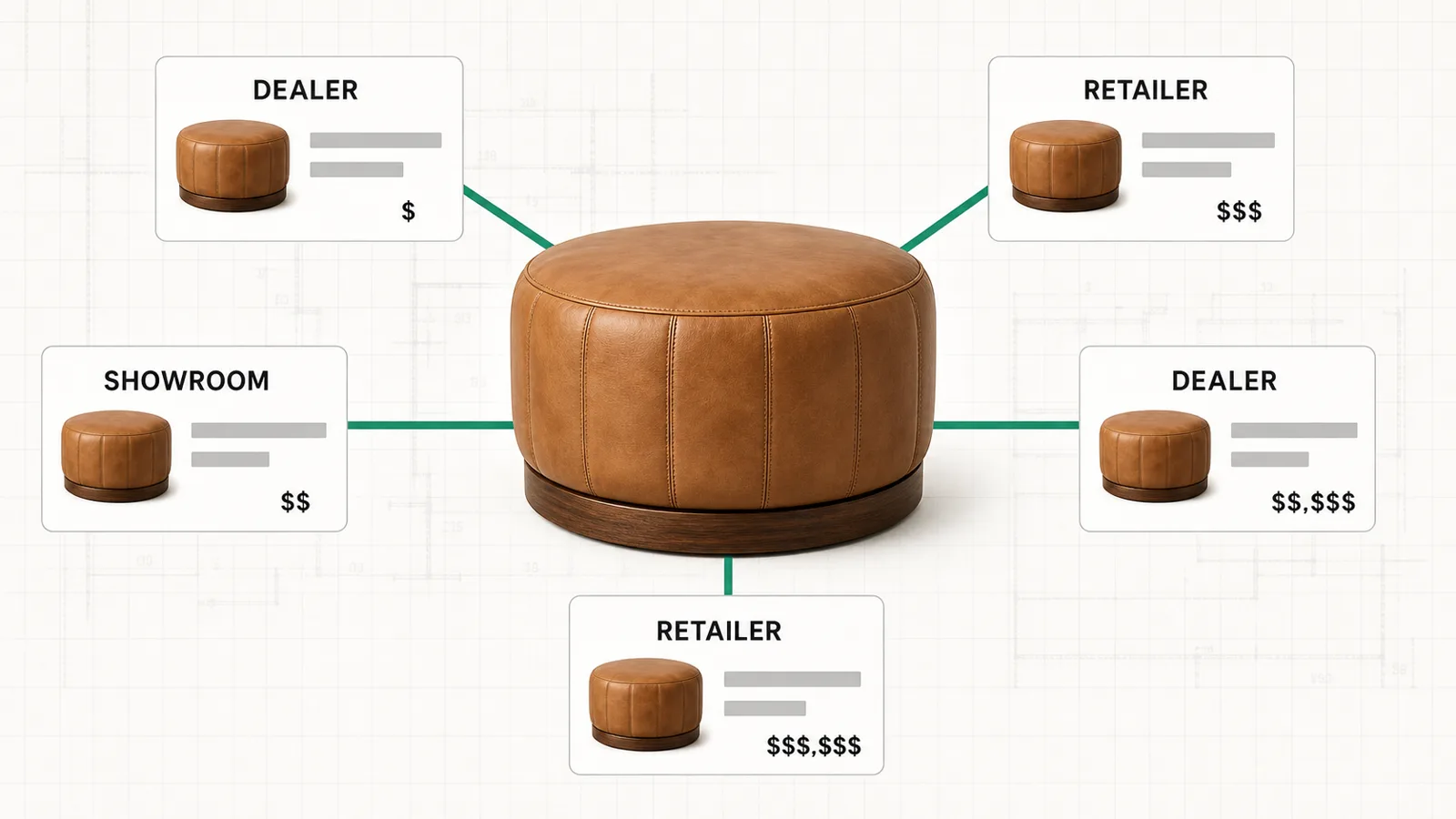
Rules, materials, finishes, and prices managed once.
The customer price changes by account, without exposing cost.
A website or showroom configuration stays tied to the dealer who owns it.
The place each dealer signs in is our b2b customer portal. It applies the same CPQ rules and catalog that manufacturers manage in Dealect.
Counts about the workflow, not promised customer outcomes. Your own quote speed and accuracy depend on the catalog you bring.
The customer choices are captured once, at the start of the sale.
The quote and production output read the same approved configuration.
The answerA priced model, a branded quote, and a production specification.
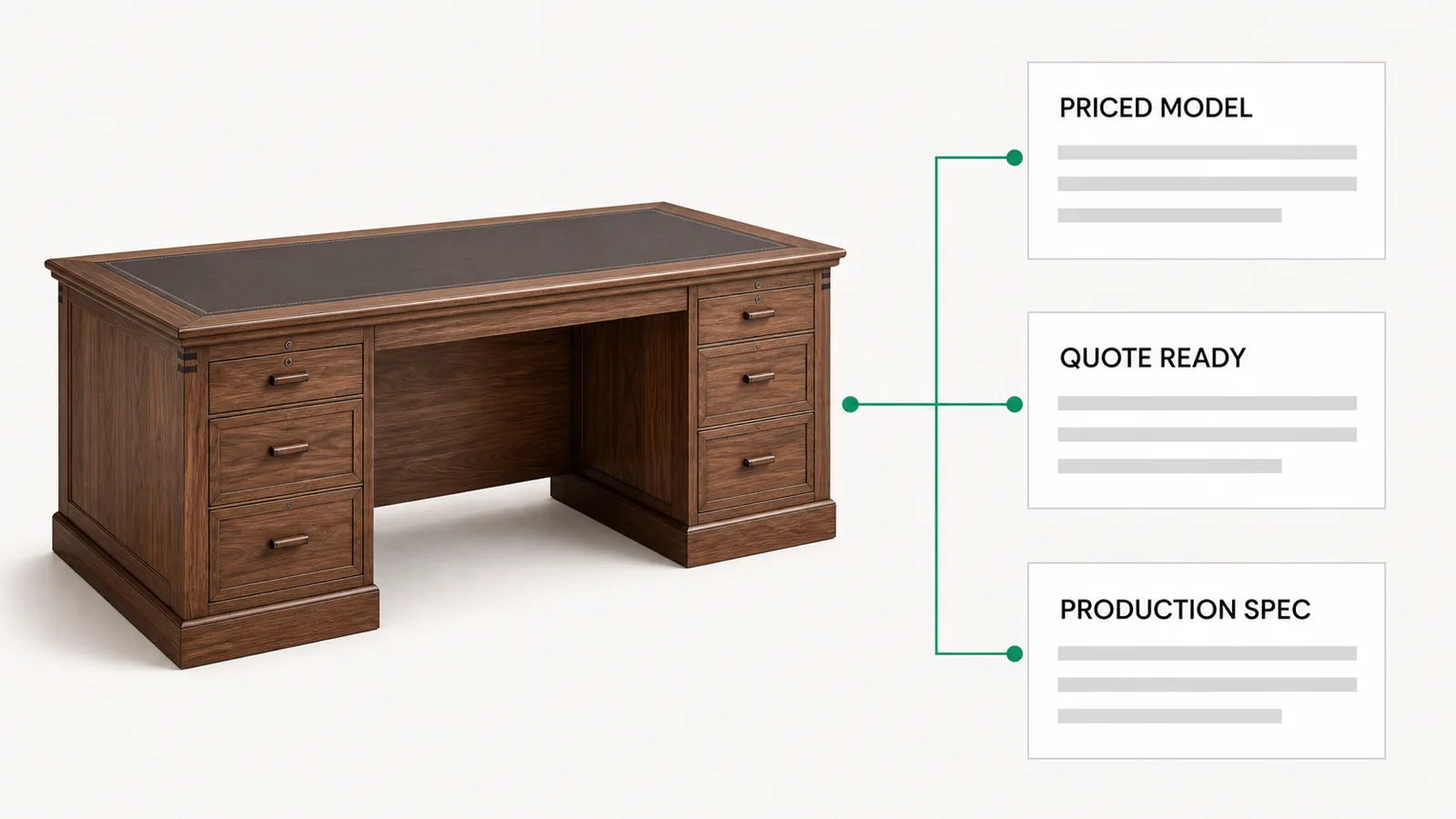
Bring one product and its price list to a demo. You can also see how Dealect handles CPQ for manufacturers across other made-to-order product lines, or return to the Dealect homepage.
A 3D furniture configurator is a selling system that lets a buyer or dealer assemble an approved furniture product on screen. The selected modules, materials, dimensions, and finishes drive the live price, the quote, and the production output from one configuration. It differs from a 3D visualizer, which only shows the result, and from design software, which draws a piece that does not exist yet. The rules under the picture allow only the combinations the factory can make, and the same configuration becomes the branded quote, the frame BOM, the cut list, and the upholstery yardage requirement.
No. Design software draws a piece that does not exist yet for a designer or woodworker. A configurator sells a product the factory already builds, option by option, to a dealer's customer.
We first check the product geometry and the source files you already have. If usable 3D assets do not exist, we scope that asset work before the build. 3D views are an added piece of the project, so the requirement and cost stay visible from the start.
The retail side can connect to Shopify or WooCommerce. The accepted order and customer record can connect to ERP, CRM, or PIM systems. The exact handoff depends on what each system needs to receive.
A first product line is measured in weeks, not months. The exact schedule follows catalog depth, rule complexity, available product assets, and the systems that must connect. The demo call gives us enough detail to scope that first line.
The price has two parts: a one-time build and a monthly fee to keep the system running. Product complexity, dealer count, 3D views, augmented reality, and system connections shape the quote. Our pricing page explains the model, and the demo gives you one number for your line. The demo is where that number comes from. You bring one product, its options, and the price list you quote from today. We configure that piece on your rules, apply a dealer margin, and show what reaches the shop, so the figure you receive is scoped to your catalog and your dealer count, not a list price for an average line.
The same rules that define a build run before the quote exists. They can refuse incompatible modules, unsupported dimensions, the wrong leg for a frame, or a material that is not available on that model. Production receives only a configuration that passed those checks.
Augmented reality is available as an added piece. Whether it runs in the browser or through a separate experience depends on the chosen 3D stack and target devices. We confirm that delivery path when we scope the 3D work.
A configurator controls valid choices. CPQ adds the price and quote rules around those choices. A 3D visualizer shows the result. Dealect joins all three where the product needs them, then carries the accepted configuration into the order.
Comparing vendors? We weighed the configurators built for furniture, rooms and space against each other, with their published prices.
Same portal, same dealer login, one more trade at a time.
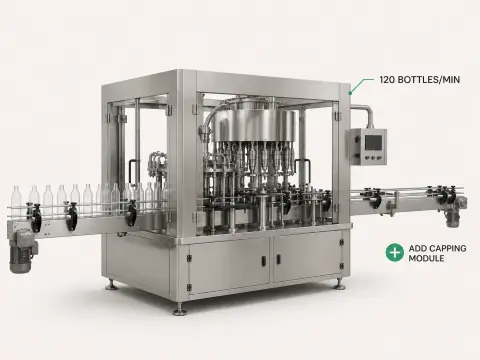
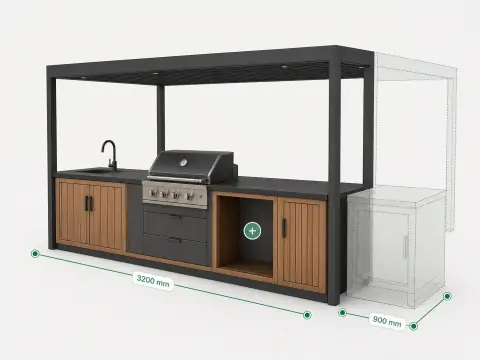
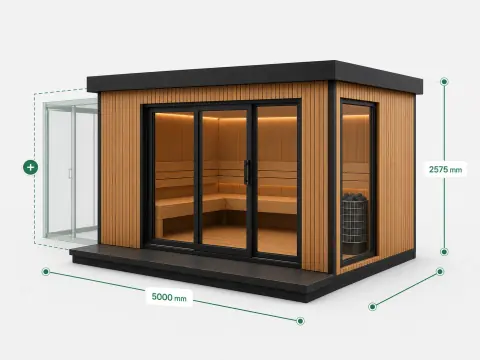
Bring one product, its options, and your price list. We will build it on screen, apply a dealer margin, and show what reaches the shop.
Your call is with the Dealect team.