Why it matters
The model on screen is the build being bought
Because the model on screen is the build being bought, nobody has to picture the rest, and the same configuration can be quoted and then manufactured without anyone retyping it.
Your dealers build the product on screen in real time 3D, the price follows every click, and the finished configuration becomes the quote and then the build sheet. It runs in the browser on your options, rules, and prices, so nothing gets quoted that your shop cannot make. If the term is new, what is a product configurator explains it first.
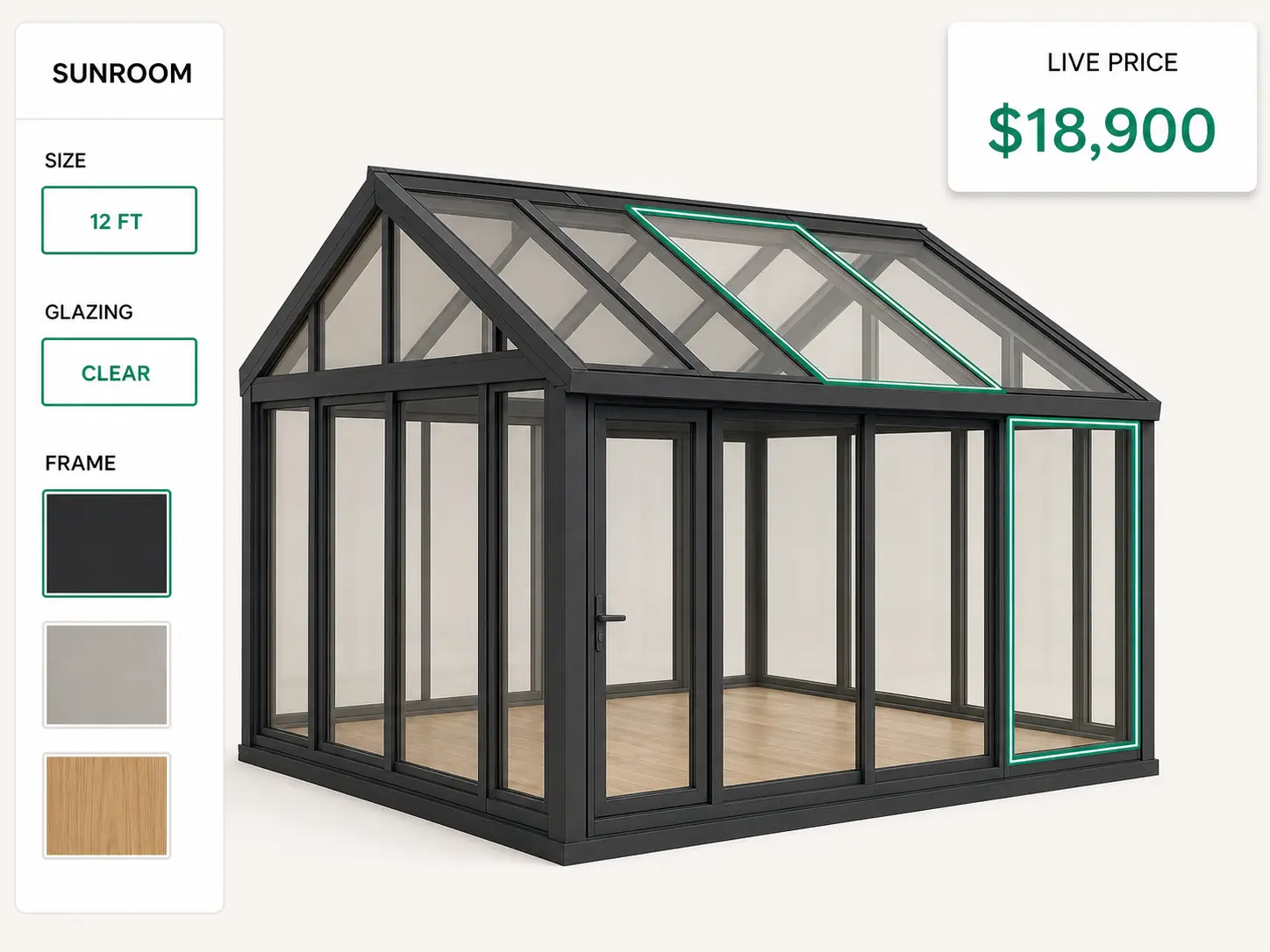
A 3D product configurator is software that lets a buyer or a dealer build a product option by option, with every choice rendering on a live 3D model and the price recalculating on each click. The finished configuration carries the full spec.
Because the model on screen is the build being bought, nobody has to picture the rest, and the same configuration can be quoted and then manufactured without anyone retyping it.
For custom manufacturers, 3D product configuration replaces the old pair of a catalog photo and a price list. A photo shows one build. A configurator shows the build the buyer is actually buying. Options, rules, and prices live inside the 3D product configuration software, so a combination your shop cannot make is never quoted, and an out of date price never reaches a buyer.
Dealect is 3D product configurator software built around dealer networks. Each dealer opens the same online 3D configurator in a browser, configures on their own prices and their own margin, and sends a finished quote in minutes. When the buyer signs, the approved configuration becomes the order and the build sheet your shop works from.
The live model is one type of a wider category. For the category itself, from the word up, read product configurator, defined.
Written and kept current by the team that builds Dealect, in Mississauga, Canada. Who builds Dealect.
Every custom product gets quoted twice: once as a picture the buyer only half believes, and once as a number somebody works out by hand.
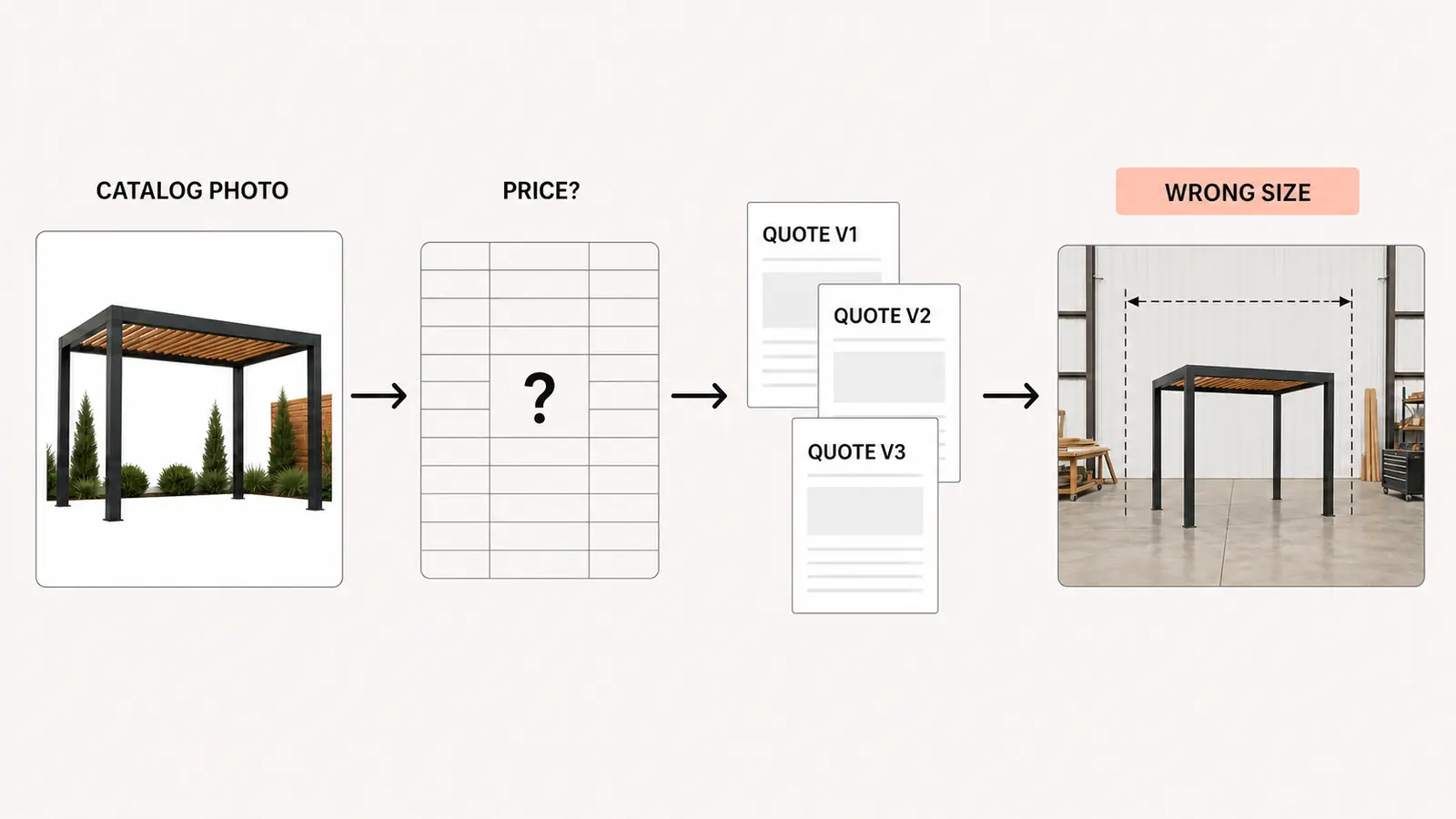
Your product changes with the order: size, material, glazing, add-ons. A catalog shot shows one combination, so the buyer pictures the rest, and pictures it wrong.
Options multiply faster than a price list can hold. The dealer standing next to a ready buyer has to ask you, and your answer lands after the moment has passed.
Change the width, change the finish, and the quote is rebuilt by hand. The thread grows, the versions pile up, and nobody is certain which PDF is current.
The order reaches the shop as typed. On a high-ticket custom product there is nothing to restock, so the margin, or the whole build, pays for the mistake.
One 3D product configuration carries the whole deal: what the buyer sees, what the quote says, and what your shop builds.
Step 01 · The dealer, in the browser
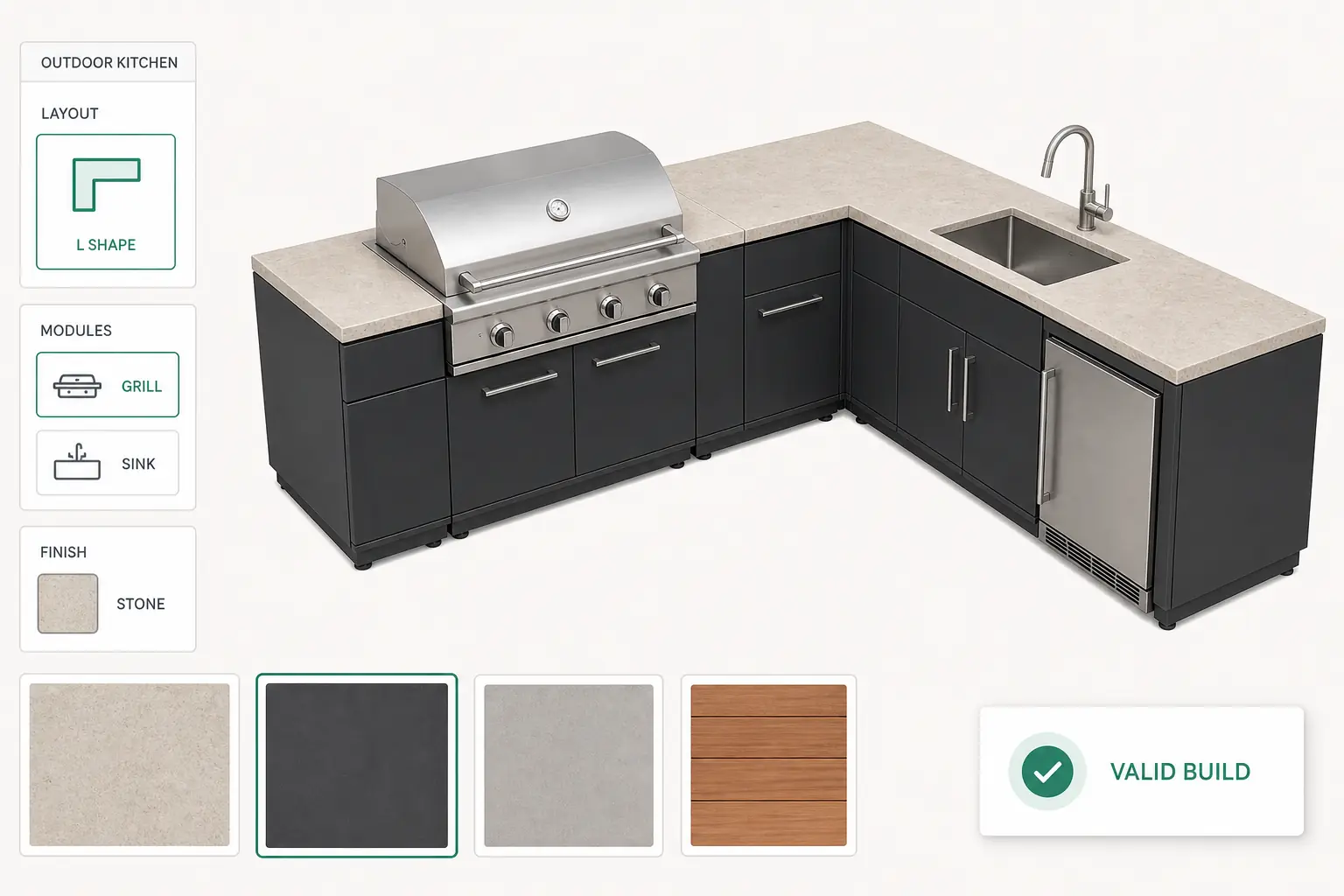
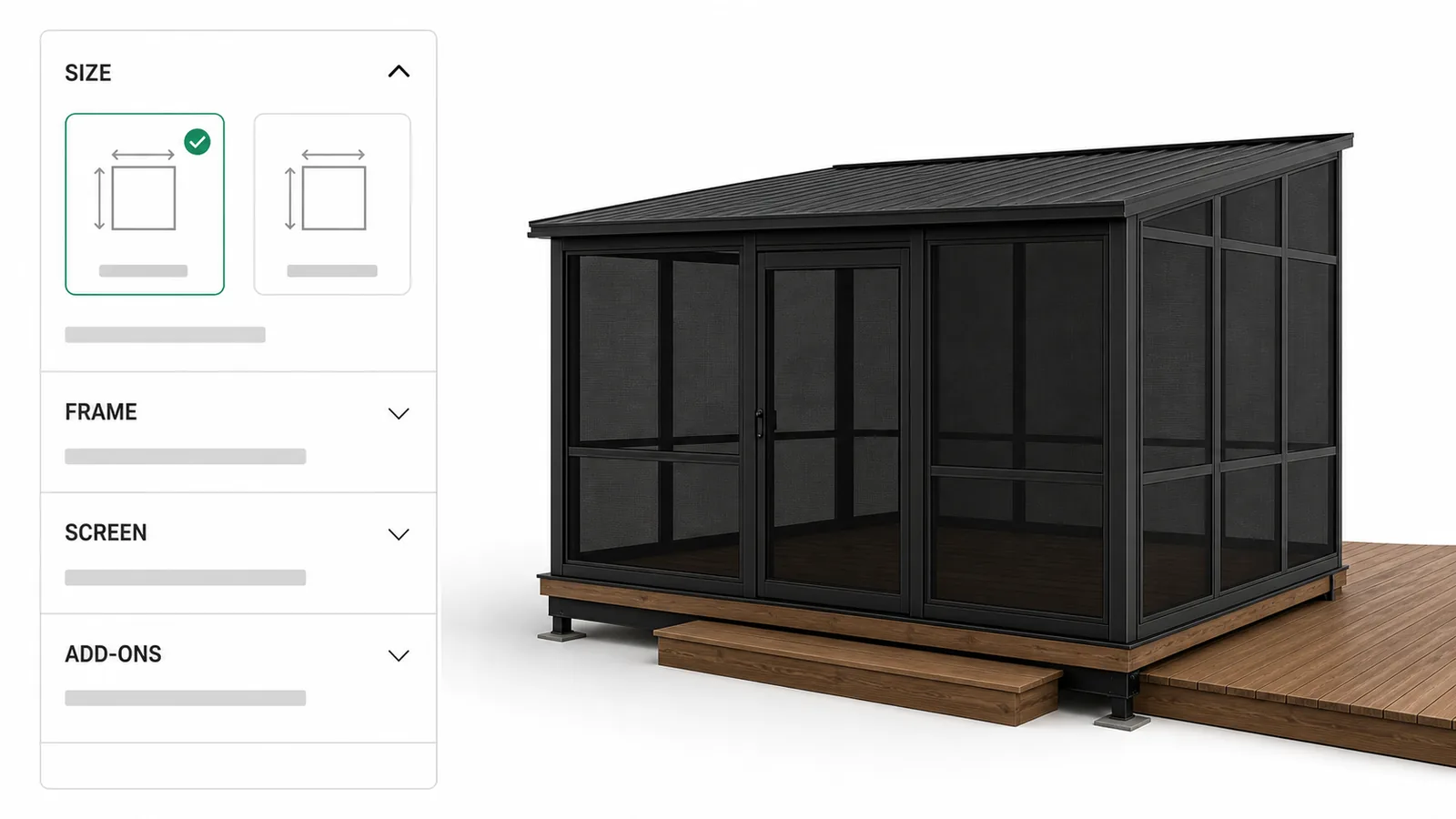
The dealer picks size, material, and options, and the model updates with every choice. Your rules sit behind each one, so an interactive 3D configurator only ever produces a build your shop can actually make.
Step 02 · Real time, every click
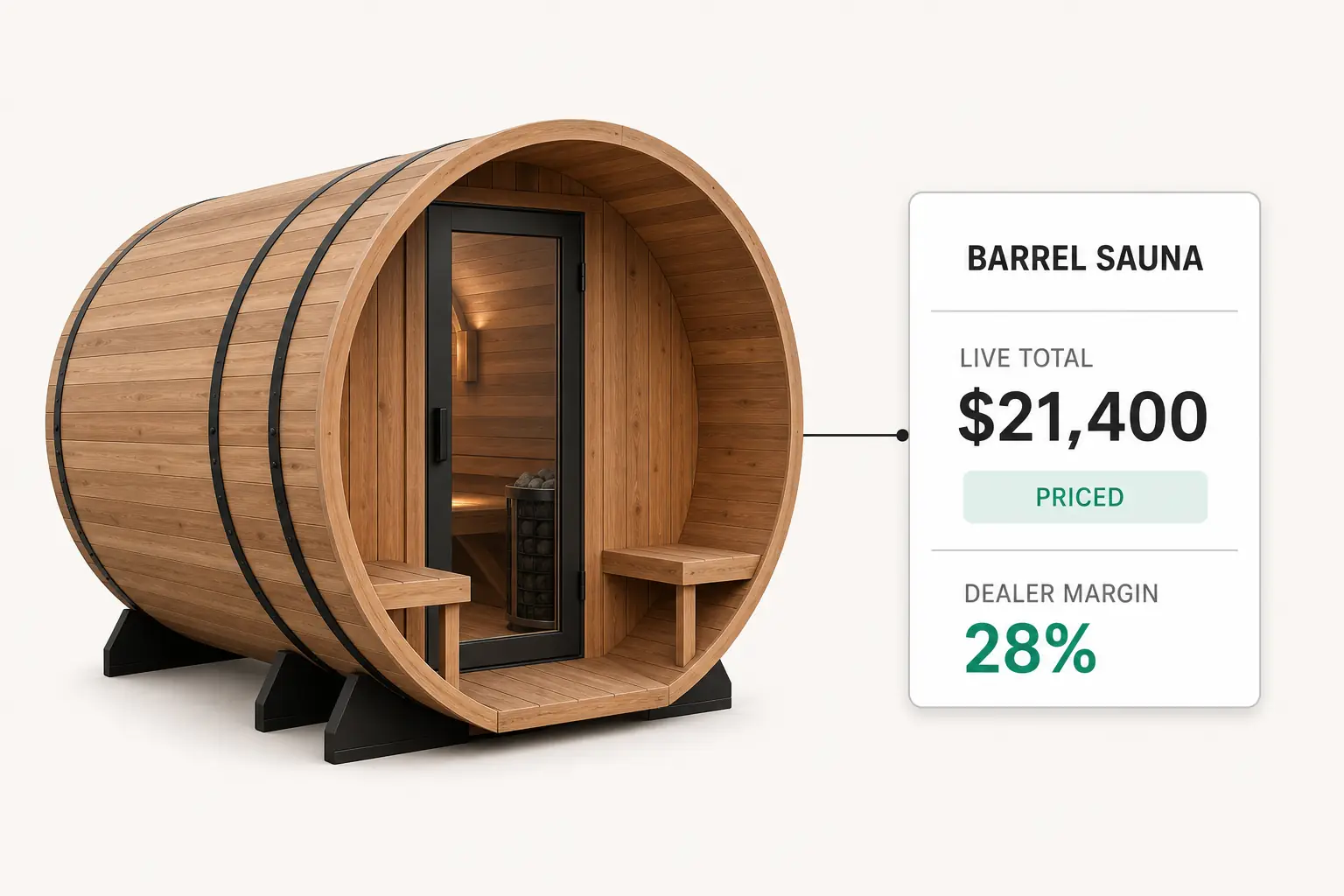
Each option carries its price, so the total moves the moment the build does. Every dealer works on their own prices and margin, and your cost price stays with you.
Step 03 · One spec, no retyping
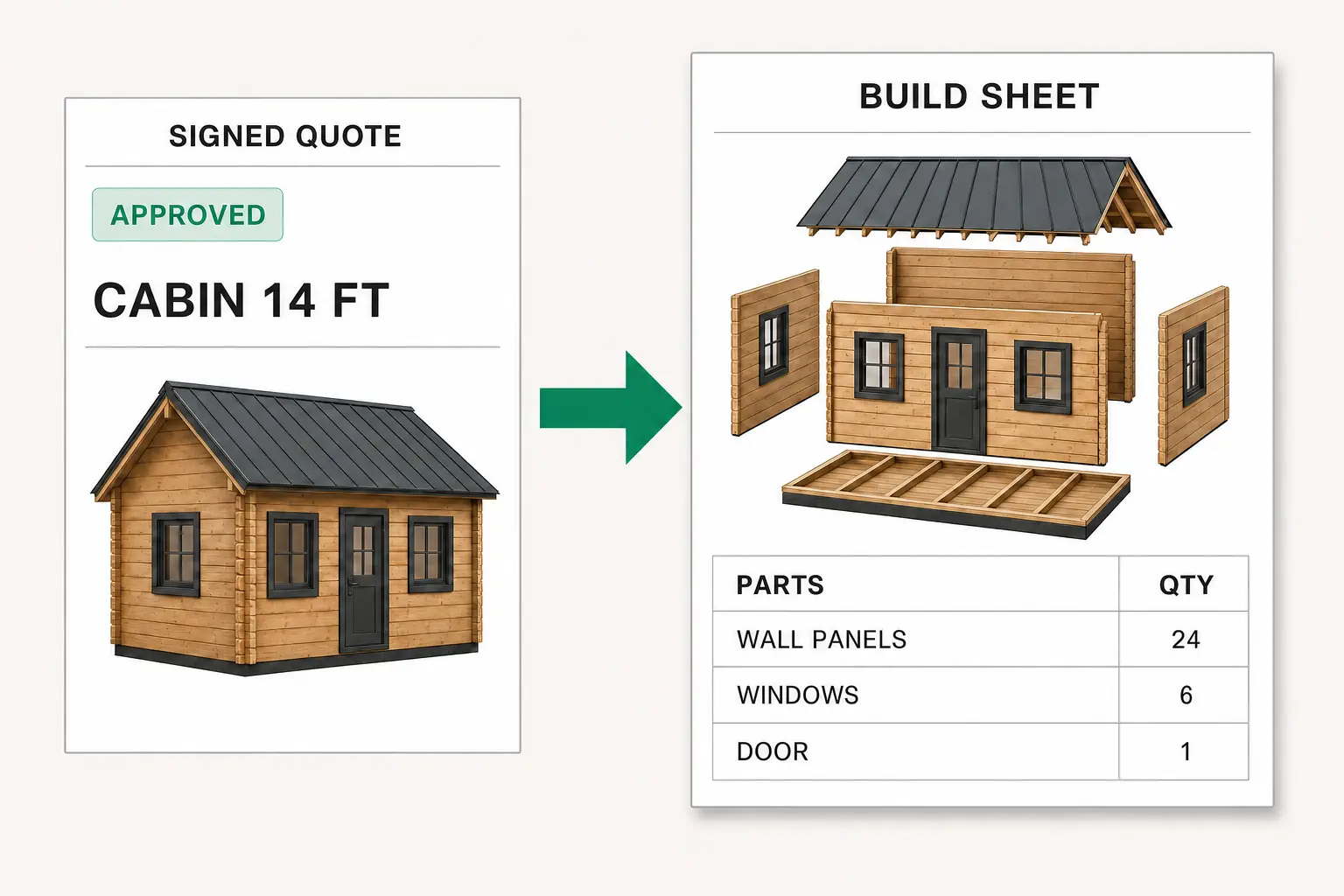
The buyer gets a finished quote in minutes. When they sign, the configuration becomes the order, the approved spec becomes the build sheet, and approved orders can land in your ERP with the lead in your CRM.
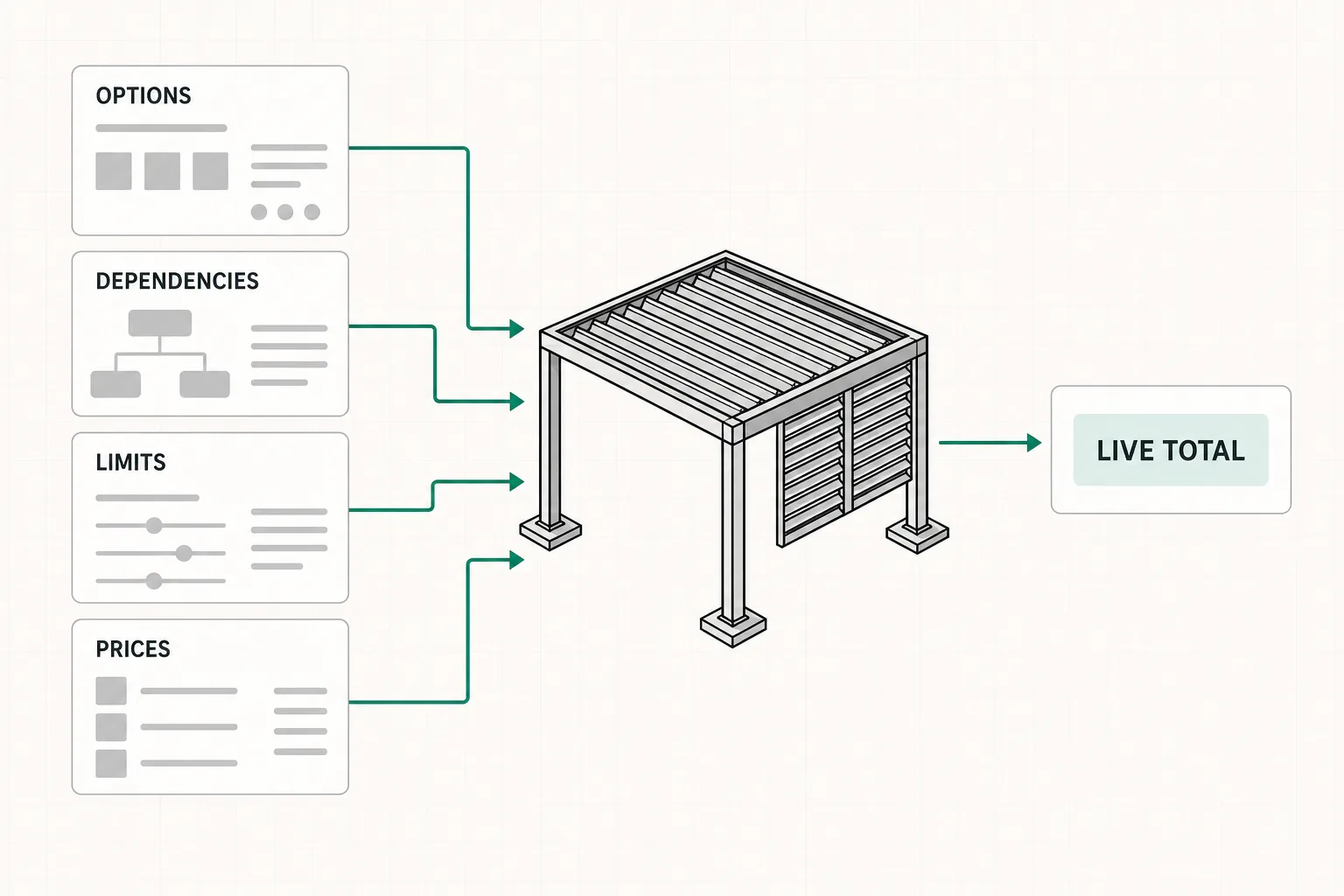
A 3D product configurator is only as good as the product knowledge inside it. Here is what gets built in before your dealers ever open it.
Sizes, materials, finishes, and add-ons, in the order a dealer meets them on a real deal. The configurator asks the questions you already ask, one screen at a time.
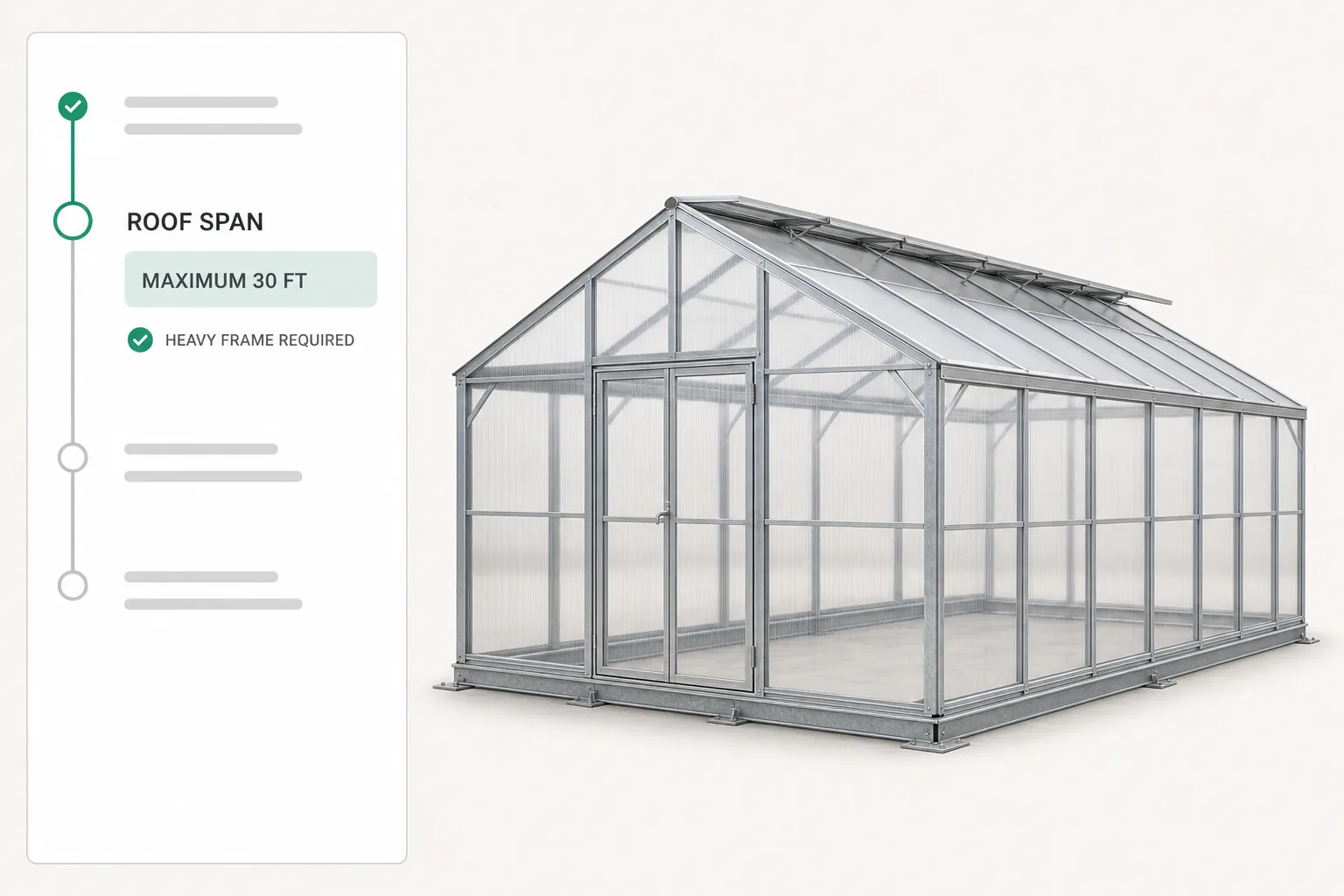
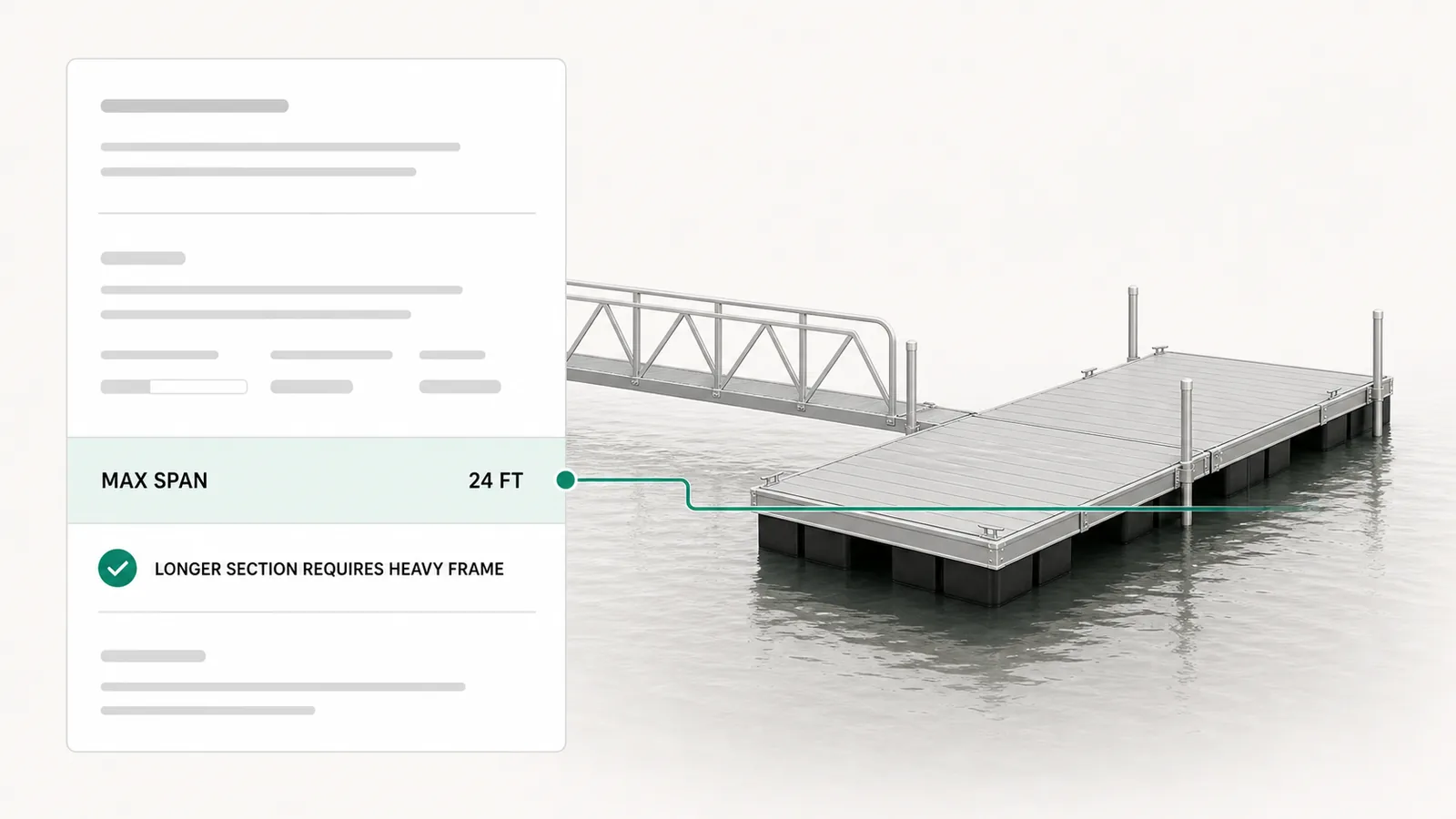
One choice can require or rule out another: a motorised roof that needs the heavier frame, a finish that only exists in two widths. The rule lives in the configurator, not in a dealer's memory.
Maximum spans, minimum sizes, combinations you will not build. If it cannot leave your floor, it cannot be configured, so it never becomes a quote you have to walk back.
The total is assembled from the same option prices you use by hand today, so it moves as the build moves. No rounding to the nearest package, no calling the office to confirm.
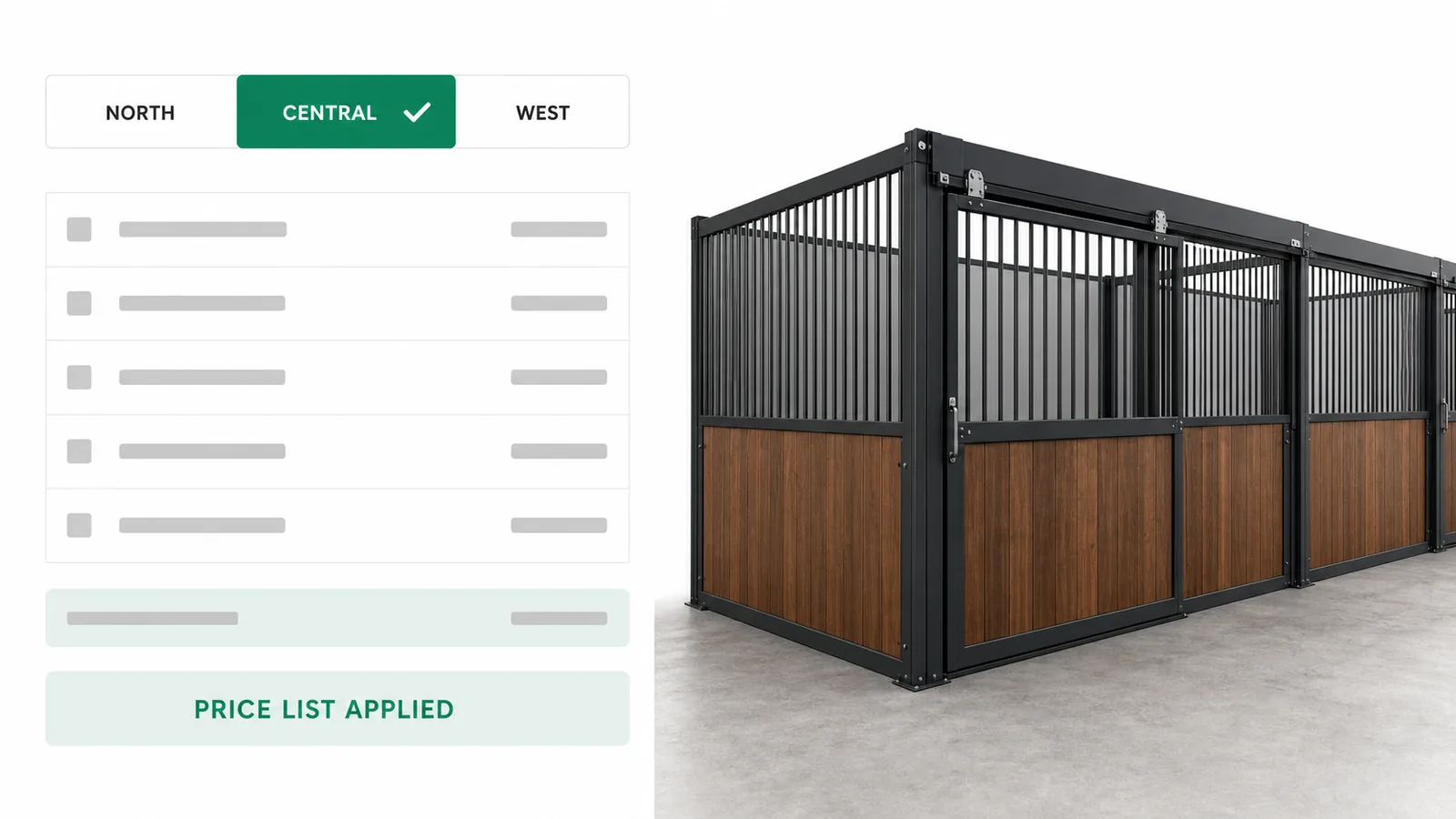
Each dealer quotes on their own prices and sees their own margin on each deal. Your cost price stays with you, and no dealer sees another dealer's numbers.
When a material price or a rule changes, you change it once. Every dealer's next quote uses the new one, and there is no revised PDF to chase around the network.
A price list per dealer means one build carries three different numbers at the same time. Each side of the deal sees only the one that belongs to them.
| The buyer | One price for the build in front of them, from the dealer they are talking to. |
|---|---|
| The dealer | Their own price list and their own margin on every deal, and never another dealer's numbers. |
| You | Every order across the network, and your cost price, which never leaves your side of the portal. |
3D is not the only valid view. If the product changes in finish and trim while its shape stays fixed, a 2d product configurator can explain the same choice with less asset work.
The same product, sold two ways. What separates them is where the truth about the build lives.
| In a custom deal | Photos, PDFs and a form | A 3D product configurator |
|---|---|---|
| What the buyer sees | One catalog photo of a build that is not theirs | Their exact build in 3D, every option applied as it is picked |
| Where the price comes from | A price list, plus whatever somebody remembers | Your rules and your prices, recalculated on every click |
| Who can quote | Whoever holds the price file, during office hours | Every dealer, any hour, from a browser |
| What a change costs | A new email, a new version, a few more days | One click, and the total moves with the model |
| An impossible build | Gets quoted, then gets caught in the shop | Cannot be configured, because your rules block it |
| What reaches production | A spec retyped by hand, hopefully the right one | The approved configuration itself, as the build sheet |
Most 3D product configurators get judged on the viewer alone. Six parts of the one screen your dealers open every day, and the viewer is only one of them.
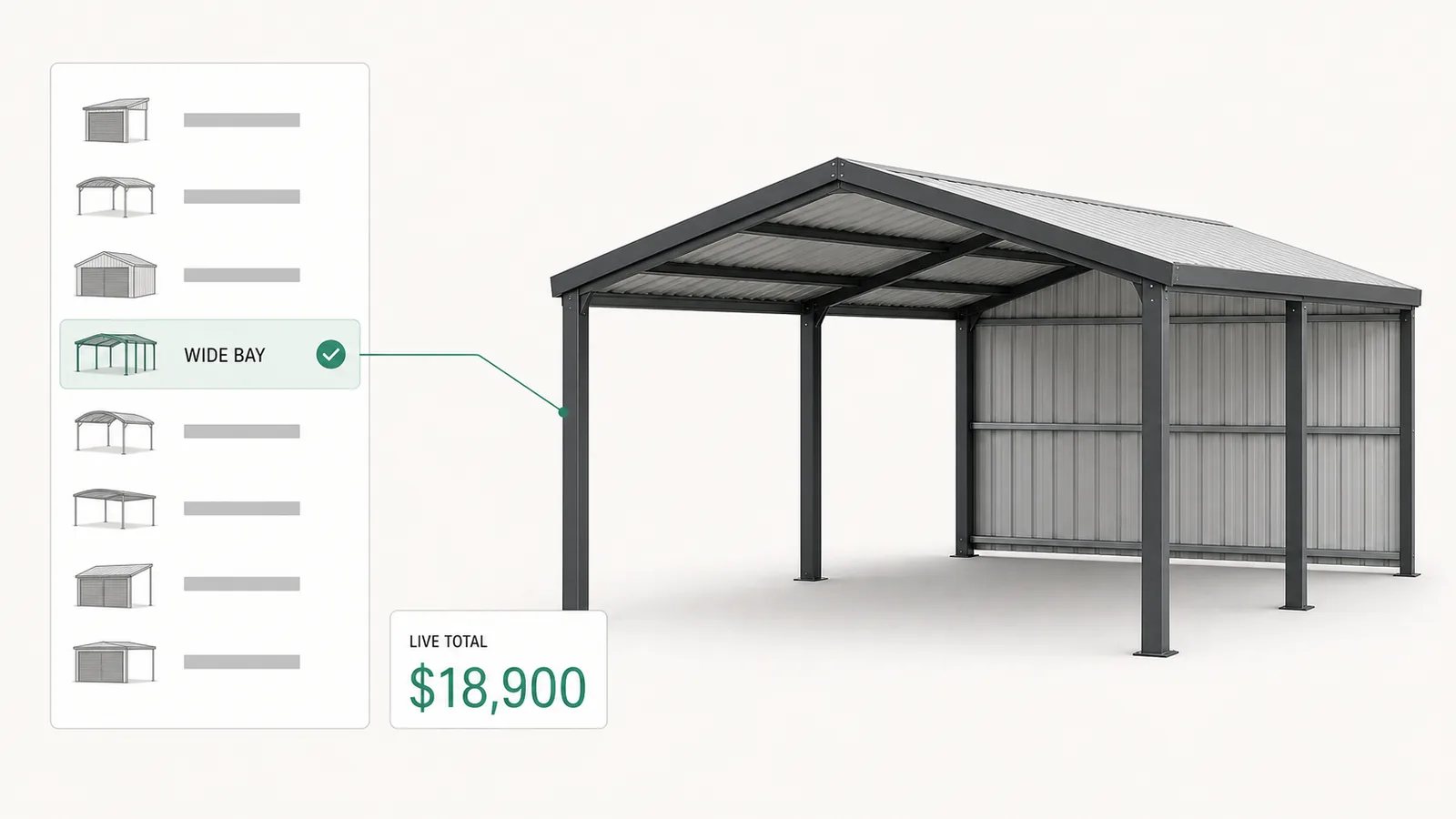
Every option applies to the model as it is chosen, and the price recalculates with it. Nothing waits in a queue and nothing renders overnight: the build on screen and the total beside it stay in step with each click.
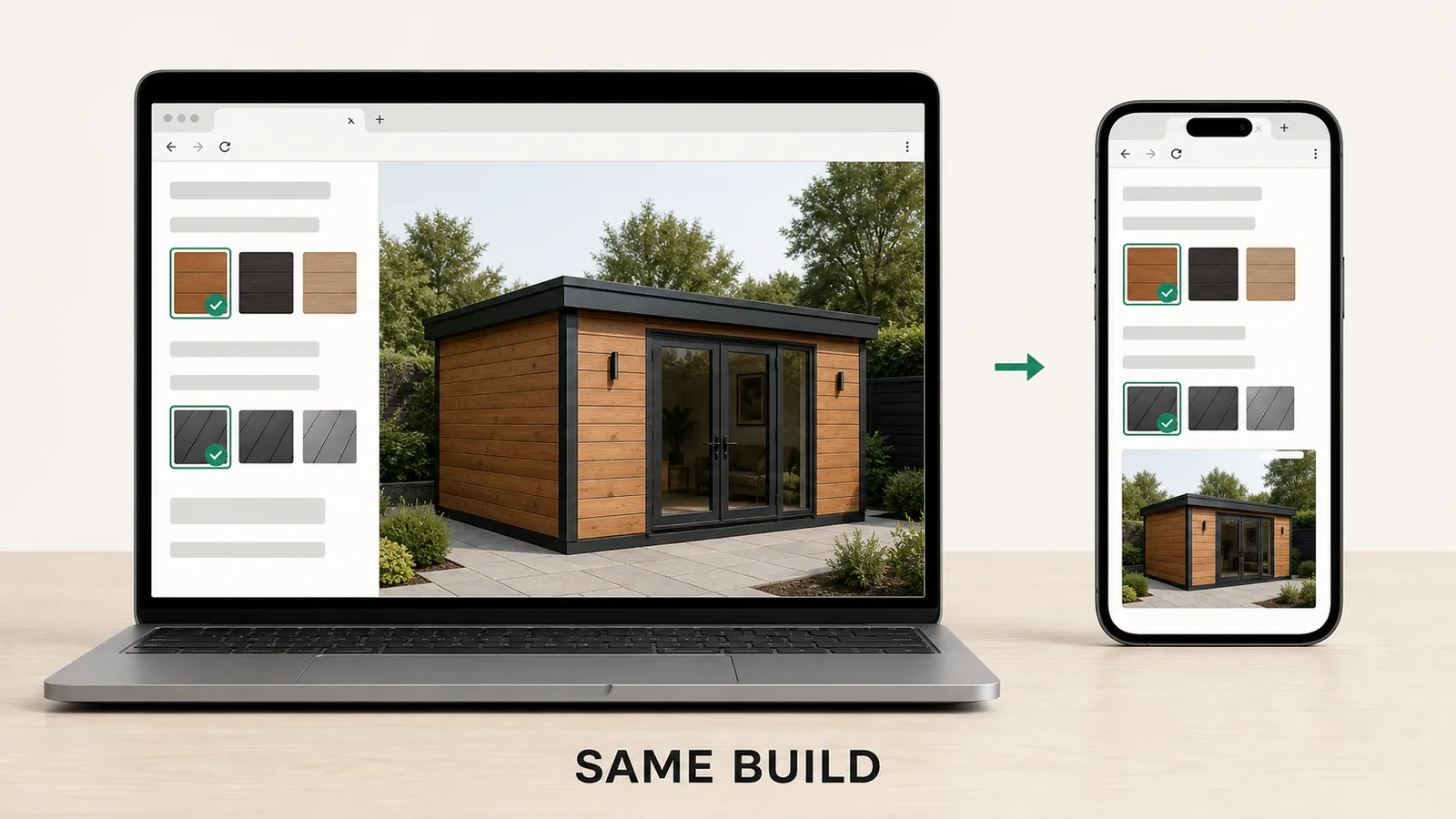
There is nothing to install. The web 3D product configurator opens on a showroom laptop or a phone in a driveway, so a dealer configures, prices, and quotes wherever the buyer happens to be standing.
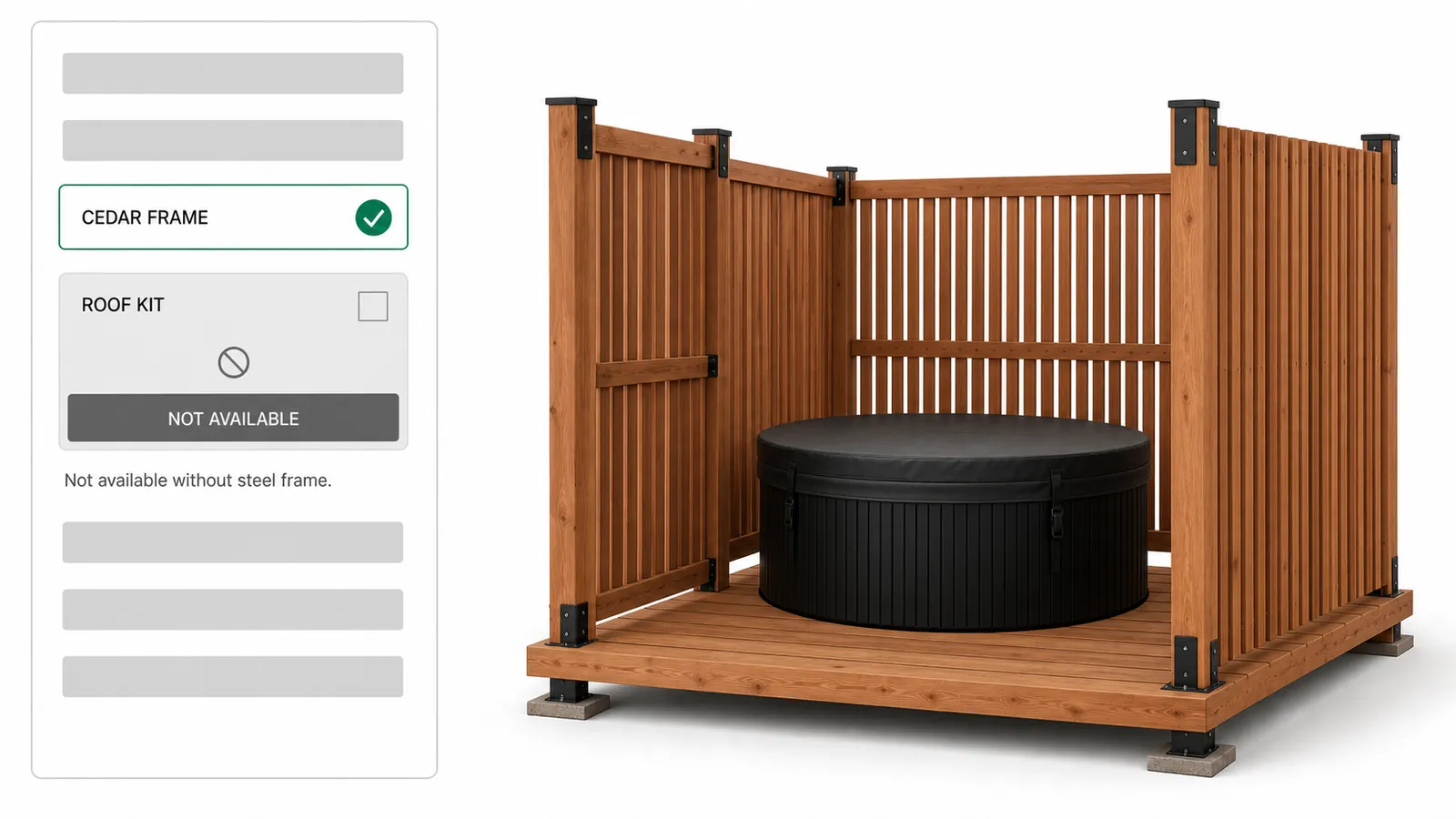
Your options, dependencies, and limits sit behind every choice, so the interactive 3D configurator refuses combinations your shop cannot make. Dealers get a guided build instead of a blank spec form and a phone call to your office.
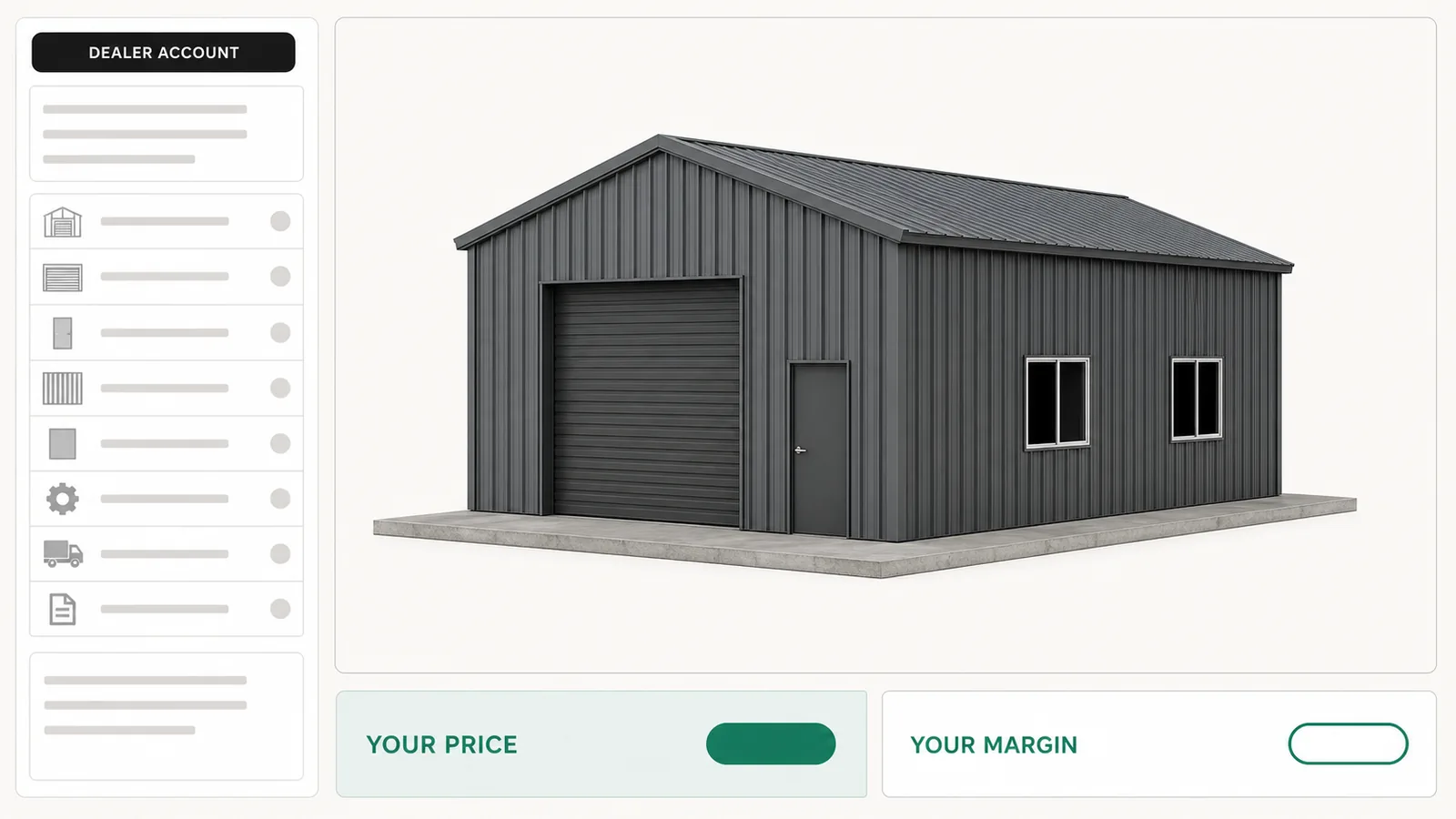
Dealers do not memorize specs or price lists, because the configurator carries the product knowledge. They build, price, and quote on their own, any hour, each on their own prices and margin.
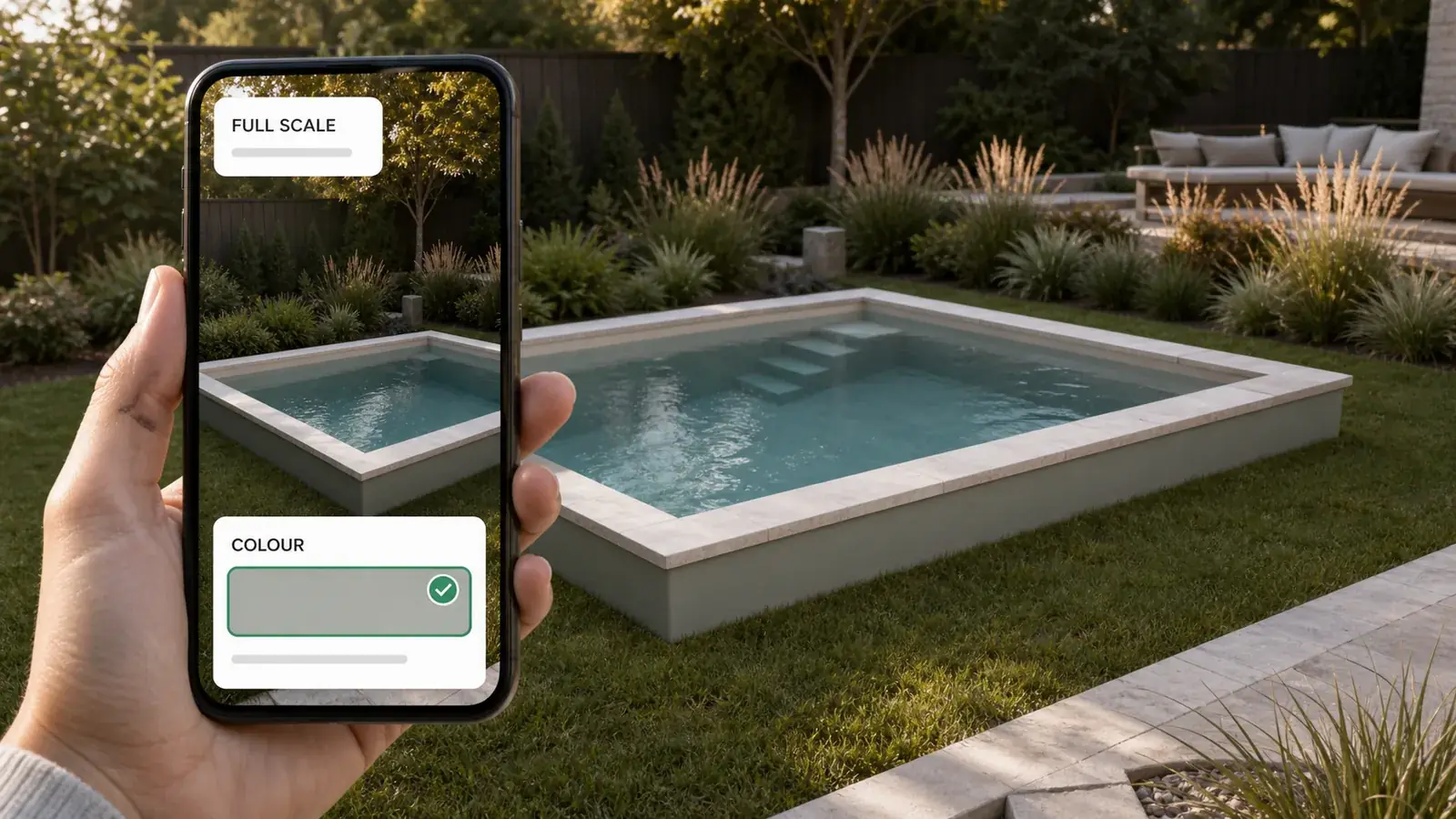
Dealect is 3D configurator and product visualization software in one, so the model that drives the quote also sells it. The buyer sees the exact build before signing. The 3d product visualization software guide explains what the picture must produce after the last click.
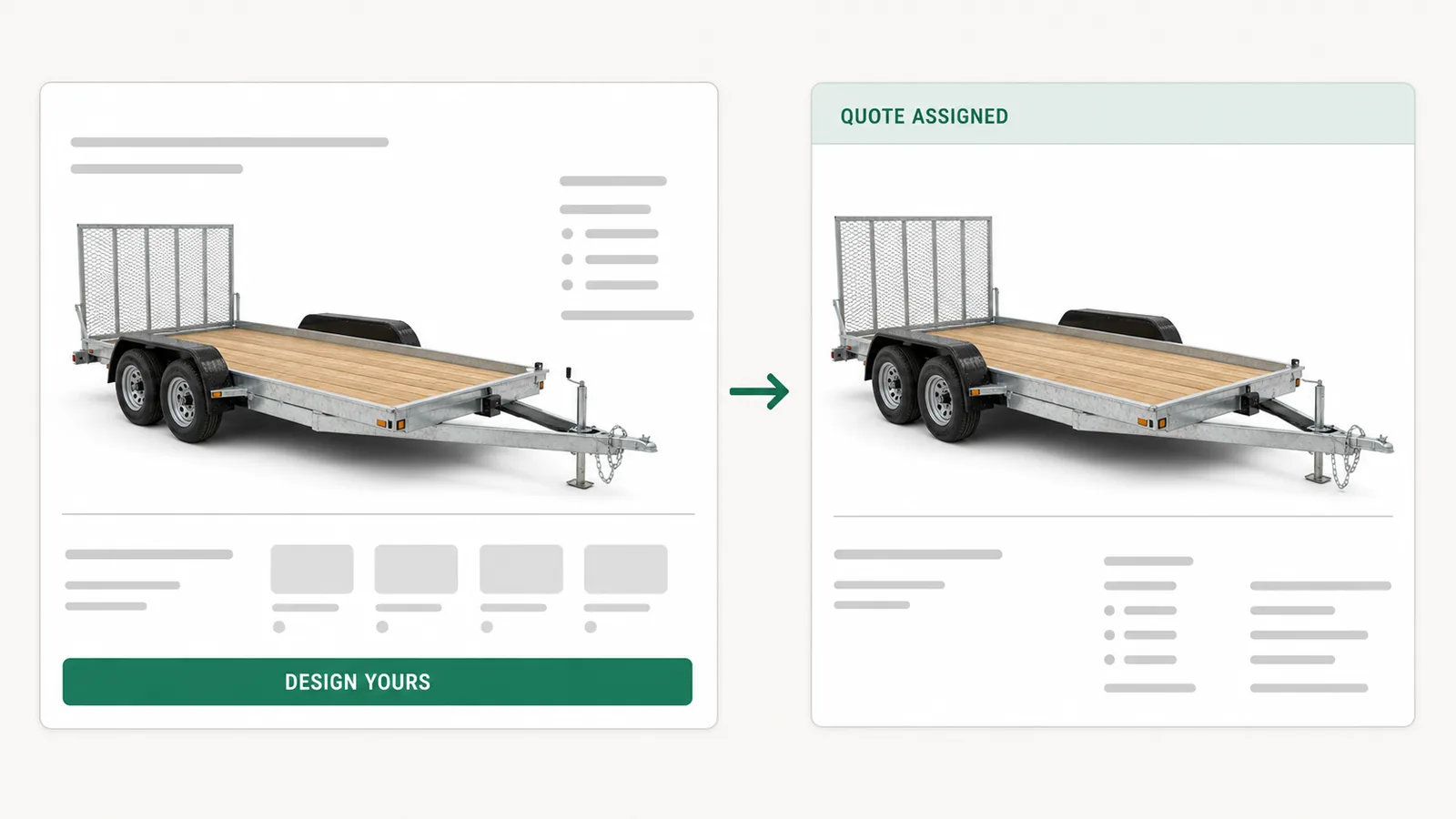
Dealect ends in a quote, not a checkout. It works as a 3D product configurator for ecommerce up to a point: it can sit behind a “Design yours” link on your own site and hand the finished build to the right dealer, but the flow closes as a signed quote and a production order.
A configurator is not a widget bolted onto a website. It is the one place your product line is defined, and everything downstream reads from it.
A configurator earns its keep where the product changes with every order and the price follows the build. If a spreadsheet decides your prices today, the configurator can hold the same logic and never forget a rule at 5pm on a Friday.
See the same configurator on a single product line: the sauna configurator and the outdoor kitchen configurator. For the quoting engine underneath it, read CPQ for manufacturers; for the term itself, what CPQ means; for the portal your dealers log into, the B2B customer portal; and for the same render put in front of a buyer while the price moves, visual cpq. The whole product sits on the Dealect homepage.
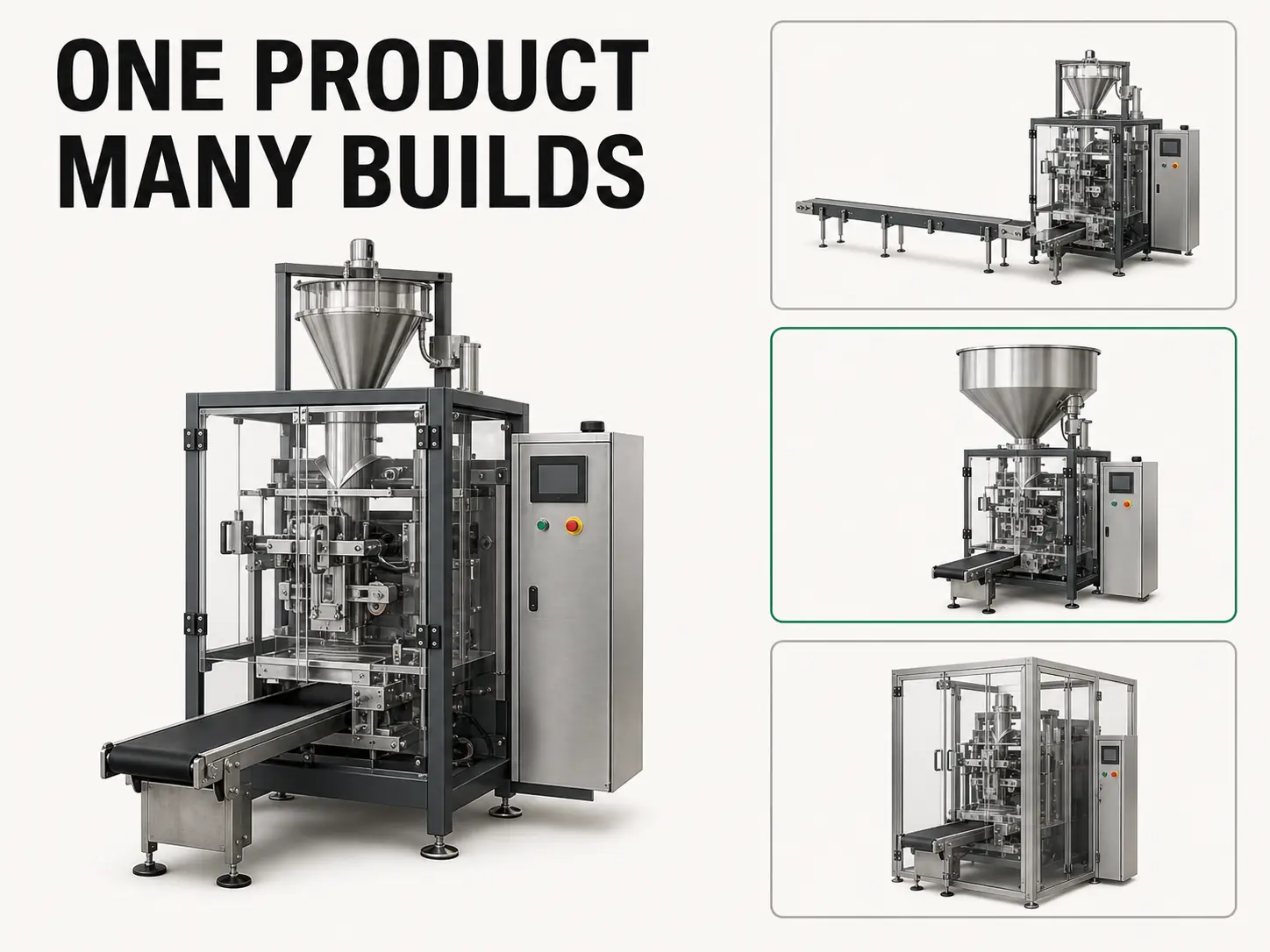
It is the wrong tool for a product with two sizes and a fixed price: there is nothing for the rules to hold, and a photo with a number under it does the job. The line falls where a dealer starts needing you on the phone to answer what a build costs.
A dealer network's first month on Dealect.
2 days to10 min
From the moment a dealer opens the configurator to a quote in the buyer's inbox.
A configurator that prices the build is the whole reason that number moved: nobody is waiting on the office for a figure. The rest of that month is on the homepage.
3D product configuration starts with what you already have. You bring the product knowledge and the configurator gets built around it.
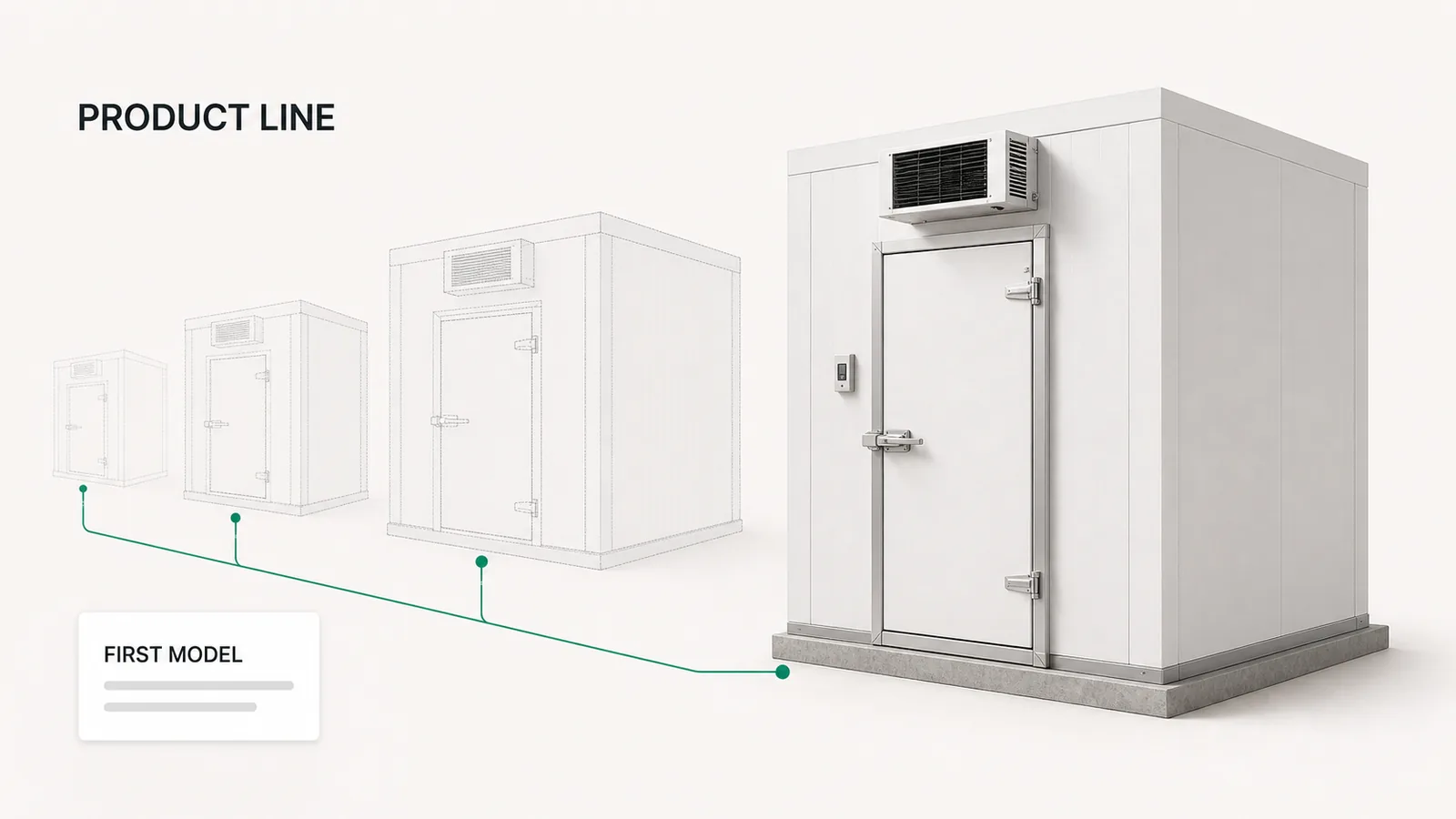
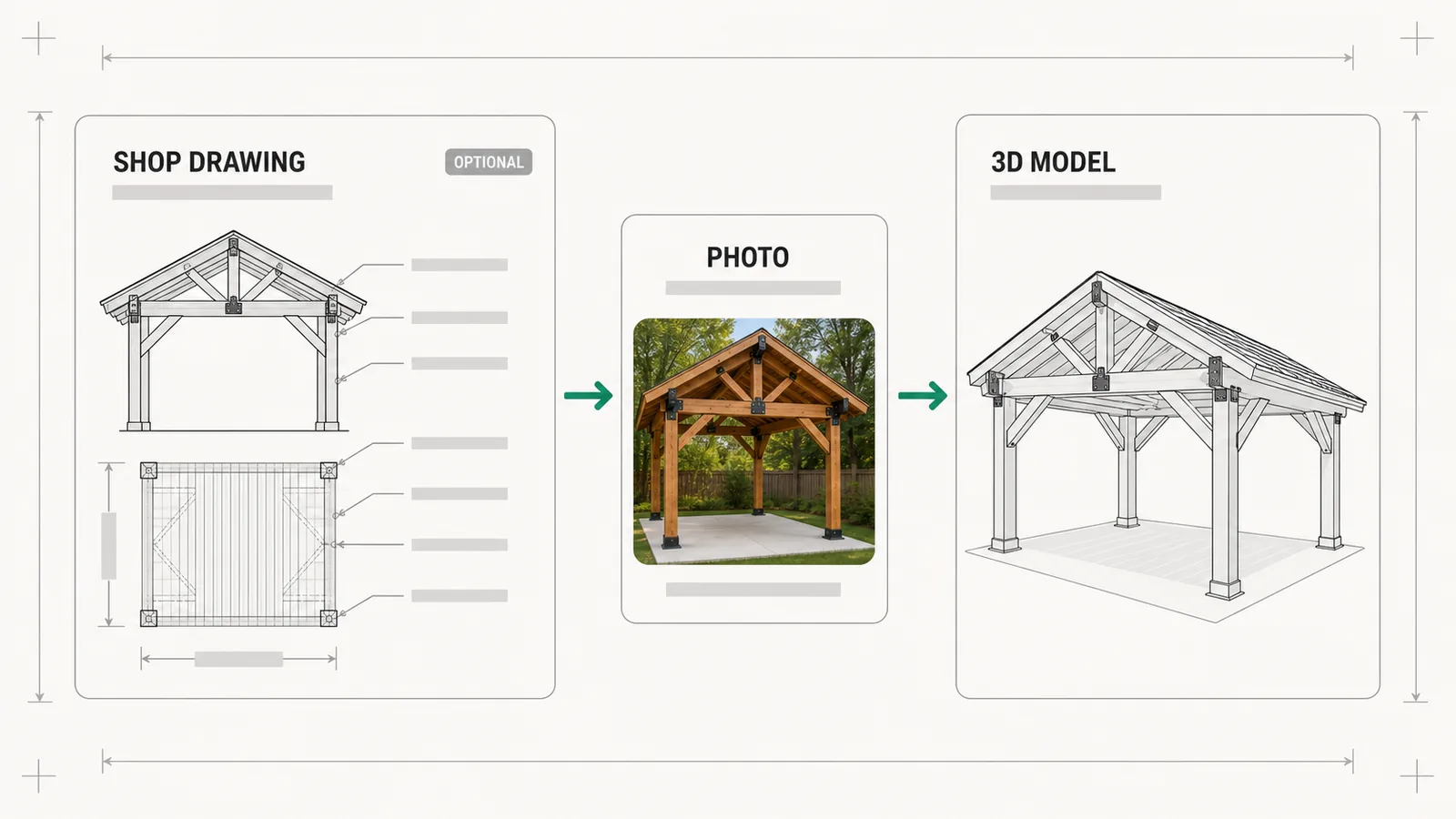
None of that is a 3D project on your side. You hand over the product knowledge you already have, in the form you already keep it, and the modelling, the option states, the rule logic, and the price setup are ours. Your team answers questions about your own product, which is the one part nobody else can do.
A browser, and that is the whole list. There is nothing to install and no plugin to approve, so the online 3D configurator opens on a showroom laptop and on a dealer’s phone at a buyer’s kitchen table, over ordinary mobile data. Options apply to the model as they are picked instead of queuing a render, so nobody waits on a server to draw the build they just changed.
What matters more than the drawings you start from is that the option list and the rules are the real ones. A model that looks right but allows a combination your shop will not build is a quote you have to walk back, so the rules get checked with you before a single dealer opens it.
There is no list price, because the work is scoped to your product line. Here is what moves the number, and when you hear yours.
A 3D product configurator is scoped rather than listed, and what it is scoped against is the product line: every option, every rule between options, and every view that has to be built. The four things below are what move it. The pricing model itself is the same for every product line.
How many options, dependencies, and limits your line carries. A product with four options and a product with forty are different projects.
How many dealers will configure and quote in your portal, each on their own price list and their own margin.
How many models the first line needs, and whether buyers place the finished build in their own yard with a phone.
Whether approved orders land in your ERP and leads in your CRM on their own, and which systems those are.
3D configurator software development is six projects wearing one name. A viewer that runs on a phone. A rules engine that knows what your shop can build. A pricing engine holding every dealer’s prices. A quote document someone will sign. Accounts and permissions for the whole network. And the person who keeps models and prices current long after launch.
Teams that start in-house usually get the viewer working first, then find that the other five are where the years go. A 3D product configurator tool gets judged on its viewer and lives or dies on the rest: the rules, the prices, and the handoff to production are the product.
With Dealect the build is ours and the product knowledge is yours. We set up your options, rules, and prices, your dealers start quoting on one product line, and you go live in weeks rather than months, with no IT project on your side. Read who builds Dealect.
30 minutes, one of your products, configured live.
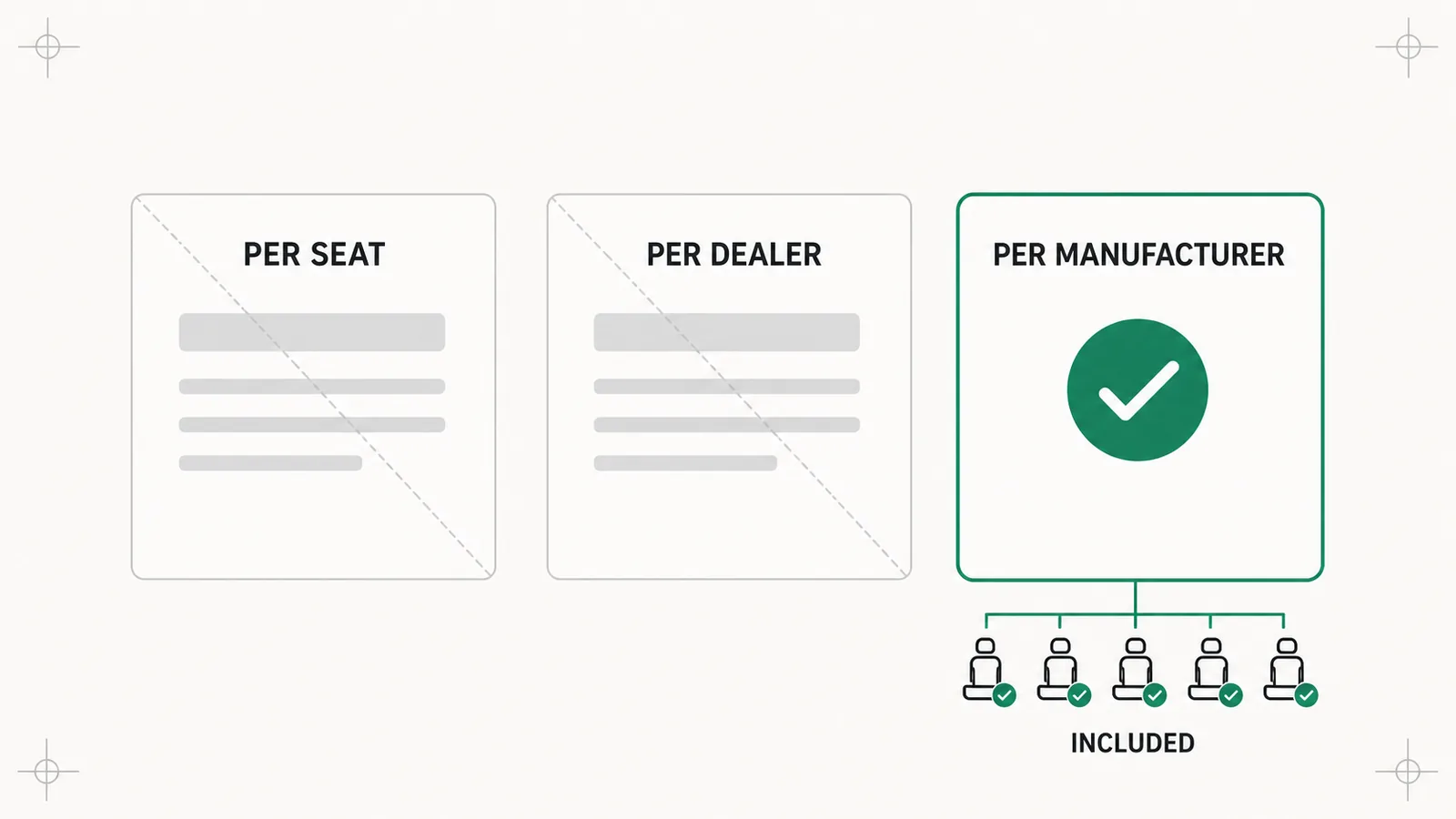
It is scoped, not listed, and what it is scoped against is how much product there is to model: the number of options, the rules between them, and the views you want built. That is why it is priced per manufacturer rather than per seat. Dealect quotes it after a 30-minute demo, so you hear a number for your products rather than a starting point.
Not here, and there is no self-serve signup. What is free is the demo: a 30-minute call where we configure one of your own products live and you hear your full price on the same call. Free tools exist for simple products with a handful of options, but they stop where custom manufacturing starts, at your rules, your dealer prices, and the handoff to the shop.
That is the case it is built for. A product with sizes, materials, add-ons, and dependencies has more valid combinations than a price list can hold, which is exactly why the logic belongs in software. Your options, rules, and prices are set up before launch, so the configurator produces only builds your shop can make, and prices every one of them.
Yes. It is an online 3D product configurator with nothing to install: dealers open it in a browser on a laptop or a phone, in the showroom or at a buyer's kitchen table. The same screen serves the dealer building the quote and the buyer looking at the render.
We build them in. You bring the product line, the options, the rules, and the prices, and Dealect is set up around them, so there is no 3D configurator software development project on your side and no models for your team to maintain. The demo call walks through one product and a go-live plan, so you see the timeline before you commit.
Weeks, not months. Enterprise CPQ projects can spend months in implementation before a dealer sends the first quote. Dealect starts with one product, gets your dealers quoting on it, and grows across the line from there.
It prices it. Visualization alone leaves the quote to be worked out by hand, which is where the errors live. In Dealect each option carries its price, the total updates with every click, and each dealer sees their own prices and margin while your cost price stays with you.
Yes, as the front door to a quote. It runs in the browser, so a 3D web configurator can sit behind a “Design yours” link on your own domain and pass the finished build to the dealer who owns that territory. It is a 3D product configurator for a quoting flow rather than a checkout: the deal closes as a signed quote and a production order.
Both, in one flow. The 3D configurator is what the dealer and the buyer see; CPQ is what it does underneath, holding every option, rule, and price so the quote is always valid. The CPQ side of the same product is covered on our CPQ for manufacturers page.
You change the price once and every quote written after that uses it. That is the part a price list cannot do: a PDF sent to forty dealers keeps quoting last season's cost until the last dealer notices. In the configurator the price sits with the option, so the correction reaches the whole network on the next click.
No, and that is the point of putting the rules in software. Dependencies and limits are configured before launch, so an impossible combination cannot be selected, let alone priced and signed. The wrong build gets stopped at the option, not in the shop.
No. The configurator carries the product knowledge, so dealers do not have to learn specs or price lists. Every option, rule, and price is already set, the price updates as they build, and they watch each order move from approval to build to ship without calling your office.
Last updated
Request a 30-minute demo, bring one product, and watch it configured, priced, and quoted in 3D. We reply by email to set up the time.
Your call is with the Dealect team.