B2B customer portal

A B2B customer portal your dealers can quote from

Dealect is a B2B customer portal for custom manufacturers. Every dealer signs in to their own prices, their own margin, and their own orders. They build the product with the buyer, price it, place the order, and watch it move through your shop, without an email to your office.

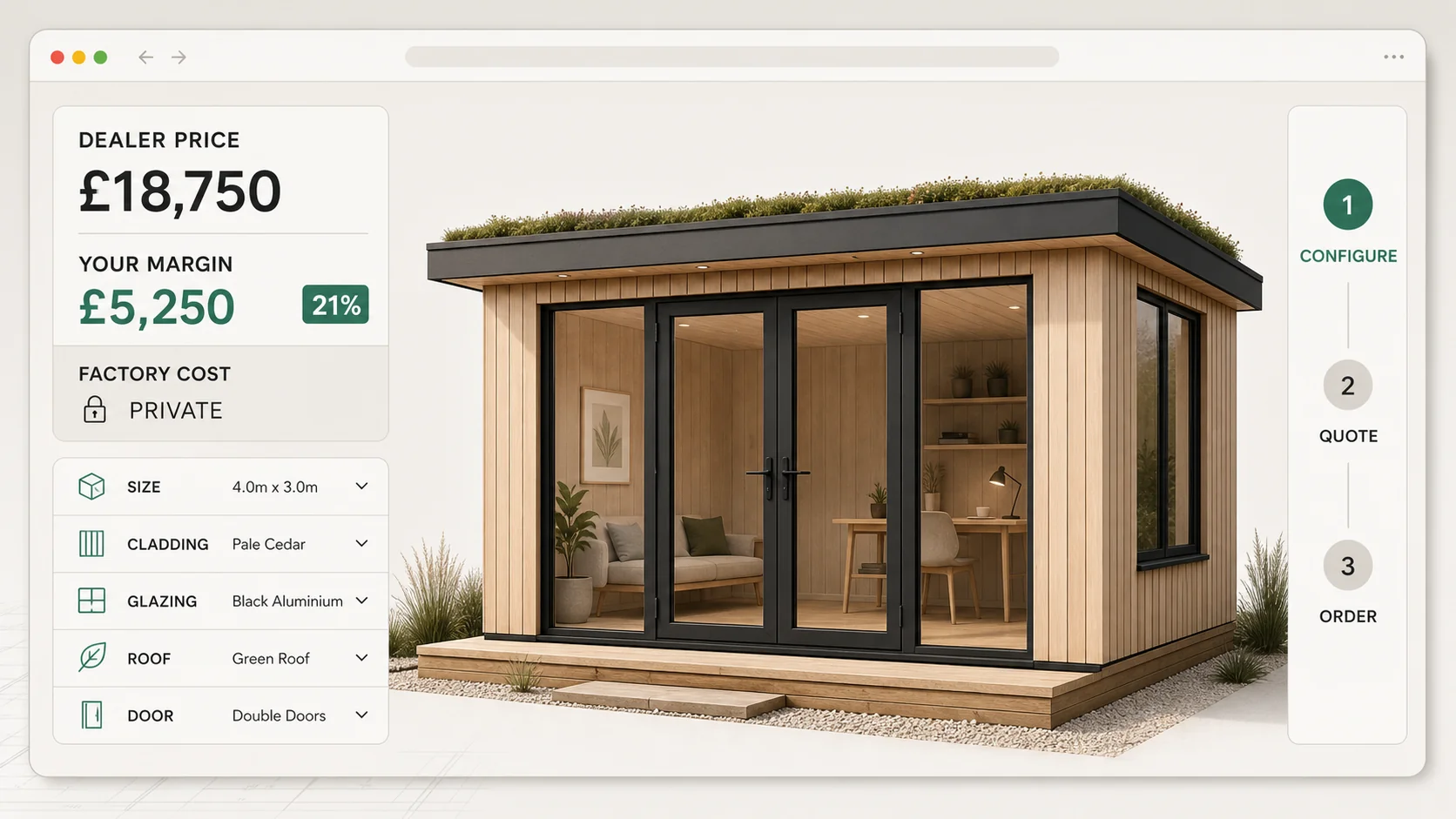
B2B customer portal on a configurable timber frame garden studio, with the dealer’s own price and margin and the factory cost private.
In plain words

What is a B2B customer portal?

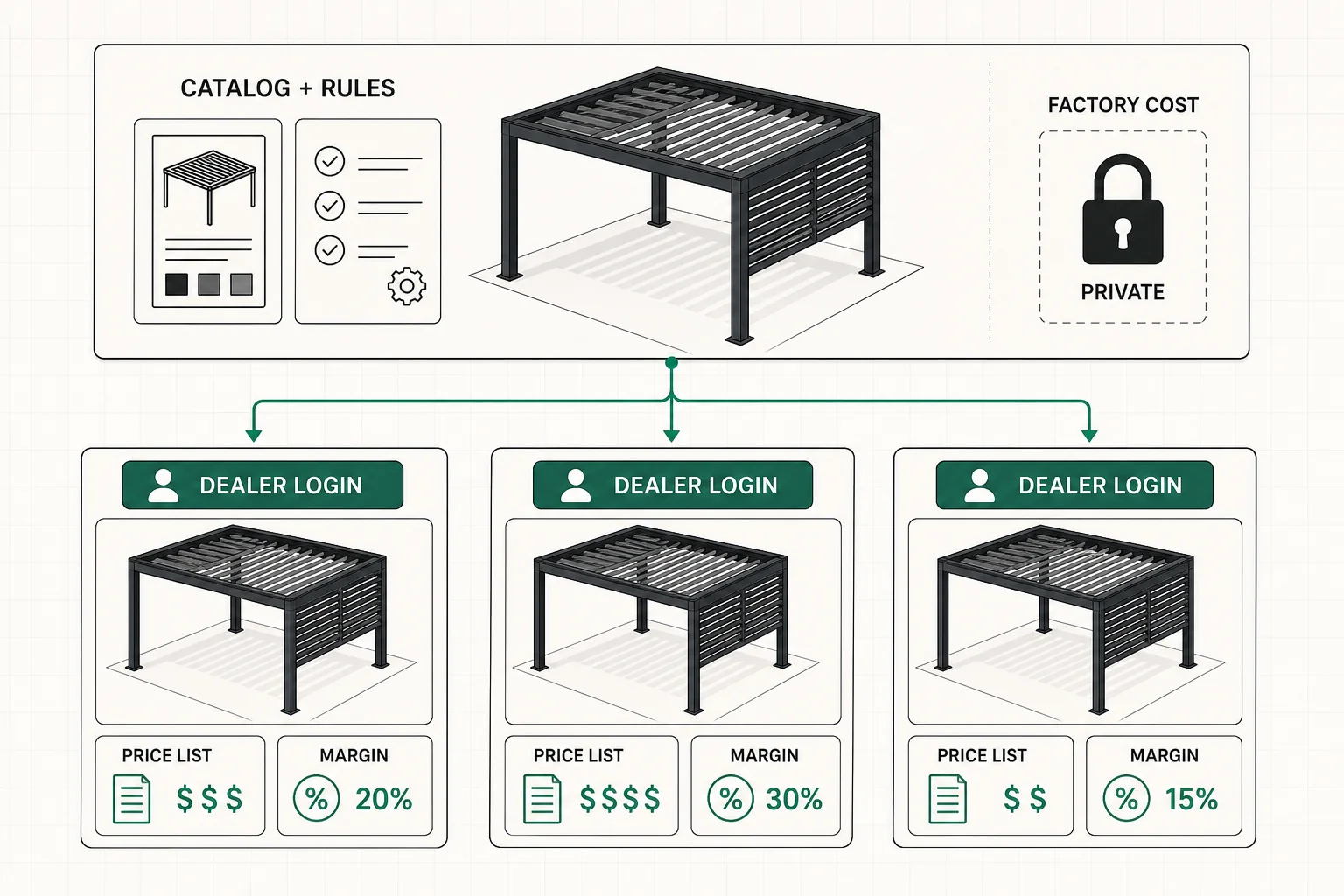
What a B2B customer portal holds: one catalog, a price list behind every dealer login, and the factory cost on your side.

A B2B customer portal is a private, logged-in site where business customers do what they would otherwise phone or email you about: see their own prices, place and track orders, and reach the documents behind them. For a manufacturer selling through dealers, it is where the channel works.

What it replaces

One screen per dealer, instead of your inbox

It replaces the email thread and the shared spreadsheet with one screen per dealer. Each one signs in to their own price list, their own margin, and their own order history, so nobody waits on your office for a number, a status, or a copy of last month’s order. Running a B2B customer portal is what turns a mailbox full of dealer questions into a system.

Why yours is different

There is no price to look up

Most portals assume a catalog: the dealer finds a part number and reorders it at a negotiated rate. Yours does not work that way. The product does not exist until somebody builds it, so there is no price to look up. The tool a dealer drives inside the portal is a sales configurator, and it computes the number from the configuration and that dealer’s own list at the moment they build it.

The boundary

No checkout, no stock counter, no deal registration

It is worth saying what a B2B customer portal is not. There is no card payment, no shelf count, and no deal registration. Dealers quote, order, and track. Money and inventory stay where you already keep them.

Written and kept current by the team that builds Dealect, in Mississauga, Canada. Who builds Dealect.

The problem

Every order your dealers place still goes through you.

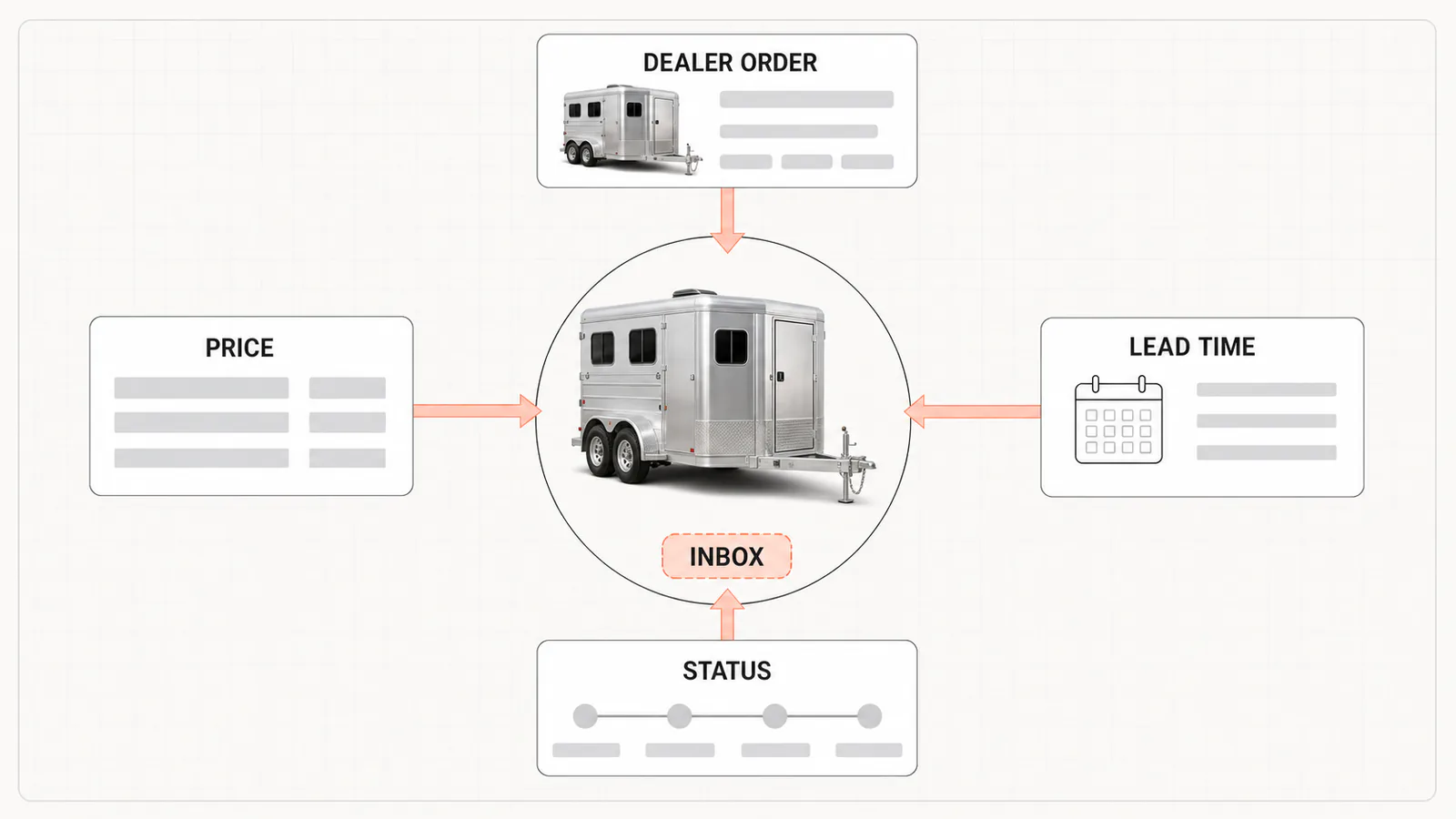
When the prices, the lead times, and the paperwork all live at your office, a dealer cannot finish anything alone. The buyer waits while the two of you email.

Every dealer order detouring through the manufacturer’s inbox for a price, a lead time, and a status, with the buyer waiting.
  • Ordering starts with a question

    A dealer has a buyer ready to sign and no way to price the build or check a lead time. Both questions land back on your desk, next to every other dealer’s, and the order waits its turn in your inbox.

  • Your price list ages the day you send it

    Attachments do not update. Six months in, every dealer holds a slightly different version of your prices, and the one who quotes from the oldest file is the one who wins the job at a number you never agreed to.

  • Somebody retypes the order

    A dealer writes the spec in an email, your office types it into the system, and one wrong option or size reaches the shop floor. On a high-ticket custom build there is nothing to restock and nothing to resell.

  • Nobody can see the network

    Quotes sit in email, orders sit in another system, and status sits in someone’s head. Neither you nor your dealers can say where a job stands without asking a person, which is the slowest lookup in the business.

A B2B customer portal removes the middle step: the dealer stops asking, because the answer is already on their screen.

The comparison

B2B customer portal vs webshop vs PRM vs DMS

A B2B customer portal is a private account area where a named customer sees their own terms and places their own orders. A B2B webshop sells a catalog at a listed price. Partner portal software, sold as PRM, manages deals and marketing funds rather than orders. A distributor management system runs inventory and routes for the distributor, not the manufacturer. Only one of the four is built around a product that gets configured.

Side by side · four things people call a portal
In a dealer orderB2B customer portalB2B webshopPartner portal (PRM)Distributor management (DMS)
What it sellsProducts built to the orderA catalog of stock itemsNothing. It manages the relationshipNothing. It moves existing stock
Where the price comes fromThe configuration, on that dealer’s own listA list price with a customer discountNot priced here at allThe distributor’s own pricing on your goods
What the buyer does at the endSends a quote, then places the orderChecks out and pays by cardRegisters a deal and waits for approvalRaises a purchase order upstream
What your factory receivesA validated build sheet, nothing retypedA picking list for a shelved itemA lead, at bestA stock replenishment order
Who it fitsManufacturers selling configured products through dealersBrands selling finished goods to businessesSoftware vendors with a reseller channelDistributors running warehouses and routes

If what you actually need is deal registration, marketing funds, and commission tracking, you need channel sales software, not this. If you need to run warehouses, stock, and delivery routes, you need distributor management software. Dealect sits where neither of those sits: the manufacturer’s own dealers, ordering a product that is built to their order. The quoting engine underneath it is our CPQ for custom manufacturers.

How it works

How a B2B customer portal works, from login to build sheet.

A dealer signs in and lands on their own catalog and their own prices. Everything after that happens on one screen, and your shop only sees the order once it is valid, priced, and approved by you.

  1. Step 01 · The dealer, with the buyer in the room

    Step 1: Configure

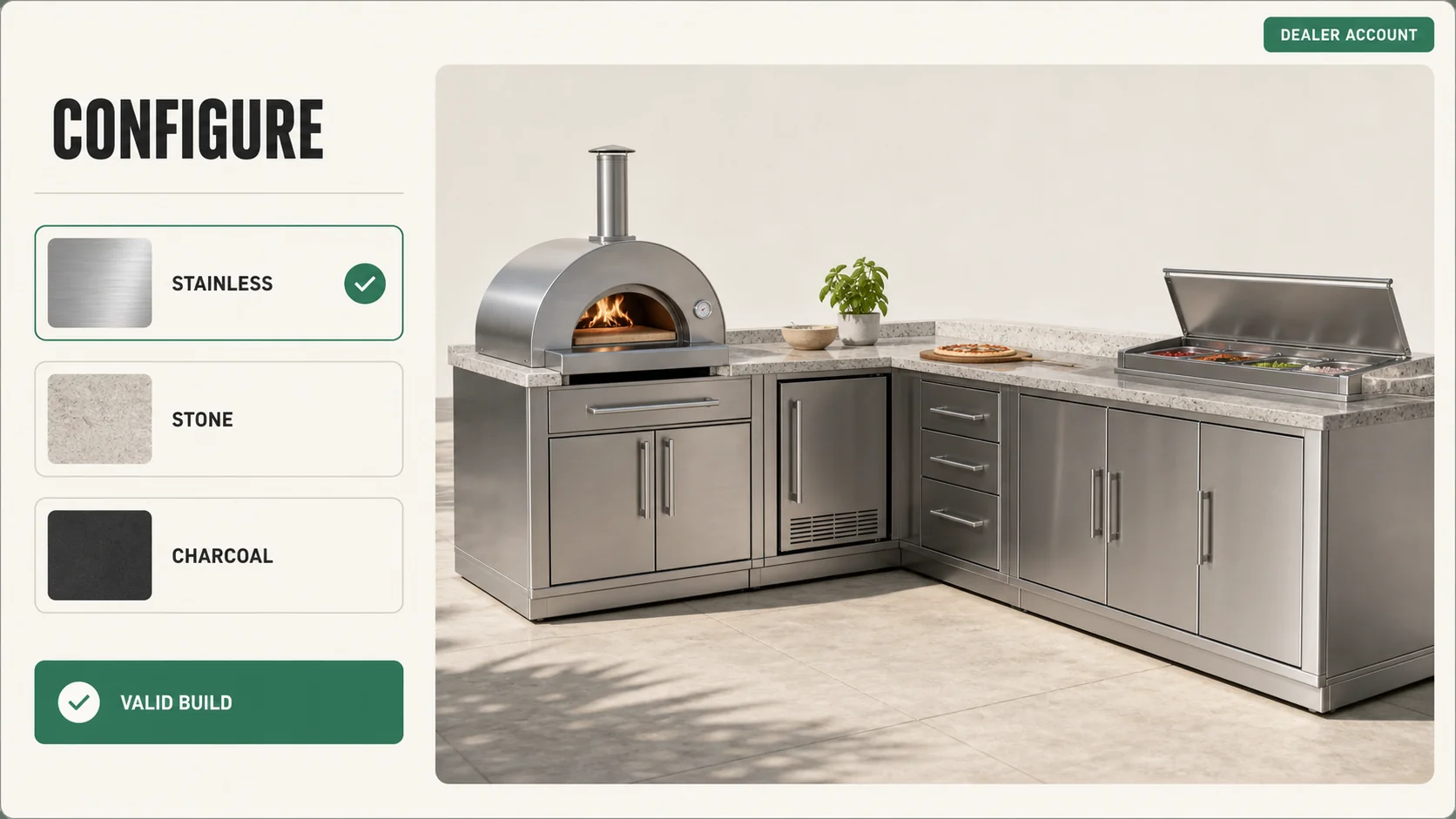
    The dealer builds the product on screen inside their own login. Your option groups, dependencies, and shop limits sit behind every choice, so a dealer can only put together something you can actually make. Nothing has to be checked with you before it is shown to the buyer. The buyer watches the build take shape while it happens, which is the 3D configurator your dealers run doing its half of the job.

    Dealer configuring a stainless steel outdoor pizza kitchen inside their own portal login, with material choices and a valid build state.
  2. Step 02 · Their margin, your cost private

    Step 2: Quote

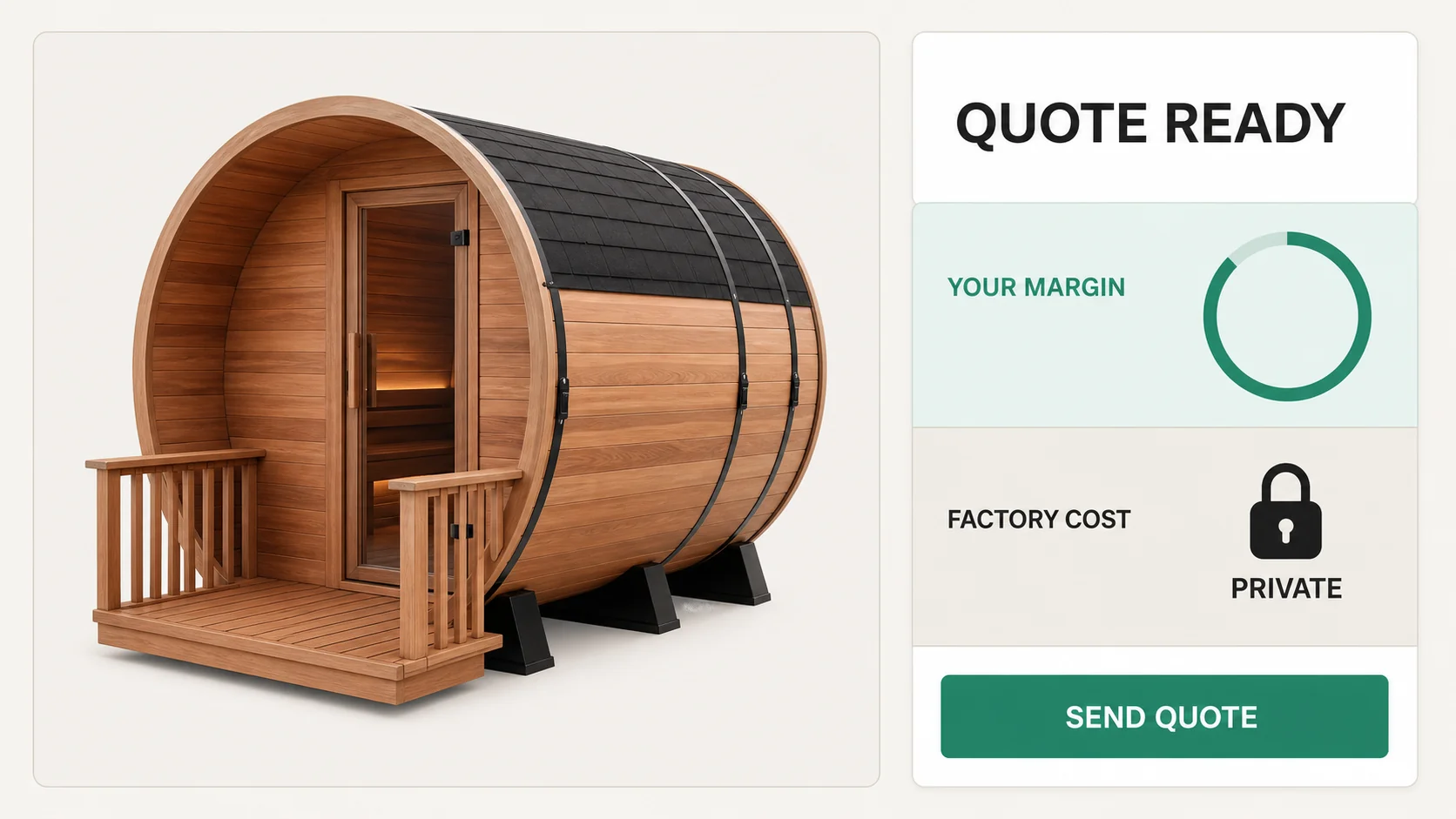
    The total moves with every click, on that dealer’s price list rather than yours. They see their own margin on the build. Your cost price never leaves your side of the portal, and no dealer ever sees what another dealer pays. The buyer gets a finished quote in minutes. If you run tiers, each tier is its own list, and moving a dealer between them is a setting rather than a new spreadsheet.

    Dealer quote for a cedar barrel sauna in the B2B customer portal, with the dealer margin visible and the factory cost private.
  3. Step 03 · From yes to build sheet

    Step 3: Order

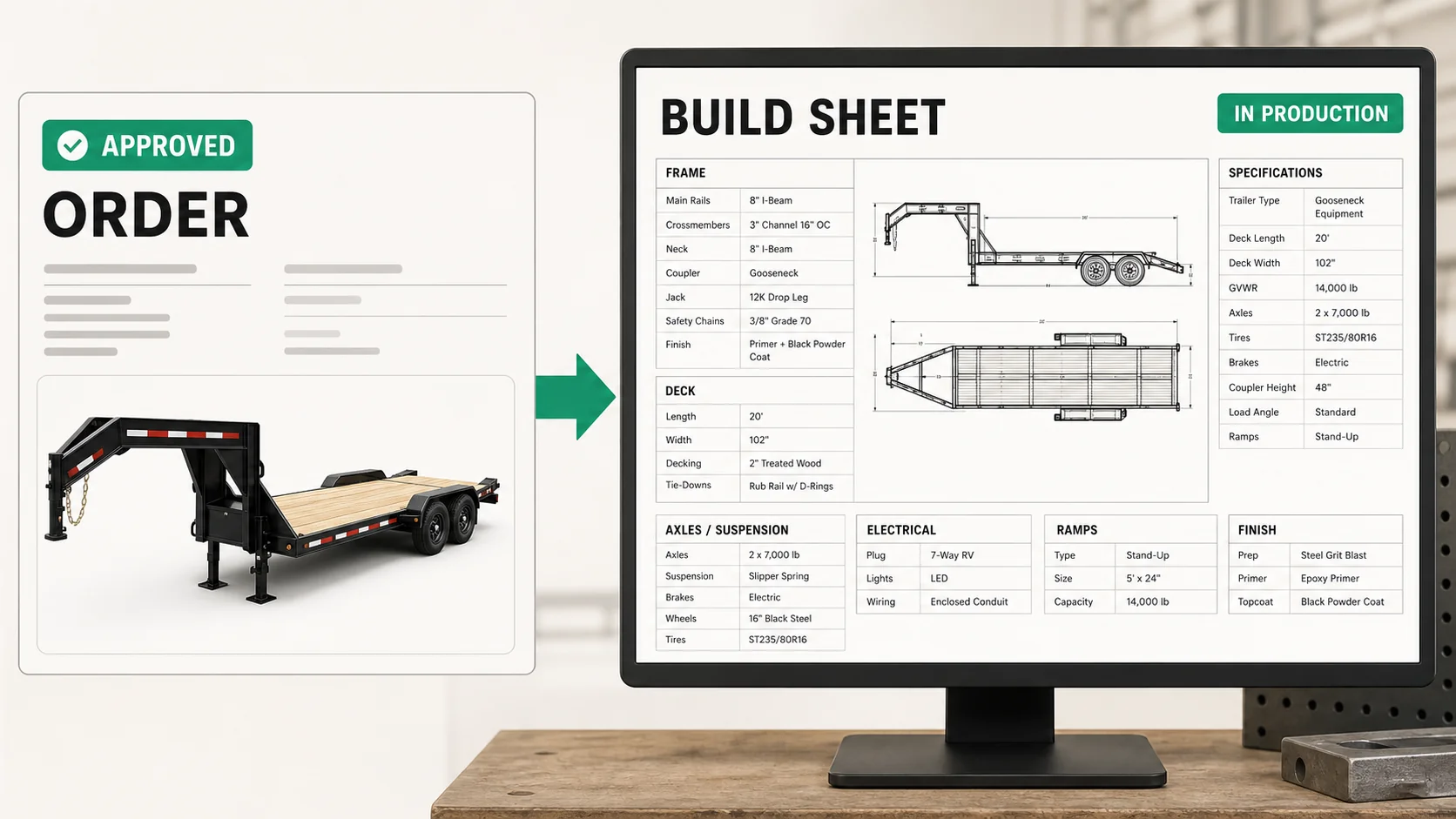
    When the buyer signs, the dealer places the order in the same B2B ordering portal they configured in: priced, valid, and complete. You approve it in one tap, the approved spec becomes the build sheet, and the dealer watches each status change without calling you.

    Approved dealer order for a gooseneck equipment trailer becoming a shop ready build sheet, with nothing retyped.

That is the whole loop. Nobody exports anything, nobody re-keys anything, and the only moment the order needs you is the tap that approves it.

Inside the portal

Inside the dealer portal, screen by screen

A feature list tells you a portal has price lists. This is what the six screens actually do, and what each one takes off your desk. Every one of them is here because the product gets built to the order rather than picked off a shelf.

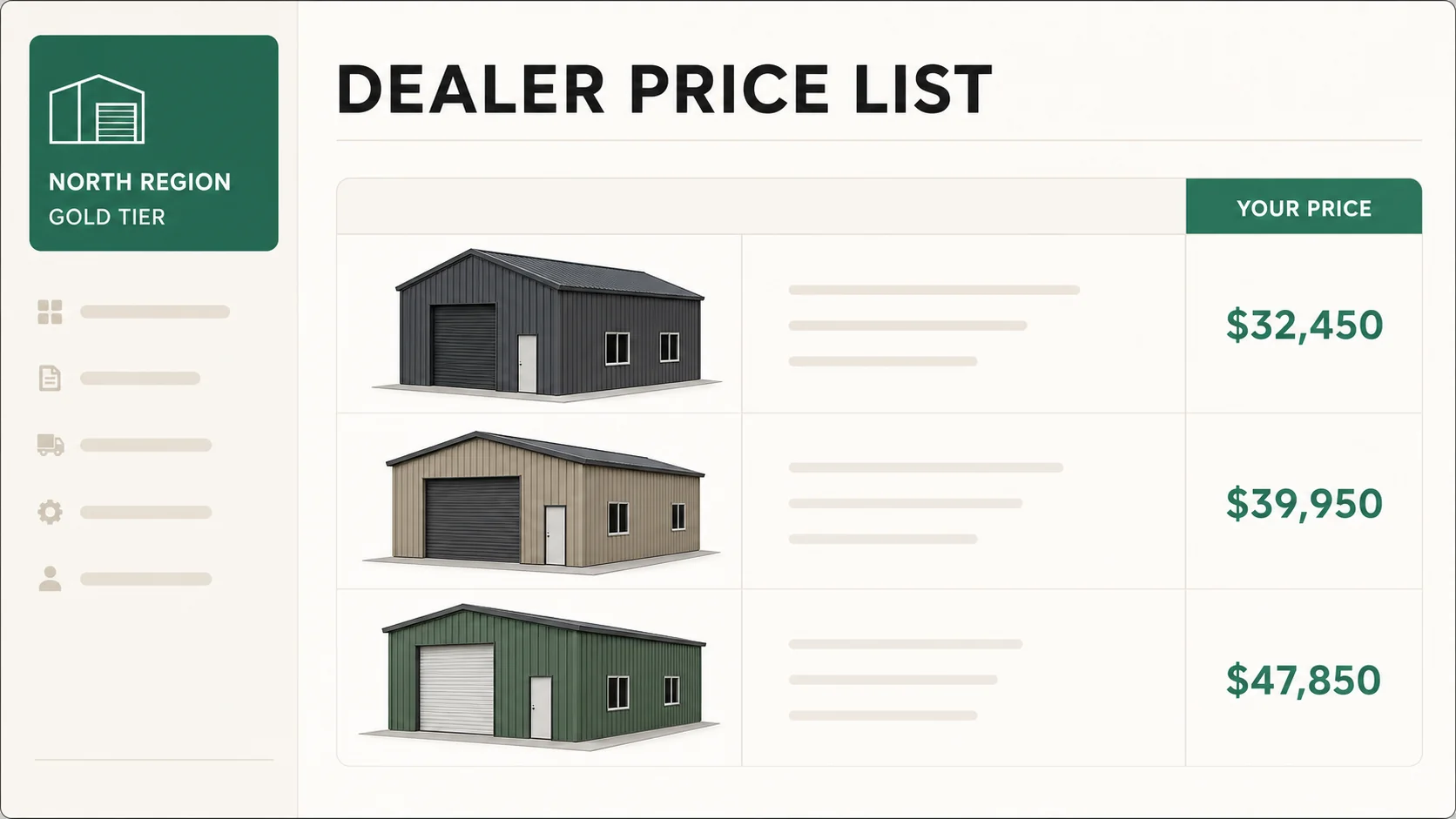
A dealer’s price list screen in the B2B customer portal, showing the products released to that dealer at their own agreed numbers.

Every dealer opens on their own price list

One catalog, many price lists. A dealer signs in and sees the products you have released to them at the numbers you agreed with them, not a public list with a discount applied on top. Change a price once and every dealer on that tier has it the same minute.

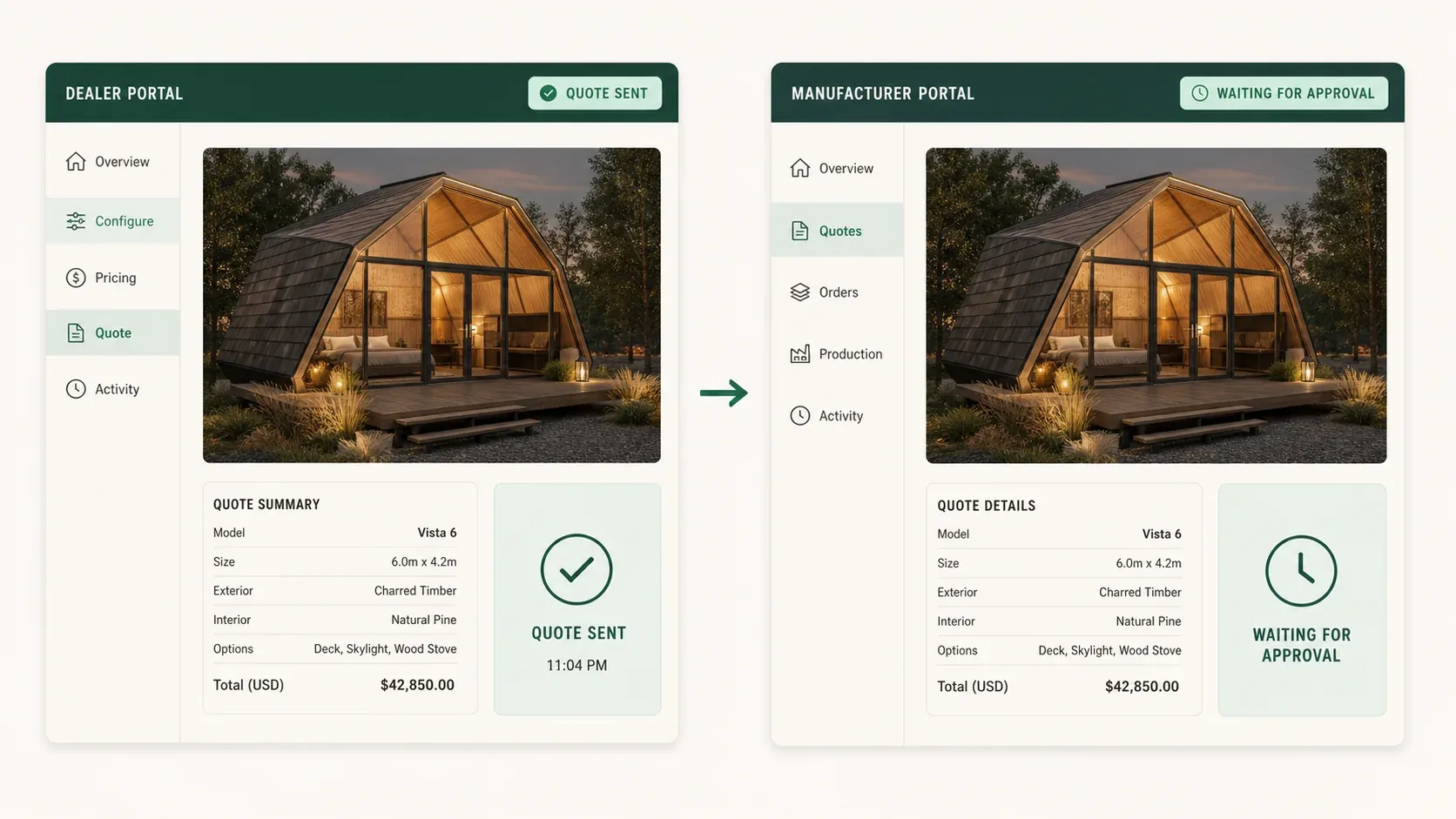
A dealer sending a quote for a configured glamping pod at 11pm, with the order behind it waiting for the manufacturer’s approval.

A B2B ordering portal that is open at 11pm

Your dealers are with buyers in the evening and on Saturday, which is exactly when your office is shut. A quote built at 11pm is a quote sent at 11pm, and the order behind it is waiting for your approval when you open the laptop on Monday.

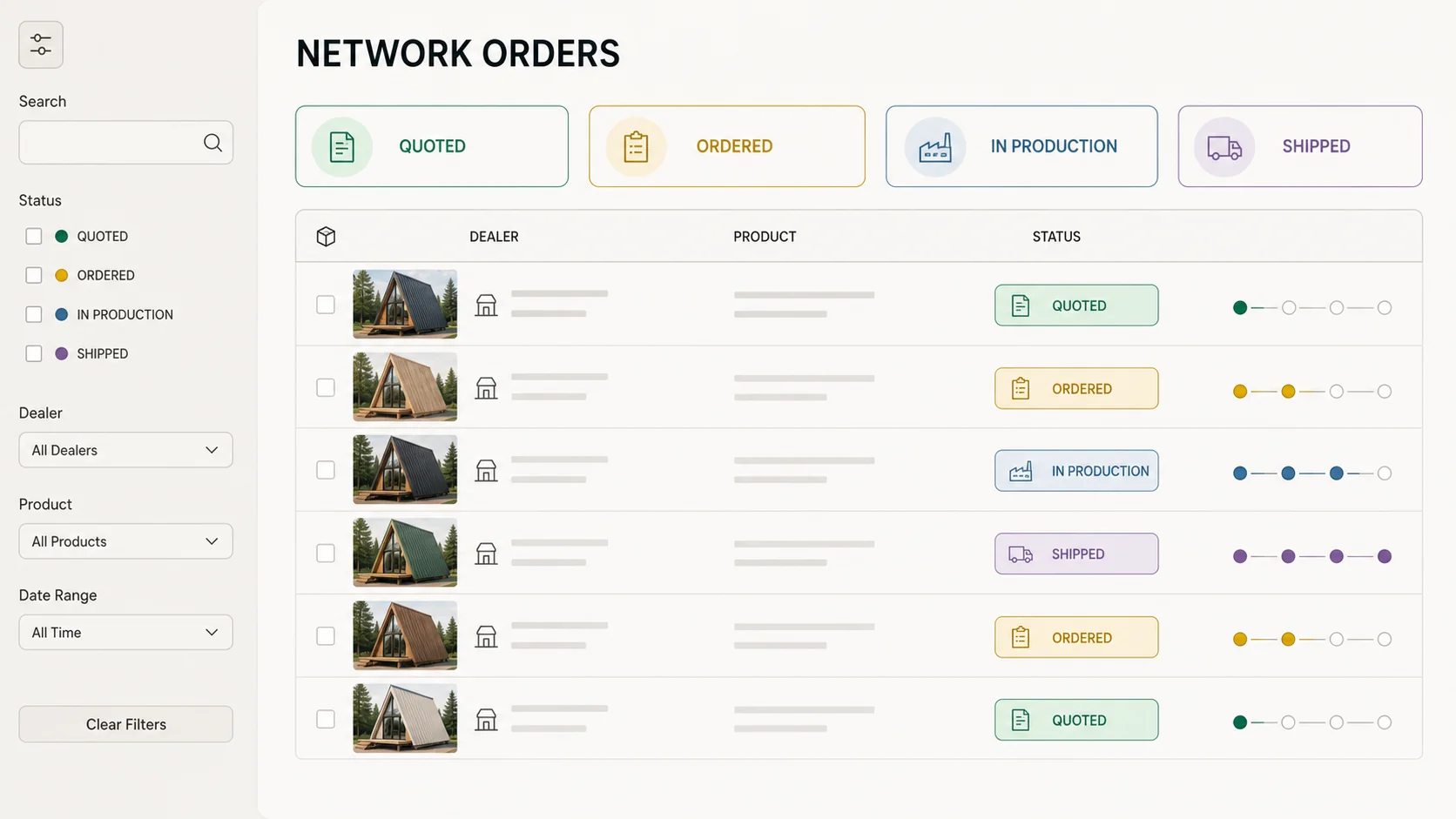
The manufacturer’s network view, every dealer’s quotes and orders in one list with a status column.

Every quote and every order in one list

Each dealer sees their own pipeline: what is quoted, what is ordered, what is in production, and what shipped. You see all of them at once, filtered by dealer or by status, which is the view that does not exist when the record lives in email.

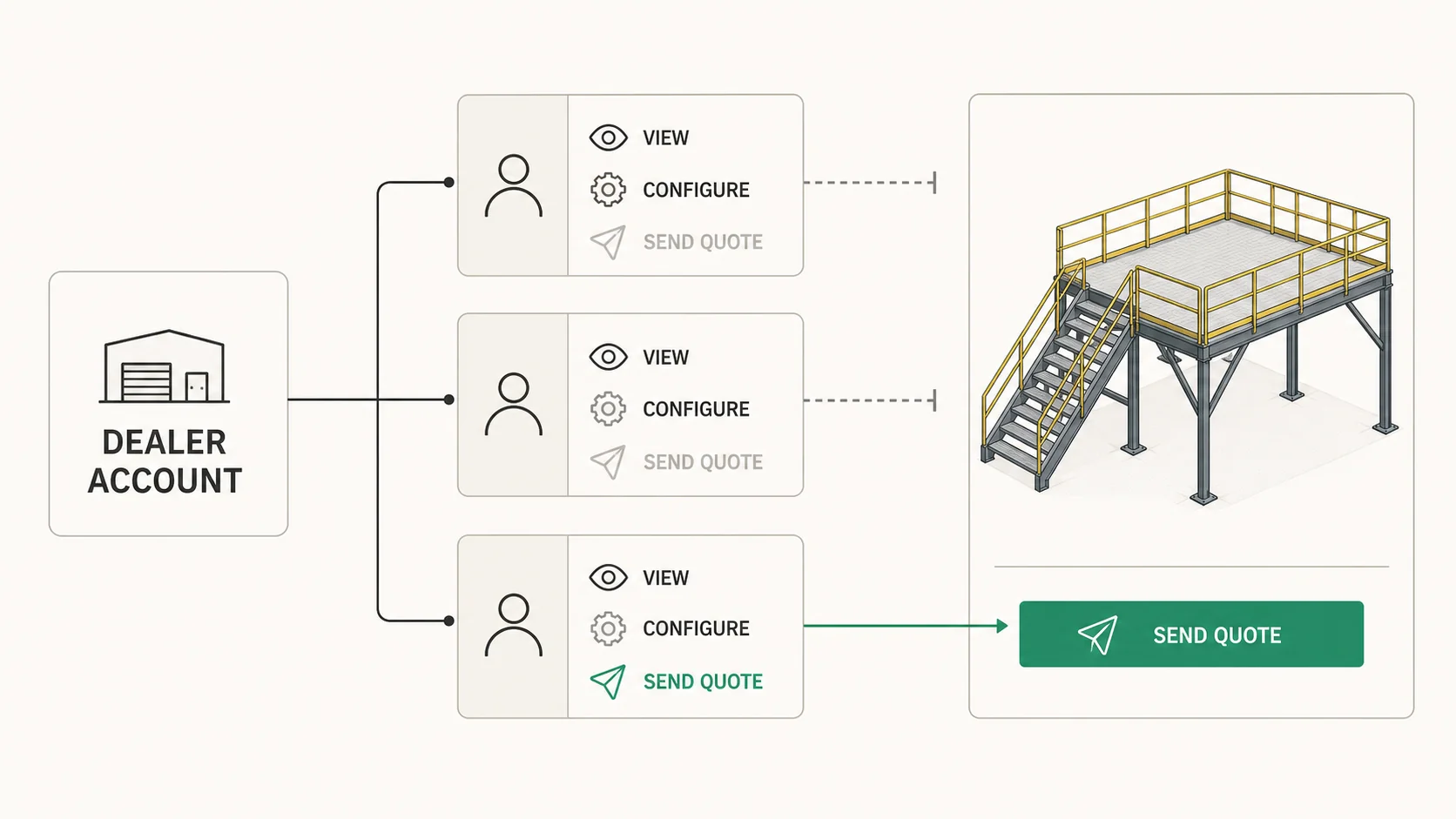
One dealership account opened out into three logins with different permissions, quoting a configured steel mezzanine platform.

A B2B self service portal, down to who sees what

A dealership is a company with people in it. The owner, the salesperson, and the person who chases delivery each get their own login under one account, with their own permissions. Nobody sees another dealer’s numbers, and you decide which of your products each account can quote.

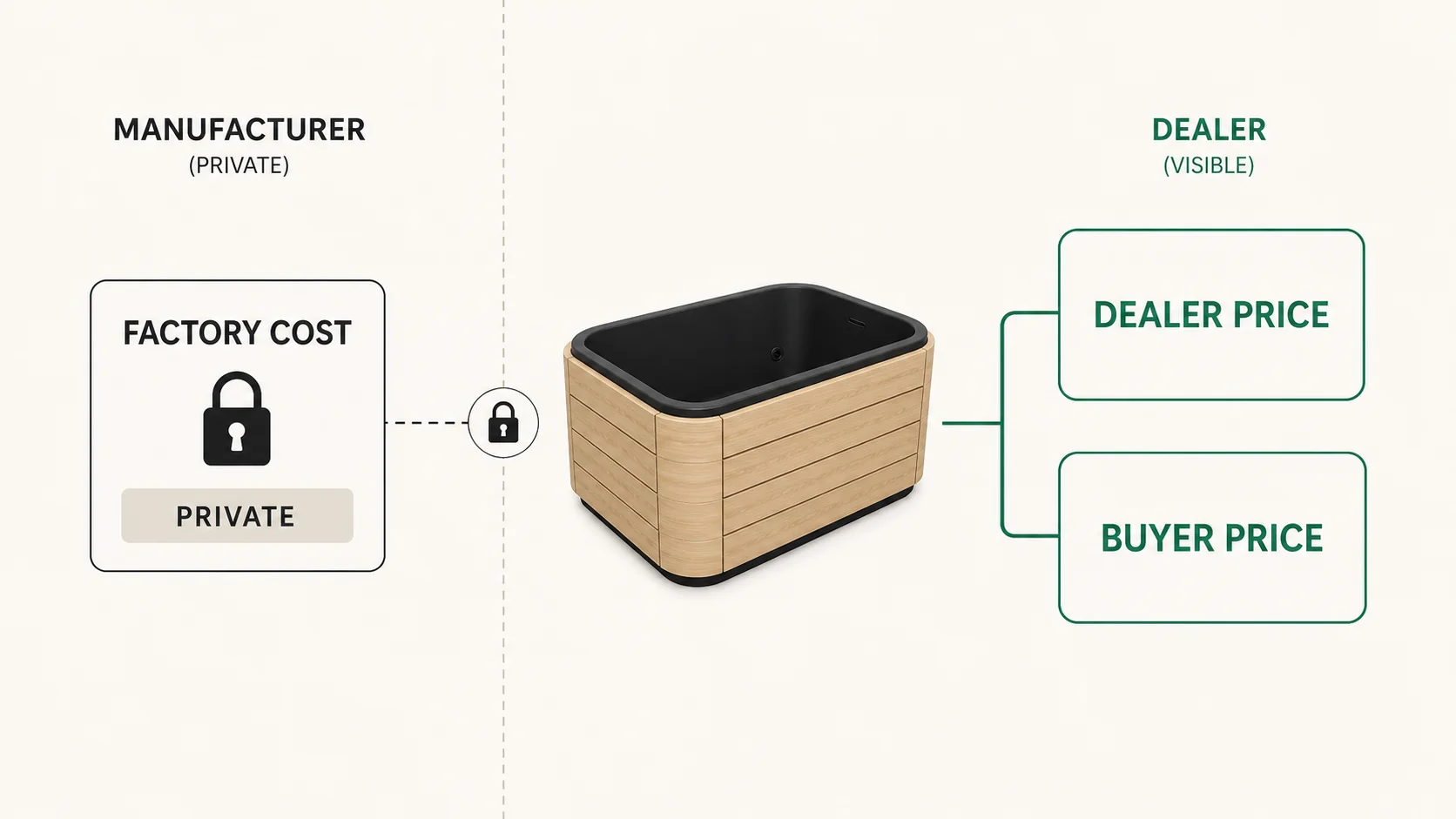
One configured cold plunge tub carrying three numbers, with only the dealer and buyer prices showing on the dealer’s screen.

Your cost price stays with you

One configured build carries three numbers: what it costs you to make, what the dealer pays, and what the buyer pays. The dealer sees the second and the third, so they can work their own margin. The first never renders on their side of the screen.

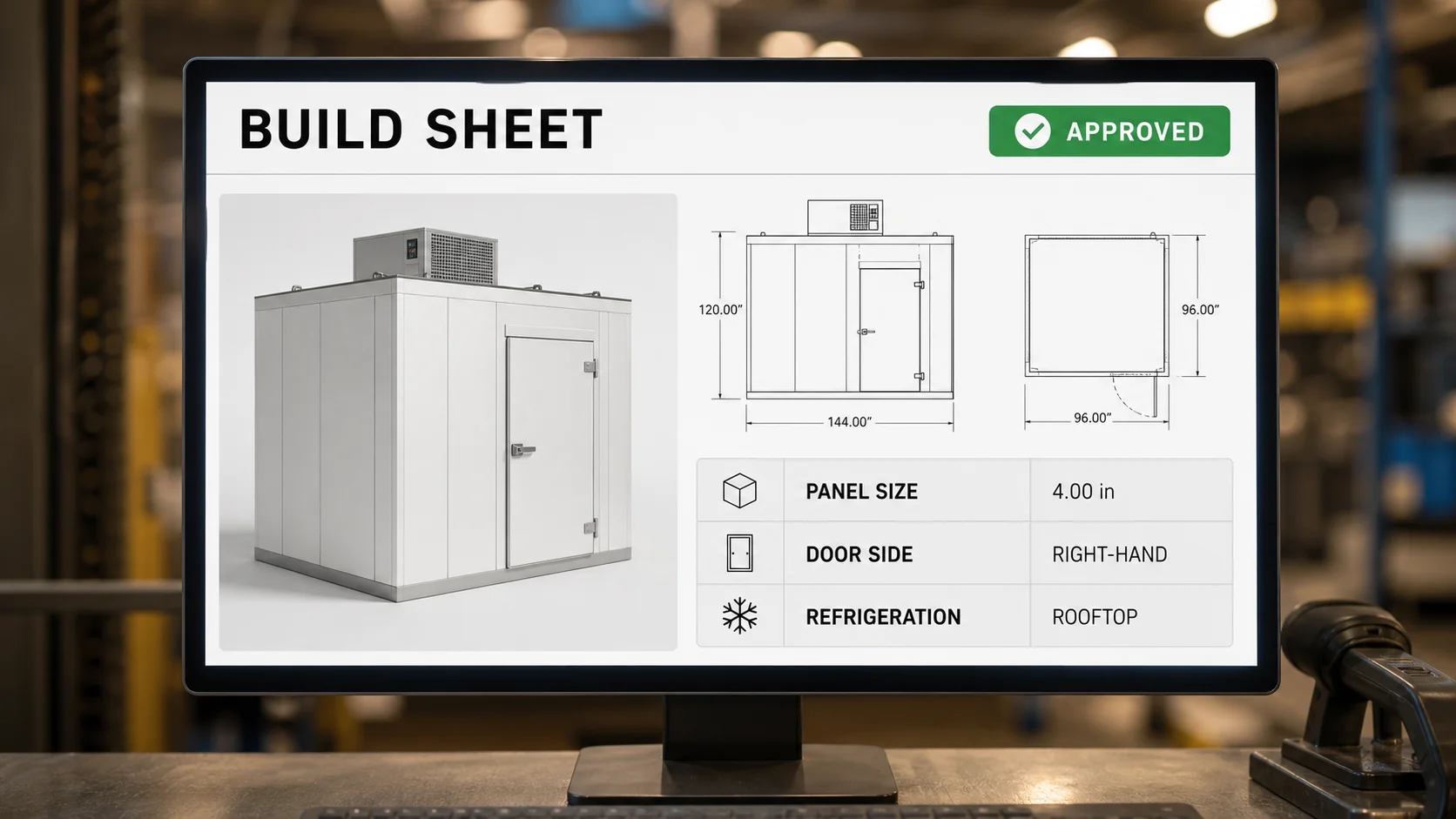
The approved build sheet for a configured walk-in cooler on a shop floor terminal, with the job number carried from the dealer’s order.

Orders into your ERP, leads into your CRM

An approved order does not need a person to move it. As an ERP dealer portal for manufacturing, Dealect can push the approved build into the system your shop already plans from, and send the lead behind it to your CRM. No export, no re-keying, no IT project.

What your factory gets

What your factory receives when a dealer orders

Ten pages about B2B portals describe the buyer’s experience and stop there. The question a manufacturer actually has is what lands on the shop floor at the end of it, and whether anyone has to type it in again.

One dealer order · four stops · nothing retyped
Configured orderEvery option the dealerpicked, valid againstyour rulesYour approvalOne tap, or a changerequest back to the dealerBuild sheetThe approved spec, inthe form your shop readsERPLine items, quantities,and dates, on their ownTHE DEALER’S SIDEYOUR SIDEWHAT THE SHOP FLOOR ACTUALLY RECEIVES

Nothing in that chain is retyped, which is where the wrong size and the missing option come from. This is the part that separates CPQ for dealers and distributors from wholesale ordering software: a wholesale order names a product you already stock, while a configured order describes one that does not exist yet and has to be described completely enough to build.

A B2B customer portal earns its place at this end of the process, not at the login screen.

Who it’s for

Who a B2B dealer portal fits

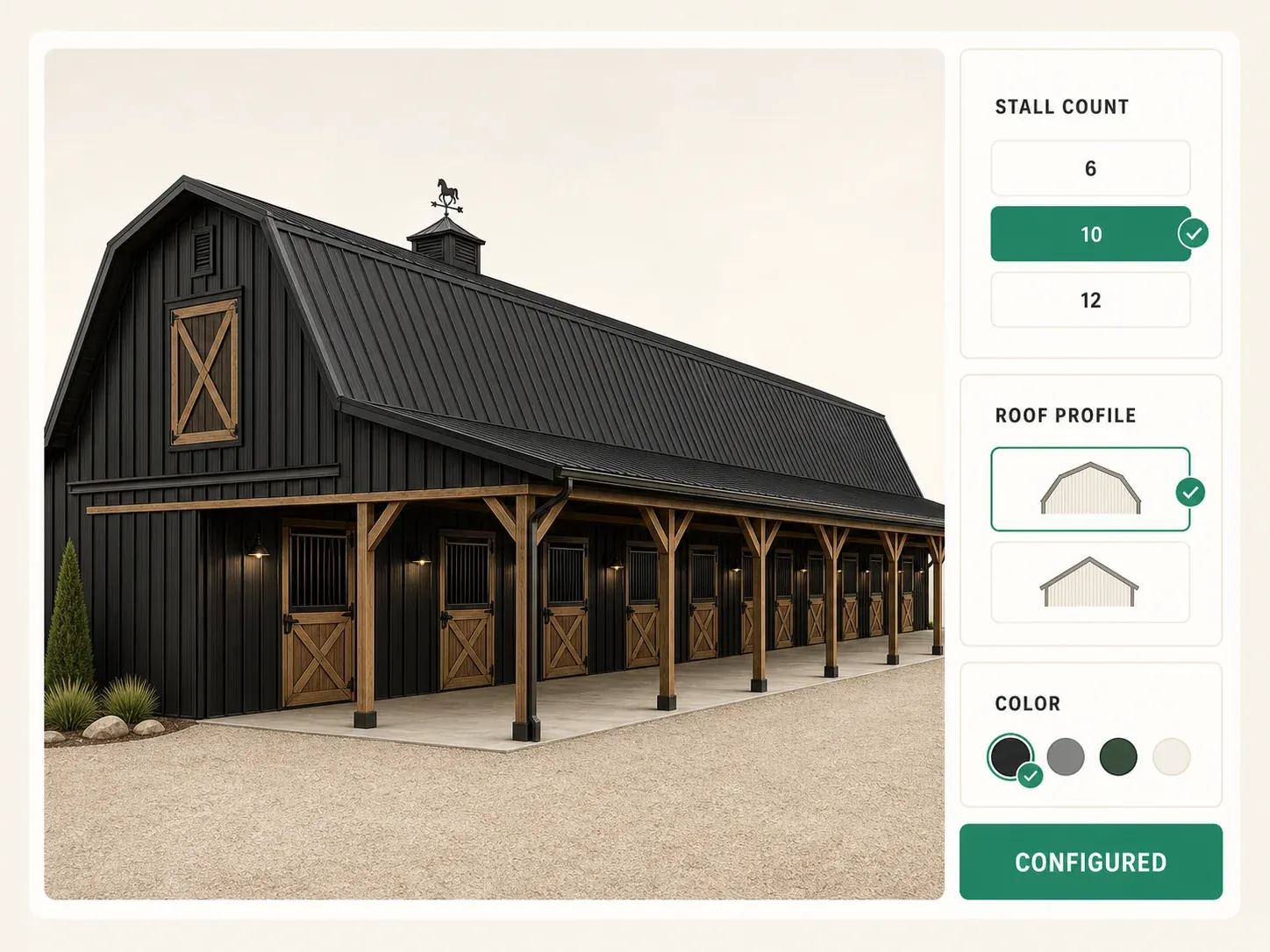
A configured modular horse barn as a dealer presents it to a buyer, with the chosen stall count, roof profile, and colour picked out.

Dealect is built for manufacturers who sell high-ticket configured products through other people: dealers, distributors, reps, and franchise partners. If your channel still runs on price list attachments and status emails, dealer network management is currently a mailbox, and this is the page about replacing it.

  • You sell through a dealer, distributor, or rep network rather than direct only
  • Your product changes with every order, so there is no fixed price to publish
  • Each dealer or tier buys on their own price list and works their own margin
  • Orders reach production as a spec, not as a part number off a shelf
  • Your office is currently the bottleneck between a dealer and a quote

It is not a fit if you sell a fixed catalog at a listed price to anyone with a card. That is a webshop, and a webshop will do it better.

Two of our vertical pages show the same portal on one product line: the sauna configurator and the outdoor kitchen configurator. Dealers running either of them sign in to the B2B customer portal on this page. Dealer sales software is one screen, whatever the product is.

The payoff

What changes in the first month

A dealer network’s first month on Dealect, after the B2B customer portal replaced the email thread.

Network report · DLCT 001 · month 01
  • Quote time

    2 days to10 min

    From a dealer’s request to a sent quote.

  • Spec reworks

    weekly to0

    Nothing reaches the shop floor with a wrong spec.

  • Selling hours

    9 to 5 to24/7

    Your dealers sell without the office. You just tap approve.

We do not put a customer’s name next to a number on this page. The figures are our own, from a dealer network’s first month, and where they came from is a fair question to ask on the demo call. Three figures, measured, and no fourth one invented to fill the row.

The rollout

Rolling out a B2B ordering portal to the dealers you already have

Software is the easy half. The hard half is getting thirty people who have always emailed you to sign in instead. Here is what we need from you, what we build from it, and what a dealer has to install to start quoting.

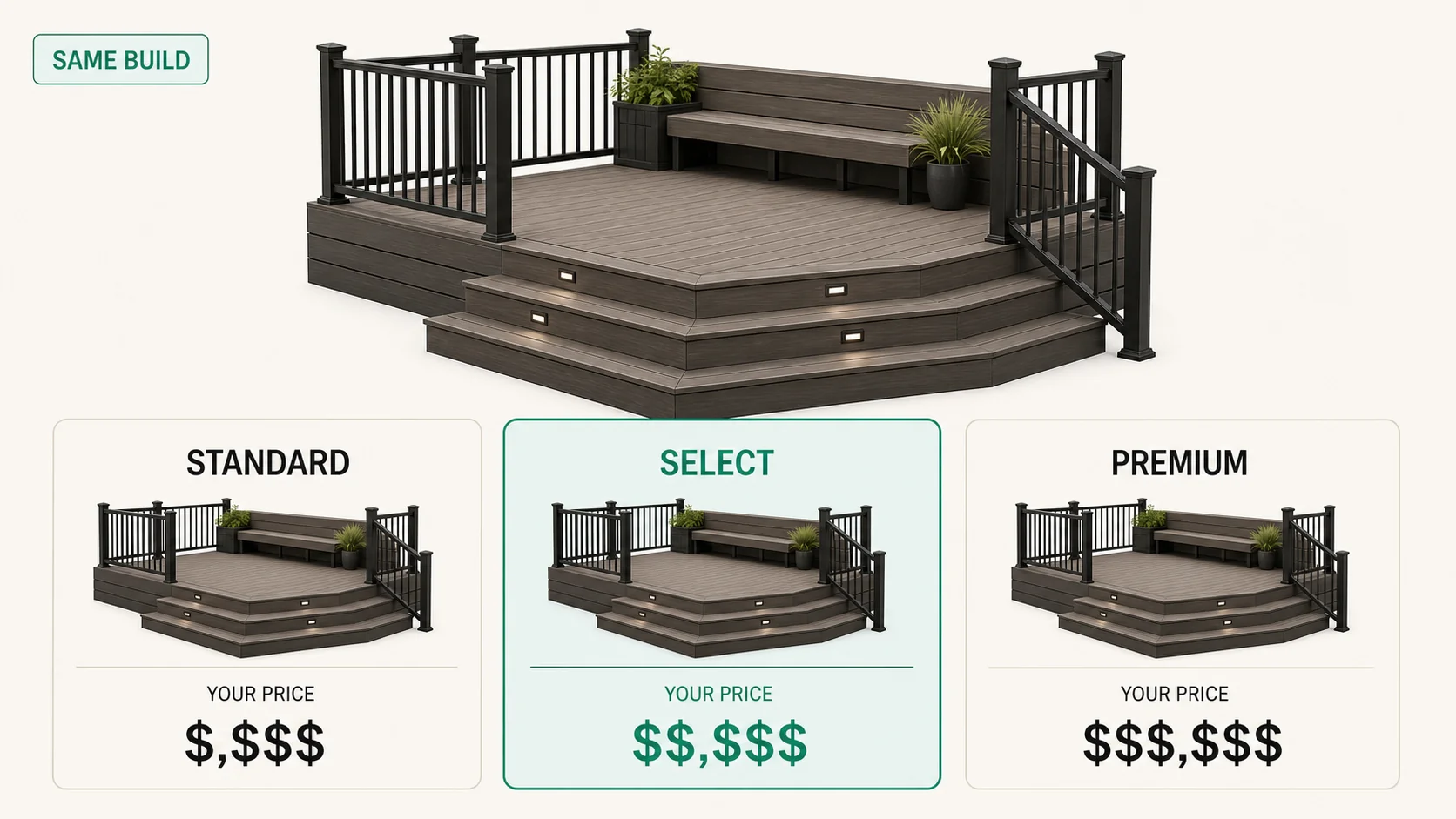
Three dealer price tiers loaded for one composite deck system, each tier opening on its own numbers for the same configured build.
You bring · Your price lists
One list per dealer or per tier, loaded so each login opens on its own numbers. If you have one list today and want three, that is the moment to decide it.
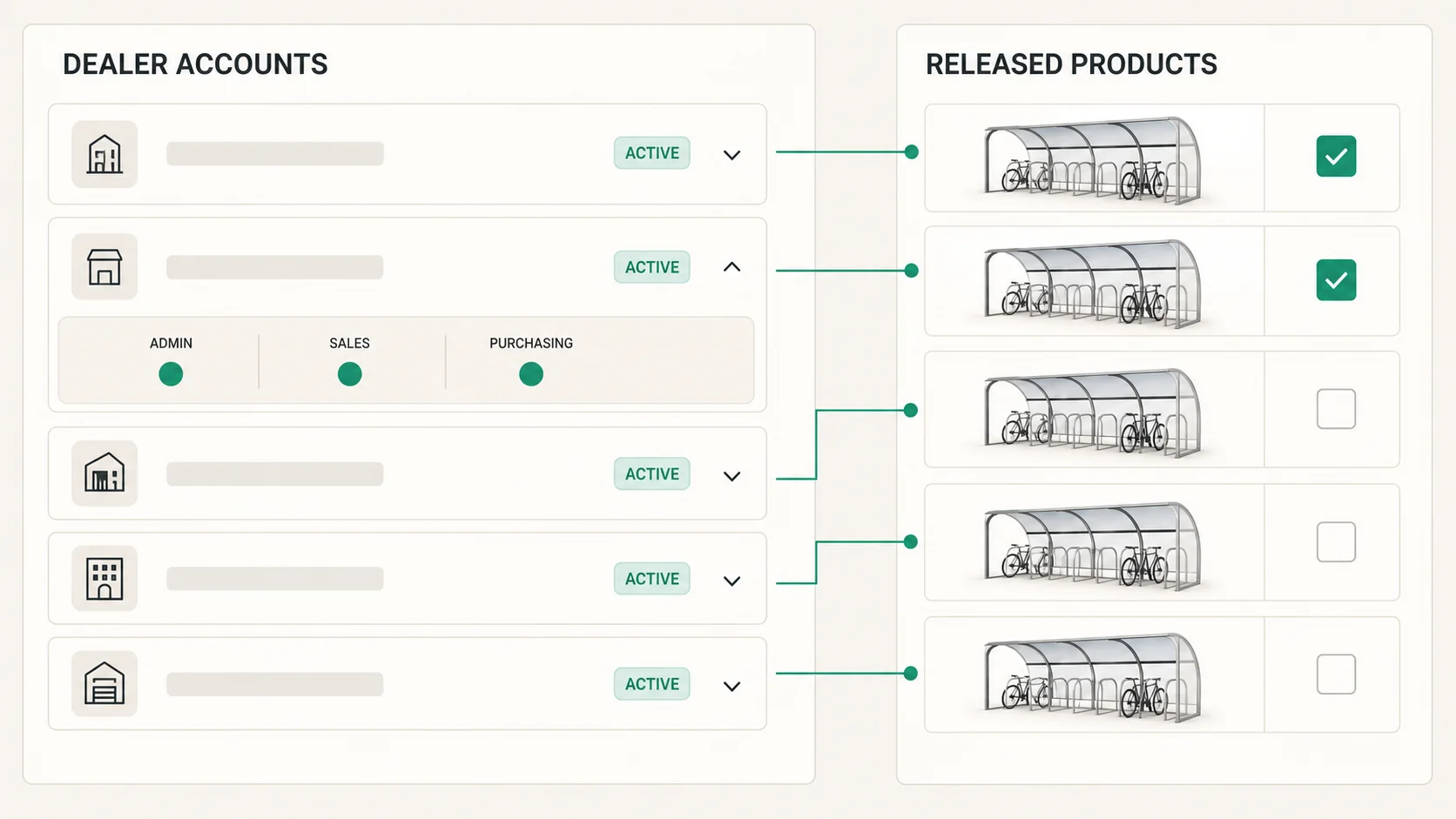
A dealer account list being set up, with the people inside each dealership and the products each account is allowed to quote.
You bring · Your dealer list
An account per dealership, with the people inside it and the products each one is allowed to quote. Nobody is waiting for an IT project to get a login.
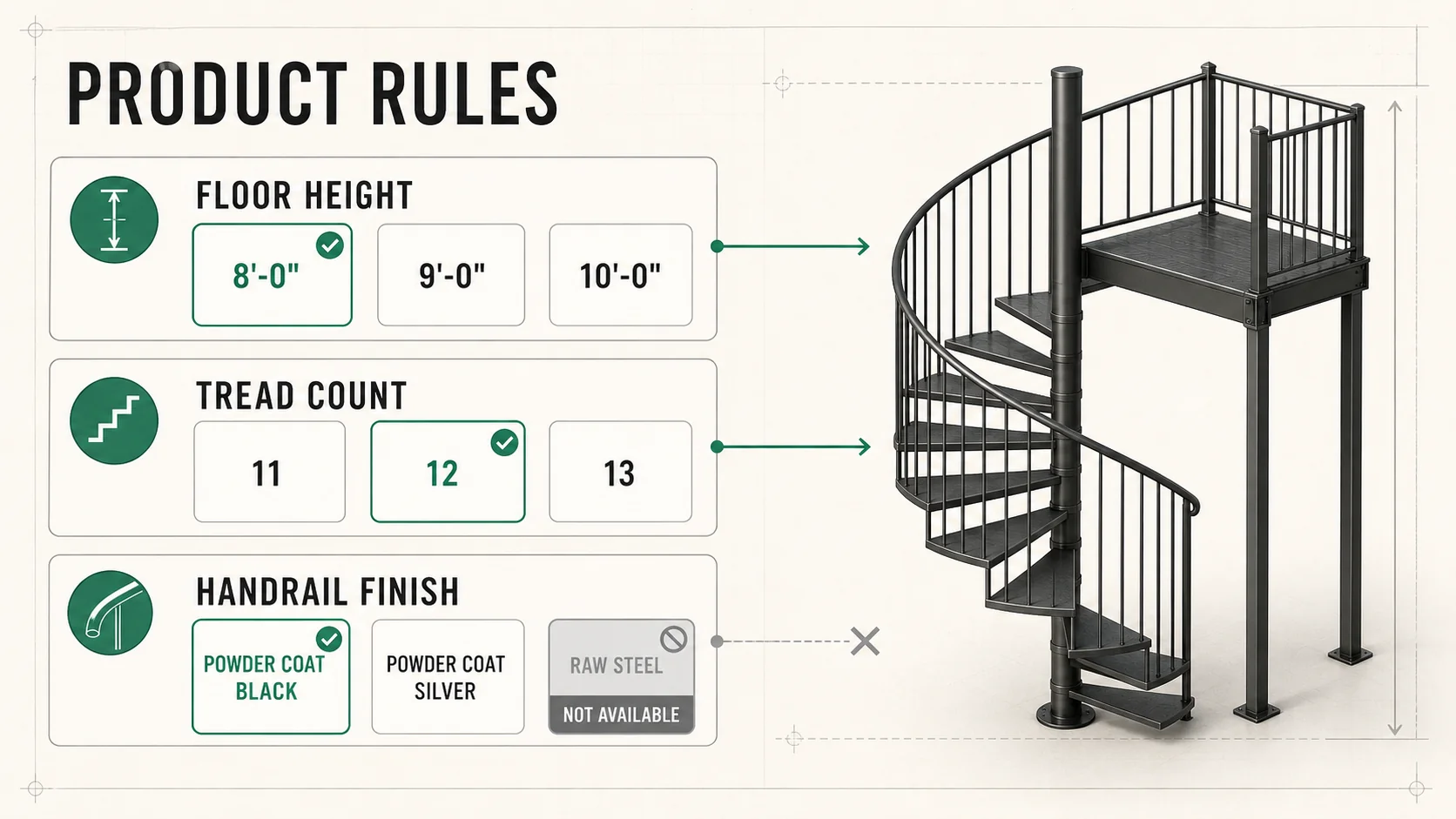
Option groups and dependencies behind a configured steel spiral staircase, with the combination the shop will not build ruled out.
You bring · Your product rules
The options, the dependencies, and the sizes your shop will not build. Everything a dealer can pick in the portal comes from this, so it is worth an afternoon of your time.
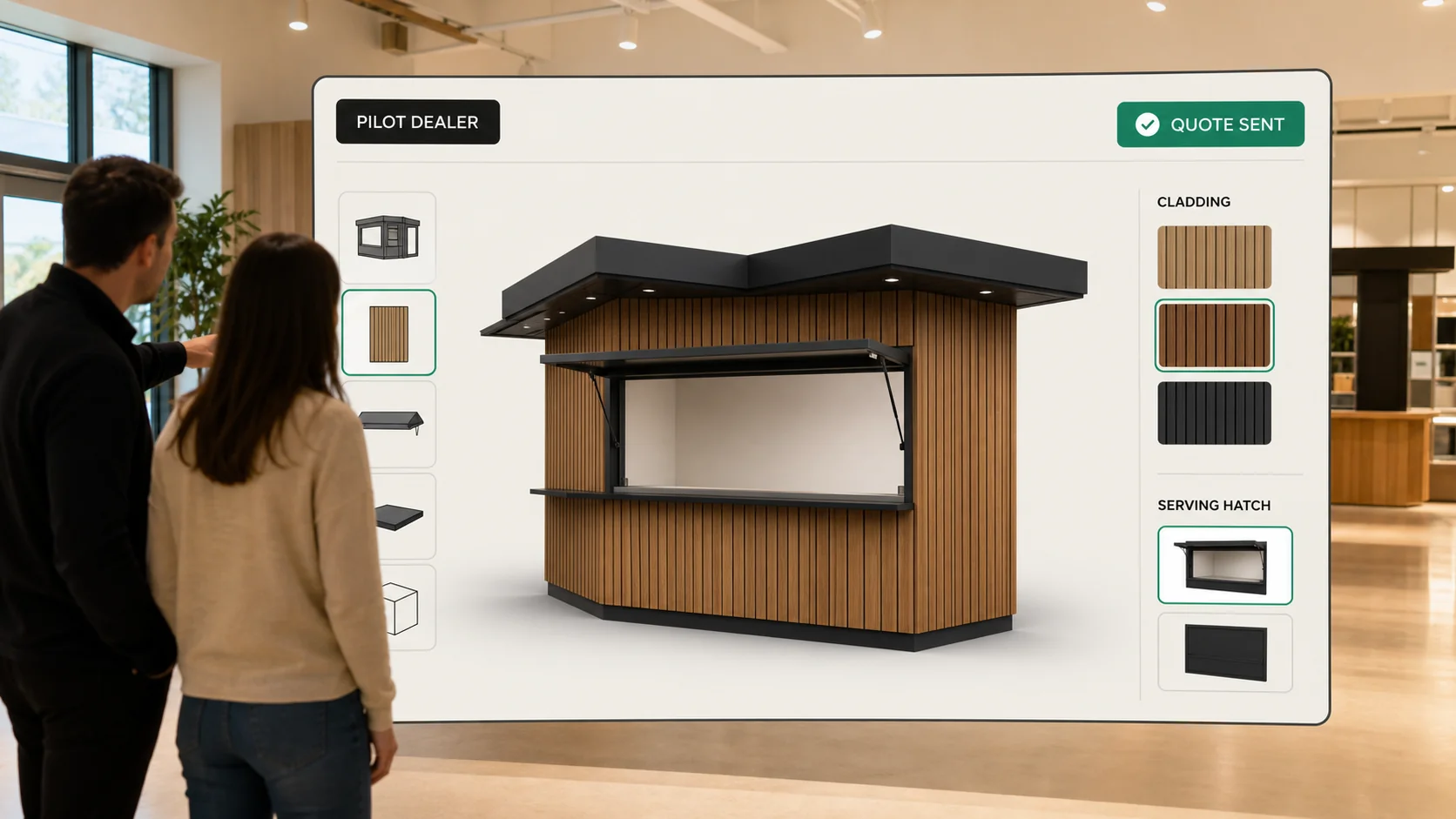
A pilot dealer configuring a modular retail kiosk with a buyer, on the first live deal after the rollout.
You bring · The dealers who go first
Two or three who quote the most. They learn it on a live deal, and the rest of the network hears about it from them rather than from a memo you wrote.
What a dealer installs · Nothing
A dealer opens a browser and signs in. There is no software on their machine and no dealer quoting software for them to buy, because the B2B dealer portal is the thing you are giving them.
What it costs

What a B2B customer portal costs

Almost nothing written on this subject says how a portal is actually priced. Ours is priced per manufacturer, scoped to your product line and your dealer count, and quoted after the demo.

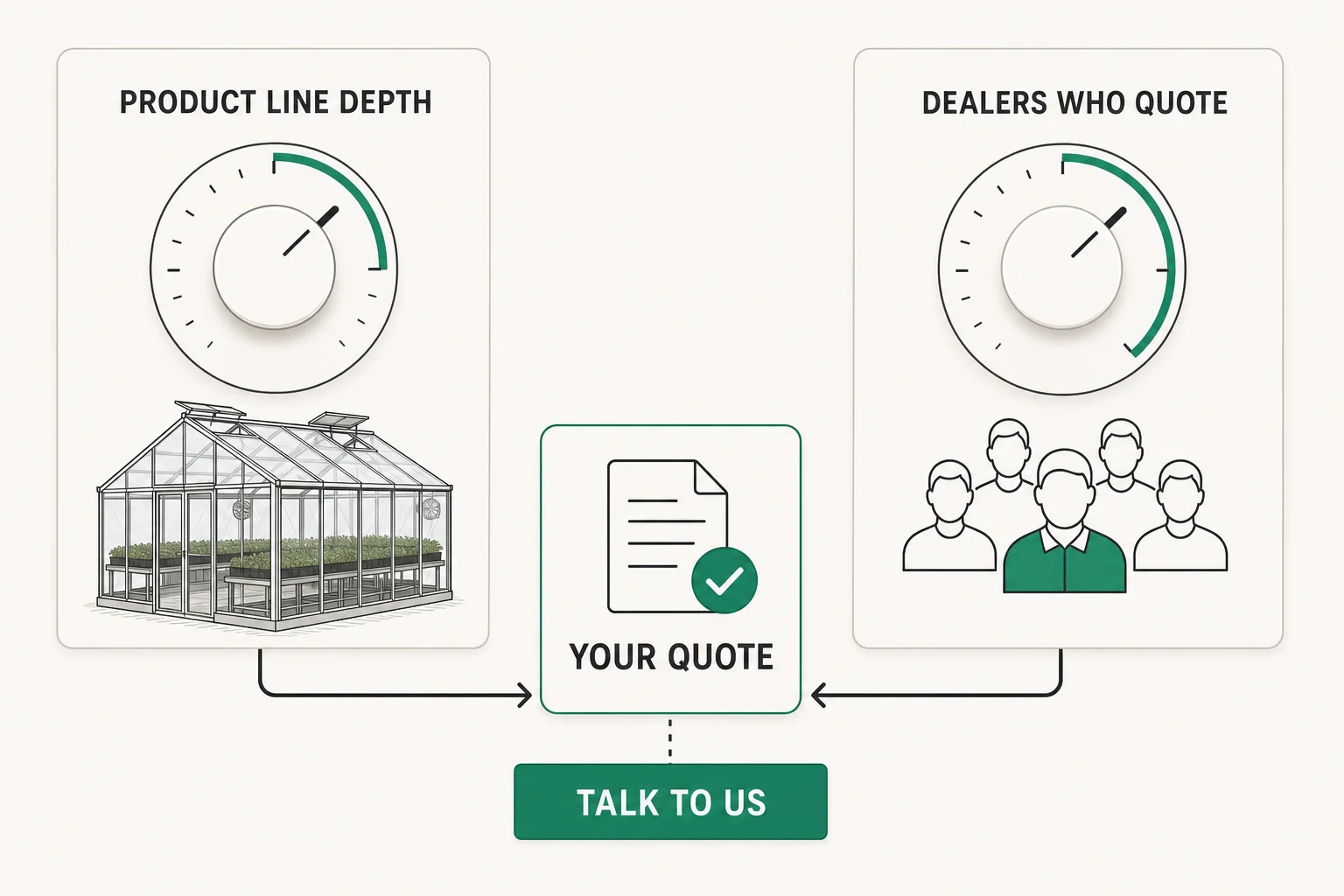
The two levers that set what a B2B customer portal costs: how deep your product line is, and how many dealers will be quoting in it.

You pay, your dealers do not

Dealect is priced for the manufacturer, so a B2B customer portal costs the person who benefits from it. Dealer logins come with your setup, and nothing stands between a dealer and their first quote.

Your product line moves it

A few signature builds price differently than a deep catalog with option groups on every line. Complexity is the first lever.

Your dealer count moves it

Ten dealers and two hundred dealers are different portals. The second lever is how many people will be quoting in it.

You hear the number on the call

There is no self-serve tier and no public list, because one list would be wrong for most people reading it. You get your figure before committing to anything.

More on what a B2B customer portal costs, including what the connections on either end add.

FAQ

Questions manufacturers ask about dealer portals

A webshop sells a catalog at a listed price to whoever arrives with a card. A B2B customer portal is a private account area for a customer you already have, with their terms, their history, and their people in it. If your product is configured rather than picked off a list, only the second shape can price it.

B2B ecommerce is the wider category, and most of it is catalog commerce with a checkout at the end. This portal is the account half without the checkout: dealers configure, quote, order, and track, and payment stays on whatever terms you already have with them.

Yes, and that is the reason this one exists. The dealer builds the product against your option rules, the price is computed from the configuration and their own list, and the order that reaches your shop is a complete specification rather than a part number.

Yes. Each dealer or tier has its own price list, and a dealer only ever sees theirs. They also see their own margin on each build, because they need it to negotiate. Your cost price does not render on their side of the screen, and no dealer sees another dealer’s numbers.

No. There is no stock counter and no invoice payment in Dealect. A B2B customer portal for configured products answers a different question: these are products that get built rather than picked, so a shelf count is not what a dealer is asking about, and payment stays with your accounts team on the terms you already agreed.

No. PRM tools manage a reseller relationship: deal registration, marketing funds, commissions, and certification. Dealect manages orders. If your channel needs to register deals against a software quota, this is the wrong product, and we would rather say so here than on the call.

Yes. A B2B customer portal is only worth as much as what happens after the order, so approved orders can land in the system your shop plans from and the lead behind the order can land in your CRM, without an export or a re-key. What the connection covers depends on which system you run, and it is scoped before anything is built.

Nothing. A dealer opens a browser and signs in. There is no plugin, no desktop application, and no separate licence for them to buy. If they can open your website they can quote in the portal.

There is no fixed cap. Networks of ten and networks of a few hundred both run on it, and the number of dealers is one of the two things that shapes your price. Adding a dealer later is an account, not a rebuild.

It depends on how deep your product line is, because building the option rules is the long pole. What is quick is everything around it: accounts, price lists, and logins for the first dealers. The honest answer for your product line comes out of the demo call, once we have seen it.

A B2B customer portal is priced per manufacturer, not per dealer seat, and it is scoped to how complex your products are and how many dealers will quote in it. There is no public list, because one number would be wrong for most people reading this. You hear yours on the demo call.

Last updated

Next step

See your dealer network working on its own.

Request a 30-minute demo, bring one product and one price list, and watch a dealer configure it, quote it, and order it live on the call. We reply by email to set up the time.

  • 30-minute personalized demo
  • See real configurators in your industry

Your call is with the Dealect team.

See pricing