Best CPQ software in 2026: 17 platforms compared for configured products
Seventeen CPQ platforms in five categories, compared on configuration depth, published price, and dealer quoting, with the price table nobody else in the field publishes.
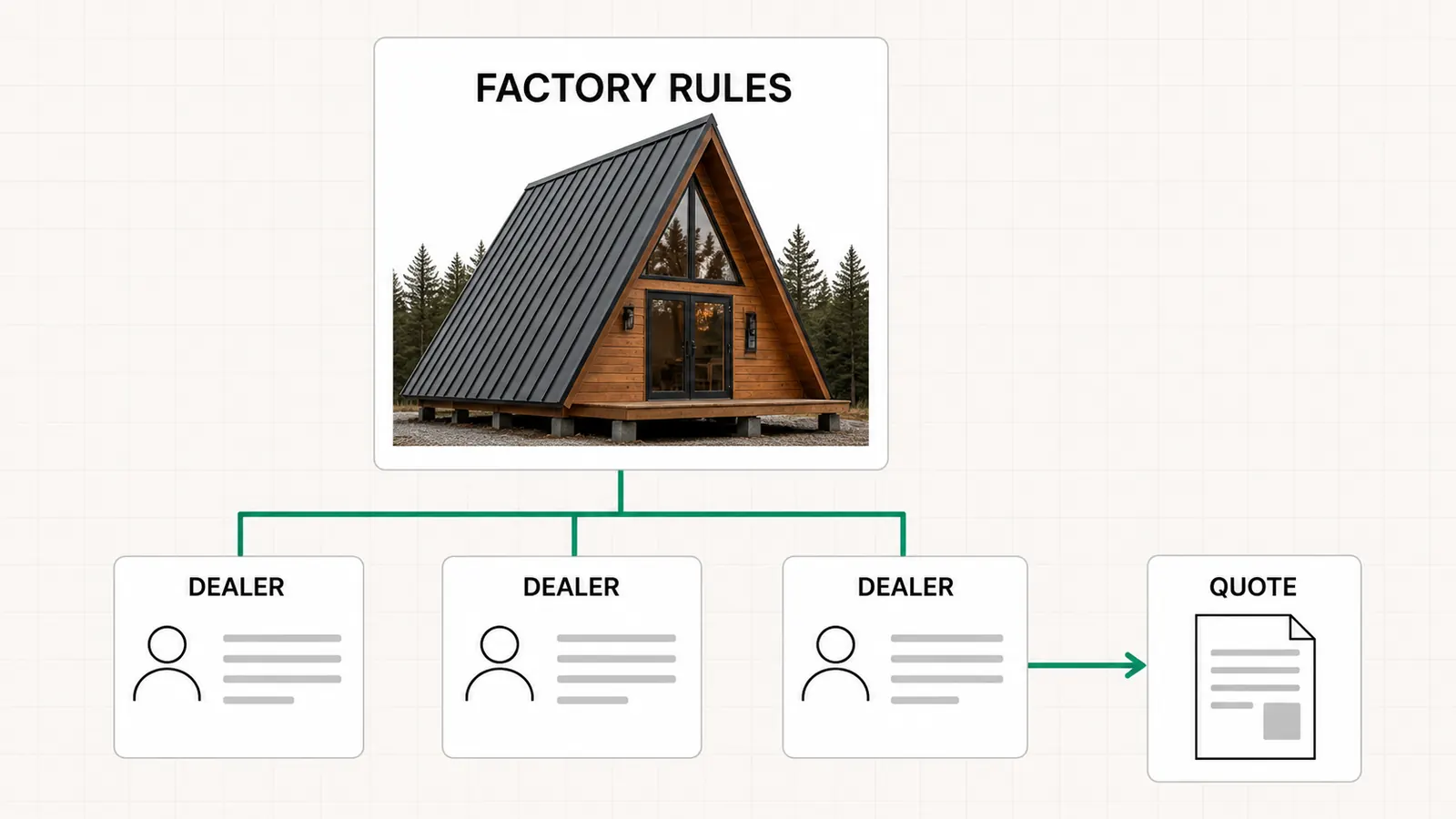
Give the configurator to your dealers and the quote stops being a phone call into your office. Each dealer builds a valid spec, prices it with their own margin in it, and sends the quote in minutes, while your rules keep every order buildable. This guide walks what changes, pain by pain.

It is high season. A dealer is on the phone waiting for a price, the PDF price list you sent out in spring is two revisions stale, and last week the same product went out at three different numbers from three different lots. If the vocabulary is new, our guides to what CPQ is and what a product configurator is cover the definitions. This page assumes them and gets to the argument.
The argument is this: when a manufacturer sells a configured product through a dealer network, the highest-leverage move is not a better brochure and it is not another hire. It is moving the quoting itself into a configurator the dealers drive. What follows is what that actually changes, in the order the pains usually hurt.
Key points
Dealers use the configurator. End customers do not.
The manufacturer owns the rules and the prices, dealers sign in and quote, and a 3D view for buyers is an optional upsell rather than the product.
A dealer prices the product in minutes, with their own margin in it.
No call to the factory, no stale PDF. The price list and the dealer's terms are already in the system, so the quote goes out the same visit.
Rules block impossible specs before they reach the shop.
An option that cannot be built cannot be picked, so the error is caught at the click instead of on the shop floor.
The configuration the dealer approves is the build sheet the shop receives.
Nobody retypes the order into CAD or the ERP, and the error class that came from retyping disappears with the retyping.
Start with the symptoms, because the diagnosis only matters if you recognize them. Quotes take hours in Excel and on the phone. Every dealer prices differently, so the same product carries three prices in one region. The customer waits days for a number and buys from whoever answered first. And your own team spends its best hours as live support for dealers instead of selling.
None of this is laziness, and hiring rarely fixes it. A dealer quoting a configured product has to answer two hard questions at once: can this combination be built, and what does it cost with my terms in it. The answers live at the factory, in one engineer's head and in a spreadsheet, so every quote becomes a call into the factory's queue. The dealer who cannot get through improvises. That is where the wrong specs, the invented discounts, and the week-long quotes come from.
Read it that way and the diagnosis writes itself. This is not a people problem. It is a translation problem, between what the dealer sells, what the shop can build, and what the price list actually says. The rest of this page is what happens when that translation moves into software.
Here is one quote, step by step, in both worlds. The sections that follow take these rows one at a time.
| Step in one quote | Today, on the phone and the PDF | With the dealer in the configurator |
|---|---|---|
| Getting a price | The dealer works from whatever price list they last saved. | Their own price list resolves at quote time, with their terms already in it. |
| Checking it can be built | A call to the factory, then a wait in the engineer's queue. | The rule blocks an invalid pick at the moment it is made. |
| Writing the quote | Excel, by hand, while the buyer goes home to wait for a number. | Built at the counter, with the buyer watching the price follow each pick. |
| Knowing what happened | The manufacturer hears the outcome weeks later, if at all. | Every lead sits with its quotes and their status, tied to a named dealer. |
| Handing it to production | Someone retypes the order into the ERP and into CAD. | The configuration the dealer approved is the build sheet the shop receives. |
When a manufacturer puts a configurator on a dealer network, the dealers use it and the end customers do not. The manufacturer owns the product rules and the price logic, each dealer signs in to configure and quote on their own terms, and the buyer sees a finished quote rather than a software tool. A 3D view for the end customer is an optional upsell, not the product.
That inversion matters because almost everything written about configurators assumes the opposite: an anonymous shopper configuring on a website, checkout at the end. That is an ecommerce shape. A $15,000 configured building does not sell like a t-shirt. It sells across a counter, through a person the buyer already trusts, and the expensive step is that person getting a valid price without calling you.
So the seat to equip is the dealer's. Equip it, and every change below follows from one mechanism: the knowledge that lived at the factory now travels with the person selling.

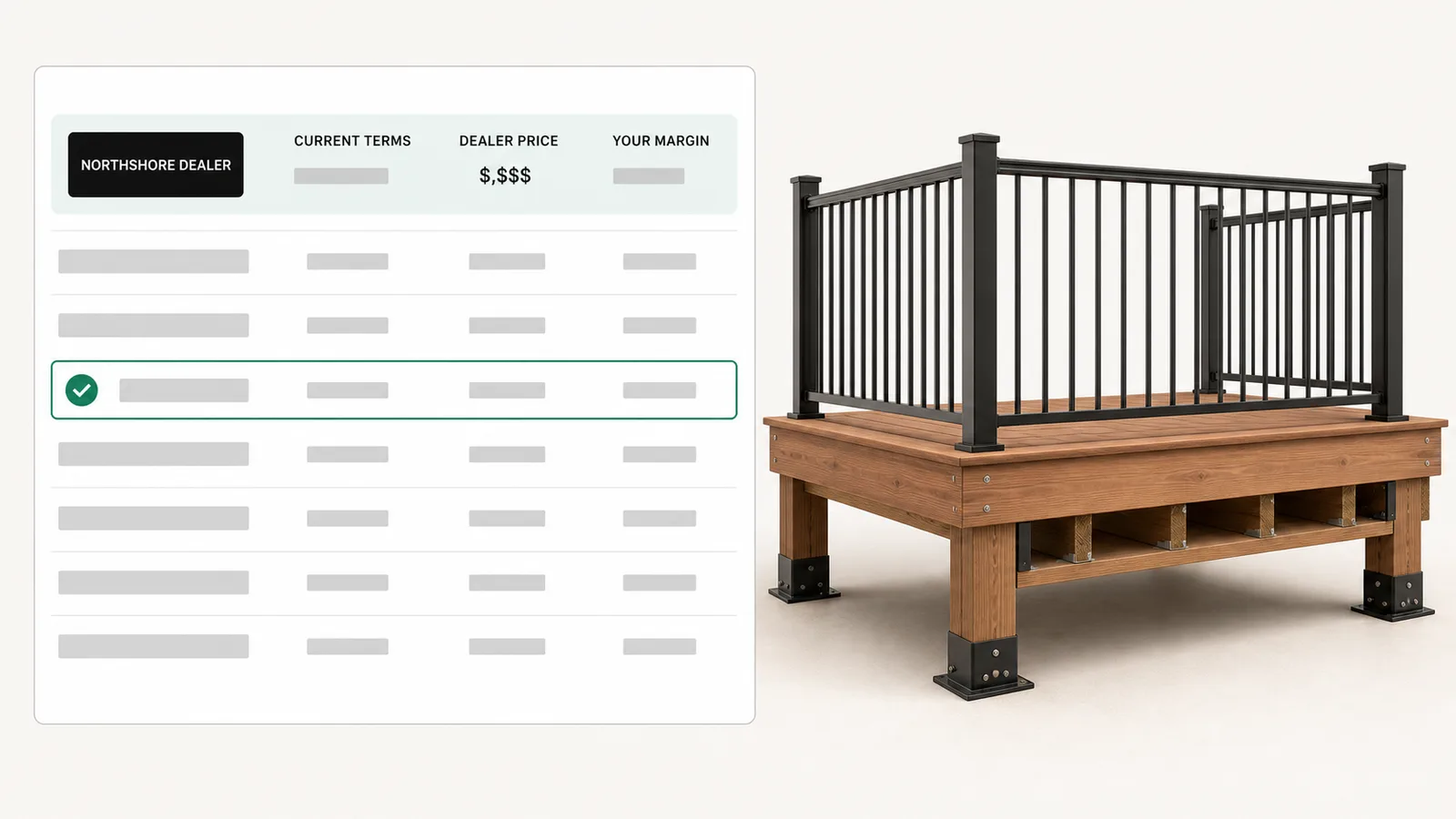
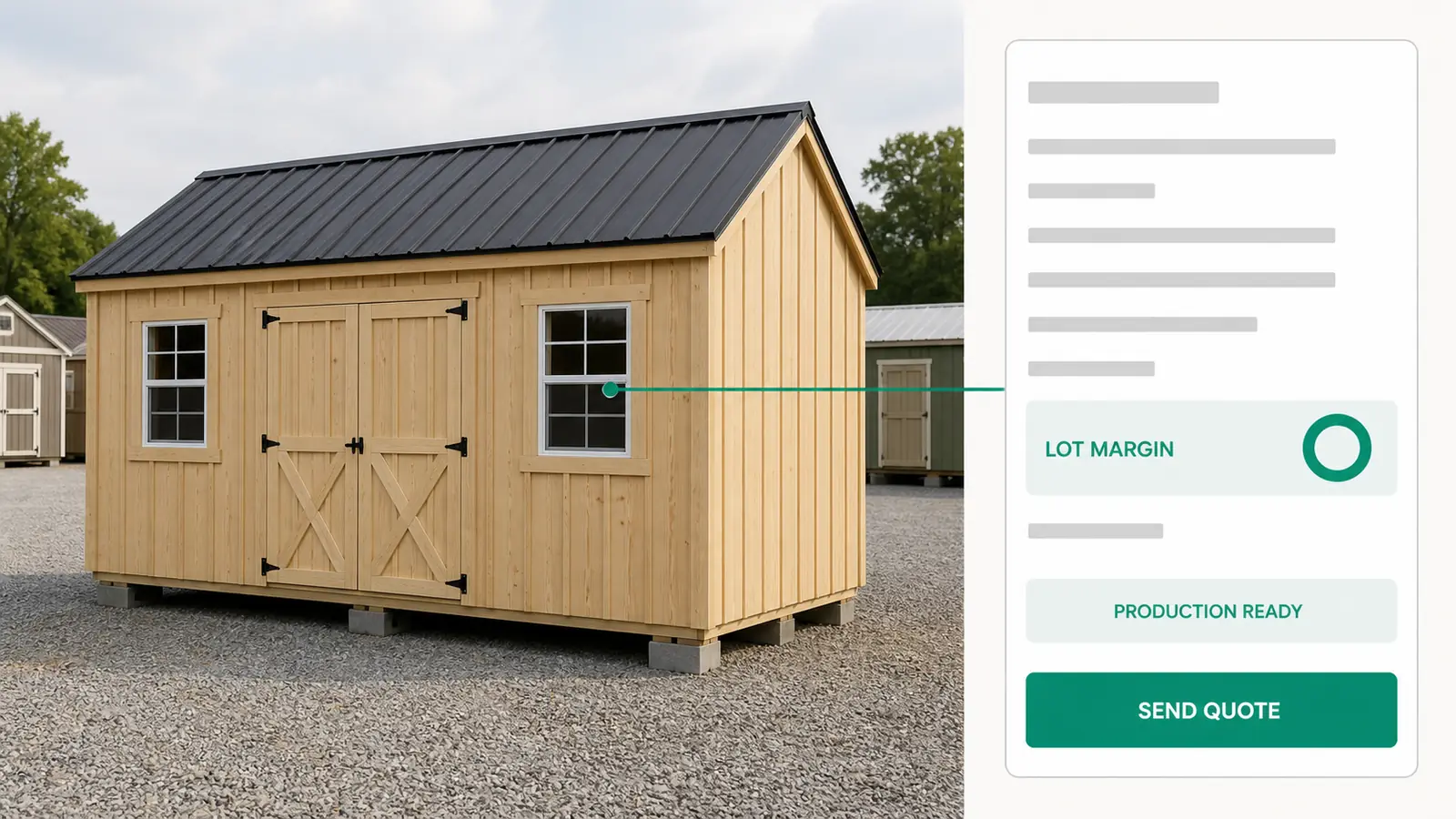
The first change lands where the pain is worst. The dealer opens the configurator, builds the spec with the buyer at the counter, and watches the price follow every pick. Their own price list is applied, their own margin sits inside the number, and the finished quote goes out under their name in minutes. Nobody phoned the factory. Nobody opened Excel.
Speed is the visible half. The quieter half is that the dealer's number is finally right. A dealer working from a stale PDF quotes what the PDF says, and the gap between that and your current costs comes out of somebody's margin. A dealer quoting live is quoting today's prices under today's rules, every time.
This is the seat our sales configurator page describes end to end: the build, the price, and the quote on one screen, with a buyer sitting there. For the dealer it feels like being handed the factory's knowledge without the factory's queue. For you it means the question of what this build costs at this lot stops being a judgment call made three states away.
Per-dealer terms are where quoting gets slow twice. Someone at the factory recalculates the same discount structure by hand every time an order comes in, and every dealer runs their own version of the same math on their side. Memory is the system of record, and nobody can say which number is current.
Price rules per dealer replace the memory. Tiers, regions, agreed terms, all resolved by the system at quote time. The dealer sees their price and their margin. You see the logic once, in one place, and change it once when costs move. A price update reaches every dealer the moment it is saved, not on the next PDF run.
The product stops carrying a different price at every lot, and the argument about which number was right stops consuming Monday mornings.

The second pain is control. Leads go out to the network and disappear. You learn that one died three weeks later, in an awkward call, if you learn it at all.
When quoting runs through one system, visibility is a side effect rather than a project. Every lead sits in one place, tied to a named dealer, with its quotes and their status next to it. You can see who followed up the same day and who sat on a request for a week, and so can the dealer. What you do about it is a management question rather than a software one, but you are answering it from a record instead of from an impression.
This is the signed-in home the B2B customer portal provides: each dealer works inside their own catalog, prices, and pipeline, and the manufacturer finally has one view across all of them. Not to micromanage. To know where demand is going, which lots need help, and which dealer has earned the next territory.
Custom manufacturing concentrates quoting knowledge in whoever knows what can actually be built, and in a shop of this size that is one person. Every non-standard request, every question about whether the product comes at this width, every drawing that needs checking flies to the same engineer, or to the owner, and waits. That person is the bottleneck for the whole network's quoting, and their vacation is the company's vacation.
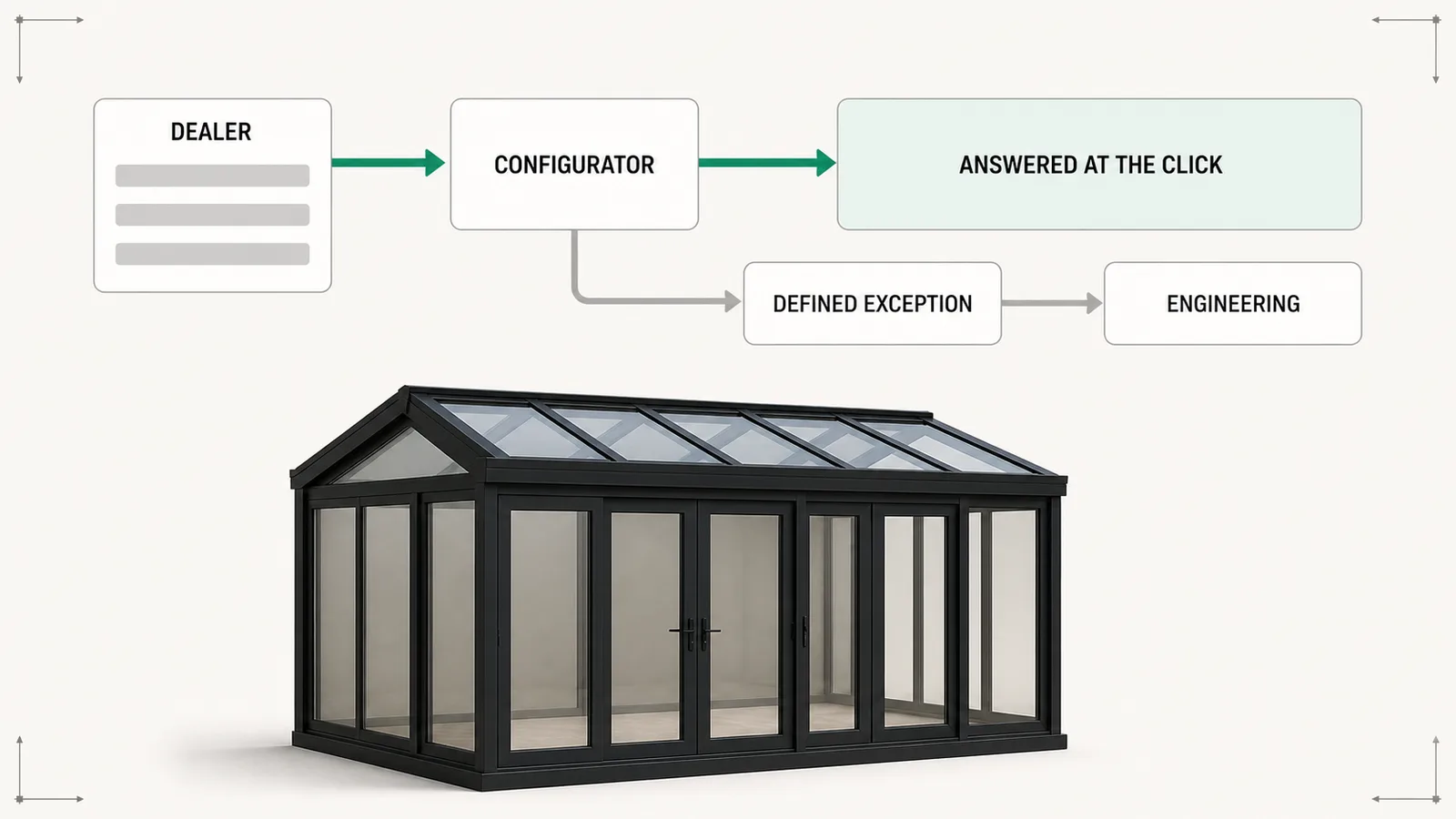
A configurator answers the routine questions before they are asked. Which options combine, which dimensions are possible, what each combination costs: that knowledge is encoded once, and every dealer gets it at the click instead of at the end of a phone queue. What still reaches engineering is the genuinely new, the request no rule covers yet. That is the work an engineer should be doing, and it arrives as a defined exception rather than as the fortieth interruption of the day.
The change reads on the org chart as nothing and in the working week as everything. The business stops running on one person's availability, and the knowledge that made that person the bottleneck becomes an asset the company owns.

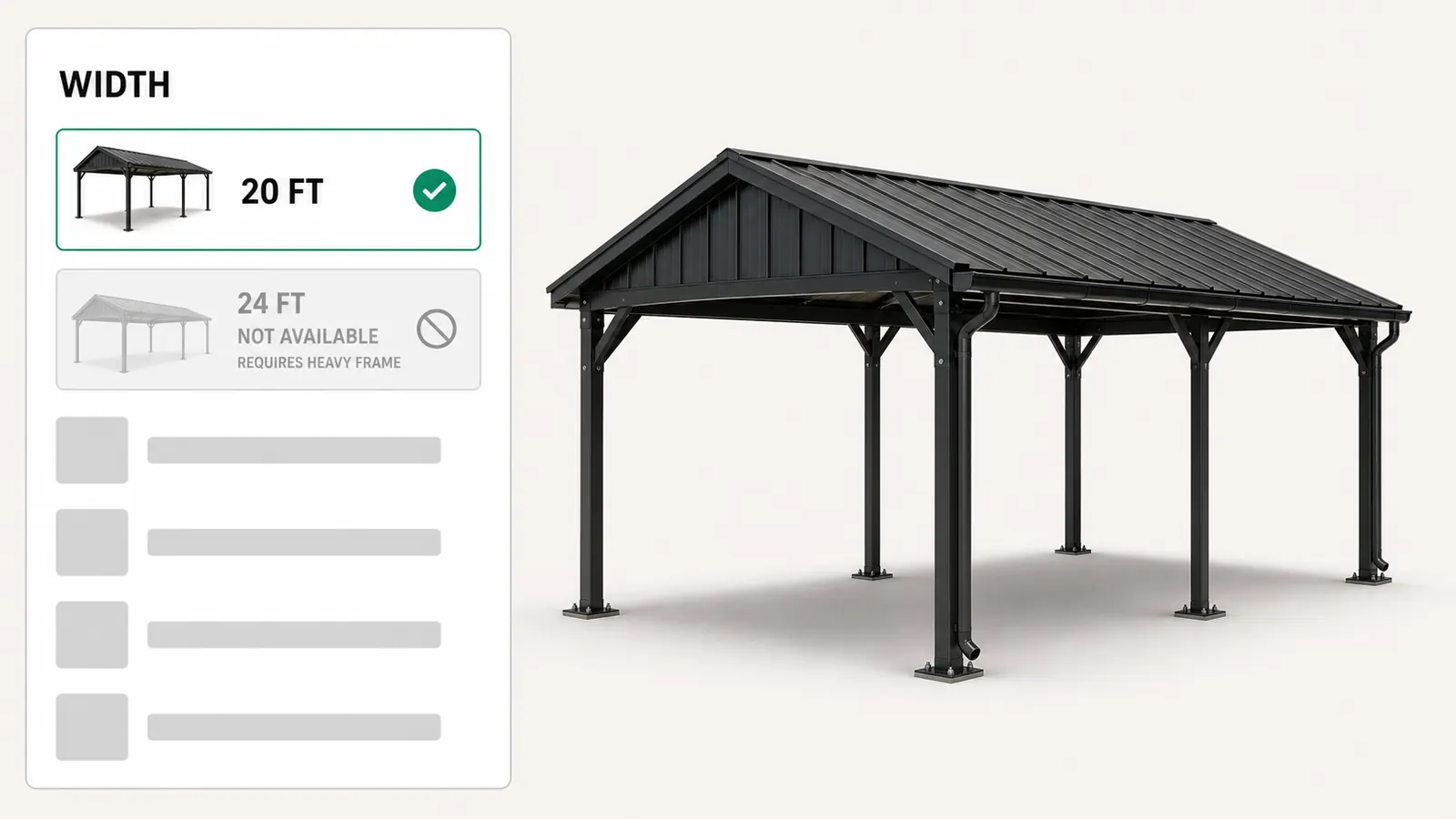
A configurator rule is a constraint the manufacturer writes once: this roof pitch needs that truss, this width cannot take that door, this option requires the upgraded frame. The rule blocks the invalid pick at the moment it is made, in the dealer's session, so the person who would have made the error never gets to make it and the shop never sees it.
That is the whole mechanism, and it is worth being precise about, because this is the claim the category usually inflates. The figures that circulate on this subject come with no source attached, so none of them appears on this page, and we will not put a percentage on your error rate from here. What a rule system changes is structural: a class of mistakes that used to be caught late, at the shop, at delivery, or by the customer, is now caught at the earliest possible moment, by software, at the click.
Late errors are the expensive ones. A wrong spec that reaches the shop becomes scrap, rework, a delayed delivery, and a dealer arguing about whose fault it was. A wrong spec that never leaves the configurator costs one red outline and a second click.

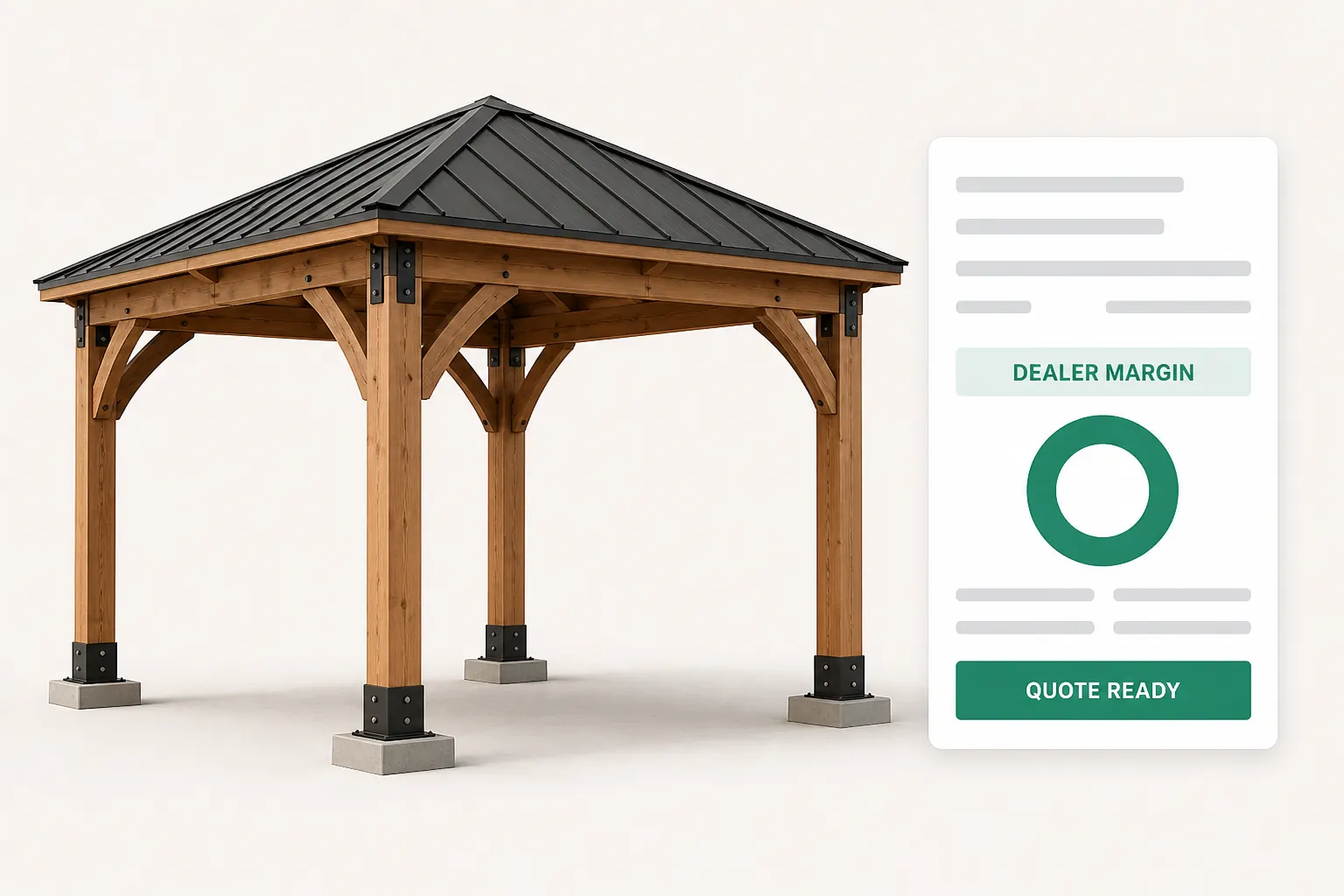
Follow the approved quote one step further. In the manual world, the dealer's order arrives as a PDF or an email, and someone at the factory retypes it: into the ERP for the order, into CAD for the drawings, into the cutting list for the shop. Every retype is a chance to translate the order wrong, and the person doing it is usually the same overloaded engineer from two sections ago.
When the dealer configures the order, the configuration is the order. The spec the dealer approved, with every option, dimension, and price on it, reaches production as a build sheet the shop can work from. The same record the dealer built is the record the shop builds from, and the two cannot disagree. Whatever your systems look like downstream, the point is not the integration diagram. It is that nobody re-enters the order by hand, so the errors that came from re-entering disappear with the task itself.
The handoff between sales and production stops being a translation step. It becomes a transfer.
When quoting is slow, the instinct is to hire: another inside salesperson, another estimator, another pair of hands for high season. It is the obvious fix and it is the wrong one, because the constraint was never headcount. It was that every quote needed the factory's knowledge, and the factory's knowledge did not scale.
Move that knowledge into the configurator and quote capacity stops being a payroll line. Forty dealers quoting for themselves are forty salespeople you do not employ, working lots you have never visited, in hours your office does not keep. High season stops being triage.
This is the manufacturer's side of the argument, and it is what our page on CPQ software for manufacturing covers as a category: what the system holds, what it replaces, and where the boundary of the job sits.
Take the one vertical we cover in its own words, sheds and carports, sold through dealer lots. What follows is an illustration of the model rather than a customer account. A buyer walks onto a lot with a rough idea. The dealer opens the configurator on the counter screen and they build the shed together: size, doors, windows, colors, the snow rating if the site needs one. Every pick the shop cannot build is blocked as it is made. The price updates with each choice, with the lot's own margin already in it.
A few minutes in, the buyer is looking at their shed and a number, not a brochure and the promise of a callback. The dealer sends the quote under the lot's name. When the buyer signs, the configuration goes to the factory as the order. No retyping, and no follow-up call to check whether that door fits that wall.
No part of that transaction required the factory to answer a phone. That is the whole model in one sale, and every change this guide has walked through is visible inside it.

The honest objection is that your network was not designed around software. Dealers vary. Some will open the configurator the first morning, some quote three orders a year, and a few will resist anything that changes how they work. A rollout has to survive all three, so it is worth saying what one actually asks of each side.
From the manufacturer, it asks for the knowledge you already have, written down once: the option list, the rules about what can be built, and the price lists with each dealer's terms. That is the real work, and it is finite. From a dealer it asks for a login. There is nothing to install, and the first quote is the training.
So sequence the rollout instead of announcing it. Start with the dealers who quote most, because they hit the bottleneck most often and have the most to gain the week it goes, and let the rest follow the results rather than the memo. And if you are still comparing platforms for the job, our best CPQ software roundup lays out the field and says which kind is built for the dealer seat.
Short answers a manufacturer can act on. The first sentence of each is the answer.
Not by default. In this model dealers quote in the configurator and the end customer sees the result: a visual of their build and a finished price under the dealer's name. A public view for buyers can be added where it fits the product, and for some manufacturers it is a strong upsell, but it is an option on top of the dealer workflow rather than the point of it.
You gain control. Today each dealer already prices your product, in their own spreadsheet, from whatever PDF they last saved. In the configurator the price logic is yours: you set each dealer's terms and floors once, the system applies them on every quote, and a dealer cannot quote outside the boundaries you wrote. What dealers gain is speed inside your rules, not freedom from them.
It supports them, and the dealers with the most to gain are the busiest ones, because they feel the quoting bottleneck hardest and get the most back when it goes. The configurator removes the part of the job dealers never wanted, chasing the factory for prices and specs, and leaves the part where they earn their margin: knowing the local buyer, closing across the counter, and delivering. A manufacturer rolling one out is making dealers faster, not routing around them.
Because the price list is only half of what a quote needs. It can say what options cost. It cannot say whether a combination can be built, and it starts going stale the day it is exported. A configurator answers price and buildability together, on current data, and it returns something a PDF never will: visibility into which dealer quoted what, and when.
Last updated
Teodoro Pickett writes the Dealect blog, covering CPQ, product configurators, and the business of selling custom products through dealer networks. Every article is written for manufacturers first, checked against sources a reader can open, and updated as the category moves.
How we source and correct sets out where our facts come from, how our own product appears in our own comparisons, and how to tell us we got something wrong.
Request a 30-minute call, bring one product and one dealer scenario, and we run the quote in front of you. We reply by email to set up the time.
Your call is with the Dealect team.