Blog · Configurators, compared

Best product configurators in 2026: 12 compared for custom manufacturers

Twelve product configurators, sorted by who holds the quoting seat and judged on what a manufacturer selling through dealers actually needs. Four publish a list price and this page assembles them. Every entry says where the configurator is strong and where it is wrong.

By Teodoro PickettLast updated 14 min read
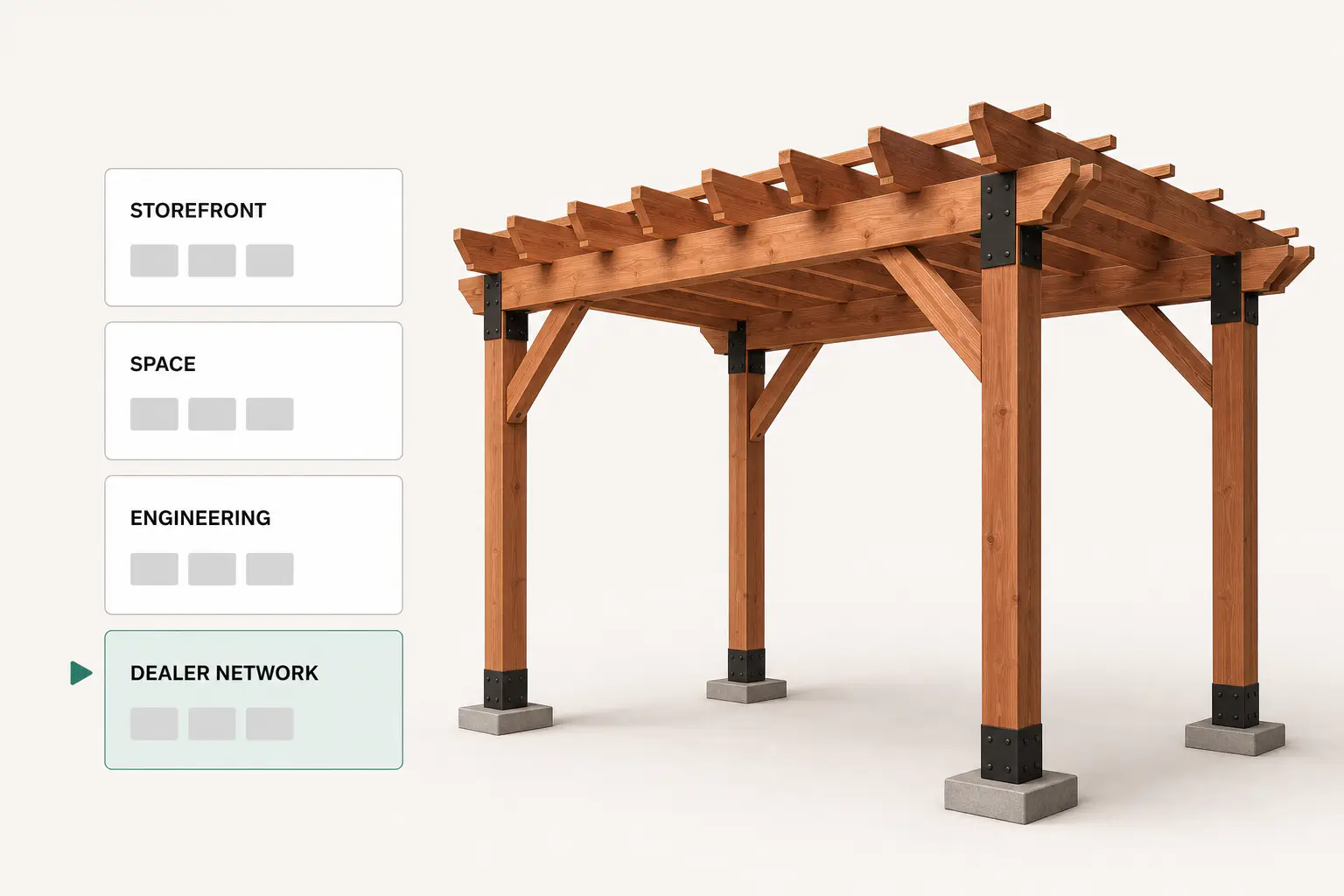
Twelve product configurator tiles sorted onto four labeled shelves beside a configured cedar pergola, the field this comparison of the best product configurators covers

Written for manufacturers of configured products, most of whom sell through independent dealers. Every price is a number on the vendor's own page, read in August 2026, or an honest contact only. Our own configurator sits in the list in category order, with the same strong and weak lines as everyone else.

Key points

  1. Product configurators split into four kinds, and the kind decides your shortlist.

    Storefront, furniture and space, quoting engines, and dealer networks. They fail differently, so pick the kind before the brand.

  2. Four of the twelve publish a list price.

    Zakeke, Kickflip, VividWorks, and Roomle. Seven are contact only. Every number was read on the vendor's own pricing page in August 2026.

  3. Two of them charge a percentage of every sale.

    Kickflip from 1.95% and Zakeke from 1.5% to 1.9%. On a $12,000 build that is $180 to $234 on one order, a model built for a low ticket.

  4. Published subscriptions run from $59 to $1,447 a month.

    Kickflip's entry tier to VividWorks' top space planning tier. The whole engineering and quoting tier publishes nothing.

  5. A dealer network inverts the comparison.

    Only two configurators here are built for quotes written by people who do not work for you, and per-seat pricing turns each new dealer into a bill.

The category

What a configurator actually does

A product configurator lets a customer pick options, refuses the combinations your shop cannot build, and moves the price as the picks change. That is the whole mechanism, and every configurator below is a different bet on which part of it matters most: some spend their engineering on the 3D picture, some on the rules, some on the quote that comes out the other end.

If the category is new to you, read what a product configurator is first. This page assumes the mechanism and gets on with choosing between the products that ship it.

The method

How we judged these configurators

Every roundup of product configurators is written by somebody who sells one, this page included, and claimed neutrality does not fix that. Publishing the criteria does, and almost nobody here bothers: the largest vendor listicle on this topic sources its whole ranking to reviews curated from a review site, with no score, rank or threshold named.

Ours are below and every one is checkable without a sales call, because a criterion you can only verify by sitting through a demo rewards whoever books the most demos. Live preview and price movement carry the most weight: together they are the buying experience your customers get. Dealer quoting is next because nothing retrofits it, and because it is why this site exists, which we would rather say than smuggle into the scoring.

The six weighted criteria this comparison scores every configurator on, with the answer that passes each one and the answer that fails it
CriterionWeightPassesFails
Live visual preview25%The 3D redraws in the browser as each option changes.The render arrives with the quote, or a rep drives it for you.
Price movement20%The number moves on the same screen, on your price list.Pricing happens afterwards, in a spreadsheet or the ERP.
Rule depth20%A rule refuses an unbuildable option during the demo, on your product.Rules are scoped as a services project after signature.
Dealer quoting20%Each dealer configures on their own price list and margin.One shared login, or your cost price visible to the network.
Published price10%A list price on the vendor's own page, readable in August 2026.A contact form, or a figure that only follows a discovery call.
Time to live5%A go-live date for one product line, in writing.It depends on scope.
The field

Best product configurators at a glance

One row per configurator, every cell short enough to check. Who configures names the person the product is designed around, which is the choice underneath every other one here. Live visual asks whether that person watches the thing being built, not whether a 3D render exists somewhere in the product. Published price means a number on the vendor's own site, read in August 2026. Our own row sits in category order, not first.

Read the first column down before anything else. Ten of the twelve hand the configurator to somebody who is not a dealer, seven to your customer and three to your own staff, and that is not a gap in the market so much as a different market. If your quotes are written by people who do not work for you, most of this list was built for a different company.

Twelve product configurators compared on who sits in front of the configurator, whether that person sees a live visual, and the published price
PlatformWho configuresLive visualPublished price
ZakekeYour customerIn the storefrontFrom $69.90plus 1.5% to 1.9%
KickflipYour customerIn the storefrontFrom $59plus up to 1.95%
ExpiviYour customerIn the storefrontContact only
ThreekitYour customerPlus rendered stillsContact only
VividWorksYour customerRoom levelFrom $547
RoomleYour customerRoom levelFrom €100
3D CloudYour customerRoom levelContact only
Epicor CPQYour own staffWith drawingsContact only
TactonYour own staffRules firstContact only
ExperlogixYour own staffRules firstContact only
Configure One CloudYour dealersRules firstContact only
DealectoursYour dealersLive 3DPer setupdealers pay nothing

Tiers, currencies, and the per-sale fees two of them charge are in the cost table below. Three of the ten that serve a customer or your own staff will build a dealer path as a project, which the quoting-engine section covers.

Who sits in front of the configurator, across the twelve platformsDonut chart of the twelve platforms in the table above, split by who configures. Seven put your customer in the seat, three your own staff, and two your dealers, so ten of the twelve are built for a seat that is not a dealer's.10 of 12not a dealer seatSource: vendor product and pricing pages, August 2026
Your customer · 7Your own staff · 3Your dealers · 2
The first column of the table above, as one shape: ten of the twelve seat somebody who is not a dealer. Source: each vendor's own product and pricing pages, read August 2026.
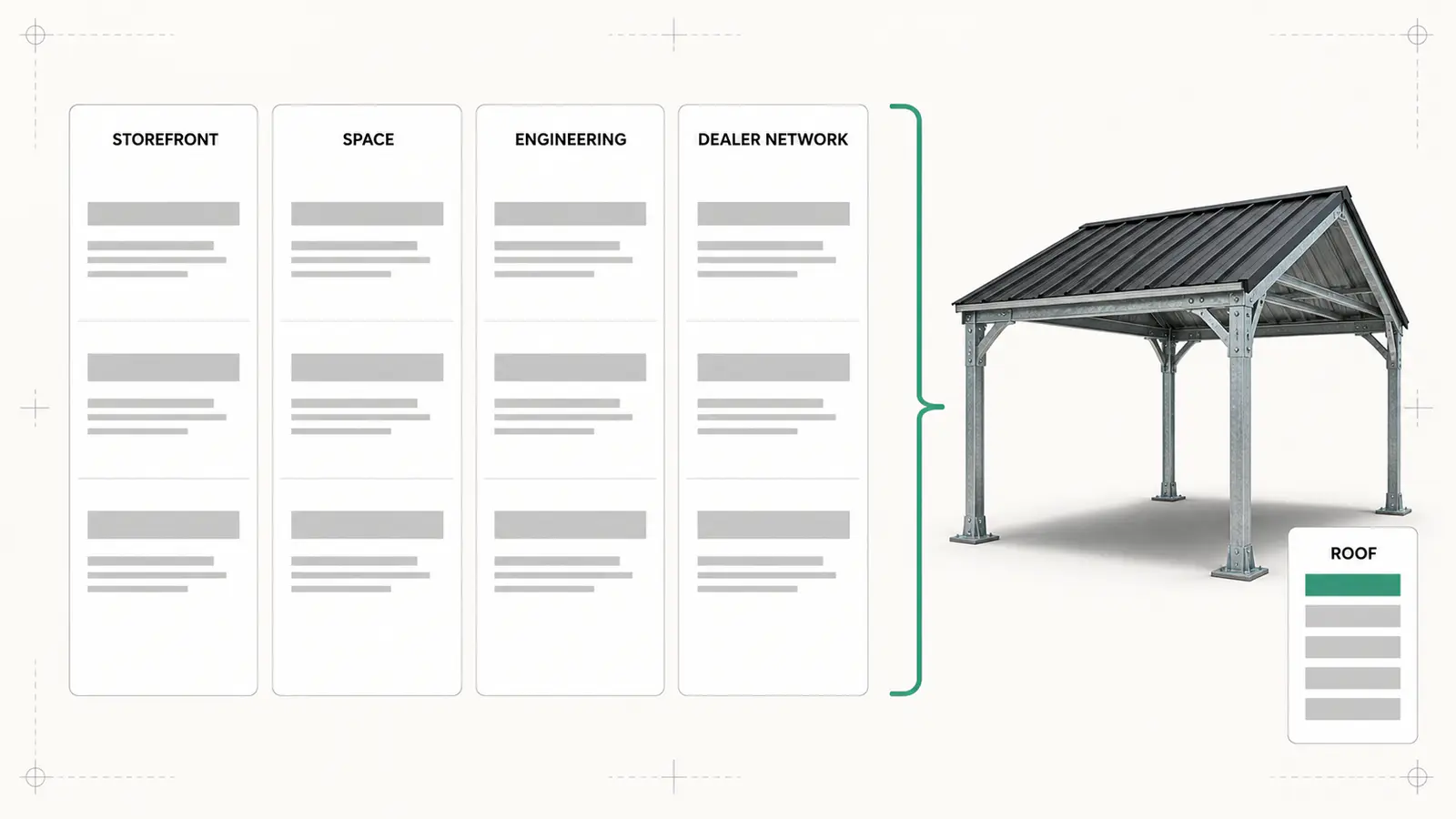
Twelve platforms grouped into four columns by what each product configurator is built for, a steel carport configured beside them
The taxonomy

Four kinds of product configurator tools, and why the difference decides your shortlist

The twelve above are not one product at twelve prices. They are four kinds of tool sharing a word, and most shortlisting mistakes are category mistakes.

  1. Storefront. A 3D configurator bolted into an ecommerce product page so customers personalize and check out alone. Cheap to start, priced on a cut of every sale.

  2. Furniture and space. Room level 3D, where the product is arranged as much as configured. Right when the sale is really the layout.

  3. Engineering and quoting. Constraint engines with CAD and ERP behind the configuration. Right when the rules are the hard part and every go-live is a project.

  4. Dealer network. Built for the sales seat the other three treat as an afterthought: whoever is quoting your customer does not work for you.

The four kinds are our grouping rather than an industry standard: we sorted the twelve by what each configuration engine may price and by who holds the sales seat, the two things a buyer cannot change after signing. Sort the same way yourself. Who picks the options, who sees the price, and is whoever quotes your customers on your payroll? Those three questions place you in one of the four sections below, and the right product configurator tool is the one built for that seat.

Kind one

Ecommerce product configurator options for a storefront

An ecommerce configurator lives on the product page: customers personalize, see the 3D result, and check out without anyone from your company touching the order. That design is why the tier prices as it does, cheap to start and a cut of every sale. McKinsey's 2021 Next in Personalization research found 71% of consumers expecting personalized interactions, and those customers took that experience into their day jobs, which is how it became a manufacturer's problem.

Zakeke

The broadest storefront product: personalization, 3D configuration, augmented reality and virtual try-on on one subscription. Published tiers run $69.90, $129.90 and $299.90 a month, with product limits of ten, fifty and a hundred and a fee of 1.9%, 1.7% or 1.5% on top.

Strong
Published tiers, published fees, and a trial that needs no card.
Weak
A fee on every sale, and no dealer seat anywhere in the product.

Kickflip

Aimed at consumer configurable goods, and the cheapest published entry here at $59 a month. The fee is 1.95% at the entry bracket, falling with volume. Quote requests cost $99 more and dropping Kickflip's branding another $49, so the headline number is not what most pay.

Strong
The lowest published entry price of the twelve, with the fee schedule stated plainly.
Weak
The percentage model gets expensive fast on a high ticket, and quoting is an add-on.

Expivi

3D configuration with a quoting step behind it, sitting closer to the manufacturer end than the two above without leaving the storefront. No published price: the route is a demo or a discovery call.

Strong
3D and a quote step together, without an enterprise project behind it.
Weak
No number before the first call, on a tier where the others publish.

Threekit

The name most manufacturers reach for first, and a visual commerce platform rather than a configurator alone: live 3D, augmented reality, and rendered stills from the same models, so catalogue photography comes out of the configuration. Pricing is custom, behind a meeting and a project survey.

Strong
One model set feeds the configurator and the product photography.
Weak
No published price, and a survey stands between you and a quote.

Kind two

Configurators built for furniture, rooms and space

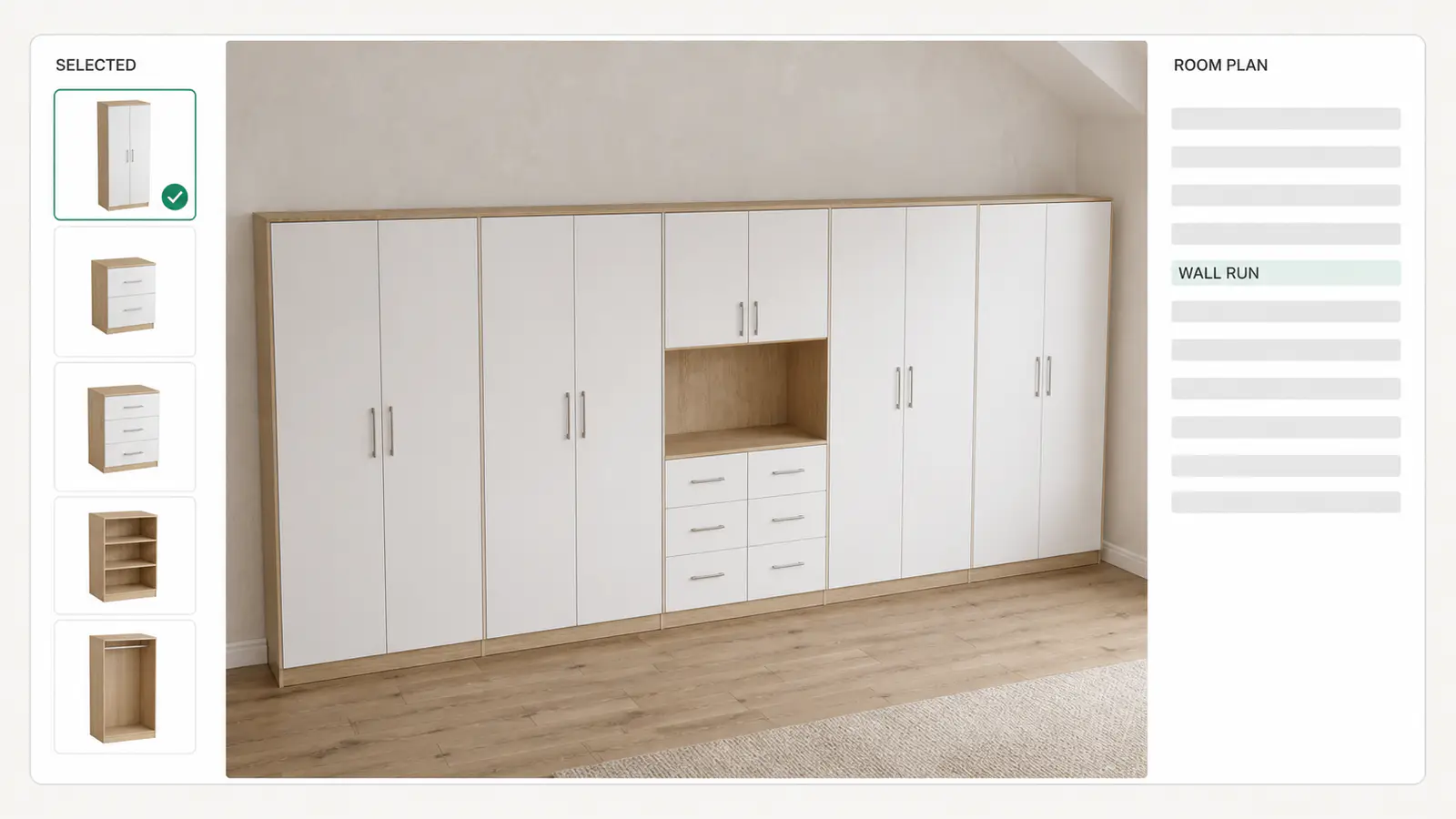
Some products are arranged as much as configured. A sofa range, a kitchen, a wardrobe run: customers want to visualize the pieces together before caring what any one costs. All three below ship a room planner. If the 3D render itself is what you are buying, our 3D product configurator page covers what that costs to set up, and when the quote matters as much as the picture, the pairing is visual CPQ.

VividWorks

$547 a month for the configurator Starter tier and $1,047 for Pro, with a separate space planning product at $897 and $1,447. Priced in euros and pounds too, and the page states plainly that there are no transaction fees, which on this list is a differentiator.

Strong
A flat published price in three currencies, with no cut of your sales.
Weak
Two separate products, so the real number is often the higher one.

Roomle

Sold as Rubens, and the most granular price ladder here: €100 a month for a 3D and augmented reality viewer, €280 for materials, €650 for space design, €850 for a basic variant configurator, €1,450 for the full logic modular one. The ladder is honest about what the field hides, that rule depth is the expensive part.

Strong
You buy exactly the depth you need and can see what the next step costs.
Weak
The full rule engine is the top tier, at fourteen times the entry price.

3D Cloud

The heaviest of the three, built for large retail furniture programmes and the room planners behind them. Its pricing page returns a 404, checked in a browser in August 2026, so treat it as contact only until that changes.

Strong
Depth, scale and content operations nobody else on this list matches.
Weak
A programme rather than a subscription, and no published price to anchor it.
A modular wardrobe run being arranged in a room planner, the space level view this kind of product configurator is built for
Kind three

Configurators built into a quoting engine

The third kind starts from the quote and works backwards: constraint engines with CAD and ERP behind them, sold to manufacturers whose products are engineered rather than picked, and every one contact only. This is the home of mass customization in its original sense, a catalogue of one produced on a production line. We rank them against each other in the quoting engines compared; here is what they are as configurators.

Epicor CPQ. The most visual of the three, generating drawings and CAD output from the finished configuration, so engineering gets a file rather than a specification to retype. Wrong when you wanted a configurator and have bought a programme.

Tacton. The deepest constraint engine here, for engineer to order machinery where valid configurations run into the millions and no option list could enumerate them. Wrong for anyone whose customers decide on how it looks.

Experlogix. Configuration and pricing sitting beside Dynamics or Salesforce rather than replacing it, the path of least resistance for a manufacturer already committed to one. Rules first, 3D second. Wrong if the CRM is not already the centre of your sales operation.

Kind four

Configurators built for a dealer network

The other three kinds assume whoever configures is your customer or your employee. For many manufacturers it is neither: it is an independent dealer or rep selling alongside two competitors. That sales seat changes every requirement, and what a configurator changes for a dealer network walks through it. McKinsey's B2B Pulse, a 2024 survey of 3,942 B2B decision makers, found 39% willing to spend $500,000 or more through self-service or remote channels, which here means the dealer quoting on the spot rather than phoning your office.

Configure One Cloud

From Revalize, and the one enterprise vendor whose own product page markets dealer and distributor quoting in those words. Configuration rules, generated documents and ERP integration, with the dealer a first class user rather than a portal bolted on afterwards. Contact only.

Strong
A real dealer seat from a vendor with enterprise ERP integration behind it.
Weak
Priced and scoped for the enterprise end, which is a heavy fit for a 40-dealer network.

Dealect

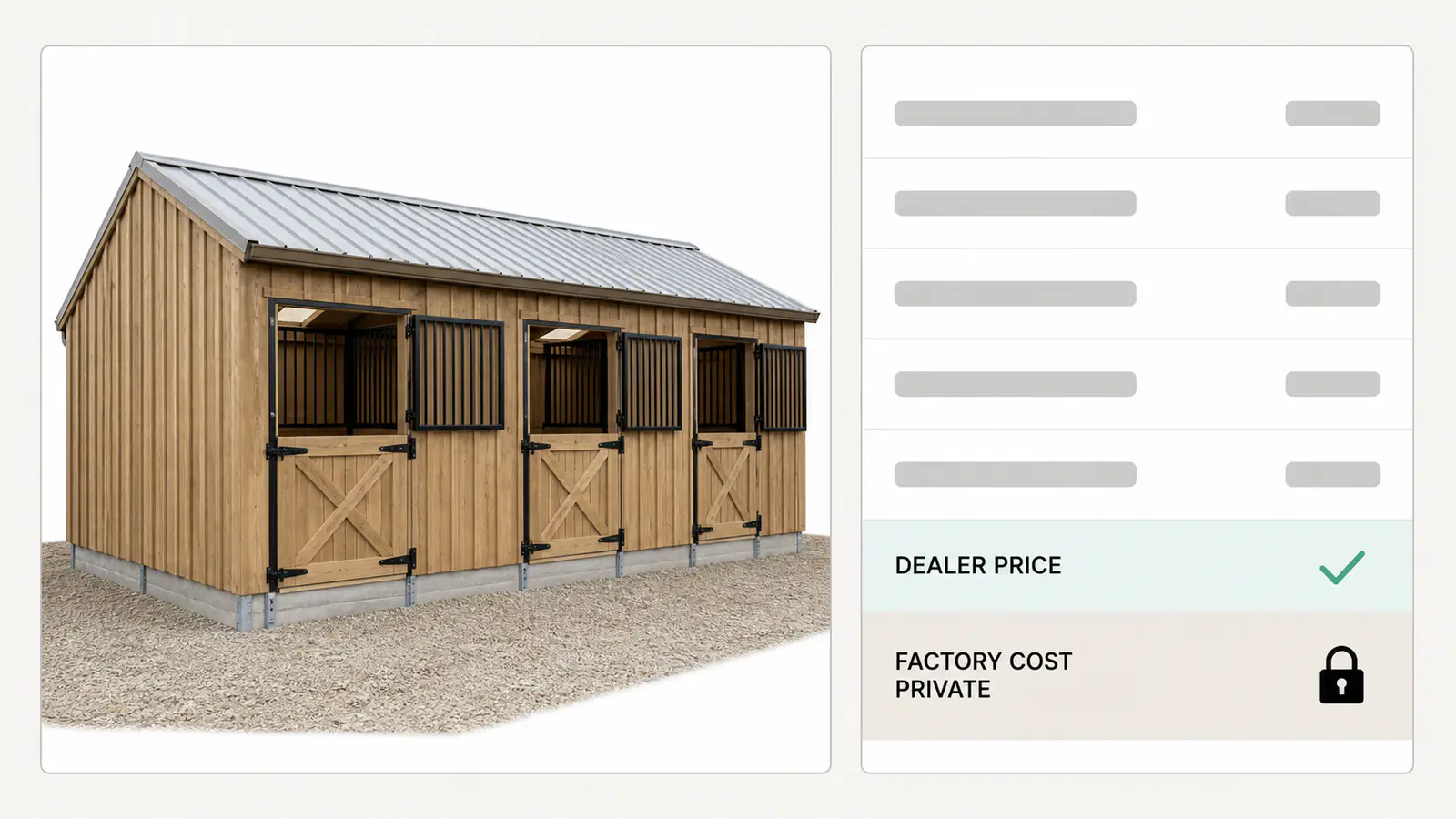
Ours. Each dealer opens the configurator in a browser, configures on their own price list, watches their own margin, and never sees your cost price, so the buying experience your customer gets is the dealer's. Your rules travel with them, and approved quotes become orders in the same B2B customer portal. Priced per manufacturer, and dealers pay nothing.

Strong
The dealer seat is the product rather than a module, and adding dealers costs nothing.
Weak
Wrong for direct sales off a fixed catalogue, and we do not do retail storefront personalization.
A dealer quoting a configured timber horse stable on their own price list, the seat the best product configurator has to serve for a manufacturer selling through dealers
The numbers

What the best product configurators cost

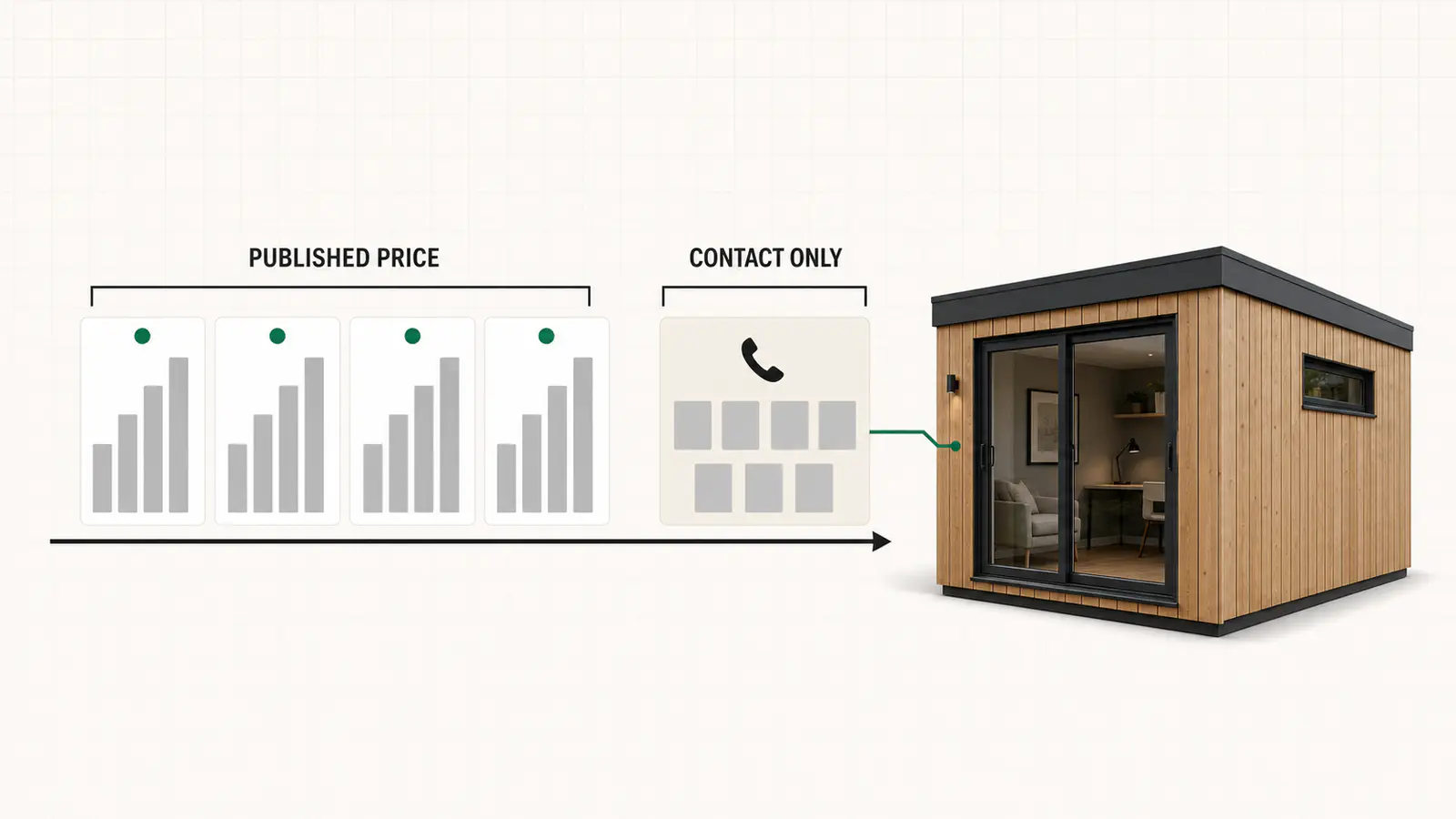
No ranking page in this field publishes a price, and one answers the cost question in its own FAQ by telling you to book a call. The numbers are not secret. Nobody has gone and looked. We read all twelve vendors' own pricing pages in August 2026: four publish a list price, one publishes its structure, seven publish nothing.

Every published price across the twelve product configurators compared, the cut of each sale each one takes, and the seven contact-only vendors named
PlatformPublished priceCut of each saleTerms
KickflipFrom $591.95%, falling with volumePer month, Standard. White label +$49, quote requests +$99
Zakeke$69.90 to $299.901.9%, 1.7% or 1.5% by tierPer month, Starter to Scale, cheaper billed yearly
Roomle€100 to €1,450None publishedPer month, from a 3D and AR viewer to the full logic modular configurator, with a room designer at €650
VividWorks$547 to $1,447None, and the page says soPer month, configurator Starter and Pro at $547 and $1,047, room planner Starter and Pro at $897 and $1,447
DealectoursPer setupNoneQuoted after a 30-minute demo, priced for the manufacturer; dealers pay nothing
The other sevenContact onlyNot publishedExpivi, Threekit, 3D Cloud, Epicor CPQ, Tacton, Experlogix, Configure One Cloud

List prices from each vendor's own pricing page, read 2026-08-05: Kickflip, Zakeke, Roomle, VividWorks. Each vendor is quoted in the currency its own page leads with. Price pages move, so this section is the first thing this article re-checks.

Every published number sits at the storefront and space end. The whole engineering and quoting tier prices by project, and there the year-one project regularly outweighs the year-one licenses, so ask for the band on the first call.

The bigger finding is the one nobody does the arithmetic on. Two of the four vendors that publish charge a percentage of every sale: Kickflip 1.95% at its entry bracket, Zakeke 1.5% to 1.9% by tier. On a $40 mug that is cheap. On a shed design software ticket of $12,000 it is $180 to $234 on one order, and ten orders a month is $1,800 to $2,340 in fees against VividWorks at a flat $1,047 or Roomle at a flat €1,450 however much you sell.

Monthly subscriptionPer-sale fees
The two percentage models against a flat subscription, at ten $12,000 orders a monthStacked bar chart of the monthly software bill at ten $12,000 orders. Kickflip Standard: a $59 subscription plus $2,340 in per-sale fees, $2,399 in all. Zakeke Starter: $69.90 plus $2,280 in fees, $2,349.90. Zakeke Scale: $299.90 plus $1,800 in fees, $2,099.90. VividWorks Pro: a flat $1,047 with no per-sale fee.Kickflip Standard$2,399Zakeke Starter$2,349.90Zakeke Scale$2,099.90VividWorks Pro$1,047Source: published prices on vendor pricing pages, August 2026
The entry bracket rates from the table above, multiplied out against one flat subscription. Kickflip's rate falls as volume rises, and Roomle's flat €1,450 sits off a dollar axis. Source: vendor pricing pages, read August 2026.

Kickflip's rate falls as volume rises and at scale the models converge, but the shape holds: a percentage of sales is designed for a low ticket sold in quantity, and a custom manufacturer's ticket is not low. Run that multiplication on your own average order value before comparing monthly figures. Our frame is on the Dealect pricing page: no per-sale fee, no per-dealer seat, dealers pay nothing.

Published price bands across the product configurator field, four vendors with public numbers and seven marked contact only, a configured garden office beside them
The screen

Product configurator examples worth copying

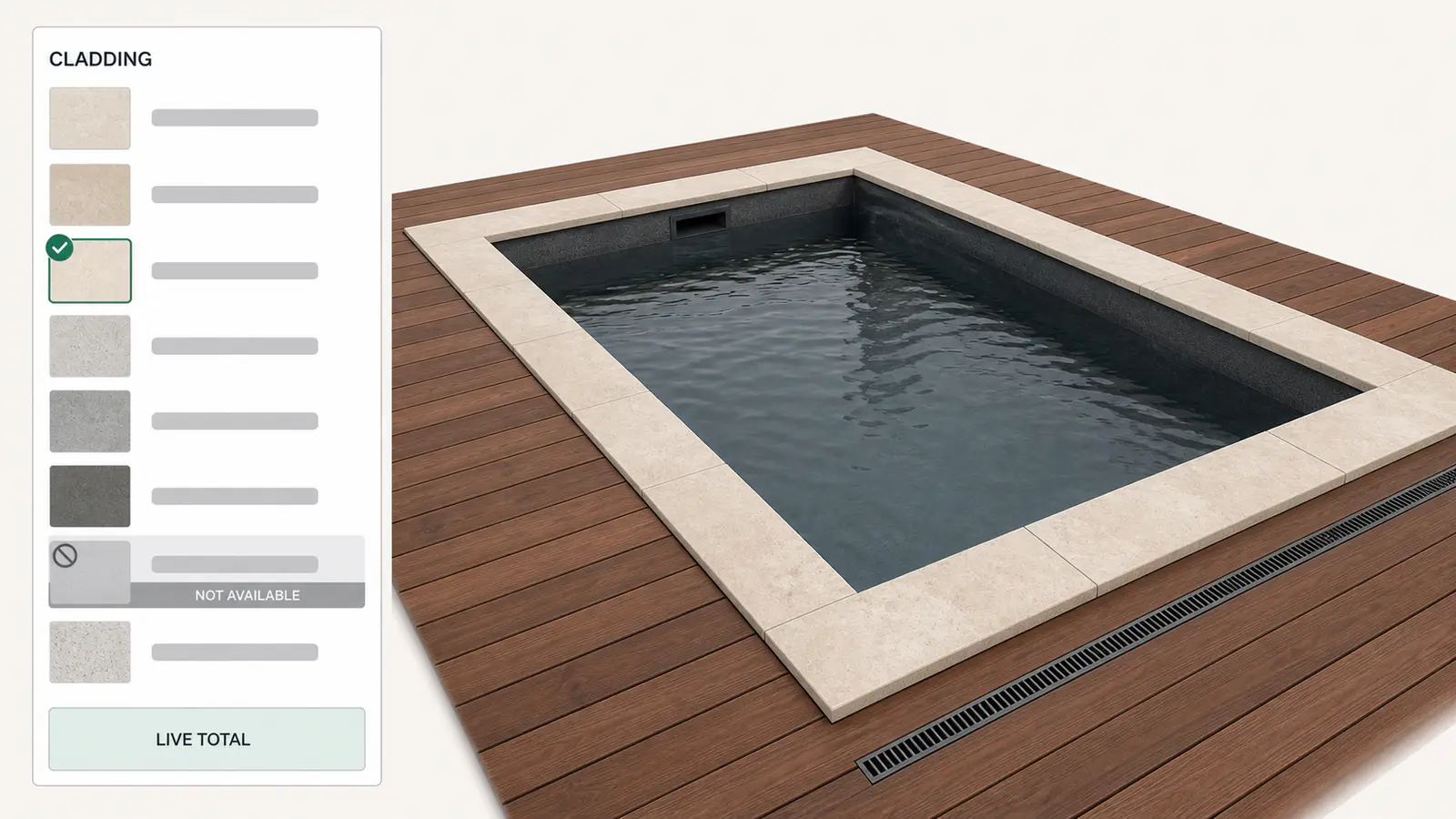
Strip the marketing away and the good product configurators all do three things on screen. A live preview redraws the 3D product as each option changes, so the customer watches their own build rather than a stock photo. The price moves in the same moment, on the right list. And a rule refuses a configuration your shop would refuse, at the click, rather than three days later in an email from production.

The third is what separates a configurator from a well-built product page, and it answers SKU explosion: six sizes by eight finishes by four layouts is 192 variants nobody wants to create, photograph or stock. Configure at component level with rules on top and you maintain the components, not the combinations. Customer appetite was never the bottleneck: in 2015 a Deloitte consumer review found 1 in 5 willing to pay a 20% premium for a customized product. The quoting was, and still is.

A live preview redrawing a configured plunge pool as options change with the price moving alongside, what the best product configurator does on screen
The filter

How to choose if your dealers write the quotes

If independent dealers or reps write your quotes, this comparison inverts: the dealer seat becomes the first filter rather than a late question. The Aleran/TrendCandy survey put the average cost of manual quoting at 5% of annual revenue; that is sellers describing their own process in a vendor-commissioned study, so read it as a shape rather than a measurement. Five questions sort the field, all answerable before a sales call.

  • Can a dealer open the configurator themselves, without a login you issue by hand each time?
  • Does the dealer configure on their own price list, and watch their own margin, without ever seeing your cost price?
  • Do your build rules ride along, so no dealer can promise a configuration your shop will refuse?
  • Does the finished quote reach the customer under the dealer's name, with your office out of the loop?
  • Is the pricing per manufacturer rather than per seat, so a fortieth dealer is growth rather than a license?

No roundup in this category asks any of these, which is how a manufacturer with forty dealers ends up comparing storefront tools that bill a percentage of every sale. Our own answer to all five is the sales configurator a dealer drives, and the demo form at the end of this page books a 30-minute call where we answer them on one of your products, live.

FAQ

Common questions when shortlisting a configurator.

Short answers a buyer can act on. The first sentence of each is the answer.

Published subscriptions run from $59 to $1,447 a month, and only four of the twelve configurators here publish at all. The other seven price by project.

Four of the twelve do: Kickflip, Zakeke, Roomle, and VividWorks. Dealect publishes the structure instead, priced per manufacturer and quoted after a 30-minute demo, with dealers paying nothing. The other seven publish nothing.

Two of the twelve are built for it: Configure One Cloud at the enterprise end, and Dealect for manufacturers of configured products. The test that separates built for from bolted on: each dealer configures on their own price list, watches their own margin, and never sees your cost price.

Photos are enough when the options are finishes and customers already know the shape. You need 3D when the configurations outrun what anyone can photograph, the moment sizes multiplied by layouts multiplied by finishes makes a photo library impossible to keep current.

Yes, and a live preview with the price attached separates the stronger configurators from the weaker ones. The 3D render and the number update on the same screen as each option is picked, so customers approve a picture and a total together.

A product configurator decides what may be built and shows it in 3D. CPQ takes that valid configuration, prices it against the right list, and turns it into a signable quote with approvals behind it. If the rules are your hard part start from the configurator; if the paperwork is, start from the quoting engine.

Last updated

Last updated

Portrait of Teodoro Pickett

Teodoro Pickett

Teodoro Pickett writes the Dealect blog, covering CPQ, product configurators, and the business of selling custom products through dealer networks. Every article is written for manufacturers first, checked against sources a reader can open, and updated as the category moves.

How we source and correct sets out where our facts come from, how our own product appears in our own comparisons, and how to tell us we got something wrong.

Keep reading

Where to go next

The blog

Latest articles

All articles
Score us against the table

Watch one of your products configured in the dealer seat.

Request a 30-minute call, bring one product, and hold us to the six criteria above, live. We reply by email to set up the time.

  • 30-minute personalized demo
  • See real configurators in your industry

Your call is with the Dealect team.

See pricing