Best CPQ software in 2026: 17 platforms compared for configured products
The best CPQ software depends on how you sell, not on a rankings algorithm. This comparison sorts seventeen CPQ platforms into five kinds, scores them on configuration depth, published price, and dealer quoting, and says plainly where each one is the wrong pick, including ours.
This guide is written for manufacturers of configured products, most of whom sell through dealers, and it holds for anyone shortlisting CPQ. Every price in it is a published list price with its source named. Every price on request is marked as such. And the platform this site belongs to sits in the list on the same terms as everyone else.
Key takeaways
01
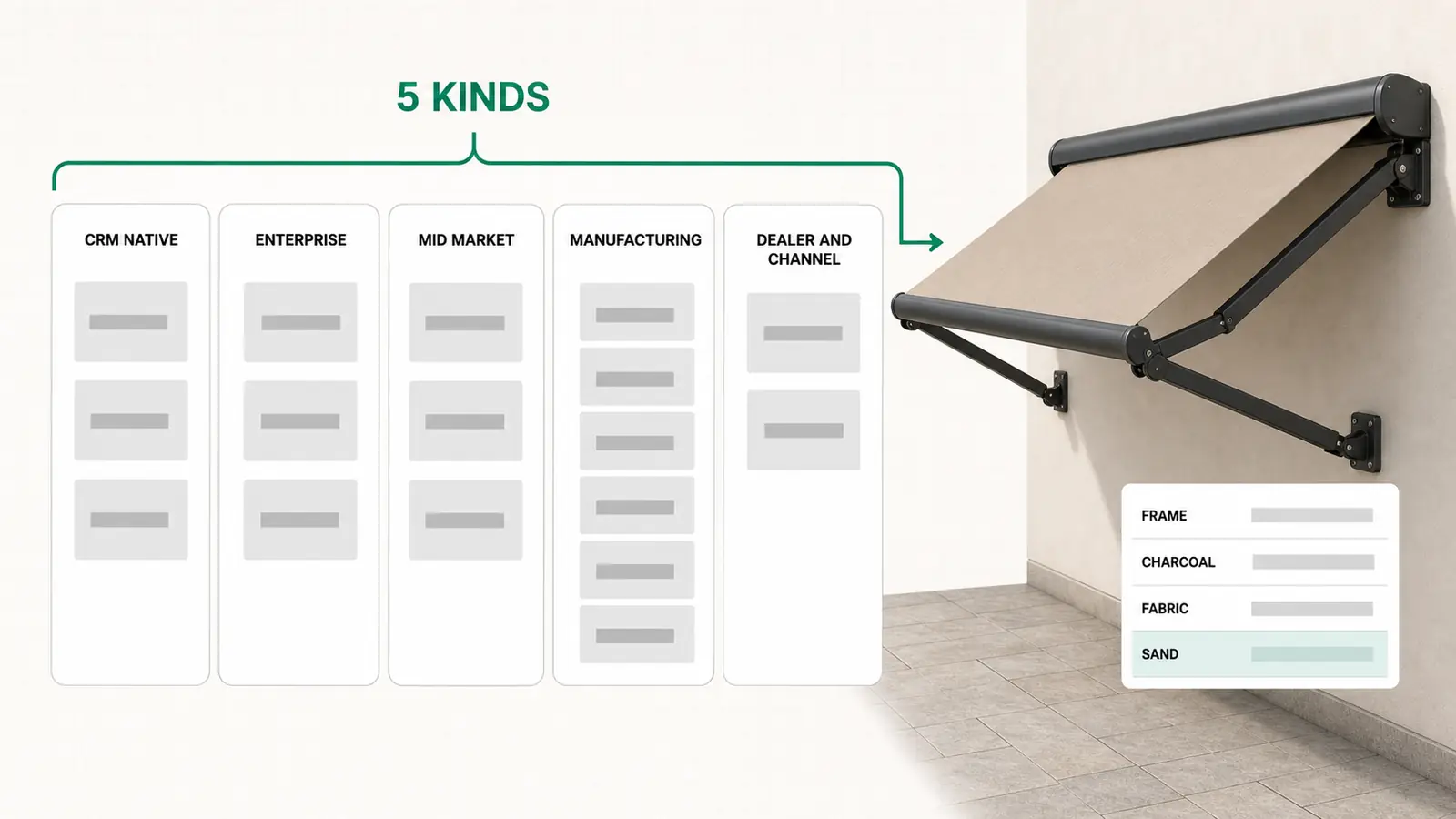
The best CPQ software splits by how you sell, into five kinds.
CRM-native, enterprise standalone, mid-market and document, manufacturing and industrial, and dealer and channel. The kinds fail differently, so pick the kind before the brand.
02
Only five of the seventeen platforms publish a price.
Salesforce, Microsoft, HubSpot, PandaDoc, and QuoteWerks. The whole manufacturing and industrial CPQ tier quotes by project, so ask for the band on the first call.
03
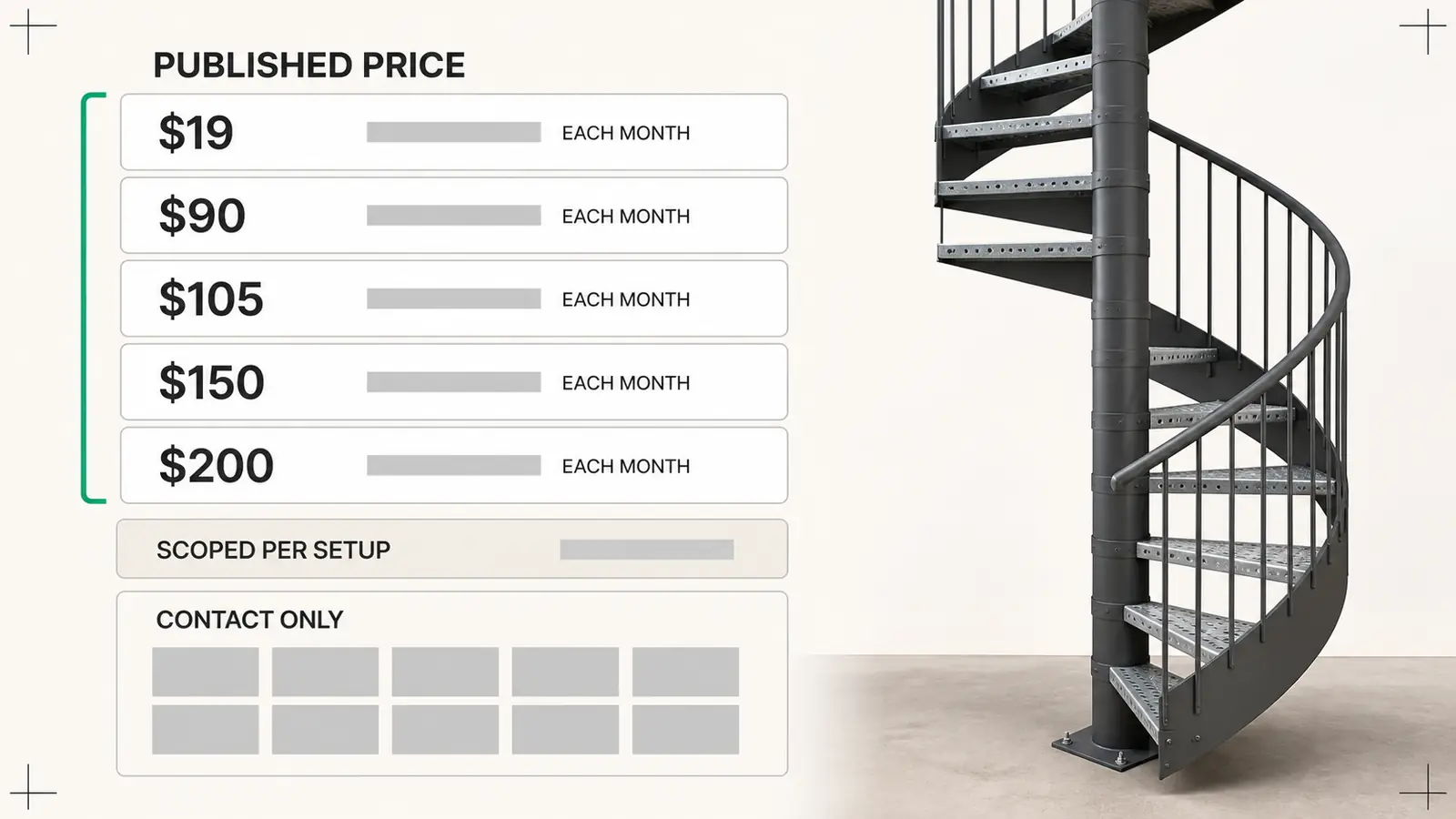
Published prices run from $19 to $200 per user per month.
PandaDoc's entry tier to Salesforce Revenue Cloud Advanced, each number read on the vendor's own pricing page; the cost table carries the access date per vendor.
04
A dealer network inverts the shortlist.
Only three platforms here are built for quotes written outside your company, and per-seat pricing punishes a large network.
05
Go-live time varies more than price.
Document-tier CPQ runs in days, configured-product platforms in weeks per product line, enterprise engines in months.
The category
What CPQ software does, in short
CPQ software builds a valid specification of a configurable product, prices it, and turns it into a signable quote, in one flow. The rules and the price lists live in the system, so a quote that reaches a buyer is one the shop can actually build. If the category is new to you, start with our plain-words guide to what is CPQ and come back. This page assumes you know what the letters mean and are here to pick between the platforms that do it.
The letters do not tell you much, because the products wearing them have little else in common. Take the two CPQ software examples at the far edges of this list. A tool that writes clean proposals for a SaaS sales team is sold as CPQ. So is an engine that configures industrial machinery against constraint rules. Compare them on a feature grid and you get the six-figure surprise this category is famous for. Compare them on how you sell, which is what this page does, and the field sorts itself in minutes.
The method
How we picked these 17 platforms
Every list of the best CPQ software is written by somebody who sells one, this page included. We cannot fix that with fake neutrality. What we can do is publish our scoring weights, and almost nobody does. The one other ranking page in this field that publishes its own, Godlan's 2026 CPQ vendor rankings, read in August 2026, weights years in business at 20 percent and enterprise logos at 14. That is a moat for incumbents, not advice for a buyer. No two CPQ vendors would score themselves the same way, so the only weights worth trusting are ones you can check yourself.
Ours are below. Configuration depth carries the most weight because it is the difference between a quote and a promise the shop refuses. Dealer quoting carries the second most because it is the one requirement that cannot be retrofitted. It is also the one this site exists for, so we say that out loud instead of smuggling it into the scoring.
The five weighted criteria this comparison scores every platform on, and how a buyer can check each one without a sales call
Criterion
Weight
Check it yourself
Configuration depth
30%
Can rules block an unbuildable combination at the click, on your product, in the demo?
Dealer and channel quoting
25%
Does each dealer get their own price list and margin, with your cost price hidden?
Published pricing
15%
Is there a number on the vendor's own site before the first call?
ERP and CRM fit
15%
Do approved orders land in your ERP with nothing retyped?
Time to live
15%
Will the vendor put a go-live date for one product line in writing?
The field
Best CPQ software at a glance
This CPQ software comparison runs one row per platform, every cell short enough to check. Published price means a number on the vendor's own site, read on the date the cost table shows. Everything else is on request, and the cost section below says what that usually means. Our own row sits in category order, not first.
Seventeen CPQ platforms compared on who each serves, configuration depth, published price, and dealer quoting
Platform
Best for
Configuration depth
Published price
Dealer quoting
Salesforce Revenue Cloud
Sales teams already on Salesforce
Attribute rules inside the CRM
From $150
Extra licenses
HubSpot Sales Hub
Simple quotes inside HubSpot
Line items, no rules
From $90
No
Dynamics 365 Sales
Microsoft-stack sales teams
Price lists, rules via add-on
From $105
No
Oracle CPQ
Enterprise catalogs and approvals
Deep rules engine
On request
As a project
SAP CPQ
SAP estates
Deep rules, variant logic
On request
As a project
Conga CPQ
Enterprise quoting on Salesforce
Deep rules engine
On request
As a project
DealHub
Guided selling playbooks
Playbooks, not rules
On request
No
PandaDoc
Proposal-led sales teams
Catalog and line items
From $19
No
QuoteWerks
IT and equipment resellers
Catalog bundles
From $50
Per seat
Epicor CPQ
Industrial manufacturers needing visual 3D
Rules plus CAD automation
On request
As a project
Tacton
Engineer-to-order machinery
Constraint engine, deepest here
On request
As a project
Experlogix
Manufacturers on Dynamics or Salesforce
Rules beside CRM and ERP
On request
As a project
Infor CPQ
Infor ERP estates
Rules plus generated drawings
On request
As a project
Cincom CPQ
Long option lists, complex products
Deep rules engine
On request
As a project
ConnectWise CPQ
IT service providers and MSPs
Service bundles, not builds
On request
Yes, IT channel
Configure One Cloud
Enterprise makers quoting via distributors
Rules plus generated documents
On request
Built in
Dealectours
Manufacturers selling configured products through dealers
Build rules with live 3D
Per setupdealers pay nothing
Yes, the product
Prices read from each vendor's pricing page, accessed 2026-09-02 (PandaDoc 2026-08-05), as list price per user or seat per month. On request means no number on the vendor's site. The tiers, the qualifiers, and the source links are in the cost table further down; dealer quoting detail is in the five kind sections.
The taxonomy
The five kinds of CPQ, and why the difference decides your shortlist
The seventeen platforms above are not one product at seventeen prices. They are five different kinds of CPQ that happen to share three letters. Most shortlisting mistakes are category mistakes: an enterprise rules engine judged against a proposal tool on a feature grid, and a surprise project at the end. All five kinds promise real-time pricing. Where they differ is in what may be priced, and by whom.
1
CRM-native. CPQ bolted to the CRM the pipeline already lives in. Right when the deal is the hard part and the product is simple.
2
Enterprise standalone. A rules engine bought as its own project. Right for big catalogs, deep approval chains, and a team to run it.
3
Mid-market and document. CPQ that treats the quote as a document problem. Fastest to go live, priced per seat, light on build rules.
4
Manufacturing and industrial. Constraint engines for configured physical products, with CAD and ERP behind them and a project behind every go-live.
5
Dealer and channel. CPQ built for the seat the others treat as an afterthought: the person quoting does not work for you.
The five kinds are our own grouping rather than an industry standard. We sorted the seventeen by what each rules engine is allowed to price and by who holds the quoting seat, because those are the two things a buyer cannot change after signing.
Vendor directories sort CPQ platforms by market share, which tells you who sells the most, not which kind fits you. Sort by the seat instead: who writes your quotes, how configured the product is, and whether the person quoting is on your payroll. Those three questions place you in exactly one of the five sections below.
Kind one
CRM-native CPQ
CRM-native CPQ adds quoting to the system the pipeline already lives in. Its strength and its limit are the same thing: the CRM is the product model. Simple products quote beautifully. Configured products hit the ceiling fast.
Salesforce Revenue Cloud
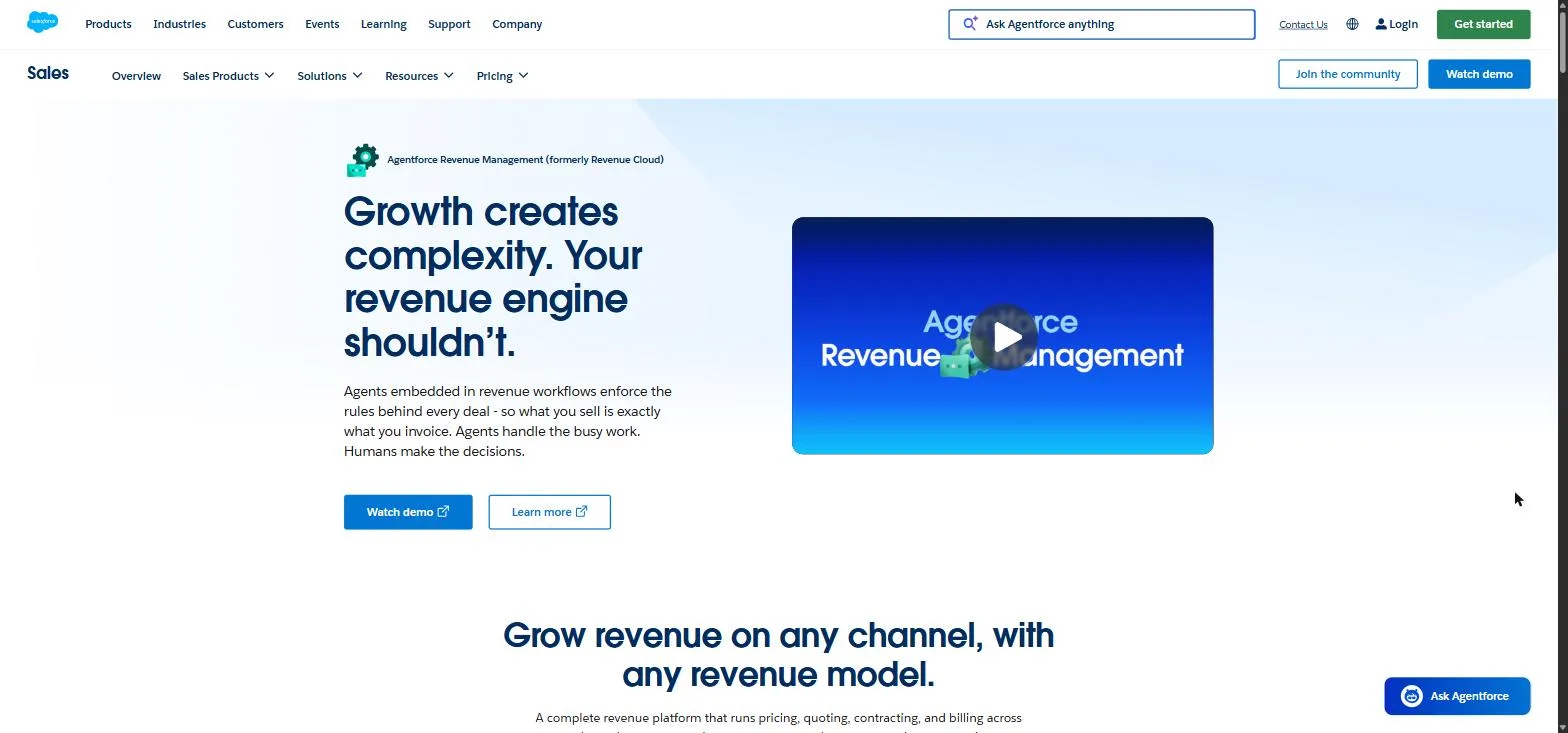
The CPQ category leader by install base, with one date worth knowing: Salesforce closed its original CPQ product to new sales in March 2025. So Revenue Cloud is what a new buyer is actually offered. Salesforce now also markets it as Agentforce Revenue Management, which is the name Gartner and G2 list it under, while its own pricing page still reads Revenue Cloud.
Pricing is published on Salesforce's pricing page, read 2026-09-02: $150 per user per month for Growth, $200 for Advanced, billed yearly, both on top of a Sales Cloud license. Right for a sales team that already runs on Salesforce and quotes attribute-based products. The build rules of a configured physical product are a project here, not a setting.
salesforce.com · captured August 2026
HubSpot Sales Hub
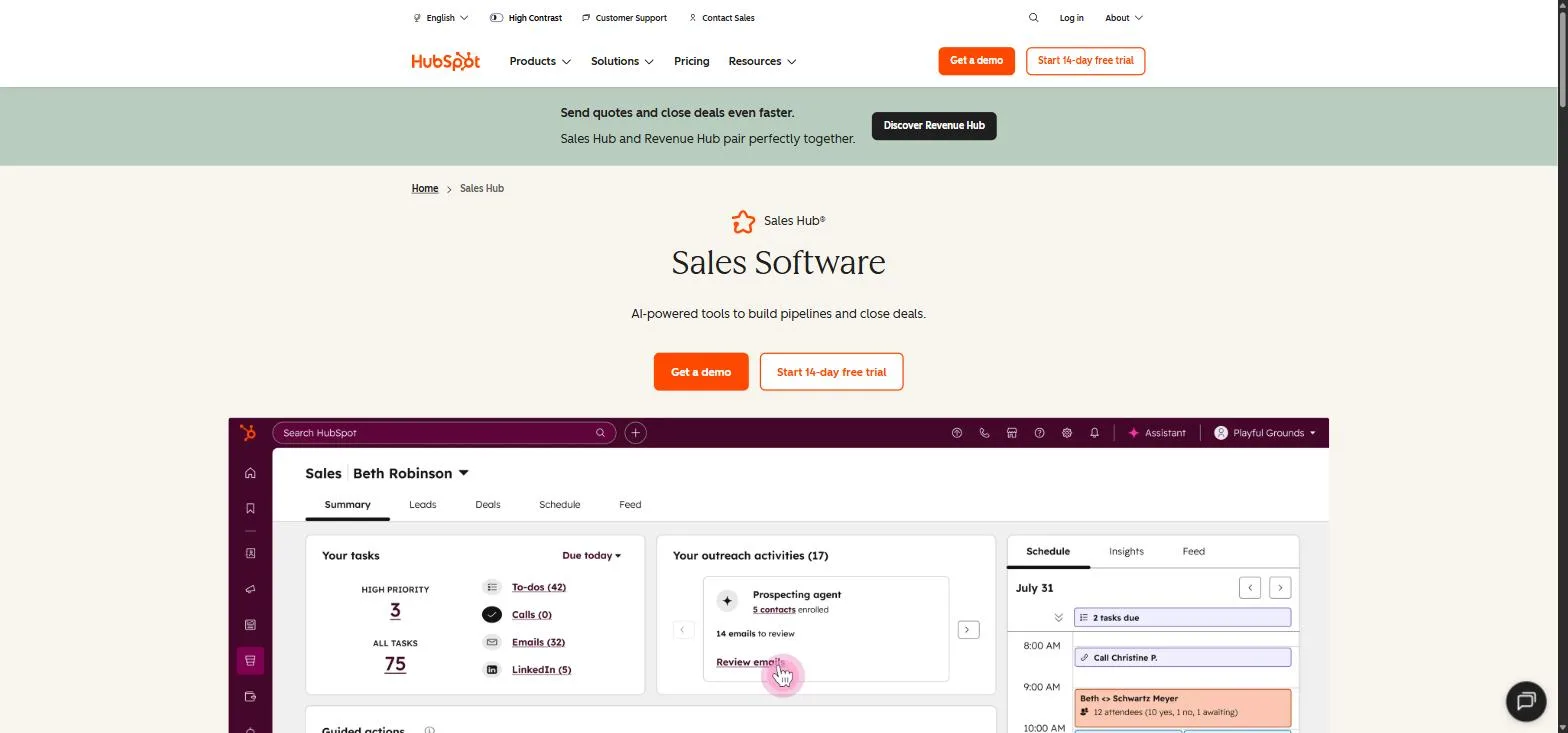
Quoting inside the HubSpot CRM. Basic quote documents exist on the cheaper tiers; the feature set this comparison scores is Professional, at $90 per seat per month paid yearly, per HubSpot's pricing page, read 2026-09-02. Line items, templates, and signatures, with no build rules at all. Right for a team that needs clean quotes this week, for products a price list can already describe.
hubspot.com · captured August 2026
Dynamics 365 Sales
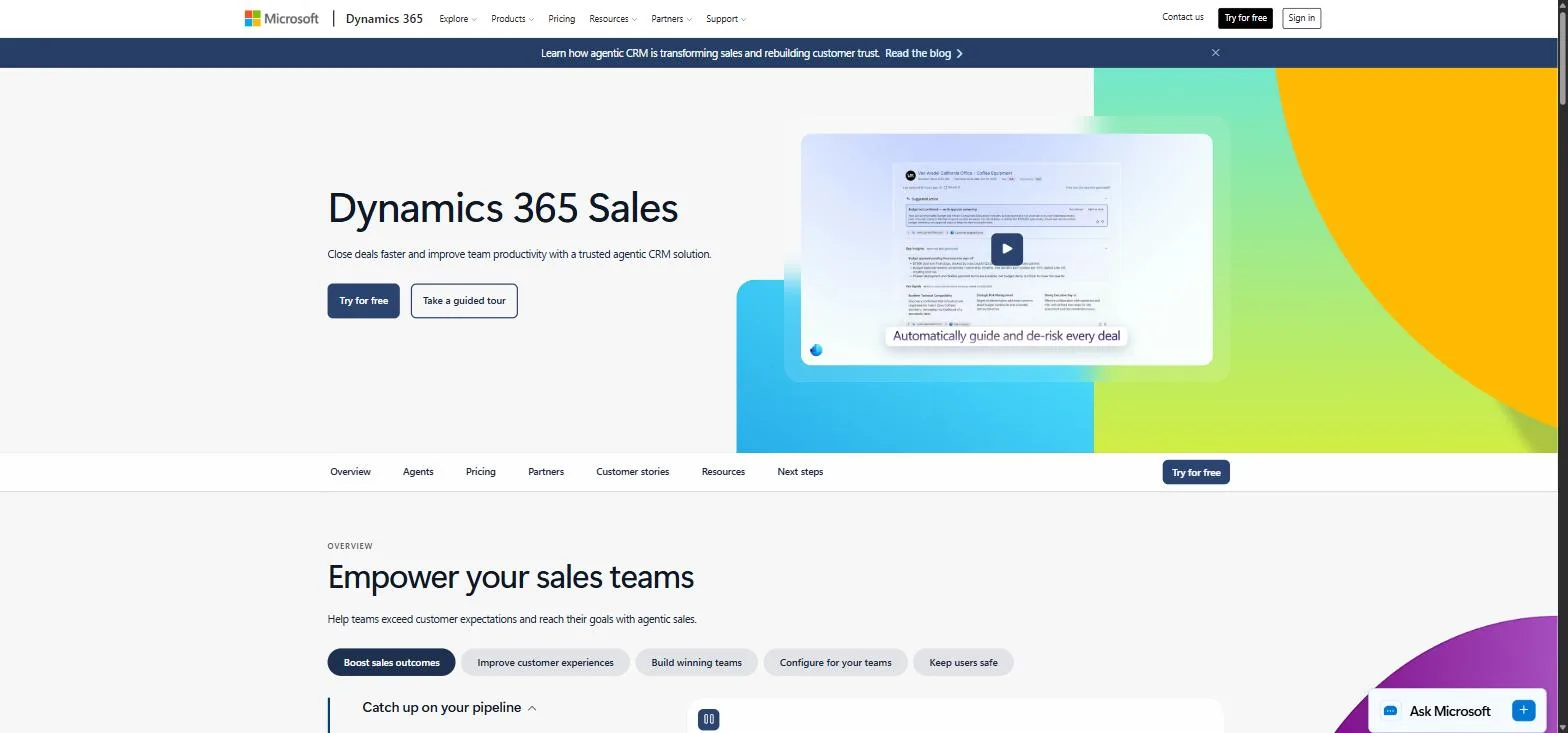
Microsoft's pricing page, read 2026-09-02, lists $105 per user per month for Sales Enterprise, paid yearly, and price lists are native. Real configuration is not: Dynamics shops that make configured products usually add an engine from the manufacturing tier below, which is exactly where Experlogix built its business.
microsoft.com · captured August 2026
Kind two
Enterprise standalone CPQ
Enterprise standalone CPQ is a rules engine bought as its own project and integrated into whatever CRM and ERP the estate runs. None of the three below publishes a price, and none is embarrassed about it: the CPQ companies on this tier sell through account executives, and every deal is scoped.
Oracle CPQ
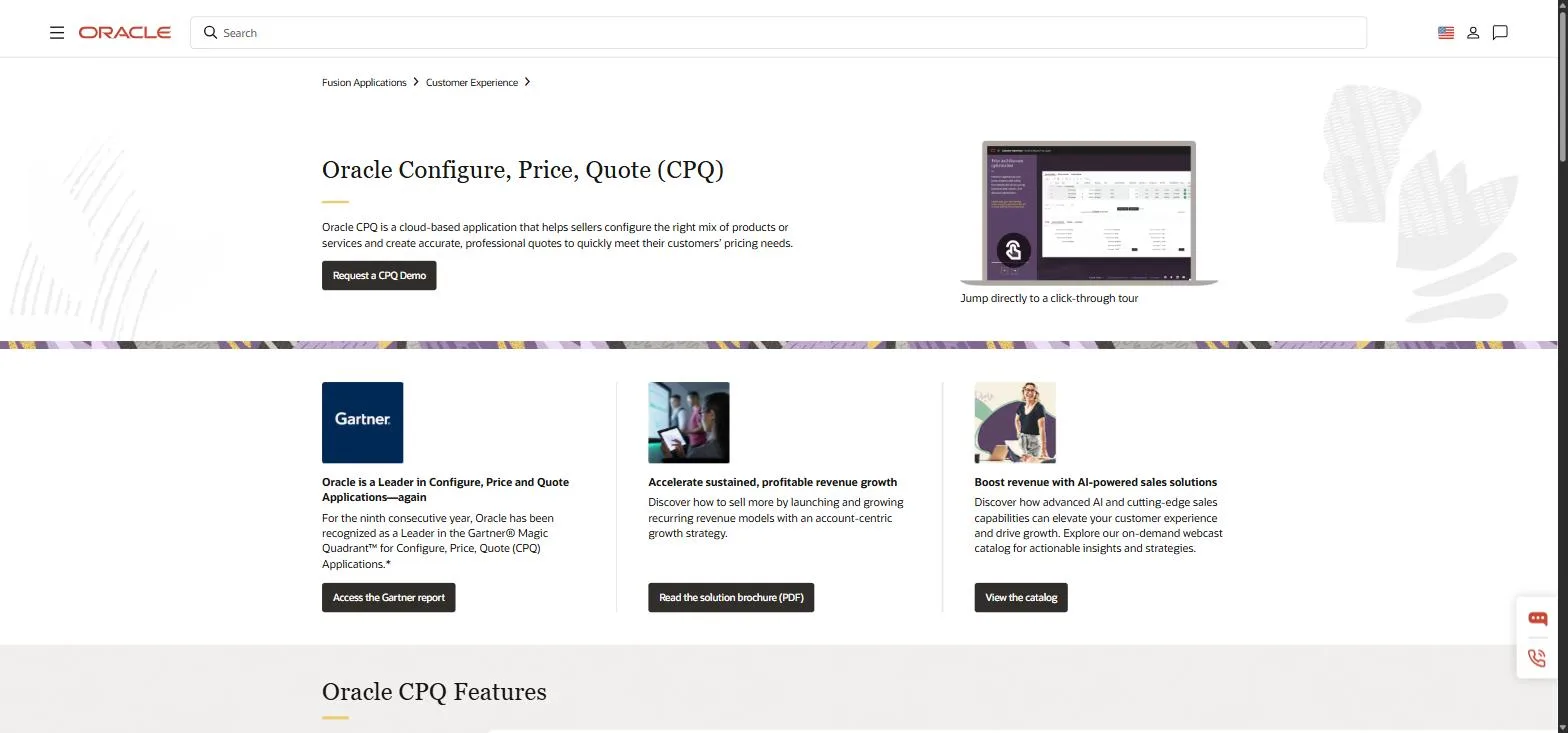
The deepest approval and catalog machinery in CPQ, built for thousand-seat sales organizations with an admin team behind them. The engine began as BigMachines, which Oracle bought in October 2013. Price on request, and the go-live is a program rather than a setup.
oracle.com · captured August 2026
SAP CPQ
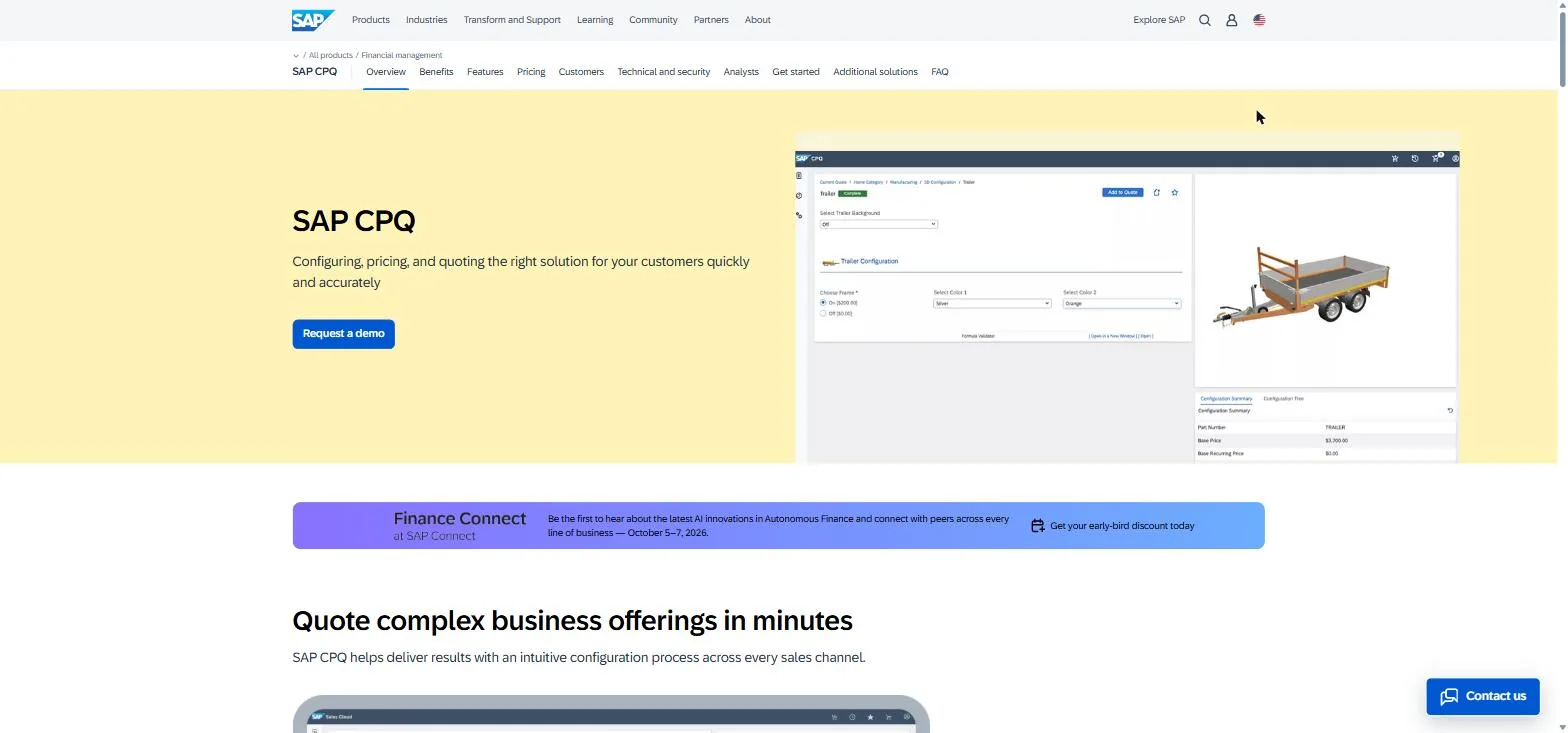
The same shape for SAP estates, running the engine that came with SAP's January 2018 purchase of CallidusCloud. If your quoting has to obey SAP variant logic downstream, this is a shortlist of one. Price on request.
sap.com · captured August 2026
Conga CPQ
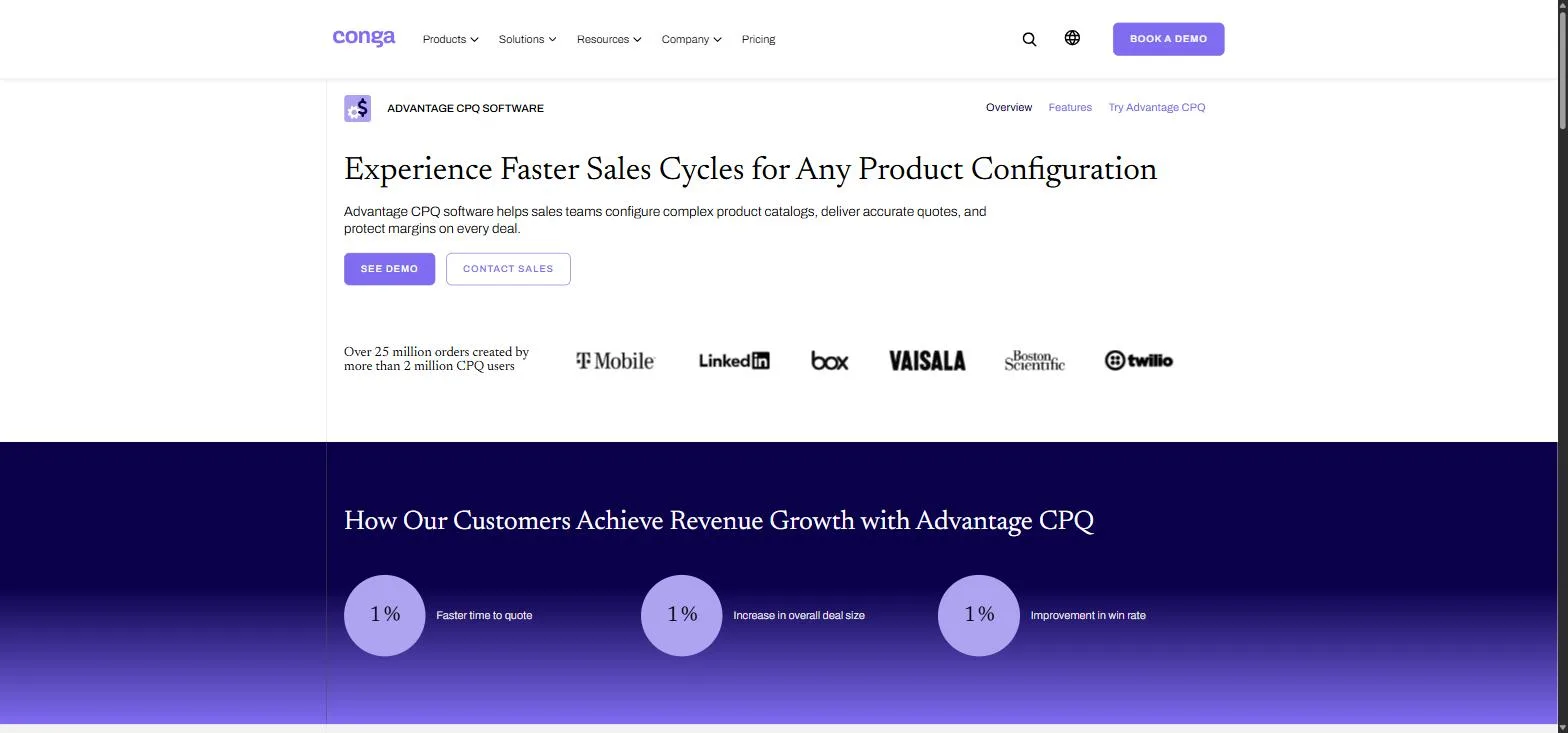
Enterprise quoting that grew up around the Salesforce ecosystem, strong on contracts and document generation at volume. The engine is the former Apttus product; the two companies combined in May 2020 and kept the Conga name. It grew again this year: Conga completed its acquisition of the PROS B2B business in February 2026. That folds PROS' pricing, configuration and quoting products into the same portfolio. A shortlist carrying both as separate products is out of date. Price on request. For a large Salesforce org weighing it against Revenue Cloud, the deciding question is usually governance, not features.
conga.com · captured August 2026
Kind three
Mid-market and document CPQ
Mid-market and document CPQ treats the quote as a document problem. It is the fastest CPQ tier to go live, the only tier that consistently publishes prices, and the tier that assumes a catalog can already describe your product. ServiceNow sells CPQ on this shelf too, built for service and subscription catalogs rather than configured products, which is why it is not in the table.
DealHub
Guided-selling playbooks that walk a rep to an approved quote, with a shared deal room on top. Popular with SaaS revenue teams. Pricing is on request, the one holdout on this tier.
dealhub.io · captured August 2026
PandaDoc
Proposals, signatures, and a product catalog from $19 per seat per month, with the Business tier at $49, per PandaDoc's pricing page, read 2026-08-05. Right where the quote is really a proposal and the pricing math is simple.
pandadoc.com · captured August 2026
QuoteWerks
The veteran quoting tool of IT and office-equipment resellers, from $50 per concurrent user per month for the Essential web tier, per QuoteWerks's pricing page, read 2026-09-02. A deep catalog machine with distributor feeds built in; not a rules engine, and not pretending to be one.
quotewerks.com · captured August 2026
Kind four
Manufacturing and industrial CPQ
This is the tier where the C stops meaning line items and starts meaning manufacturability. The rules encode what the shop can actually build, and the finished configuration drives CAD files, bills of materials, and ERP orders downstream. It is the tier built for mass customization: every order is different, and none may be wrong.
Showing the build matters here too. Most of these platforms render the product while it is configured, the approach our visual CPQ page unpacks. And when the render itself is the selling surface, the front half grows into a 3D product configurator. Five CPQ engines make up the tier. Not one publishes a price.
If the configuration rather than the quoting is the hard half for you, the same comparison exists one category over: the best product configurators. That one judges twelve platforms on live visuals, rule depth, and whether a dealer can drive one.
Epicor CPQ
Visual, rules-driven configuration with CAD and drawing automation, aimed at industrial manufacturers. It came into Epicor as KBMax, acquired in May 2021, and pairs naturally with Epicor ERP estates. The demo to ask for: your most rule-bound product, configured into an invalid state, so you can watch the engine refuse it.
epicor.com · captured August 2026
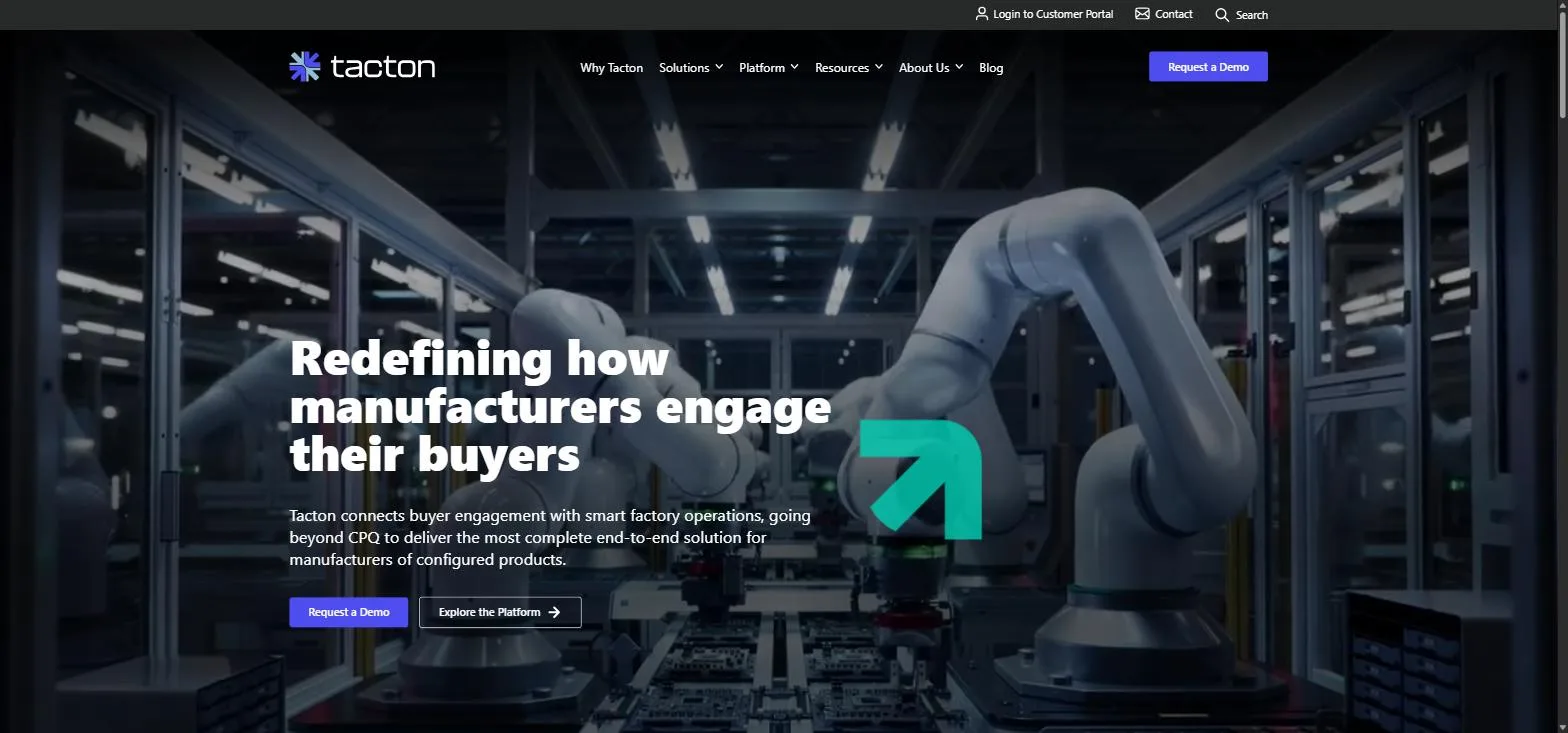
Tacton
The constraint engine of the engineer-to-order world, built for machinery with thousands of interdependent options. Six scientists founded it in 1998, with Ericsson as the sole first customer. Its needs-based approach asks what the buyer requires and derives the product from the answer, which is mass customization run at industrial scale.
tacton.com · captured August 2026
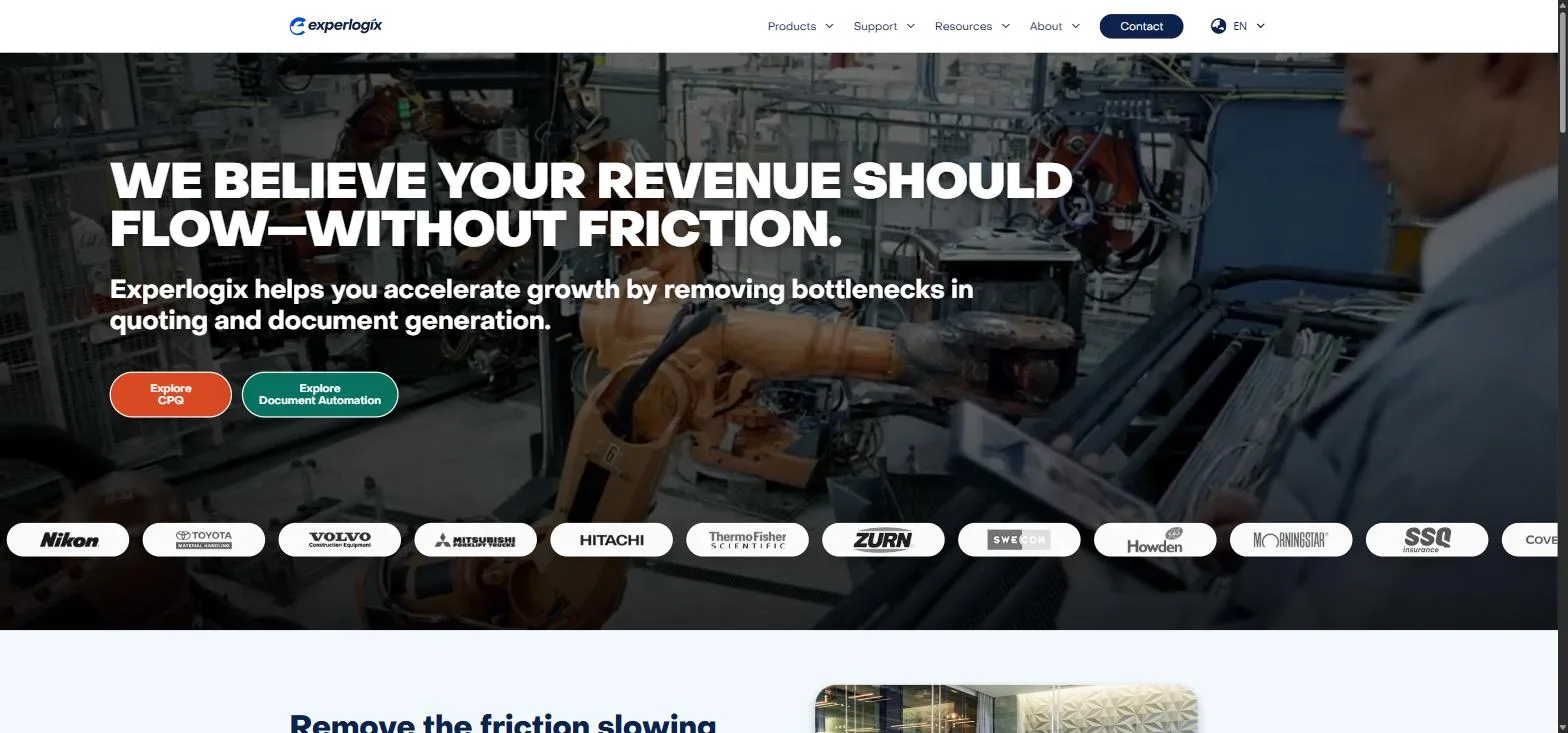
Experlogix
CPQ for manufacturers who run Dynamics or Salesforce, with the product model living beside the CRM the sales team already uses. A mid-weight option between the document tier and the heavy engines.
experlogix.com · captured August 2026
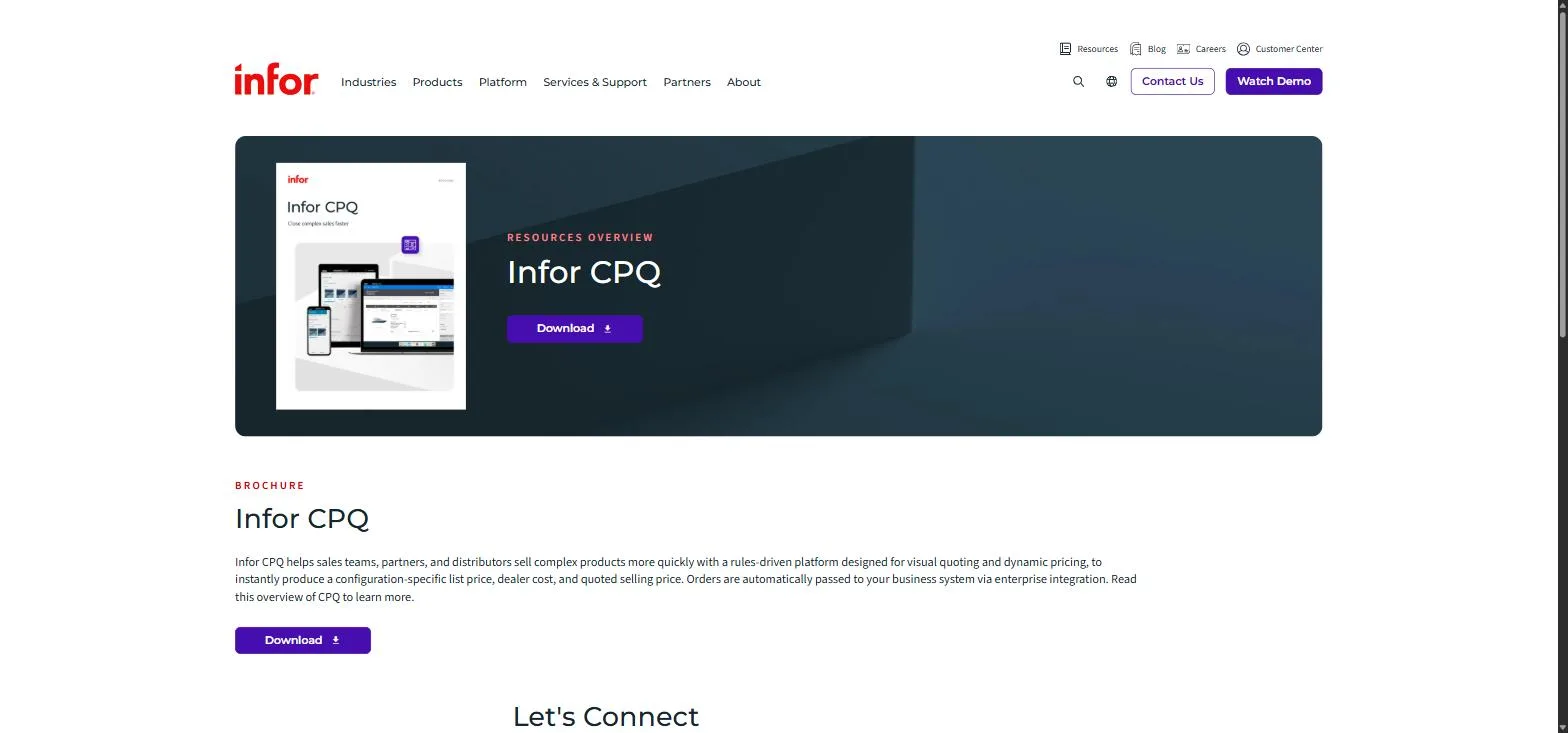
Infor CPQ
Configuration for Infor ERP estates, with 2D and 3D drawings generated from the configured build. Right where the ERP decision is already made and quoting has to fall in line.
infor.com · captured August 2026
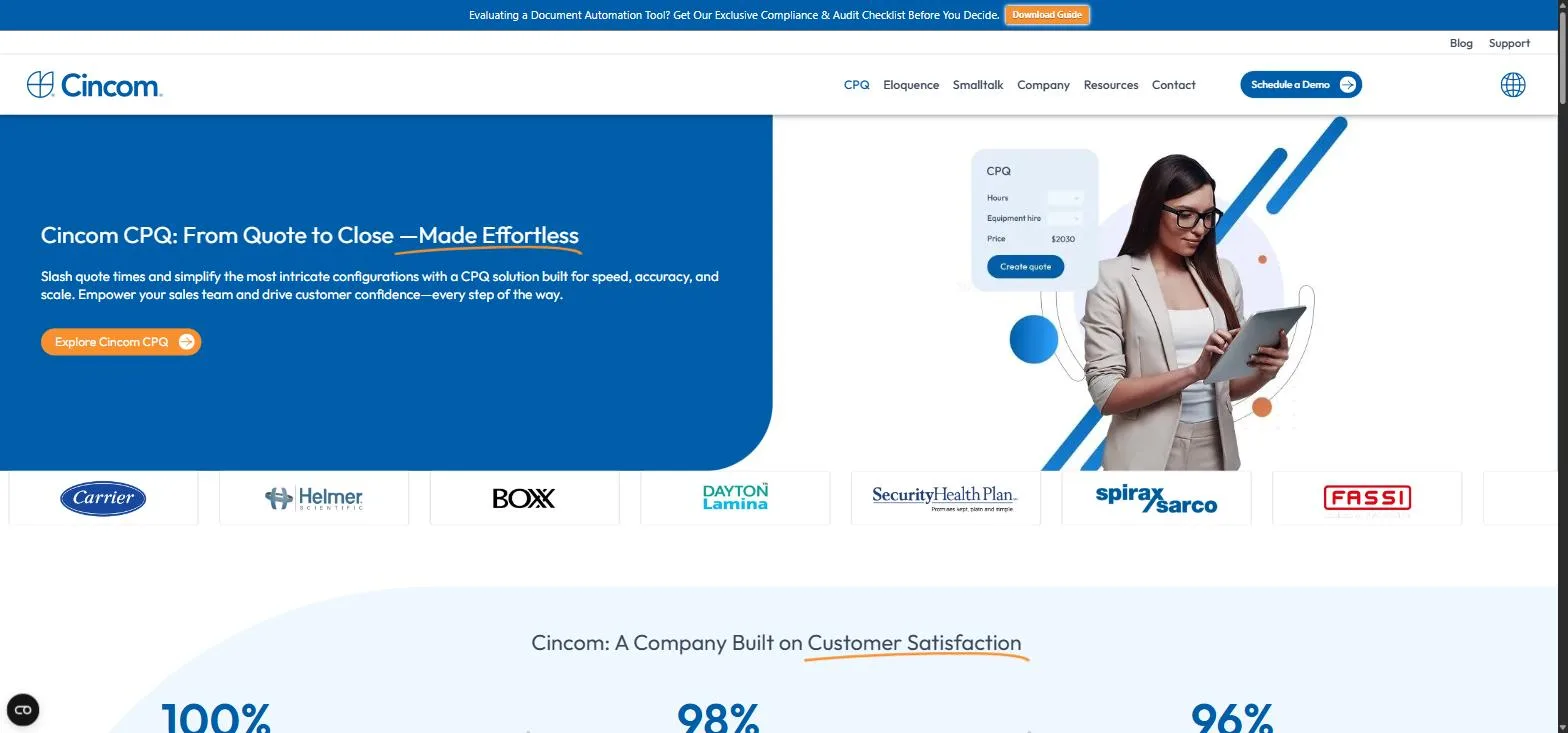
Cincom CPQ
One of the oldest rules engines in the category, at home in long option lists and regulated products. Age reads as risk to some buyers and depth to others; the rule coverage is real either way.
cincom.com · captured August 2026
The tier's blind spot is the seat assumption: all five assume the person quoting works for you. Hand the same engines to an independent dealer network and the gaps appear, which is what the next kind exists to close.
Kind five
Dealer and channel CPQ
Dealer and channel CPQ is built for the seat every other tier treats as an afterthought: the person writing the quote does not work for the manufacturer. That changes what every letter has to do. The rules must hold up in the hands of someone you cannot look over the shoulder of. And one build must carry three numbers at once: what the buyer sees, what the dealer pays and charges, and a cost price that never leaves your side.
ConnectWise CPQ
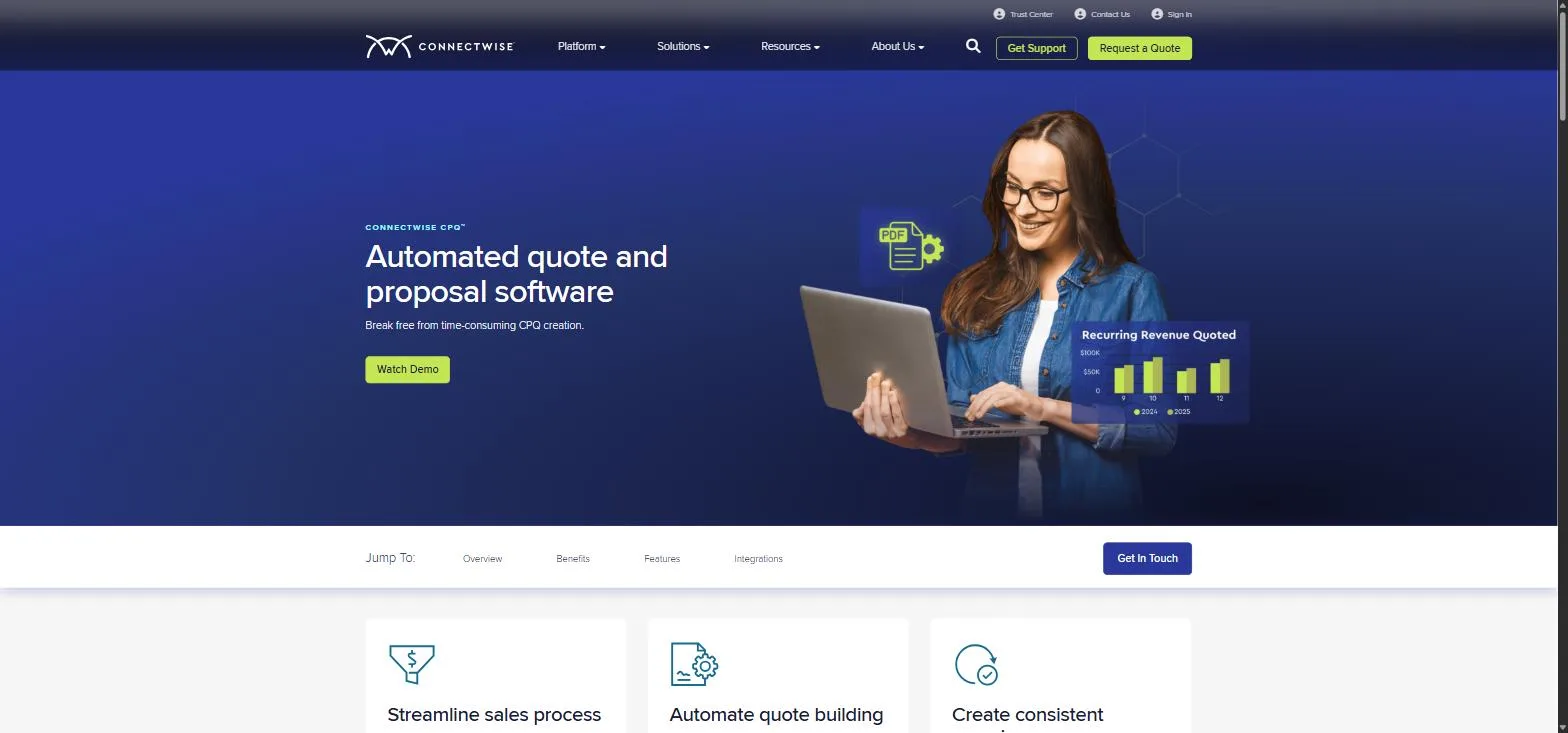
Quoting for IT service providers and MSPs, wired into the ConnectWise stack. It proves the category: a whole CPQ platform built around the fact that the quoting seat sits inside a partner business. Its catalog is IT hardware and services rather than configured physical builds, and pricing is on request.
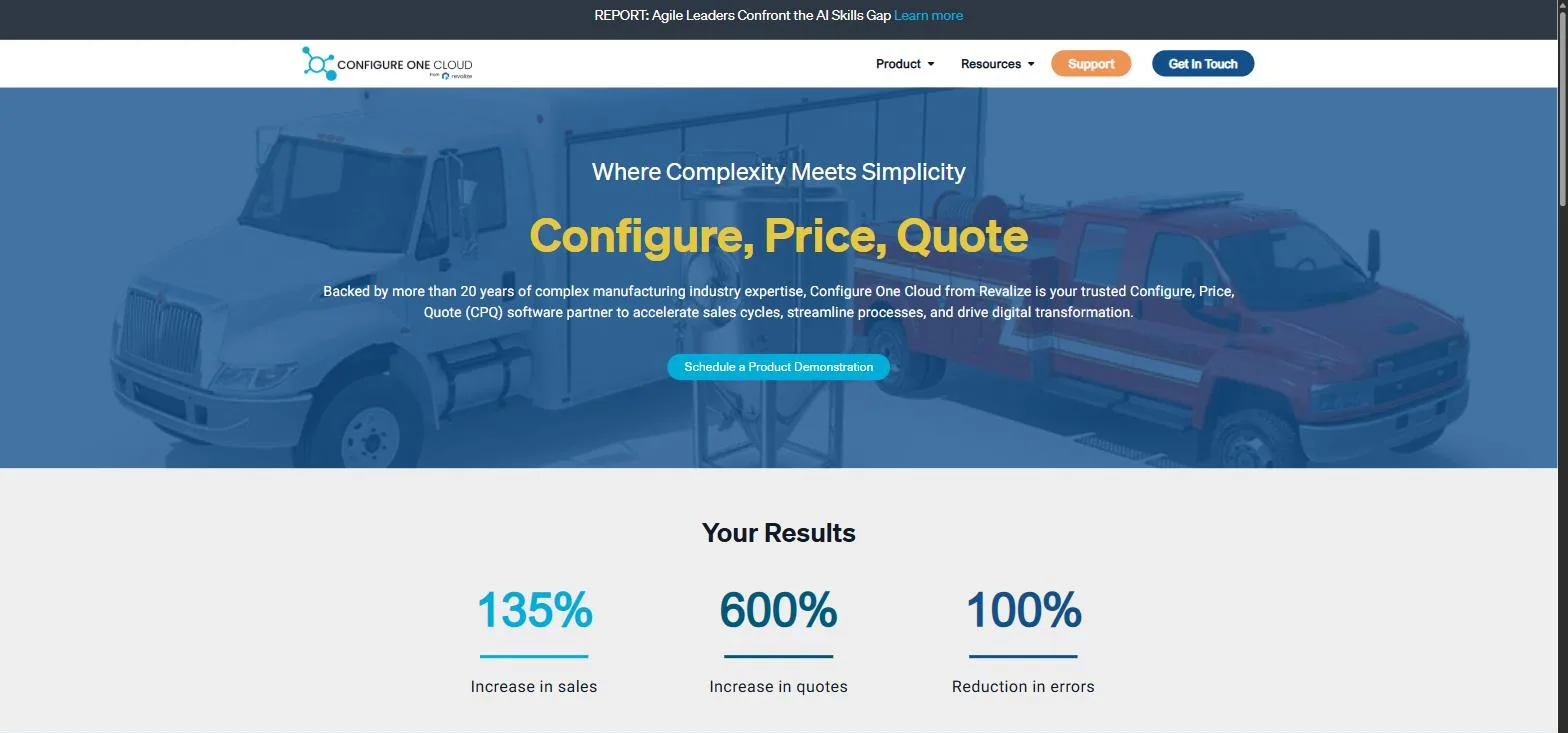
Pricing is on request. The scope is the enterprise end of this kind: a configuration and document engine bought as a project, for a distributor network that needs spec sheets as much as prices. Right if you are already at that size. Heavy if you are not.
configureone.com · captured August 2026
Dealect
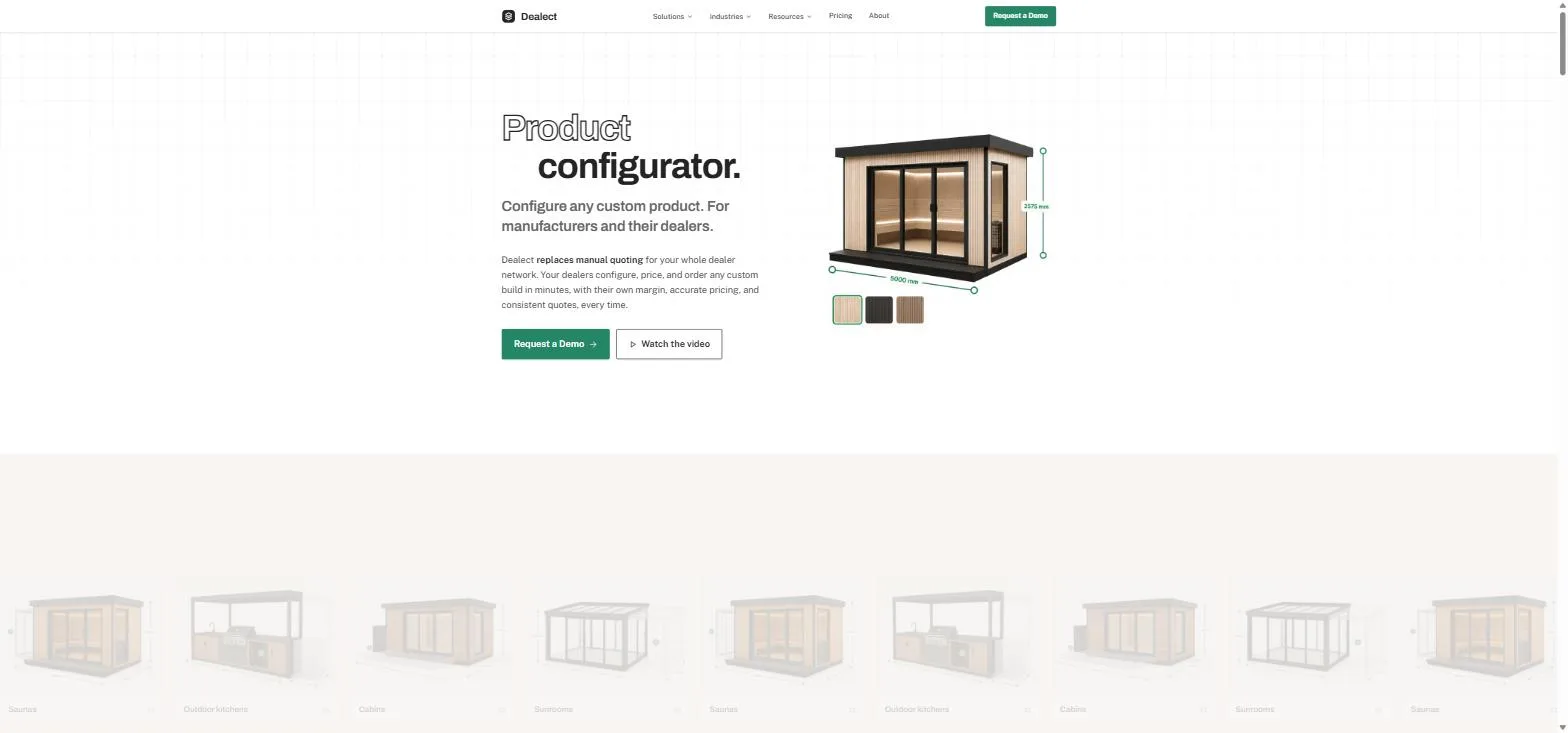
Ours, listed on the same terms as the rest. Dealect is CPQ for manufacturers of configured physical products whose quotes are written by independent dealers. Each dealer quotes on their own price list with their own margin, your build rules ride along, and your cost price stays at the factory. The signed-in home for all of it is a B2B customer portal. Pricing is per manufacturer, so dealers pay nothing. It is the wrong pick if your own reps sell direct and no dealer ever quotes for you. For that shape, start at the manufacturing tier above; our CPQ software for manufacturing page maps the boundary honestly.
dealect.com · captured August 2026
The numbers
What CPQ actually costs
Published CPQ prices run from $19 to $200 per user per month, and only five of the seventeen platforms publish one. Nobody in this field prices the configured-product tier, so we read all seventeen CPQ products' own public pricing pages, most recently on 2026-09-02. Everything published fits in one table.
Every published CPQ price across the seventeen platforms compared, with the eleven on-request vendors named
Platform
Published price
Terms
Salesforce Revenue Cloud
$150 or $200
Per user per month, Growth or Advanced, billed yearly, on top of a Sales Cloud license
Dynamics 365 Sales
$105
Per user per month, Sales Enterprise, paid yearly
HubSpot Sales Hub
$90
Per seat per month, Professional, paid yearly
PandaDoc
$19 or $49
Per seat per month, Essentials or Business, paid yearly
QuoteWerks
From $50
Per concurrent user per month, Essential web tier, paid monthly
Dealectours
Per setup
Quoted after a 30-minute demo, priced for the manufacturer; dealers pay nothing
Prices read from each vendor's pricing page, accessed on the date beside each name: Salesforce 2026-09-02, Microsoft 2026-09-02, HubSpot 2026-09-02, PandaDoc 2026-08-05, QuoteWerks 2026-09-02. On request means the vendor publishes no number. We re-read every price each quarter; the next pass is due in December 2026. Dealect's structure is on our own pricing page.
Two things stand out. First, every published number sits at the seat-priced document end. That is why a buyer searching for the best CPQ software finds so few of them: most of this field bills the way enterprise software always has. Second, on request is not one number. On the mid-market tier it usually means a scoped subscription. On the enterprise and manufacturing tiers it means a project, and the year-one project regularly outweighs the year-one licenses. The CPQ vendors that publish nothing are not all hiding the same figure.
Lists of CPQ tools wave at this with "pricing varies." Here is the useful version: if a vendor will not frame the number on the first call, the demo cycle is a negotiation, not a comparison. Our own frame is on the CPQ pricing page. The figure is shaped by the product line, the rules, and the dealer count. Dealers pay nothing, and you hear the full number on one 30-minute call.
The filter
Choosing between them if you sell through dealers
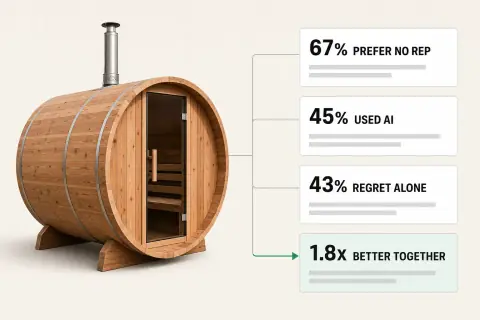
If independent dealers, distributors, or reps write your quotes, the CPQ shortlist inverts. The dealer seat stops being an add-on question and becomes the first filter, because it is the one requirement nothing can retrofit convincingly. The buyers are pushing the same way. A Gartner survey of 646 B2B buyers, fielded in August and September 2025, found 67 percent prefer a rep-free buying experience. In a dealer channel, rep-free means the dealer quotes on the spot instead of phoning your office. Five questions sort the field, and every one is checkable before a sales call.
Does each dealer see their own price list, and only theirs?
Does the dealer quote and watch their own margin without ever seeing your cost price?
Can the dealer send the finished quote under their own name, with your office out of the loop?
Do your build rules ride along, so a dealer cannot promise a build your shop will refuse?
Is the pricing per manufacturer rather than per seat, so adding a dealer is growth rather than a license fee?
No list of the top CPQ software asks any of these, which is how a manufacturer with forty dealers ends up evaluating seat-priced platforms built for an in-house sales team. Put the five in writing and the field answers itself. Or put them to us first: the demo form at the end of this page books a 30-minute call, and we answer all five on one of your products, live.
The traps
Mistakes to avoid when shortlisting
Each of these traps is set by how this field sells, and each is avoidable before a contract is anywhere in sight.
Shortlisting without a price frame. Eleven of the seventeen CPQ sellers publish nothing, and a demo cycle with no number attached negotiates against you. Ask for the band on the first call.
Accepting seat pricing on a dealer network. Forty dealers are not forty salespeople. If every dealer needs a license, growing the network reads as a bill.
Watching the demo on a simplified product. Every engine demos beautifully on a three-option product. Bring your most rule-bound build and ask to see an invalid combination refused.
Scoring brand names instead of the seat. Lists of the top CPQ solutions rank on longevity and logo counts, as the one published set of weights in the method section above does. That measures marketing budgets and staying power, not fit. The platform that fits is the one built for whoever actually writes your quotes.
Letting unsourced numbers pass. This field asserts faster quotes and fewer errors with nothing behind them. Ask any vendor, us included, where a number comes from.
The count in the first trap is this page's own: eleven of the seventeen publish no number anywhere on their site, checked against each vendor's public pricing page, most recently on 2026-09-02.
The other half
Where each platform is wrong
A recommendation you can trust has to say where its own answer fails, so here it is: one line per kind, ours included. These are our judgment rather than a vendor disclosure. Each one restates the limit already named in that kind's section above, so you can check every line against the platform entries instead of taking it on trust.
CRM-native. Wrong when the product carries real build rules. The CRM prices what sales picks; it does not know what the shop can build.
Enterprise standalone. Wrong for a small or mid-size manufacturer. The project outweighs the payroll it is meant to relieve. Conga carries one extra question this year, because it is still absorbing the PROS products it bought in February: ask which engine your quotes would run on.
Mid-market and document. Wrong when the hard half of quoting is the configuration rather than the document.
Manufacturing and industrial. Wrong when the person quoting is not on your payroll. The dealer seat is an add-on project here, not the product.
Dealer and channel. Wrong for direct sales and fixed catalogs. ConnectWise is wrong for physical products. Configure One Cloud is scoped and priced for the enterprise end rather than a network of forty dealers. Dealect is wrong if nobody outside your company ever writes a quote.
Every platform above is somebody's right answer. The expensive mistake is buying a true category leader in the wrong category.
FAQ
Common questions when shortlisting CPQ.
Short answers a buyer can act on. The first sentence of each is the answer.
There is no single best CPQ platform, because the field splits by how you sell. Salesforce Revenue Cloud leads for teams already on Salesforce. Oracle and SAP lead for enterprise catalogs and approvals. PandaDoc and QuoteWerks fit document-led sales teams. Epicor CPQ and Tacton fit industrial manufacturers with deep build rules. Dealect fits manufacturers whose quotes are written by independent dealers. Pick the kind that matches your channel first, then compare inside it.
No. Salesforce closed the original Salesforce CPQ product to new sales in March 2025, so a new buyer is offered Revenue Cloud instead, which Salesforce now also markets as Agentforce Revenue Management. Existing customers keep support under their contracts. If you are shortlisting today, weigh Revenue Cloud against the other CRM-native options here rather than against the product being retired.
Published list prices run from $19 to $200 per user per month, and only five of the seventeen platforms in this comparison publish one. The rest of the CPQ field quotes by project, shaped by catalog size, rules, integrations, and seats. On the enterprise and manufacturing tiers, budget for the go-live project as well as the licenses, because the project is often the larger year-one number.
Five of the seventeen compared here publish a number: Salesforce, Microsoft, HubSpot, PandaDoc, and QuoteWerks. Dealect publishes the structure instead: priced per manufacturer, shaped by the product line and the dealer count, quoted after a 30-minute demo, and dealers pay nothing. The other eleven, the whole enterprise and manufacturing tier among them, publish nothing at all.
No, not for a configured product. None of the seventeen platforms compared here has a free tier that will hold your build rules. The closest thing is HubSpot's quoting inside a free CRM seat, which writes line items and templates and cannot stop a dealer promising a build your shop refuses. The honest zero-budget answer is a price list in a spreadsheet and a PDF, which is what most manufacturers are already doing, and usually why they started looking.
Three in this comparison are built for the dealer seat: ConnectWise CPQ for IT service providers, Configure One Cloud for enterprise manufacturers quoting through distributors, and Dealect for manufacturers of configured physical products. The manufacturing tier can often add a dealer portal as a project. The test that separates built-for from bolted-on: each dealer quotes on their own price list, with their own margin, without ever seeing the factory's cost price.
The stronger configured-product platforms do. Epicor CPQ, Tacton, Infor and Dealect all render the build on screen while options are picked, so the buyer approves a picture rather than a parts list. Document-led tools show a quote, not a product. If your product is bought partly on looks, treat on-screen rendering as a requirement rather than a flourish.
Days at the document end of the CPQ field, months to a year at the enterprise end, and weeks per product line in between. Those ranges are our own estimate from what each tier's vendors say publicly about setup, because not one platform in this comparison publishes a guaranteed go-live date. For a configured product the honest sequence is one line first. Hand over the option list, the build rules, and the price lists, and go live on that line. Then roll in the rest of the range once it runs. Ask every vendor to put the go-live plan for your first line in writing.
Yes, when the product is configured and a wrong spec is expensive, because in a company that size the quoting knowledge usually sits in one or two heads. Moving those rules and price lists into software is what removes the queue behind those people. It is not worth it for a fixed catalog sold at list prices; a webshop already does that job.
It depends on whether the product is configured, not on how small the company is. For simple catalogs and proposal-led selling, PandaDoc at $19 per seat per month and HubSpot Sales Hub at $90 are the cheapest published entries in this comparison, and QuoteWerks at $50 suits a small IT reseller. For a small company selling a configured product through dealers, the quoting seat decides it before the seat price does, which is the shelf Dealect sits on. The enterprise tier is the wrong shelf at this size, because its go-live project outweighs the payroll the software is meant to relieve.
Teodoro Pickett runs marketing at Dealect and writes the blog, covering CPQ, product configurators, and the business of selling custom products through dealer networks. He came to it after seven years of marketing and search for B2B software companies. Every article is written for manufacturers first, checked against sources a reader can open, and updated as the category moves.
How we source and correct sets out where our facts come from, how our own product appears in our own comparisons, and how to tell us we got something wrong.
Keep reading
Where to go next
Sales configuratorThe seat the dealer drives: the build, the price, and the quote with a buyer sitting there.
B2B customer portalThe signed-in home where each dealer opens on their own prices, margin, and orders.
A price quote is a formal offer to sell at a fixed price for a set time. What it must include, how it differs from an estimate, a sales order and an invoice, when it binds, and how to send one the same day when the price depends on the configuration.
Fourteen sourced numbers on how B2B buyers buy custom products, what self-service quoting does to deal quality, and four popular figures that have no source.