Apparel and promotional
Print, color, trim, and placement change on a known form.
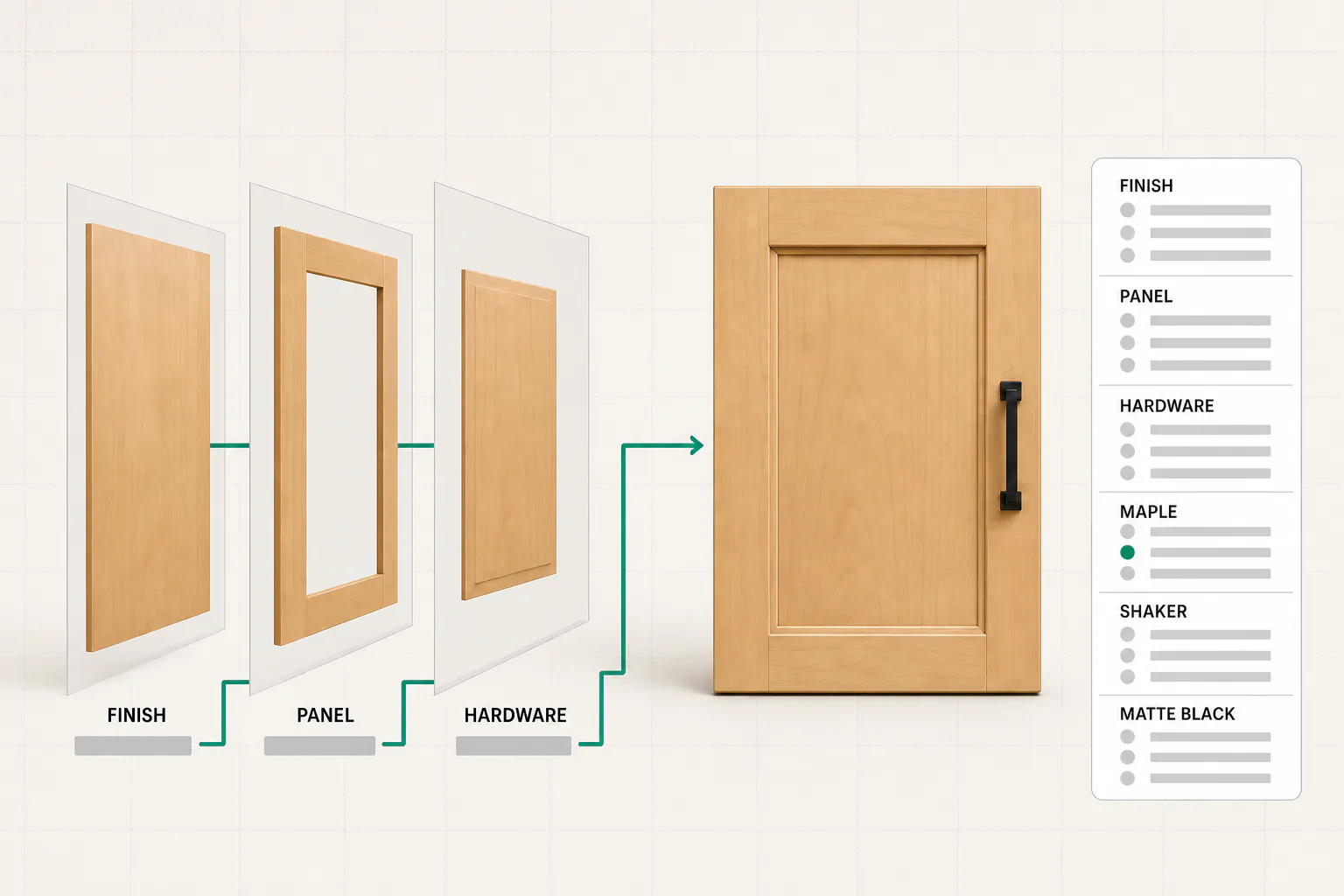
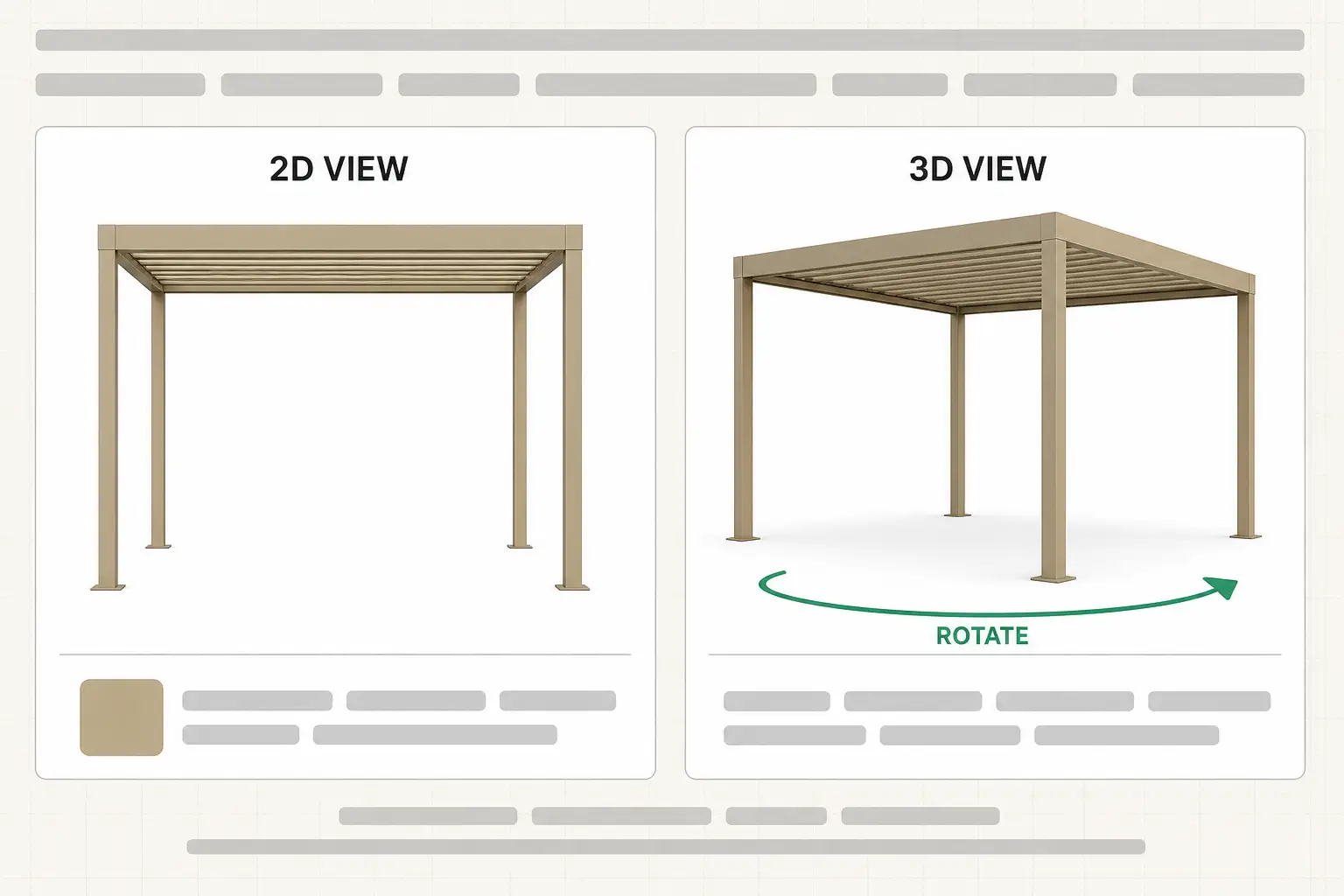
A 2D product configurator swaps layered flat artwork as options change. A 3D one renders live geometry the buyer can rotate. Choose 2D when finishes change. Pay for 3D when the buyer must understand the product in space.
Key takeaways
The short answer: choose 2D when your options change the finish, and 3D when they change the form. A 2D product configurator stacks flat artwork layers, so it is usually cheaper to build, can be lighter to load, and is quick to update when a color or a fabric is added. A 3D product configurator holds the product as geometry the buyer can rotate, which is what a pergola, a shed, or a modular layout needs before anyone trusts the price.
Use the spatial test as a product-fit framework, not as a universal performance benchmark. If the buyer must understand the product in space to trust the price, choose 3D. If the shape is already known and only the surface changes, start with 2D. Either way, price three lines and not one: software, asset creation, and the option rules that decide whether the finished order can actually be built.
Payload still needs a plan. The HTTP Archive 2025 Web Almanac measured 911 KB of images in the median mobile home page in July 2025. That does not measure configurators, but it is a useful reminder to budget a 3D model and textures before the build begins.
A 2D product configurator shows a product as flat artwork. It swaps or stacks transparent image layers as the buyer changes options, so the screen shows a picture of the choices instead of a live model.
A 3D product configurator is the other route. It holds the product as geometry and renders it live in the browser, lit and textured, so the buyer can rotate it and judge size, proportion, and placement from any angle.
In a 2D setup, every fixed view needs its own layered assets. The buyer cannot rotate between those views. Under the PNG layers, the 2D configurator can use the same option rules and price book as a 3D system. That is the distinction to keep from the broader guide to what a product configurator is: the view explains the choice, while the rules decide whether it is allowed.
A 3D view adds free rotation and spatial understanding. It also adds model work, payload size, and a longer asset pipeline. This 2D vs 3D product configurator table puts the decision in the questions a manufacturer can answer.
| Decision point | 2D configurator | 3D configurator | Wins | The question |
|---|---|---|---|---|
| How the picture is made | Layered flat artwork, swapped per option | Live geometry, lit and textured at runtime | 2D | Do you already have product photography? |
| Views the buyer gets | A chosen set of fixed viewing angles | Free 360 degree rotation from any angle | 3D | Does the buyer need to look behind it? |
| What it costs to build | Artwork per option and per view | A model, UV mapping, and materials per product | 2D | How many SKUs change each year? |
| Load and mobile use | Usually lighter assets and fewer runtime demands | Potentially heavier models and textures | Depends | Do dealers open it in the field? |
| A catalog change | Redraw the affected image layers | Remodel, retexture, and export | Depends | Does the shape change, or only the finish? |
| A priced, valid order | The same configuration rules underneath | The same configuration rules underneath | Neither | Where does the order go after the click? |
The HTTP Archive 2025 Web Almanac measured the median mobile home page at 2,559 KB in July 2025, including 911 KB of images. Google recommends an LCP of 2.5 seconds or less at the 75th percentile of page loads, measured separately on mobile and desktop ( Google's Largest Contentful Paint guidance). A 3D build can meet that target, but only if asset weight is a design constraint from the start.
As a product-fit rule, start with 2D when the product varies in finish, trim, fabric, or hardware rather than in shape. A strong 2D product configurator software shortlist should still test live pricing, invalid combinations, and quote output. That is where visual cpq does more than swap an image.
Print, color, trim, and placement change on a known form.
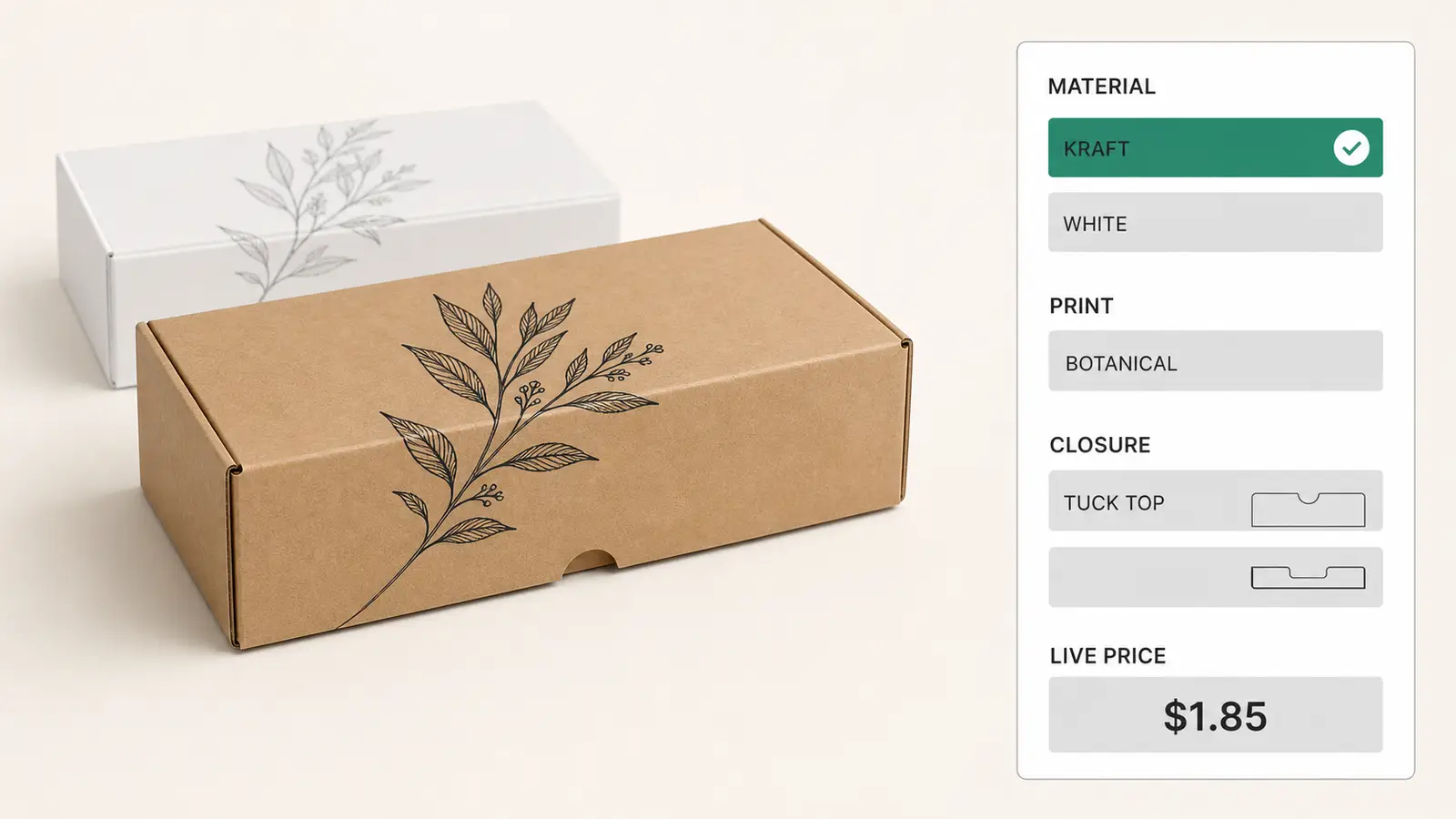
Artwork, label, stock, and finish change within fixed dimensions.
Profile, wood, paint, glaze, and hardware change on a known elevation.
As a product-fit rule, choose 3D when the shape changes with the order and the buyer must understand the product in space before trusting the price. Pergolas, sheds, carports, modular seating, and machinery create questions about span, proportion, clearance, and what sits behind what. A 3d product configurator answers those questions from any angle.
The cost is an asset pipeline: a model, UV mapping, PBR texturing, and glTF or GLB exports for the web. The benefit must be framed just as carefully. In Shopify's Rebecca Minkoff case study, shoppers who interacted with a 3D model were 44% more likely to add an item to cart, while visitors who used AR were 65% more likely to order. That is one retailer across more than 50 product pages, not a general benchmark. NRF and Happy Returns projected that 19.3% of online sales would be returned in 2025 ( 2025 Retail Returns Landscape), but that report does not say 3D lowers returns.
The broader 3d product visualization software guide follows that asset pipeline into the price, dealer quote, and order.
Cabinet fronts, printed packaging, uniforms, doors, panels, and a known sofa model with a fabric choice. See how the same logic applies to cabinets and millwork.
Structures, room layouts, modular assemblies, machinery, and products whose dimensions change their proportions. Sheds and carports are clear examples.
Boundary cases depend on what the buyer already knows. A modular sofa is form led when the buyer arranges sections. The same sofa is finish led when its shape is fixed and the only choice is fabric.
Software is one line. Assets and rules are the other two, and the asset line is where 2D and 3D separate. No honest vendor can price that line without seeing your SKU count, viewing angles, source files, and yearly catalog changes. Dealect publishes what a configurator costs structurally, then scopes the catalog.
The platform, accounts, hosting, and integrations.
2D artwork per view, or models, materials, and exports for 3D.
Valid combinations, formulas, price books, approvals, and outputs.
A useful estimate starts with counts a vendor can verify. It does not need a made-up industry average. Record the following inventory for one representative product line, then multiply it by the number of product families you plan to launch.
For a 2D build
For a 3D build
Add the same rule inventory to both estimates: options, invalid combinations, formulas, price books, approvals, and downstream outputs. That separates the cost of the view from the cost of making the resulting order valid.
Performance is also a running cost. In a four week observational study of mobile sites in Europe and the US, Deloitte observed that a natural 0.1 second speed improvement was associated with 8.4% higher retail conversion and 9.2% higher average order value ( Milliseconds Make Millions). The study does not prove that speed alone caused the result. It does show why time to first interaction belongs in the asset budget.
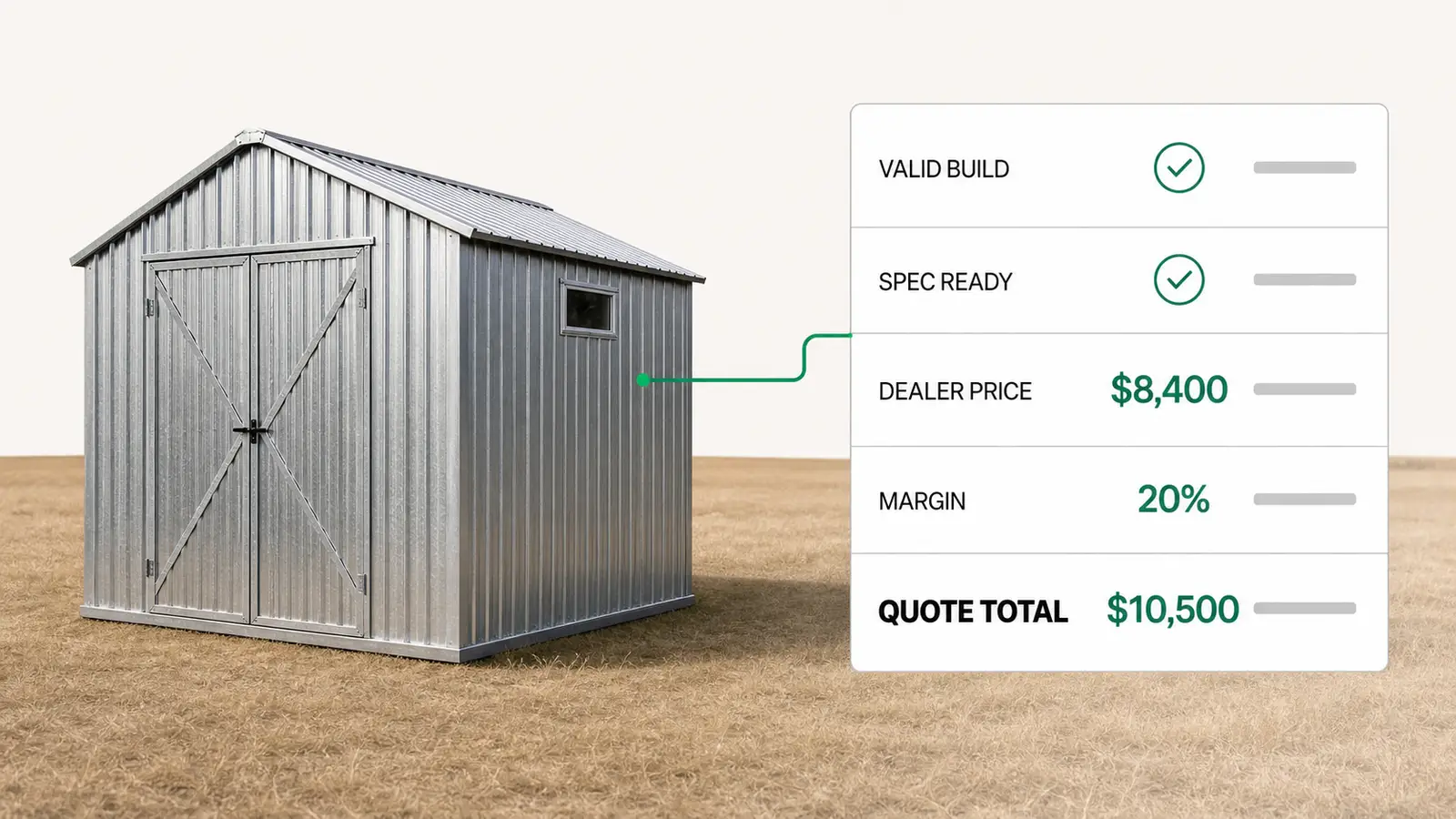
Whichever picture you pick, the order must still come out priced, valid, and buildable. Rule based configuration decides that. A polished 3D view that lets a dealer select an invalid span delivers less than a layered 2D view that refuses it.
The rule set must connect the buyer's choices to the right dealer price list, margin, quote, and production specification. A b2b dealer portal gives the dealer that controlled path. The guide to what a configurator changes for a dealer network follows the order through it.
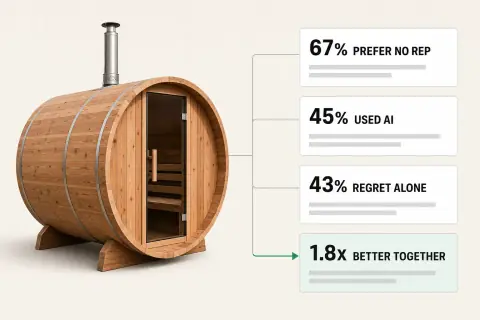
This is not a small self service order problem. McKinsey's 2026 B2B Pulse surveyed nearly 4,000 decision makers in 13 countries and found 73% comfortable placing online orders over $50,000 ( McKinsey's 2026 B2B Pulse). A Gartner survey of 646 B2B buyers, fielded in August and September 2025, found 67% preferred a rep free experience ( Gartner's 2026 B2B buyer survey). Digital Commerce 360 estimated US B2B ecommerce reached $2.93 trillion in 2025, up 13% ( Digital Commerce 360's 2025 US B2B ecommerce estimate). The renderer can help earn trust. The rules must preserve it through the order.
The practical questions that remain after the side by side comparison.
Setup time depends on the number of products, option layers, viewing angles, price rules, and approvals in the catalog. Start with one product line, map its valid choices and prices, then scope the image work before committing to a date.
Yes. The option rules and price book can stay in place while the view changes from layered artwork to live geometry. That makes 2D a practical first release when the team needs to prove the configuration and quoting path before funding 3D assets.
Not by default. A flat view can be the clearer and faster choice when buyers already understand the shape. One retailer case reported stronger shopping behavior after adding 3D, but it does not prove that every catalog needs 3D or that a heavier page will perform better.
A 2D setup usually needs transparent PNG layers or other aligned artwork for each option and fixed view. A 3D setup needs models with UV mapping and PBR materials, commonly exported as glTF or GLB files for the web.
Dealers prefer the view that loads where they sell, makes the choice clear, and produces a price they can send. That can be 2D for finish led products and 3D for products whose size, shape, or placement changes with the order.
Last updated

Teodoro Pickett runs marketing at Dealect and writes the blog, covering CPQ, product configurators, and the business of selling custom products through dealer networks. He came to it after seven years of marketing and search for B2B software companies. Every article is written for manufacturers first, checked against sources a reader can open, and updated as the category moves.
How we source and correct sets out where our facts come from, how our own product appears in our own comparisons, and how to tell us we got something wrong.

A price quote is a formal offer to sell at a fixed price for a set time. What it must include, how it differs from an estimate, a sales order and an invoice, when it binds, and how to send one the same day when the price depends on the configuration.
Fourteen sourced numbers on how B2B buyers buy custom products, what self-service quoting does to deal quality, and four popular figures that have no source.
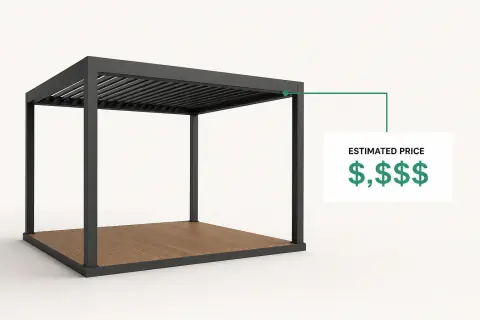
What live 3D product visuals do, how they differ from modeling and rendering, what they cost, and how a configured model becomes a valid dealer quote.
Request a 30-minute call and bring one configurable product. We will map the view, the rules, the price, and the order that comes out.
Your call is with the Dealect team.