Blog · Customization, defined

Product customization Types and examples What it costs

Product customization lets a buyer choose how a product will be made before the maker builds it. The buyer picks from options the maker has approved, and the product changes inside those limits. The limits make customization repeatable. Without them, every order becomes bespoke engineering.

Teodoro PickettBy Teodoro Pickett·Last updated 9 min read
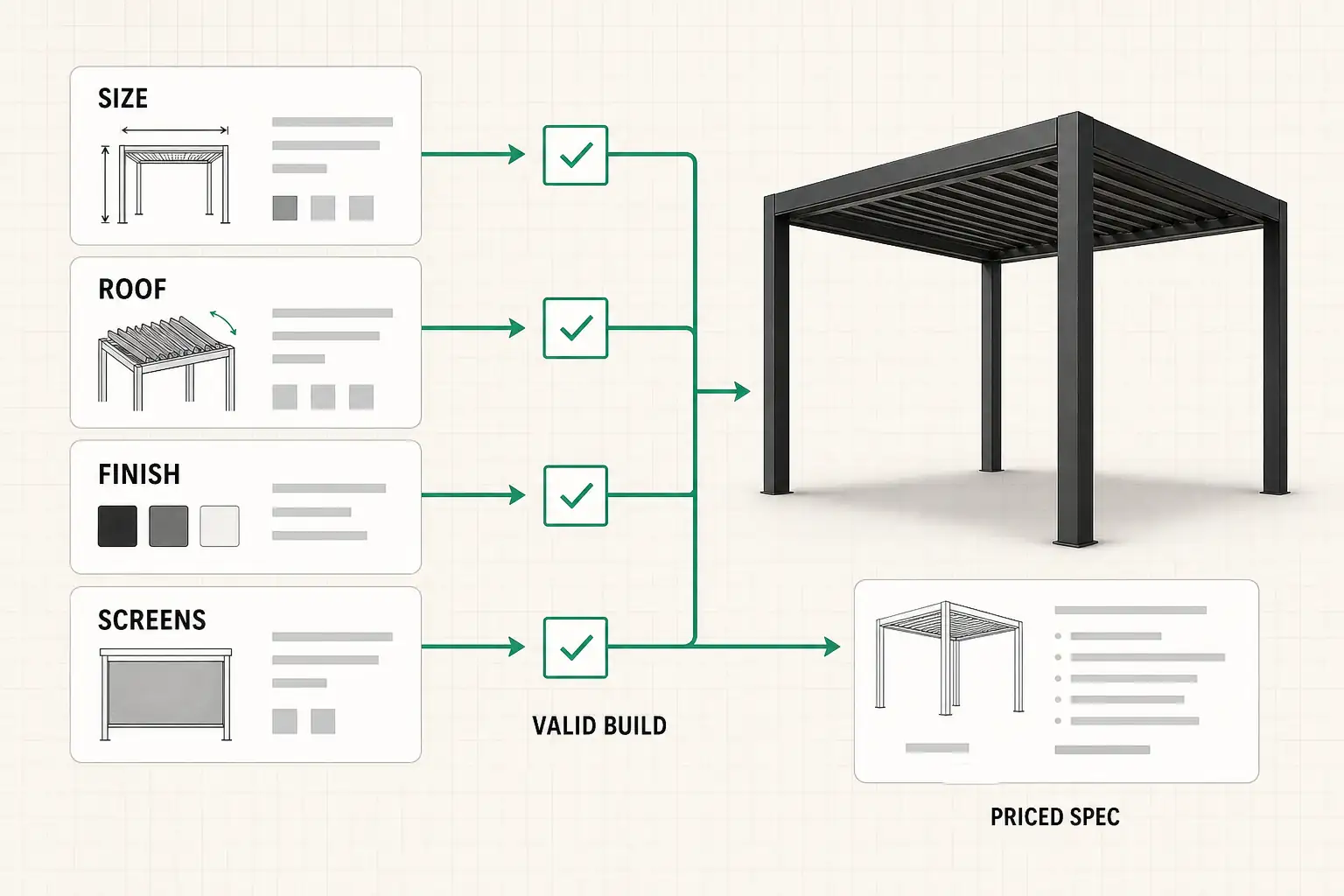
Product customization options and rule checks becoming one valid powder coated aluminum pergola with a priced specification.

Most guides explain how to put a monogram on a shirt. A manufacturer has a harder question: what happens to the price, the valid combination, the quote, and the order after the buyer chooses? This guide answers both questions. It defines the term first, then follows the choice into the factory.

Key takeaways

  • Product customization gives the buyer a controlled set of choices before it is made.
  • The four recognized types are collaborative, adaptive, cosmetic, and transparent.
  • The difficult work sits behind the picker: valid combinations, prices, specifications, and production outputs.
  • A manufacturer without a reusable rule set has moved the cost from the catalog into every quote.
The definition

What is product customization?

Product customization is the practice of letting a buyer choose how it will be made, from options the maker has set in advance. The buyer changes the product itself. The maker keeps the choice inside a buildable solution space.

Some readers ask what is customizing, which is the same subject in verb form. Customizing is what the buyer does. The noun names the practice the maker runs, and the result it produces.

Those limits are the point. Unlimited choice is bespoke work, and bespoke work does not scale. A customization option such as width, finish, hardware, or layout becomes repeatable only when the maker knows which values are offered, which choices depend on others, and how each choice changes the price.

The buyer can make those choices with a form, an online product customizer, or a live visual tool. A 3D product customizer shows shape changes as the buyer chooses. The interface can change. The product model cannot. See what a product configurator is for the software layer that turns those options into one valid, priced build.

The framework

The four types of product customization

The four types are collaborative, adaptive, cosmetic, and transparent. James H. Gilmore and B. Joseph Pine II introduced this framework in The Four Faces of Mass Customization, Harvard Business Review, 1997. The model remains useful because it asks where the change happens, not which tool presents it.

In plain terms, a mass customization definition needs both halves: individual choice for the buyer and a repeatable process for the maker. Mass customization fails when either half is missing.

The four types of product customization, what changes, what the buyer does, and a product each type fits
TypeWhat changesBuyer actionExample
CollaborativeThe specificationWorks through needs and choices with the makerA made-to-order sectional sofa
AdaptiveHow one standard product is usedAdjusts it after purchaseAn adjustable standing desk
CosmeticThe presentationChooses a label, package, or finishAn engraved tool case
TransparentThe product or serviceReceives a tailored result without configuring itA replenishment plan based on usage

Where the product customization types come from

The framework treats mass customization as a way to offer individual value with repeatable operations. Collaborative customization is the form most custom manufacturers mean. The buyer and maker narrow a known option set until one product fits the need. That is mass customization applied to a real catalog rather than treated as a slogan.

Why some sources count five

Some lists classify by the object being changed, such as function, fit, appearance, packaging, or service. That can produce five or more categories. It is not a contradiction. It is a different question. The four faces describe the relationship between buyer and maker. Object based lists describe what varies.

For examples of the tools behind collaborative mass customization, see the configurators compared.

The boundary

Product customization vs personalization vs configuration

Customization is the buyer choosing. Personalization is the seller choosing for the buyer. Configuration is the rule system that decides whether the result is valid, priced, and buildable. That third term is the operational line most definitions miss.

Product customization compared with personalization and configuration
TermWho decidesWhat changesWhat breaks
CustomizationThe buyerThe product or its presentationToo much choice can slow the sale
PersonalizationThe seller or systemThe offer, message, or recommended resultBad data creates an irrelevant result
ConfigurationThe rulesThe valid specification and priceA bad rule creates a wrong quote or order

There is no exact synonym for customization. Custom, bespoke, made-to-order, and personalization overlap, but each moves the decision to a different place. A bespoke product can require fresh design. A customized product stays inside an existing model.

Product personalization software often decides what to show from customer data. A customization process asks the buyer to decide. Both can sit in one ecommerce experience, but only the second changes the product from an explicit choice.

Personalization can still help the choice. Ecommerce product personalization can narrow a long option list before the buyer customizes the final build. That is where guided selling fits.

Four industries

Product customization examples, by industry

Good product customization examples share one pattern: the buyer changes it within limits the factory can price and build repeatedly. These customizable products differ by industry. The pattern does not.

Product customization for furniture and seating

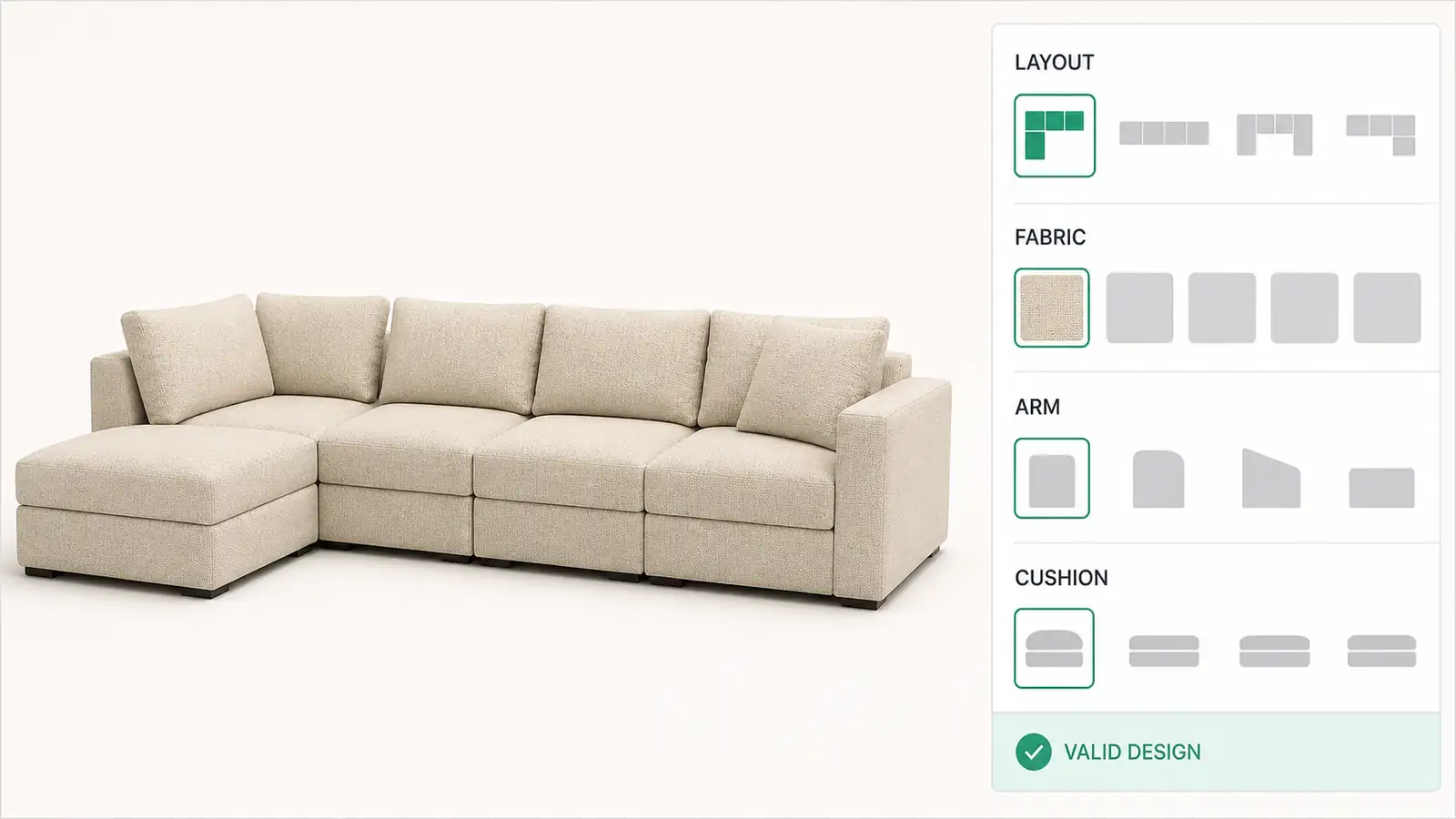
The buyer chooses dimensions, fabric, cushion firmness, arm style, and module layout. The factory must keep the frame, upholstery yield, joins, and delivery constraints valid. This is the collaborative type, because the choices create one specification before production. See how furniture manufacturers use that model.

Fabric, arm, cushion, and layout options for a modular sectional sofa, beside the one valid finished design.
Collaborative customization in furniture. Illustrative product and options, not a customer order.

Cabinets and millwork

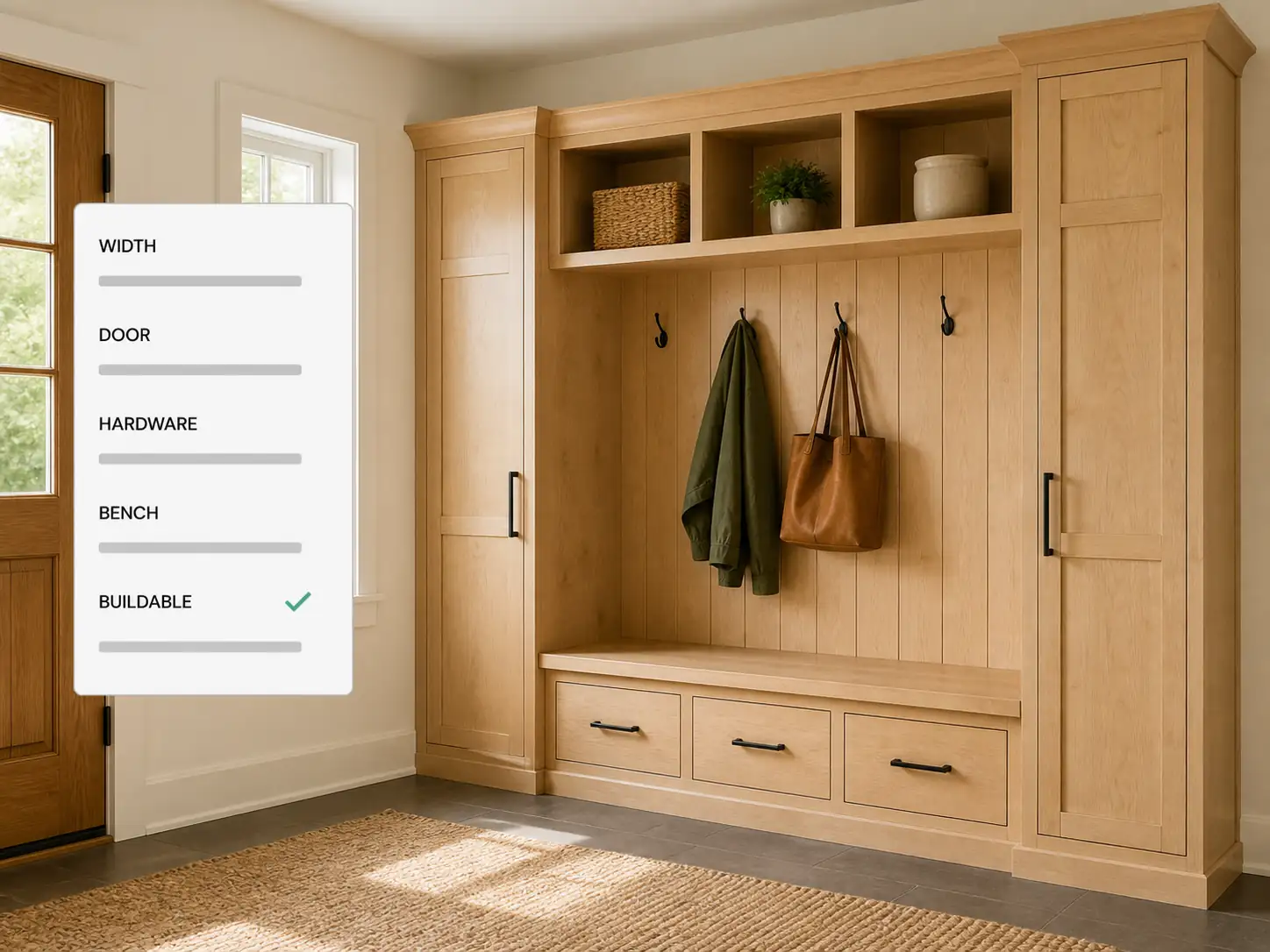
A cabinet run varies by opening size, cabinet type, door, finish, hardware, and internal fittings. Corner fillers, appliance clearances, and drawer conflicts make the rule set more important than the color picker. That is why cabinets and millwork need a rule set behind the picker.

Measured bays, door styles, and hardware for a built-in mudroom cabinet, and the one buildable run.
The rule set matters more than the color picker. Illustrative product, not a customer order.

Sheds and outdoor structures

A buyer can change footprint, roof style, siding, doors, windows, and add-ons. The maker must carry span rules, local loads, openings, and material quantities into the price. The same logic supports sheds and carports.

Windows and doors

Size, frame material, glass, opening direction, hardware, and performance rating can all vary. The selected size can rule out glass or hardware that works elsewhere. Online product customization succeeds only when those limits reach the buyer before the order reaches the shop. See the fit for windows and doors.

The value

The benefits of product customization

Product customization can improve fit, make choice visible, and collect a complete specification before production. The benefits of customization are strongest when the same option model supports many orders, many customers, and several related products. The manufacturer gains repeatability. The buyer still gets a product shaped around their need.

Demand for relevance is clear, though personalization is not the same thing. McKinsey's 2021 consumer research found that 71% expected personalized interactions and 76% were frustrated when they did not receive them McKinsey, Next in Personalization. That evidence supports the expectation of relevance. It does not prove that every such program earns a premium.

Returns are the other honest boundary. The National Retail Federation and Happy Returns estimated that 15.8% of all retail sales, and 19.3% of online sales, would be returned in 2025 2025 Retail Returns Landscape. A better fit can reduce some avoidable returns, but custom products can also be harder to restock. The option preview, measurements, and approval record must make the choice clear before checkout. What a live 3D preview is made of, and what it costs to build, is in our guide to 3D product visualization software.

Return pressure a product customization program has to answer, 2025The National Retail Federation and Happy Returns estimated that 15.8 percent of all retail sales, and 19.3 percent of online sales, would be returned in 2025. Online selling carries the higher rate of the two.Estimated share of 2025 sales returnedAll retail against onlineAll retail15.8%Online19.3%Source: NRF and Happy Returns, 2025 Retail Returns Landscape
Online orders come back at the higher rate. Product customization is often offered as the remedy, though this report does not test that claim.
The cost

What product customization costs

The cost of offering it is the software plus the work of turning a catalog into rules. A price for software alone is incomplete. Someone still has to define the options, dependencies, formulas, drawings, and outputs for every customizable product.

Software cost usually moves with product count, seller count, visual depth, and the systems connected after the quote. See what a configurator costs for Dealect's pricing structure.

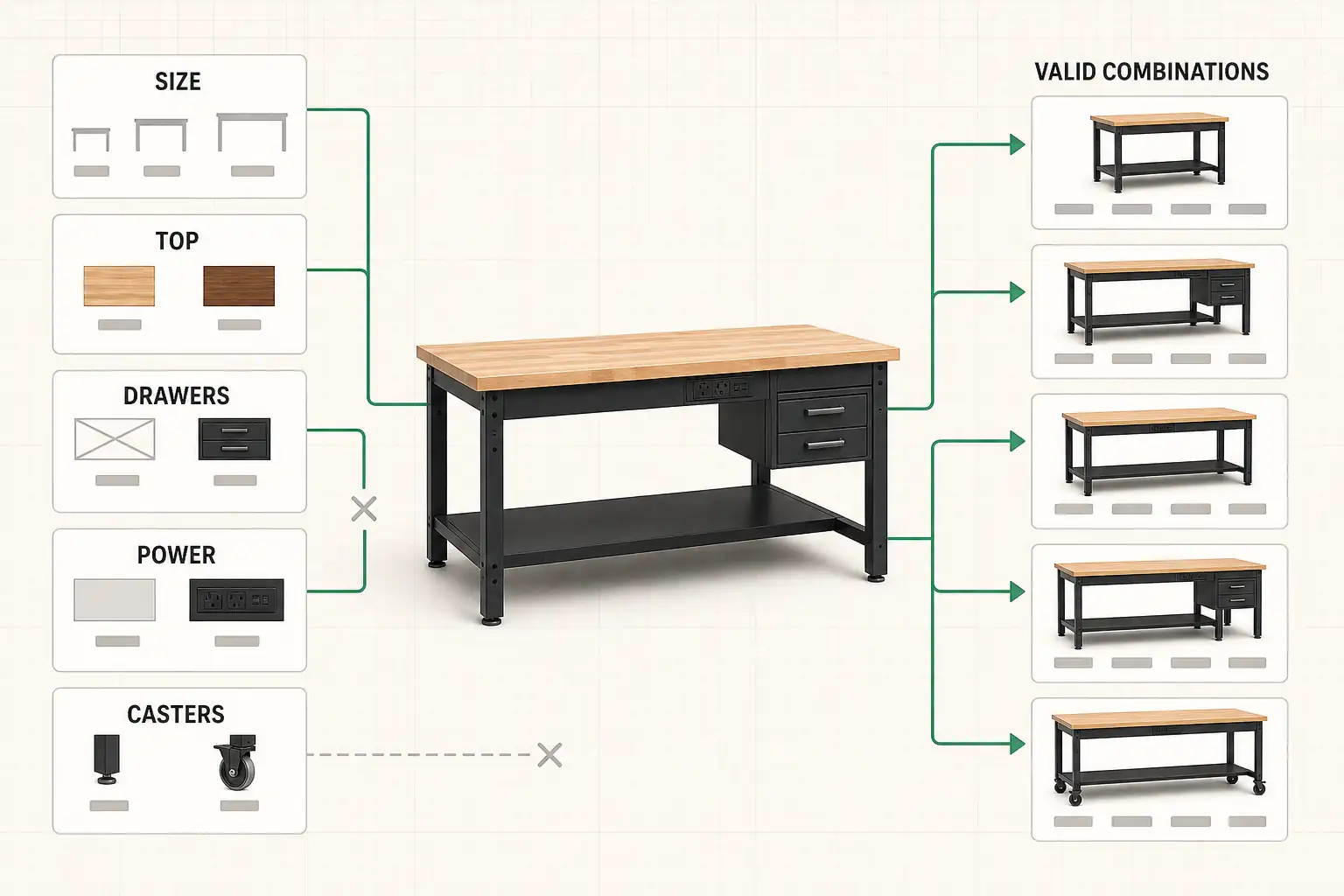
Catalog work moves with complexity, and the arithmetic is easy to check. Ten independent finish choices are simple. Ten option groups with four values each is four to the tenth power, or 1,048,576 apparent combinations. Nobody builds a million records. The catalog behind that number is still ten option lists plus the dependencies between them, so the work is counted in tens of rules. The practical unit is the rule count, not the combination count.

Letting customers customize a product online does not remove this work. It exposes the rule model to more orders and makes errors faster, which is why customization in ecommerce must start with the catalog rather than the storefront.

Selling customized products online also changes the return decision. Ecommerce product customization needs clear measurements, previews, and approval records because a made item rarely has the resale path that stock products do.

What product customization breaks

The costs that surprise a manufacturer are not on the invoice. Lead times get longer, because nothing ships from stock. A cancelled order becomes a write-off instead of a restock, because the build fits one buyer. Forecasting by stock keeping unit stops working, because what was sold is a configuration and not a code. Quoting gets slower before it gets faster, because the first months go on finding rules the catalog never wrote down. Sales also loses the simple answer: "what does it cost" becomes "it depends" until the price rules are finished.

None of these is a reason to refuse product customization. Each one is a reason to size the option list before the launch, rather than after the first quarter of quotes.

An option tree on a workbench, narrowing thousands of customization choices into a small set of valid combinations.
The catalog work behind the price: the options, dependencies, and rules that narrow the tree. Illustrative product.

The cost test

If the same rules price and validate hundreds of future orders, the setup work compounds. If every order still needs fresh engineering, the business is doing bespoke work through a picker. The interface did not remove the cost.

Three capabilities

How to offer product customization

Start with the solution space, the process, and choice navigation. That structure comes from a study of more than 200 manufacturing plants in eight countries by Fabrizio Salvador, Pablo Martin de Holan, and Frank Piller MIT Sloan Management Review, 2009. The researchers found that mass customization depends on three organizational capabilities, not on a picker. A mass customization program becomes useful only when all three work together.

  1. 01

    Define the solution space

    Find where customer needs differ enough to justify a real option. Leave noise out of the model.

  2. 02

    Build a repeatable process

    Reuse parts, work, and supplier capacity instead of inventing a new path for every order.

  3. 03

    Help the buyer choose

    Use choice navigation to narrow the option set without making the buyer learn the catalog first.

A 3D view can help the third capability, especially when shape changes with the options. It cannot replace the first two. A product configurator with the rules and price books inside it carries all three, and that is what Dealect builds. Compare visual CPQ with a 3D product configurator if the view is part of the buying decision.

After the click

What customization does to the quote

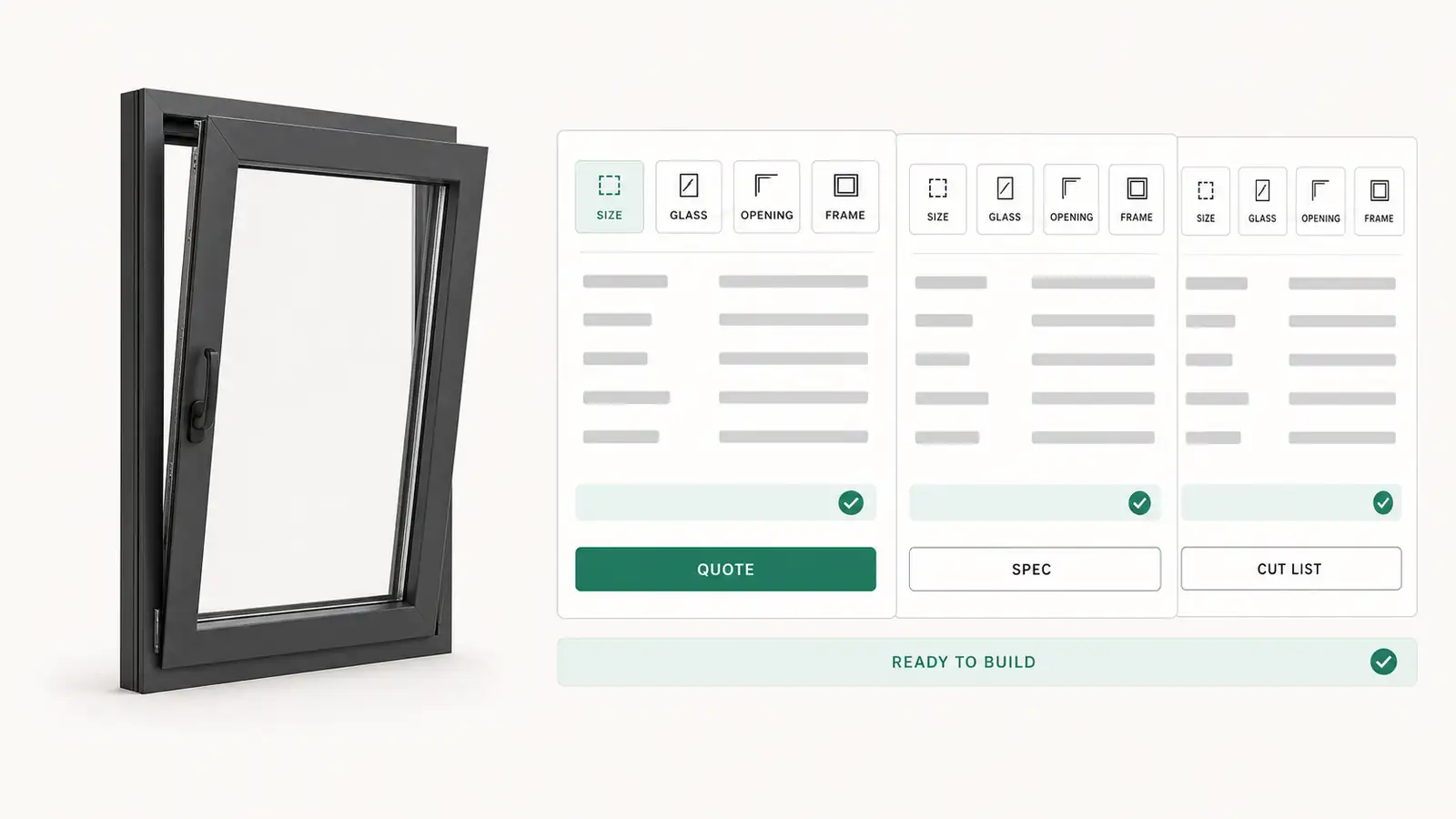
Product customization changes the whole order path. The buyer's choices must become a valid combination, a price, a quote, and a production record. If any step is retyped, the system has created a good buying screen and kept the old operating problem.

Research across 931 manufacturers in 22 countries found that stronger customization strategies were associated with both basic and advanced service offerings International Journal of Operations and Production Management, 2019. The useful implication is operational. It pulls sales, service, and production into one product model.

The channel raises the stakes. Gartner's survey of 646 B2B buyers, conducted in August and September 2025, found that 67% preferred a rep-free experience Gartner, March 2026. Self-service is useful only when the result does not need a factory expert to correct it later.

A dealer needs the manufacturer's configuration rules, their own price list, and their own margin for the customers they serve. The factory cost stays private. The finished specification travels with the quote so the order does not get rebuilt from notes. That is the bridge from product customization to a B2B dealer portal.

Choices for an aluminum tilt and turn window becoming a priced quote, a specification, and a factory cut list.
One valid configuration becoming a quote, a specification, and a cut list. Illustrative product and documents, not a customer quote.
A manufacturer who offers customization without a shared rule set has not removed quoting work. It has moved that work from the catalog into every order.
FAQ

Product customization questions, answered.

Five direct answers on the terms, the four types, cost, fit, and dealer quoting.

Product customization is chosen by the buyer, while personalization is chosen by the seller using information about that buyer. Configuration is the rule system that checks whether either result is valid, priced, and buildable.

It can be worth it when buyers value choice and the factory can reuse parts, processes, and rules across orders. It is a poor fit when each request needs fresh engineering or when the option list creates more quoting work than sales value.

The four types in the Gilmore and Pine framework are collaborative, adaptive, cosmetic, and transparent customization. They differ in who chooses the change and whether the product, its presentation, or both are changed.

The cost has two parts: the software and the catalog work. Software cost depends on the number of products, sellers, and connected workflows. Catalog work depends on the options, dependencies, formulas, drawings, and outputs that must become rules.

Yes, when every dealer uses the manufacturer's option rules and receives the correct price list. The system can block invalid combinations, protect factory cost, calculate dealer margin, and send one valid configuration into the quote and order.

Last updated

The short version

What to carry into the catalog

  • It is controlled choice. The buyer changes the product inside limits the maker owns.
  • It has two costs. You pay for software and for the rule work that makes the catalog repeatable.
  • It breaks after the picker. The quote, specification, dealer price, and production output must all describe the same build.

The next practical question is whether one of your product lines has a stable solution space. If it does, the demo below can follow one real option set from the buyer's choice to the priced quote.

Last updated

Portrait of Teodoro Pickett

Teodoro Pickett

Teodoro Pickett runs marketing at Dealect and writes the blog, covering CPQ, product configurators, and the business of selling custom products through dealer networks. He came to it after seven years of marketing and search for B2B software companies. Every article is written for manufacturers first, checked against sources a reader can open, and updated as the category moves.

How we source and correct sets out where our facts come from, how our own product appears in our own comparisons, and how to tell us we got something wrong.

Keep reading

Where to go next

The blog

Latest articles

All articles
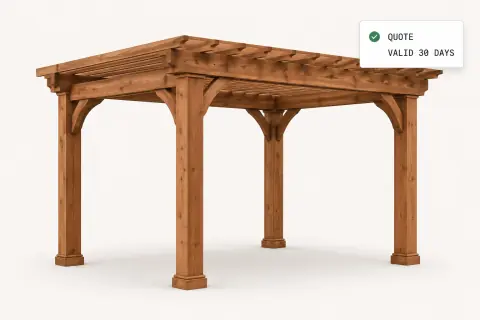
  • A configured cedar pergola with one floating card reading quote, valid 30 days, the price quote this guide defines
    Quotes, defined

    What is a price quote? Definition, parts, and when it binds

    A price quote is a formal offer to sell at a fixed price for a set time. What it must include, how it differs from an estimate, a sales order and an invoice, when it binds, and how to send one the same day when the price depends on the configuration.

    12 min read
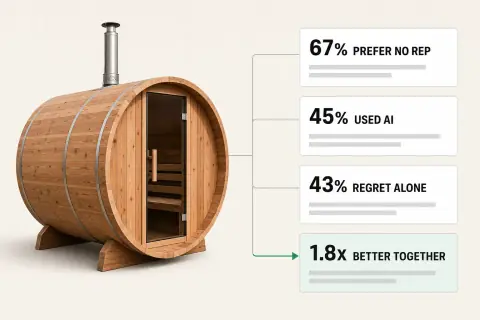
  • A cedar barrel sauna beside four research findings on how B2B buyers prefer to configure and validate a custom product quote.
    Statistics, sourced

    Custom product quoting statistics for 2026

    Fourteen sourced numbers on how B2B buyers buy custom products, what self-service quoting does to deal quality, and four popular figures that have no source.

    9 min read
Bring one product

See one option set become a buildable quote.

Request a 30-minute call and bring one product line. We will follow its choices, rules, price, and order output together.

  • 30-minute personalized demo
  • See real configurators in your industry

Your call is with the Dealect team.